Entries by Death Penalty Information Center
News
Apr 10, 2017
Texas Court Stays Execution of Paul Storey Based on False Argument About Wishes of Victim’s Family
The Texas Court of Criminal Appeals has issued an order staying the scheduled April 12 execution of Paul Storey. The unpublished April 7 order sends Storey’s case back to the trial court to consider whether the prosecution knowingly presented false evidence about the victim’s family’s views on the death penalty. Storey had been scheduled to be executed on April 12. His lawyers argued that “the State denied him his right to due process because it argued “evidence it knew to be false” when…
Read More
News
Apr 07, 2017
Federal Appeals Court Upholds Injunction Against Ohio Execution Protocol
The U.S. Court of Appeals for the Sixth Circuit has upheld a lower federal court ruling blocking the state of Ohio from proceeding with plans to carry out executions with its new three-drug execution protocol. The decision affirmed a district court preliminary injunction that barred the state from using the drug midazolam as part of a three-drug execution process, and barred the state from using “any lethal injection method which employs either a paralytic agent…or potassium chloride.” Judge…
Read More
News
Apr 06, 2017
Arkansas Parole Board Recommends Clemency for Jason McGehee
The Arkansas Parole Board voted 6 – 1 on April 5 to recommend clemency for Jason McGehee, one of the eight death-row prisoners scheduled to be executed in an unprecedented eleven-day period later this month. McGehee’s clemency petition drew support from both the former Director of the Arkansas Department of Correction, Ray Hobbs, and the trial judge who presided in his case, Robert McCorkindale. Speaking on McGehee’s behalf, Hobbs told the Board, “He has learned his lesson, and he still has value…
Read More
News
Apr 05, 2017
Alabama Legislature Votes to End Judicial Override
The Alabama legislature has approved and sent to the Governor a bill that would bring to an end the practice of permitting trial judges to impose death sentences over a capital sentencing jury’s recommendation that the defendant be sentenced to life. Alabama is the only state in the U.S. that currently permits judicial override. The legislature acted in response to mounting court challenges to Alabama’s death penalty statute. On April 4, the state House of Representatives voted 78 – 19 to pass a…
Read More
News
Apr 04, 2017
In Expanding Dispute Over Death Penalty, Florida Governor Orders Replacement of Local Prosecutor in 21 Murder Cases
Florida Governor Rick Scott issued a series of executive orders on April 3 removing locally elected 9th Judicial Circuit State Attorney Aramis Ayala (pictured) from 21 first-degree murder cases and replacing her with 5th Judicial Circuit State Attorney Brad King. The removal comes two weeks after Ayala announced a policy that her office would not pursue the death penalty in murder prosecutions. The cases include a number of potential capital resentencings resulting from the Florida Supreme…
Read More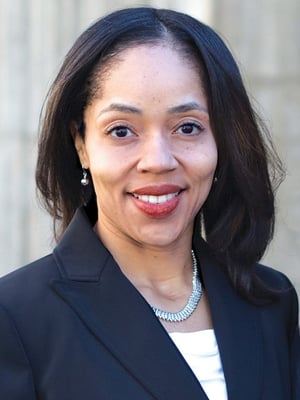
News
Apr 03, 2017
STUDIES: 21st-Century Executions Disproportionately Involve Defendants With Mental Illness
A new study of the case records of the men and women executed in the United States between 2000 and 2015 has found that 21st-century executions disproportionately involve prisoners diagnosed with mental illness and who have experienced traumatic child abuse. In The Washington Post’s data feature, Monkey Cage, Professor Frank Baumgartner and Betsy Neill of the University of North Carolina-Chapel Hill write that “[m]ost Americans oppose the death penalty for the mentally ill. But our research…
Read More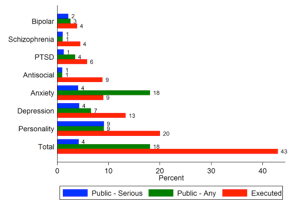
News
Mar 31, 2017
Corrections Officials Warn Arkansas Leaders About Psychological Trauma From Unprecedented Execution Schedule
As Arkansas moves toward attempting to conduct an unprecedented eight executions in eleven days, former corrections officials from across the country are warning Arkansas Governor Asa Hutchinson of the psychological toll the compressed execution schedule could take on prison personnel. Dr. Allen Ault (pictured), former warden and corrections commissioner in Georgia who oversaw five executions in that state, said “[t]he rapid schedule will put an extraordinary burden on the men and women…
Read More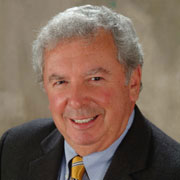
News
Mar 30, 2017
NEW VOICES: Bipartisan Former Governors Support Death Penalty Exemption for Those With Severe Mental Illness
In a joint op-ed for The Washington Post, former governors Bob Taft (pictured, l.) and Joseph E. Kernan (pictured, r.) have expressed bipartisan support for proposed legislation that would prohibit the use of the death penalty against people who have severe mental illness. Taft, a former Republican governor of Ohio, and Kernan, a former Democratic governor of Indiana, call the execution of mentally ill defendants “an inhumane practice that fails to respect common standards of decency and…
Read More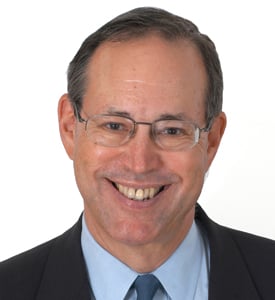
News
Mar 29, 2017
Maricopa County, Arizona DA Seeks Death Penalty So Often, The County Has Run Out of Capital Defense Lawyers
Maricopa County, Arizona County Attorney Bill Montgomery has sought the death penalty so frequently that the county has run up millions of dollars in defense costs and run out of defense lawyers qualified to handle new capitally-charged cases. The Arizona Republic reports that, with 65 active death-penalty cases and more new capital cases charged than the 35 that have been resolved since July 1, 2014, the county ran out of the specialized lawyers needed to defend the cases in January of this…
Read More
News
Mar 28, 2017
Supreme Court Overturns Texas’ “Outlier” Standard for Determining Intellectual Disability in Capital Cases
The U.S. Supreme Court has unanimously struck down Texas’ standard for evaluating intellectual disability in death penalty cases, calling the state’s approach an “outlier” that, “[b]y design and in operation, … create[s] an unacceptable risk that persons with intellectual disability will be executed.” In Moore v. Texas, the Court on March 28 vacated the judgment of the Texas Court of Criminal Appeals (CCA), which had applied an unscientific set of lay stereotypes known as the “Briseño factors”…
Read More