Entries by Death Penalty Information Center
News
Jun 10, 2009
U.N. Special Investigator Report: U.S. Death Penalty Leads to Miscarriage of Justice
U.N. Special Investigator Philip Alston has submitted a report to the U.N. Human Rights Council in Geneva criticizing the application of the death penalty in the U.S. Alston calls for the U.S. to enact more stringent safeguards to protect the innocent, saying the current application sometimes leads to miscarriages of justice. “It is widely acknowledged that innocent people have most likely been executed in the U.S,” Alston said. “Yet, in Alabama and Texas, the 2 States that I visited, I found a…
Read More
News
Jun 09, 2009
Ohio’s New Lethal Injection Procedures Include ‘Pinching Inmate’ to Test for Consciousness
The first execution under Ohio’s new lethal injection procedure was conducted on June 3. Questions about the effectiveness of the first of the three drugs used, as well as recent botched executions, have brought Ohio’s procedures under scrutiny. The new procedures include a procedure for the warden to pinch the inmate to make sure the first drug works before administering the second, which has been described as excrutiatingly painful . “The warden will call their name, shake their shoulder a…
Read MoreNews
Jun 05, 2009
NEW RESOURCES: Lapham’s Quarterly – “Crimes and Punishments”
The latest edition of Lapham’s Quarterly features essays from a wide variety of authors reflecting on crime and punishment. At least one of the articles, by Christopher Hitchens, focuses on the death penalty. In “Staking a Life,” Hitchens draws on his background in religion, morality, and government to explore why the United States continues to utilize capital punishment while many of our allies have abandoned it. “I have heard a number of suggested answers: two in particular have some…
Read More
News
Jun 04, 2009
Alabama’s New Law Providing DNA Testing Has Limitations
Alabama has adopted new legislation that allows some inmates to obtain DNA testing on old evidence. However, critics have pointed out important limitations in the new law. The new procedure is limited to inmates who were convicted of capital crimes, including those on death row. The Department of Forensic Sciences requested this limitation because they believed they did not have the resources to handle a larger class of cases. Even those convicted of a capital crime face further hurdles. For…
Read MoreNews
Jun 03, 2009
Supreme Court Rules Second Mental Retardation Determination Does Not Constitute Double Jeopardy
On June 1, in the case of Bobby v. Bies, the U.S. Supreme Court unanimously ruled that Michael Bies had to bring his claim of mental retardation before a separate state hearing, thereby reversing the lower federal courts that held such a hearing would constitute double jeopardy. The Court held that Ohio could contest Bies’ assertion that he is mentally retarded and that this does not subject Bies to double jeopardy, despite the fact that the Ohio Supreme Court in 1996 had recognized his mental…
Read More
News
Jun 02, 2009
NEW VOICES: Executing Troy Davis Would Be “Unconscionable and Unconstitutional”
Former Congressman Bob Barr of Georgia has called for a full court hearing on the new evidence offered by death row inmate Troy Davis regarding his possible innocence. Davis’s attorneys have submitted a petition to the U.S. Supreme Court requesting such a hearing. Barr noted that part of the basis the lower courts have used in refusing to hold a hearing is the Anti-Terrorism and Effective Death Penalty Act, a law that he helped write. Barr, who also served as a U.S. Attorney in Georgia, wrote…
Read More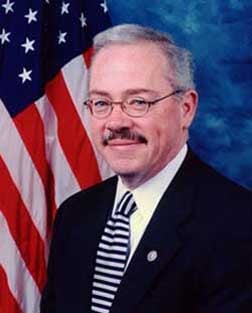
News
Jun 01, 2009
BOOKS – The Ride: A Shocking Murder and a Bereaved Father’s Journey from Rage to Redemption
The Ride: A Shocking Murder and a Bereaved Father’s Journey from Rage to Redemption is a new book by Brian MacQuarrie that explores a parent’s grief and subsequent transformation through the story of Robert Curley in Massachusetts. Curley’s 10-year-old son, Jeffrey, was a victim of abduction and murder in 1997. The murder shocked and outraged the community of East Cambridge outside of Boston. MacQuarrie explores the father’s evolution “from grief to anger to activism against predators,” and…
Read More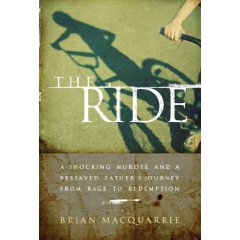
News
May 29, 2009
Nebraska Governor Signs Bill Changing Method of Execution to Lethal Injection
On May 28, Nebraska’s Governor Dave Heineman signed a bill changing the state’s method of execution from electrocution to lethal injection. Nebraska had been without a legal method of execution since February 2008 when the state’s Supreme Court found the electric chair unconstitutional. Before executions in the state can resume, Nebraska still needs to develop procedures for lethal injections and the new law will be tested in court. Nebraska was the last state to have the electric chair as its…
Read More
News
May 28, 2009
Florida’s Execution Selection Process Appears Secretive and Arbitrary
Florida Governor Charlie Crist recently chose two death row inmates for execution from among many eligible prisoners on the state’s death row, but no reasons were given for his choice. He joins a long line of Florida governors who made the decision of who lives and who dies without explanation of their selection method. “I don’t know how they decide,” said John Marek’s lawyer, Marty McClain, a veteran death-row attorney who has defended hundreds of inmates. (Marek was one of those given an…
Read MoreNews
May 27, 2009
California Could Save $1 Billion in 5 Years By Eliminating Death Penalty
California is facing an unprecedented budget deficit and voters recently rejected a series of tax reforms. To meet the crisis, Gov. Schwarzenegger has proposed selling state owned property, including San Quentin State Prison, to remedy the $21.3 billion deficit. Natasha Minsker of the Northern California ACLU, writing in the Daily Kos, has proposed that California eliminate or suspend the death penalty as a way of saving a large amount of money. According to her article, the state would save $1…
Read More