History

Arson investigation and evidence first entered the U.S. criminal legal system during the late 1800s. These early cases relied heavily on circumstantial evidence and eyewitness testimony rather than scientific analysis. The scientific analysis of fire scenes began to gain acceptance in courts during the 1940s, and by the 1960s, fire investigators were commonly admitted to testify as expert witnesses, largely dependent on the individual’s qualifications and experiences. Arson investigators during this era relied largely on generally accepted concepts to determine whether a fire was accidental, including whether there was evidence of an accelerant or the smell of gasoline. Detractors argued that these concepts lacked scientific rigor. A 1977 government report noted that common arson indicators had “received little or no scientific testing” and that “[t]here appears to be no published material in the scientific literature to substantiate their validity.”
A significant shift in the validity of arson science occurred in 1992 with the publication of The National Fire Protection Association (NFPA) 921: Guide for Fire and Explosion Investigations. The NFPA 921 established the first comprehensive, science-based guidelines for fire investigation, and it became the national standard for fire investigation methodology. U.S. courts began to use NFPA 921 as a benchmark to evaluate expert testimony in arson cases, particularly following the U.S. Supreme Court’s decision in Daubert v. Merrell Dow Pharmaceuticals (1993), which established a strict standard for admitting scientific expert testimony.
Several landmark cases have now shaped how today’s courts consider arson evidence in criminal cases. The case of Cameron Todd Willingham, who was executed in Texas in 2004 despite serious doubts about the cause of the fire for which he was convicted of setting, revealed that many of the supposed indicators that pointed to arson were based on outdated and invalid methodology. The case of Ernest Ray Willis, who was exonerated less than a year after Mr. Willingham’s execution, similarly demonstrated how flawed arsonscience could lead to wrongful convictions. Mr. Willis was exonerated when modern fire science revealed that there was no evidence of an intentional fire.
The 2012 appellate decision in Han Tak Lee v. Glunt helped establish precedent for challenging the validity of outdated fire investigation methods and contributed to the eventual exoneration of Mr. Lee based on a more sophisticated understanding of fire science. Mr. Lee had been convicted and sentenced to life in prison without the possibility of parole for the arson murder of his daughter. The United States Court of Appeals for the Third Circuit found that the prosecution’s “fire expert testimony undermined the fundamental fairness of [Mr. Lee’s] trial because the testimony was premised on unreliable science and was therefore itself unreliable.”
Courts have increasingly required arson investigators to demonstrate adherence to scientific methods and to explain the scientific basis for their conclusions, not just their experience or visual observations. Arson evidence presented in court today places greater emphasis on laboratory analysis, documented and proven methodologies, and consideration of alternative hypotheses. Many jurisdictions now recognize that advances in fire science may constitute new evidence that can support appeals or habeas corpus petitions, particularly in cases where convictions were based on now-discredited arson investigation methods. Challenges remain in ensuring that all jurisdictions consistently apply current scientific standards to arson investigations, and the courts properly evaluate the reliability of arson evidence.
Standard of Care
The National Fire Protection Association’s 921 establishes a scientific framework for fire investigations through seven sequential steps: (1) identifying the problem, (2) defining the problem, (3) collecting data, (4) analyzing data, (5) developing a hypothesis, (6) testing the hypothesis, and (7) selecting a conclusive hypothesis. But NFPA 921 remains a guide that investigators can choose to follow or disregard. As a result, the fire investigation profession lacks mandatory standards governing scientific and valid methodologies.

Flashover in a controlled environment
Pabloboj, CC BY-SA 4.0 <https://creativecommons.org/licenses/by-sa/4.0>, via Wikimedia Commons
Fire pattern analysis serves as the primary method by which fire investigators determine how burn patterns were created by examining the shape, depth, texture, location, and appearance of heat effects on walls, ceilings, floors, and furniture. Using this analysis, in combination with an understanding of fire behavior and dynamics, a fire investigator may determine the area of the fire’s origin and its cause. As fires burn longer, this process becomes increasingly more difficult, as new patterns conflict with and obscure earlier patterns. One complication is the condition known as “flashover,” which is the phase in a closed space where the temperature is so high that all combustible items begin to burn, even if far from the fire’s origin. Quickly after flashover, the fire moves to “full room involvement,” where the progression of the fire can create conflicting burn patterns, masking the origin of the fire.
Arc mapping is another technique that fire investigators may use to supplement other methods to determine the spatial relationship between points of damage and energized electrical conductors. However, NFPA 921 specifically advises against using arc mapping as a standalone method for determining fire origin, recommending that it be used as a complement to other collected data.
NFPA 921 supports the use of witness information as a valid source of information in a fire investigation but offers contradictory information regarding how investigators should use witness statements in drawing conclusions. While the importance of witness statements is acknowledged, the guide cautions that fire investigators must conduct a thorough investigation and collect all possible data to refute or support witness assertions.
When searching a fire scene, investigators look for evidence of an accelerant or ignitable liquid that may indicate the fire was intentionally set. Gas chromatography/mass spectrometry (GC/MS) provides reliable laboratory confirmation of ignitable liquids in fire debris samples even with just trace amounts present. However, in a large fire scene, including a house fire, ignitable liquids are found in everyday, common items and may unintentionally contribute to the burn progression of a fire.
Concerns with Arson Science and Investigations
Fire investigators can determine a fire’s origin through pattern interpretation when extinguished during early stages. However, interpretation becomes more complex as fires progress. Extended burning creates competing layers of evidence where newer patterns obscure earlier ones. This evolving pattern complexity introduces subjectivity into the investigation process, making accurate origin determination increasingly challenging as fire damage becomes more extensive. The little research that exists regarding area of origin determination suggests complex fire scenes, when examined by multiple investigators, lead to different conclusions.

K9 Training with Florida State Fire Marshal’s Office
State Farm, CC BY 2.0 <https://creativecommons.org/licenses/by/2.0>, via Wikimedia Commons
In a 1986 pilot program developed by the Connecticut State Police and the Bureau of Alcohol, Tobacco, and Firearms, police trained dogs to search fire scenes for traces of ignitable liquids. These dogs, who came to be known as accelerant detection canines (ADC) were trained to detect 17 different odors of ignitable liquids. It is known that dogs’ noses are sensitive enough to detect minimal volumes, like those needed for GC/MS, but it is unknown how well these animals can discern between actual ignitable liquids and other chemical compounds that release similar chemicals after burning in a fire. The ADCs often alert handlers to similar-smelling compounds in burned materials even in situations where no actual ignitable liquids were used, revealing a critical limitation in their scent discrimination capabilities.
In a paper from Parisa Dehghani-Tafti, the Commonwealth’s Attorney for Arlington County and the city of Falls Church, and Paul Bieber, a criminal investigator and founder of The Arson Research Project, the authors assert that arson science “is a subset of criminal investigations where the investigator considers the totality of circumstances (including, perhaps, the conclusions of forensic experts) to understand if a crime took place and, if it did, to gather evidence to prove each element, understand possible motives, and identify a criminal suspect.” Because the subject of a fire science expert’s testimony regards the origin and behavior of a fire, these individuals also classify the cause of the fire. This determination extends beyond where and how a fire started but goes to the intentional or accidental nature of the fire. There are four classifications of fires: natural, accidental, incendiary, or undetermined.
NFPA 921 combines forensic determinations of fire origins and cause with judgments of human intent when determining the nature of a fire. This conflation allows investigators to present inferences about human behavior with the weight of seemingly scientific testimony. Courts often permit these individuals to offer expert testimony that extends beyond technical analysis of a fire scene. NFPA 921 fails to separate scientific findings from inferred intent and creates a problem where the jury may conflate this assertion with an objective forensic conclusion.
The National Academy of Sciences’ 2009 report, Strengthening Forensic Science in the United States: A Path Forward, recommends that “forensic investigations should be independent of law enforcement efforts either to prosecute criminal suspects or even to determine whether a criminal act has indeed been committed.” This separation is recommended because studies have demonstrated that taking on a particular role can influence an observer’s viewpoint, directly affecting both the type of information they seek and how they perceive and process that information. This is relevant to fire investigators who may assume a criminal investigative role, as is the case in many jurisdictions.
The NFPA 921 does not provide strict guidance on how to separate these roles. Rather, NFPA 921 lists arson indicators to consider when assessing whether a fire was set intentionally and expands the physical evidence which fire investigators should collect and consider. Some of these “non-fire” indicators include the absence of personal items prior to a fire, evidence of additional crime, and any indication of financial stress.
Another issue that may unintentionally appear in fire investigation is expectation bias — the tendency to favor, validate, and emphasize results that align with anticipated experimental outcomes, while simultaneously doubting and rejecting the importance of findings that contradict these expectations. This bias acts similarly to confirmation bias, which is the tendency for an individual to seek information that confirms their preconceived notions. NFPA 921 acknowledges that both expectation and confirmation bias may arise in fire investigations and warns investigators to be wary of presumptions, but the guidelines do not offer tools on how to avoid this bias or recognize one’s own bias.
Case Studies
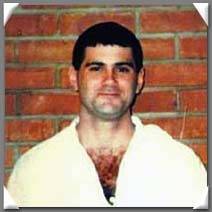
Cameron Todd Willingham
Cameron Todd Willingham was convicted, sentenced to death, and ultimately executed for intentionally setting a house fire that killed his three children. The prosecution’s case relied heavily on the testimony of two key fire investigators: Assistant Fire Chief Douglas Fogg of Corsicana, Texas and Deputy Fire Marshal Manuel Vasquez from the State Fire Marshal’s Office. Both investigators used what were then considered standard investigative techniques, identifying what they claimed were over 20 distinct indicators of arson, including burn patterns, melted aluminum they associated with accelerant-fueled high temperatures, and petroleum-based chemical traces found in samples from the front porch floorboard.
Mr. Fogg and Mr. Vasquez both relied heavily on visual interpretation and what Mr. Vasquez termed “logical and common sense” observations. Their process involved attempting to eliminate accidental or natural causes of the fire while looking for what they considered unusual burn characteristics and pour patterns. This approach, while standard at the time, lacked rigorous scientific validation. Particularly problematic was their use of comparative analysis, with Mr. Vasquez likening burn patterns to fingerprints — suggesting they were unique and unchangeable identifiers of arson, a claim that modern fire science has thoroughly debunked.

Picture of the aftermath of the Willingham’s house fire.
Photo from Texas State Fire Marshall’s Office.
Both investigators employed some scientific testing, specifically gas chromatography-mass spectrometry (GC-MS), to analyze samples from areas of the house they deemed “suspicious.” GC-MS testing failed toconclusively demonstrate the presence of accelerants, but Mr. Vasquez argued that the absence of an accelerant shouldn’t be interpreted as evidence that accelerants were not used — a position that effectively dismissed the significance of scientific testing when it contradicted his conclusions.
Mr. Vasquez was permitted to testify not only about the cause of the fire but also about Mr. Willingham’s intent and guilt. The investigators’ conclusions were influenced by extralegal factors, including witness interviews and Mr. Willingham’s perceived behavior after the fire, showing how investigator bias could impact the interpretation of physical evidence. Mr. Willingham was sentenced to death on October 29, 1992 and none of these issues were raised during appeals or in his initial habeas corpus petition.
Texas scheduled an execution date for Mr. Willingham in 2004. Patricia Cox, Mr. Willingham’s cousin, enlisted Gerald Hurst, a fire and explosives expert, to review the evidence in his case. Mr. Hurst’s analysis, completed as part of Mr. Willingham’s clemency petition, identified “critical errors” in the experts’ trial testimony and highlighted how scientific advances challenged each of the 20 arson indicators that Mr. Fogg and Mr. Vasquez identified. By 2004, a new analysis indicated that the fire that killed Mr. Willingham’s three children was accidental. Despite Mr. Hurst’s report detailing his findings, Mr. Willingham was denied clemency and was executed by lethal injection on February 17, 2004.
In 2008, the Texas Forensic Science Commission agreed to review the evidence in Mr. Willingham’s case. Fire expert Craig Beyler’s review for the commission testified that the original investigators failed to consider several plausible alternative explanations for the fire, including electrical causes or accidental ignition by one of the children. Mr. Beyler concluded that neither Mr. Fogg’s nor Mr. Vasquez’s investigations met the standards of care that existed even at the time of the original investigation, let alone the modern standards outlined in the National Fire Protection Association’s guidelines.
In 2009, The New Yorker released an in-depth article investigating Mr. Willingham’s case, drawing light on the many faults present in the initial investigation. The article brought renewed attention to Mr. Willingham’s case, and inspired the film, Trial by Fire, which details the events of the fire and time on death row ahead of his eventual execution.
Ernest Ray Willis
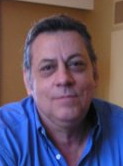
In October 2004, just eight months after Cameron Willingham’s execution, Ernest Ray Willis was freed from Texas’ death row largely because of changes in the understandings of fire science.
Mr. Willis was convicted and sentenced to death for the 1986 arson murders of two women. After a house fire killed Elizabeth Belue and Gail Alison, investigators quickly focused on Mr. Willis, who had been staying at the house that burned down and was one of the only two survivors. The prosecution’s case heavily relied on arson experts who claimed to identify “pour patterns” on the floor, which they viewed as evidence of an intentionally set fire using flammable liquids. Despite no clear motive or physical evidence linking Mr. Willis to the arson, the prosecution portrayed him as a “cold-hearted” murderer and “satanic demon.”
In 2004, U.S. District Judge Royal Furgeson threw out Mr. Willis’ conviction, citing several issues including the fact that after modern arson experts who reexamined the evidence against Mr. Willis concluded that the original investigators had been fundamentally wrong in their analysis. There was no evidence of intentional fire-setting, and the original experts had wrongly discounted the house’s documented electrical problems that could have caused an accidental fire. The cause of the fire was newly declared as “undetermined,” highlighting how the original investigators jumped to conclusions about arson without properly considering alternatives. This analysis led prosecutors to drop all charges against Mr. Willis, who was released from death row after seventeen years in October 2004. He was eventually awarded $429,000 in compensation from the state, in addition to a monthly annuity of nearly $10,000. Mr. Willis died in January 2021 at age 75.
Sources
Jennifer D. Oliva and Valena E. Beety, Evidence on Fire, North Carolina Law Review, 2019; Parisa Dehghani-Tafti and Paul Bieber, Folklore and Forensics: The Challenges of Arson Investigation and Innocence Claims, West Virginia Law Review, December 2016; Rachel Dioso-Villa, Scientific and Legal Developments in Fire and Arson Investigation Expertise in Texas v. Willingham, Minnesota Journal of Law, Sciences & Technology, 2013; Alexandra Gross, Ernest Ray Willis, National Registry of Exonerations, August 29, 2011; Innocence Staff, Cameron Todd Willingham’s Wrongful Execution Gains New Attention After Netflix’s Trial by Fire Release, Innocence Project, September 13, 2010 (Updated 4/2/2025); Jordan Smith, Innocent Man Off Death Row, The Austin Chronicle, October 15, 2004; John F. Boudreau, Quon Y. Kwan, William E. Faragher, Genevieve C. Denault, Arson and Arosn Investigation: Survey and Assessment, National Institute of Law Enforcement and Criminal and Law Enforcement Assistance Administration, 1977.