Transcript
Anne Holsinger 00:00
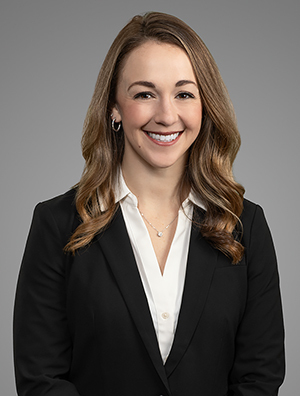
Hello, and welcome to 12:01: The Death Penalty in Context. I’m Anne Holsinger, Managing Director of the Death Penalty Information Center. Our guest today is Melanie Kalmanson, a commercial litigation attorney based in Jacksonville, Florida, and the author of Tracking Florida’s Death Penalty, a Substack newsletter that tracks the death penalty in Florida, including proposed legislation, trials, case law updates, and executions. Tracking Florida’s Death Penalty provides detailed coverage of pending executions and case movement in the courts. Thank you for joining us, Melanie.
Melanie Kalmanson 00:34
Happy to be here. Thank you for having me.
Anne Holsinger 00:36
To start off with, could you tell our listeners a little bit about yourself and how you came to create Tracking Florida’s Death Penalty?
Melanie Kalmanson 00:43
Sure. So, I was born and raised in Florida, and I went to undergrad and law school at Florida State. If you would’ve asked me in law school about the death penalty, I probably wouldn’t have been able to even tell you that Florida had the death penalty. I knew nothing about it. After law school, I clerked at the Florida Supreme Court for two and a half years, and just before my clerkship, I also worked as an intern at the court during my last semester of law school. And through that experience, I became entrenched in, or just completely enveloped in the death penalty, because a lot of the work that the Florida Supreme Court does, year in and year out, relates to capital cases in the state of Florida. Through my experience both in my internship and then my full-time clerkship after law school at the Florida Supreme Court, I learned how much capital punishment is a reality in the state of Florida and throughout the country and the fact that Florida conducts executions regularly. And I also realized how little society understands that reality. After my clerkship, I then proceeded to continue writing academically about capital punishment, and then in the 2023 legislative session, when a lot of changes were happening to Florida’s capital punishment laws, I realized that although academic writing is a very useful way to talk about these issues, it’s not necessarily accessible. And there wasn’t a good resource that had all of the information on what is going on with Florida’s death penalty, right, who is being sentenced to death, what cases are pending, where is the death penalty being sought, what are the statistics on Florida’s death penalty. And so that is how the blog was born. It really was just sort of this need for the resource honestly for myself, because I found myself going back to the court dockets over and over to find the same information, and I thought well, if I start this blog and I start explaining even to myself what’s going on so I don’t have to recreate it every time I look up a case, then it will be useful for me and perhaps it will be useful for others. It just sort of organically grew from there, and I was also able to track the legislative session through the blog that year.
Anne Holsinger 03:13
Thank you. We are also so grateful to have this resource about what’s going on in Florida. As we get more into the conversation, I want to sort of set the stage for what’s happening in Florida today. To do that, I’d like to discuss the 2016 U.S. Supreme Court decision in Hurst v. Florida. In that case, the court found Florida’s death penalty statute unconstitutional, because the judge rather than the jury was required to make findings of fact about the aggravating factors that made a case death eligible. In light of this decision, people who had been sentenced to death under the unconstitutional scheme were given new sentencing hearings. Could you tell our listeners about what happened to people who were resentenced?
Melanie Kalmanson 03:56
Sure. And I have to, not correct you because you’re not wrong, but qualify that statement that you made that people who were sentenced to death under Florida’s unconstitutional capital sentencing scheme were given new sentencing hearings. That’s not necessarily true in the absolute. When Hurst was decided in 2016, Florida had just under 400 prisoners on its death row. We have consistently maintained, and when I say we, Florida, has consistently maintained the largest death row population of states that continue executions. The only state in the country that has a larger death row population is California, which has not conducted an execution in a very long time. And of those 400 prisoners on death row, only 145 people received Hurst relief or, as you said, a new sentencing hearing. And the reason for that is the Florida Supreme Court, in dealing with the aftermath of the U.S. Supreme Court’s decision in Hurst v. Florida in January, 2016, determined that Hurst applied retroactively only to those prisoners whose sentences of death became final after June, 2002. If a prisoner’s sentence of death became final before June, 2002, then they were not entitled to retractive application of Hurst. So, essentially, Florida’s death row, about 400 people, was cut in half with respect to Hurst relief. So just wanted to make that distinction there.
Anne Holsinger 05:35
Yes, thank you, that timing issue is so important. And ultimately, introduced an element of arbitrariness into the ruling that maybe you’ll discuss a little more as you explain some of the outcomes of these cases.
Melanie Kalmanson 05:48
Yes, so there were quite a few steps that the court had to take in determining who received Hurst relief. The first step was determining who was entitled to application of Hurst in the first place, and that’s, like I just talked about, it was either a sentence of death that became final after June, 2002, or a sentence of death that was pending on direct appeal when Hurst was decided. Now, if you were in those groups to which Hurst applied, then the question was what was your original jury recommendation for death. And just as very, very brief background, when someone is tried for a capital case, there’s two phases to the trial. The first is the guilt phase, where the jury determines whether the defendant is guilty or not guilty of first-degree murder or a capital crime. That verdict of guilt always has to be unanimous, that doesn’t change. Once the jury unanimously finds that the defendant is guilty of first-degree murder, then the trial proceeds to what’s called the penalty phase, and in the penalty phase additional evidence is presented related to aggravators and mitigators, and I’m sure anybody listening to this podcast probably knows this, because they’re probably used to the death penalty and how it works, but Florida’s a little bit different from some other states, so just to be sure. After hearing the additional evidence in the penalty phase, the twelve-person jury votes on the recommendation as to the appropriate sentence, and those options are either life without parole or death. And you can have jury votes of really anything, right. It can be 6 – 6, it can be 7 – 5, 8 – 4, so on and so forth. So if you were a prisoner eligible for Hurst relief when it came out in 2016 and then was applied in 2017 and so on, the question was what was your jury’s original recommendation for death. And the way that the Florida Supreme Court applied that analysis, the court said if your jury’s original recommendation for death was unanimous, then the Hurst error in your case is harmless beyond a reasonable doubt. We can assume that your jury unanimously found, beyond a reasonable doubt, the existence of at least one aggravating factor and therefore any Hurst error in your case is harmless beyond a reasonable doubt. So, the question in determining who got Hurst relief was when did your sentence of death become final, and then what was your jury’s original recommendation for death. So when they took the 400 prisoners on Florida’s death row at that time, and applied that analysis, it came out to 145 people received Hurst relief or those new sentencing hearings that you mentioned. As to what happened to those people who did receive Hurst relief, Hurst v. Florida comes out in January 2016 from the U.S. Supreme Court and then it’s remanded back to the Florida Supreme Court. The Florida Supreme Court on remand said that Hurst v. Florida now required that the jury unanimously find all of these different things throughout the capital sentencing process and ultimately reach a unanimous recommendation for death. So following that in 2017, the Florida legislature updated Florida’s capital sentencing scheme to require that unanimous jury recommendation for death, and we’re, I think, going to talk about that more. That then changed in 2023, where Florida changed its statute again, there were some changes in the meantime on Florida’s Supreme Court, and so on and so forth, but in April 2023, the Florida legislature changed that requirement back down to an 8 – 4 recommendation. So now, all that’s required is that the jury find unanimously, beyond a reasonable doubt, at least one aggravating factor, and then that the jury recommend a sentence of death by a vote of 8 – 4. So, when that new statute in April 2023 went into effect, 85 of the 145 people who had received Hurst relief had been resentenced. Those new sentencing proceedings had been complete. As of April 2023, 57 of those 145 sentencing proceedings remained pending. Going to the 85 resentencing proceedings that were completed, 70 of those people were resentenced to life, 15 of those people were resentenced to death. So that’s how those proceeded, or had been completed, as of April 2023. Now, a few more have been completed since that time, but that’s generally how those numbers worked out.
Anne Holsinger 10:47
Wow. That shows a pretty dramatic shift in the percentage of people who are sentenced to death. So that’s really interesting data, thank you for sharing that with us.
Melanie Kalmanson 10:56
It is very interesting. One thing to keep in mind, though, is that those numbers were based on resentencing proceedings that were conducted under Florida’s unanimity statute. So that’s now starting to shift, or maybe right, because resentencing proceedings that are conducted after April 2023, so the 57 resentencings that were pending when the new statute went into place, those are now being conducted under Florida’s 8 – 4 statute.
Anne Holsinger 11:25
That’s a perfect lead-in to the next question that I wanted to ask. So, as you mentioned, in 2023 Florida passed this legislation. Governor DeSantis resumed executions in Florida that year following the COVID-19 pandemic and urged the passing of legislation that created the lowest unanimity threshold in the United States for imposing a death sentence, allowing, as you said, just 8 out of 12 jurors to agree. Could you talk about what prompted that legislation and how it has impacted death penalty cases in Florida?
Melanie Kalmanson 11:56
The very clear answer on what prompted this change is the capital trial of the Parkland shooter, Nikolas Cruz. Before his trial, and before this legislation, in 2020, the Florida Supreme Court after a wave of change on the Florida Supreme Court and the composition of the court, had actually issued a decision called Poole v. State, in which the court overturned the court’s prior decision in Hurst v. State on remand in October, 2016, where in Poole the court said a unanimous recommendation for death is not required under the Sixth Amendment and the U.S. Supreme Court’s decision in Hurst v. Florida from 2016 did not require a unanimous recommendation for death. The court held in Poole that what is only required under the Sixth Amendment is that the jury find beyond a reasonable doubt the existence of one aggravating factor. So, as of 2020, the legislature could have changed our unanimity requirement but they didn’t. Some people had speculated or expected that the legislature might go in and change our requirement or lower the requirement for a sentence of death in the state, but they didn’t. It sat there for a while, even with Poole on the books, and we continued to have a unanimity requirement. It wasn’t until Nikolas Cruz’s trial ended in a life sentence and there was some outrage from the victims and others in the community that sparked the legislative change in 2023. So after Nikolas Cruz’s trial, then we see the 2023 legislative session ultimately ended in the legislature changing our statute to essentially what Poole allowed, which is that the jury only has to find unanimously the existence of one aggravating factor beyond a reasonable doubt, and then we see the 8 – 4 standard for the jury’s recommendation for death.
Anne Holsinger 13:58
Since that legislation was passed, Florida joined only one other state, Alabama, as the only states that allow death sentences without unanimous jury agreement. Are there any constitutional challenges that you’re aware of to this new unusual standard?
Melanie Kalmanson 14:15
Yes, and you’re correct. Alabama and Florida are the only states that allow death sentences without a unanimous jury recommendation. In fact, Florida has the lowest standard. Even Alabama’s standard is a 10 – 2. So our 8 – 4 requirement is the lowest in the country. When Hurst was required in 2016, there was only one other state at the time that allowed a non-unanimous jury recommendation, and that was Delaware. Since Hurst, Delaware has gotten rid of the death penalty, so they’re no longer at play. So we do have the lowest standard in the country for imposing a death sentence. As to constitutional challenges, there are several. We’ve seen them across the state, in every level of courts in the state, and at every single procedural posture in a capital case. There’s been various rulings across the state on these constitutional challenges, but what we haven’t seen is the Florida Supreme Court ultimately issue a decision on the constitutionality of Florida’s 8 – 4 requirement. To talk specifically about what those challenges are, there’s challenges under the 6thAmendment, there’s challenges under the 8th Amendment, there’s challenges under the 14th Amendment due process, there are ex post facto challenges, there’s a lot of different constitutional challenges to this new standard and how it’s been applied to capital cases across the state. We’re waiting for a decision from the Florida Supreme Court on its constitutionality whether it be generally, whether the 8 – 4 is allowed, or specifically whether the 8 – 4 standard can be applied to specific cases in specific procedural postures.
Anne Holsinger 16:05
How has this 2023 legislation affected the number of new death sentences imposed in Florida, and why do you think we’re seeing the patterns we’re seeing?
Melanie Kalmanson 16:15
So when we look at the number of sentences of death that have been imposed since the 2023 statute, it’s a little difficult to tell. In 2023, five new sentences of death were imposed. In 2024, there were more. Seven people were sentenced to death. So there was an uptick in 2024. Florida has consistently led the country in the number of death sentences that are imposed each year, and that was true for 2024 with seven. Texas that year had six new death sentences, so we were still in the lead with the highest number of new death sentences that year, and it was an uptick from 2023. So you could say, perhaps, it had to do with the new legislation. This year, however, we’re already through seven months of the year, and we only have two people who’ve been sentenced to death, based on my records, so it seems like there has been at least a decline in the number of sentences of death. Well, if we look at that and we say okay, the statute didn’t go back to unanimity, so what is driving that? I think, generally, for years now we’ve seen a decline in the number of death sentences across the country and also in Florida. So, it’s kind of difficult to tell how the 2023 legislation is playing out.
Anne Holsinger 17:34
How does Florida’s number of new death sentences stand out compared to other states’?
Melanie Kalmanson 17:40
Sure, so like I said, Florida generally leads the country on the number of new death sentences each year. In 2024 that was true, it had the highest number of new death sentences in the country, Texas was number two with one less than Florida, and this year, you know, we haven’t finished the year yet, so we can’t tell.
Anne Holsinger 18:01
So, to move onto a different piece of legislation, in 2025, the Florida legislature passed several bills that expand aggravating factors, modify execution protocols, and expand death penalty eligibility. One of these bills, HB-903, expands the state’s available methods of execution to include any method “not deemed unconstitutional.” Under this new language, what methods of execution would this potentially allow?
Melanie Kalmanson 18:29
Yeah, this language is definitely concerning, and so are a lot of the bills that were introduced and passed in 2023 and 2025. But this one specifically, as you said, the language is vague, right. It doesn’t say that Florida now adopts the firing squad, or Florida now adopts nitrogen hypoxia, like we see in Alabama. Instead it has this vague language that says that Florida can use any method not deemed unconstitutional. Well that sort of sounds tricky, or it is a trick, because one would think, okay, well what has been deemed unconstitutional? And the truth to that is nothing. So, the U.S. Supreme Court has not deemed any execution method unconstitutional, so under this new language, essentially that means Florida can use any method of execution that it desires. I’ve seen, some groups have said this could mean beheading, this could mean firing squad, this could mean really anything that Florida or any other group comes up with and Florida adopts, that can be used for an execution. Now, do I think that Florida’s going to start using beheading, I certainly hope not, but the statute could be read to allow it.
Anne Holsinger 19:40
Florida’s also unique in passing such broad legislation related to methods. Other states, as you mention, have passed laws to adopt nitrogen suffocation, or to reinstate old methods like the firing squad. Why do you think Florida passed such a broad, sweeping piece of legislation, and what has the public response been like?
Melanie Kalmanson 20:00
Yeah, my guess on this, and I watched the legislative sessions leading up to this new legislation, my guess is that they’re doing it as a prophylactic measure because states are having a difficult time accessing the drugs that are used in our current lethal injection protocol. And so my guess is, they did it this way so they don’t have to go back and re-amend the legislation later, if something similar were to happen with another method, and so instead they’re saying basically DOC, you can use whatever you want that’s going to work at the time and is accepted at the time. We’re not going to tell you what to use, you can just use anything not deemed unconstitutional. That’s my best guess. As far as the public response, you know there was some concern from some of the legislators, and also some public interest groups about what this could mean. It could mean some very antiquated execution methods that we certainly, in a civilized society, don’t want to see, like beheading. Unfortunately, I think, as we’ve seen for decades, the death penalty is generally not something at the top of the news cycle, and so I think since this legislation was passed there really hasn’t been a lot of talk about it. And likely also because Florida hasn’t actually used another execution method. In Alabama, which has used nitrogen hypoxia, and some other states that have used firing squad, we have seen some news articles and some public response about this new method, and so I expect that the same would be true in Florida if they were to start using another method. One thing that’s also worth noting is Florida has kept on the books, so to speak, electrocution. It never went away, while Florida starting using lethal injection as its primary execution protocol, Florida has allowed its death row prisoners to choose electrocution as their execution method for years. It’s still on the books, it’s still on the DOC protocol, that somebody who’s sentenced to death has a certain period of time to choose electrocution as their execution method in the state of Florida.
Anne Holsinger 22:10
As we’re recording this podcast on August 11th, 2025, Florida has already reached its highest number of executions since 2014, with nine carried out this year, and more scheduled. Could you tell our listeners about what’s driving this increase?
Melanie Kalmanson 22:25
I wish I knew for sure. I have my thoughts, and there’s a lot of speculation on what’s driving this increase, it’s certainly a marked increase from last year. In 2024, Florida only completed one execution. In 2023 we had six executions, and the thought there, in 2023, was that it had to do with Governor DeSantis running for president. In 2024, like I said, we only had one execution, and so to come back from a year with only one execution and hit this record, it’s confusing, it’s shocking, and it certainly puts a lot of pressure on a lot of people. As to what’s driving it, my educated guess is that it has to do with direction from the White House. There was very clear direction from the Trump administration as soon as Trump took office to enforce the death penalty and apply the death penalty as much as possible. And that was in an executive directive from Attorney General Bondi almost as soon as the new administration took the White House. So that’s my best guess as to what is driving this. I think, while other states aren’t maybe conducting as many executions, we see other states conducting executions for the first time in a long time, and it’s likely they’re following the same directive.
Anne Holsinger 23:49
No other state has seen such a significant increase in executions this year, why do you think Florida is so out-of-step with the rest of the country? Are there things that are unique to the way Florida sets executions dates, for instance?
Melanie Kalmanson 24:03
So, like I said, we don’t have other states that are conducting executions at this same pace, but we do see other states conducting executions for the first time in decades. So while we don’t see, you know, the same rate of executions from other states, I do think we see other states starting to participate in executions that haven’t in the past, so it could be the same motivation behind those changes, just different changes. You know, the other thing that strikes me in reviewing what’s going on this year is, Florida for a long time, and still does, have a very large death row population. These prisoners have been on death row for a very long time, and that’s something that Governor DeSantis has also referenced in many speeches, it’s possible that that’s why he’s trying to conduct these at such a fast pace, but I really don’t know. He has not talked about, much less explained, the reason for the significant change in his execution patterns this year.
Anne Holsinger 25:13
Yeah, you’ve talked a lot about Governor DeSantis and his role. Could you explain a little bit about the level of discretion that the Governor has in Florida for setting execution dates?
Melanie Kalmanson 25:23
Sure, and other states are actually different, but in Florida, the Governor has absolute, complete discretion with respect to setting executions. The Governor is not involved in the sentencing process itself, and is also not involved in the appeals process, but once a death row prisoner has completed certain appeals, he or she becomes warrant eligible, or a warrant can be signed for the prisoner’s execution. Once a prisoner is warrant eligible, it is truly up to the Governor’s complete discretion as to when the warrant is signed. There is a process by which the Florida Supreme Court certified who on Florida’s death row is warrant eligible, and then it’s up to the Governor when to sign a death warrant, and for who, and when the execution takes place. So, somebody can be on death row for thirty years warrant eligible, and out of the blue get a death warrant and the execution be set in thirty days, and that’s happened time and time again, in both the DeSantis administration and other administrations. It’s completely in a black box with no explanation in the state of Florida.
Anne Holsinger 26:39
Is there anything else that you’d like to share with our listeners?
Melanie Kalmanson 26:42
I think, you know, my main motivation in all of the work that I do with the death penalty and with the blog, is really not to convince anybody to feel one way or another on the death penalty. It’s more education, and understanding the reality of the death penalty. I think these are issues that we’re voting on, with our elected officials, whether it be president, or governor, or attorney general, and so, just be educated, read about these issues, and the more you understand, the more you can make and educated decision on who you’re voting for and just understanding where your tax dollars are going. The death penalty, one thing that a lot of people don’t understand is how expensive the death penalty is. The death penalty is so much more expensive than a life sentence, which is the alternative to a death sentence, and I think it’s really important that we who live in capital states, especially those that conduct executions understand the reality of capital punishment in our states.
Anne Holsinger 27:45
Thank you so much for joining us today Melanie. If our listeners would like to learn more about the death penalty in Florida, they can visit your Substack Tracking Florida’s Death Penalty at fladeathpenalty.substack.com, and to learn more about the death penalty across the U.S., they can visit DPI’s website at deathpenaltyinfo.org. To support the 12:01 podcast and all of DPI’s work, please visit deathpenaltyinfo.org/donate, and to make sure you never miss an episode, please subscribe to 12:01 in your podcast app of choice.


