Articles
Items: 101 — 110
Feb 01, 2012
EDITORIALS: “Mistakes are made”
A recent editorial in Nebraska’s Journal Star urged support for a bill to replace the death penalty with a sentence of life in prison. Among the reasons cited for its position was the risk of executing an innocent person. The editorial noted that advancements in DNA testing have shown the fallibility of the current system: “Seventeen people who were on death row have been set free after DNA testing proved they were wrongly convicted.” The editorial also pointed to more than 250 convictions that…
Read More
Jan 10, 2012
EDITORIALS: “The Random Horror of the Death Penalty”
An editorial in the Sunday edition of the New York Times on January 8 looked at recent studies pointing to the arbitrariness of the death penalty. The editorial noted that the U.S. Supreme Court had struck down capital punishment in 1972 because its arbitrary implementation rendered it unconstitutional. In particular, the Times cited a recent study of Connecticut’s death penalty indicating the death penalty was not being imposed on the worst offenders, but rather that a death sentence depended…
Read More
Jan 09, 2012
DPIC IN THE NEWS: Media Coverage of Year End Report
Over 400 media outlets around the country reported on DPIC’s recent 2011 Year-End Report. Coverage included stories on the dramatic drop in death sentences, the decline in executions, and fewer states having the death penalty. Articles appeared in the Washington Post, Wall Street Journal, Los Angeles Times, Associated Press, Reuters, USA Today, CNN, TIME, and many other papers. National broadcast outlets such as NBC’s Nightly News, National Public Radio’s Morning Editiion, and CBS Radio ran…
Read More
Dec 01, 2011
EDITORIALS: “An Intolerable Burden of Proof”
An editorial in the New York Times criticized a recent ruling by the U.S. Court of Appeals for the Eleventh Circuit, upholding the heavy burden Georgia places on offenders with intellectual disabilities. In order to be exempt from the death penalty, defendants must prove “beyond a reasonable doubt” that they are mentally retarded. The U.S. Supreme Court held in 2002 that such defendants cannot receive the death penalty, but the Court left the procedures for determining this status to the…
Read More
Nov 28, 2011
EDITORIALS: Calls for Florida to Revamp Its Untrustworthy Death Penalty System
The Orlando Sentinel in Florida recently called on the state to change the unusual way in which it arrives at death sentences, recommending instead unanimous jury decisions for a death sentence, the prevailing practice in the vast majority of states. In June, a federal judge declared Florida’s death penalty unconstitutional because it only requires a simple majority to decide whether aggravating factors exist and to recommend a death sentence to the presiding judge. In 2005, former Florida…
Read More
Nov 23, 2011
EDITORIALS: Praise for Oregon Governor’s Action Halting Executions
The Register Guard (Eugene, Oregon) praised Governor John Kitzhaber’s recent announcement halting all executions, calling his conclusion that the “death penalty is morally wrong and unjustly administered” to be “right on both counts.” In their editorial, the paper noted that the governor’s actions are in line with other developments in the U.S. and internationally: “Kitzhaber’s announcement came as the tide is turning against the death penalty. Earlier this year, Illinois Gov. Patrick Quinn…
Read MoreNov 01, 2011
EDITORIALS: Indiana’s Death Penalty “Too Costly and Applied Unfairly”
In a recent editorial in the Fort Wayne, Indiana, Journal Gazette, the paper welcomed the proposal by the state’s Attorney General to reconsider the death penalty in light of its enormous costs. At a Criminal Justice Summit held at the University of Notre Dame, Indiana Attorney General Greg Zoeller asked state officials to look at the death penalty from a practical perspective. He cited a recent capital trial in Warrick County that cost $500,000 in defense attorney fees alone. “The costs can’t…
Read MoreOct 05, 2011
OP-ED: Mario Cuomo Calls Capital Punishment Corrosive to Society
In a recent op-ed in the New York Daily News, former New York Governor Mario Cuomo called the death penalty a “serious moral problem” that is “corrosive” to a democratic citizenry. He said many of the problems of the death penalty — ineffectiveness as a deterrent, unfairness, and the risk of executing the innocent — are inevitable: “These imperfections — as well as the horrible and irreversible injustice they can produce — are inevitable. In this country, a defendant is convicted on proof beyond a…
Read More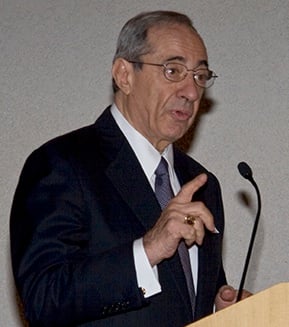
Sep 27, 2011
EDITORIALS: New York Times: “An Indefensible Punishment”
The lead editorial in the New York Times on September 26 called for an end to the death penalty because, the editors said, it cannot be made to comply with the U.S. Constitution. The editoral reviewed the 35-year history since the death penalty was reinstated in 1976 and concluded, “The death penalty is grotesque and immoral and should be repealed.” The paper pointed to the recent case of Troy Davis, who was executed on September 21 in Georgia, and to the continuing arbitrariness in the way the…
Read More
Sep 15, 2011
Florida’s Death Penalty Marked by Arbitrary Decisions
Mike Thomas, columnist for the Orlando Sentinel in Florida, recently examined the arbitrariness of the state’s death penalty system. “There is no rhyme or reason here,” he wrote. “A governor’s decision on whose death warrant to sign, as well as a judge’s decision on which appeal to accept, are about as arbitrary as a prosecutor’s decision to pursue the death penalty. We spend an estimated $51 million annually on this nonsense, and for our investment we haven’t executed anyone going on a year…
Read More