Studies
Items: 101 — 110
Mar 18, 2015
STUDIES: Most Likely Outcome of Death Sentence Is That It Will Be Reversed
A new study from researchers at the University of North Carolina at Chapel Hill finds that the most likely outcome for a capital case once a death sentence has been imposed is that the defendant’s conviction or sentence will be reversed on appeal. Execution is only the third most likely outcome. Of the 8,466 people sentenced to death from 1976 – 2013, 3,194 (38%) had their sentence or conviction overturned. 2,979 (35%) remained on death row at the time of the study. Fewer than 1 in 6 defendants…
Read More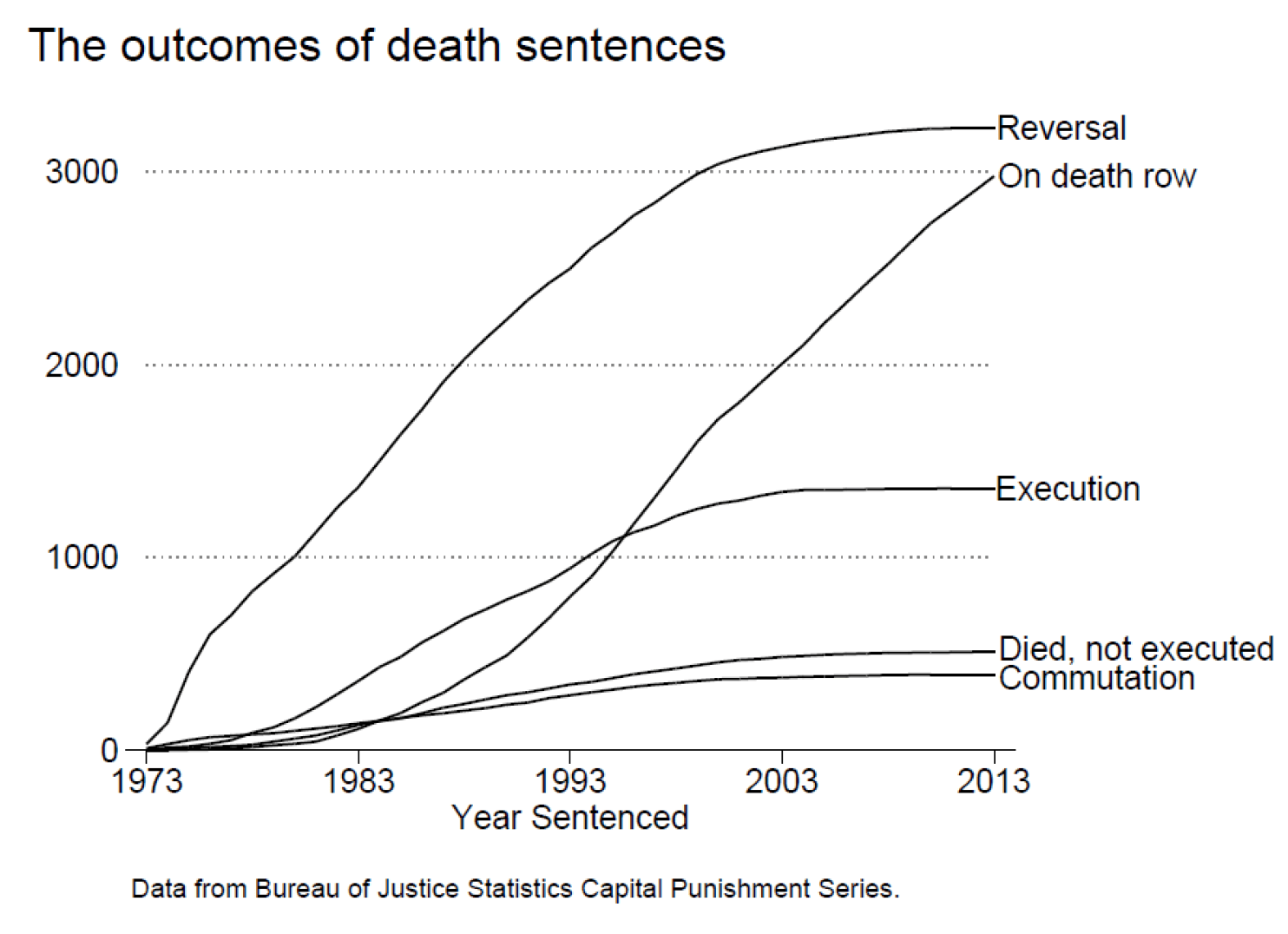
Mar 17, 2015
Ohio Officials Say Death Penalty System Has Serious Flaws
Legislators in Ohio are seeking to enact death penalty reforms as the state grapples with problems in the application of capital punishment. Sen. Bill Seitz, a Republican, and Sen. Sandra Williams, a Democrat, are working on four bills to address some of the reforms recommended by the Ohio Supreme Court Death Penalty Task Force last year. The bills would prevent the execution of defendants with serious mental impairments, establish a fund for indigent defense, require certification of crime…
Read More
Mar 02, 2015
STUDIES: Death Penalty Had No Effect on Reducing Crime
A February 2015 study by the Brennan Center for Justice examined several possible explanations for the dramatic drop in crime in the U.S. in the 1990s and 2000s. Among the theories studied was use of the death penalty, which the report found had no effect on the decline in crime. The authors explained, “Empirically, capital punishment is too infrequent to have a measureable effect on the crime drop. Criminologically, the existence and use of the death penalty may not even create the deterrent…
Read More
Feb 12, 2015
Brennan Center for Justice Report: What Caused the Crime Decline?
In February 2015, the Brennan Center for Justice released a report examining potential explanations for the dramatic drop in crime in the U.S. in the 1990s and 2000s. The death penalty was one of the possible contributing causes the researchers evaluated. The report’s conclusion: the death penalty had no effect on the decline in crime. The authors explained: “Empirically, capital punishment is too infrequent to have a measureable effect on the crime drop. Criminologically, the existence and use…
Read More
Jan 28, 2015
STUDIES: Death Penalty Overwhelmingly Used for White-Victim Cases
According to a new study principally authored by Prof. Frank Baumgartner of the University of North Carolina, the death penalty is far more likely to be used if the underlying murder victim was white rather than black. The study examined every U.S. execution from 1976 – 2013 and found, “The single most reliable predictor of whether a defendant in the United States will be executed is the race of the victim…. Capital punishment is very rarely used where the victim is a Black male, despite the fact…
Read More
Jan 13, 2015
Neuroscience Research Indicates Susceptibility to Influence in Younger Defendants
A growing body of research into adolescent brain development indicates that the brains of even those over the age of 18 continue to physically change in ways related to culpability for criminal offenses. The Supreme Court referred to such scientific evidence regarding those under the age of 18 when it struck down the death penalty for juveniles in 2005 (Roper v. Simmons) and when it recently limited life without parole sentences for juveniles. According to Laurence Steinberg (pictured), a…
Read More
Jan 12, 2015
COSTS: Washington’s Death Penalty Is Costing Taxpayers Millions
A Seattle University study examining the costs of the death penalty in Washington found that each death penalty case cost an average of $1 million more than a similar case where the death penalty was not sought ($3.07 million, versus $2.01 million). Defense costs were about three times as high in death penalty cases and prosecution costs were as much as four times higher than for non-death penalty cases. Criminal Justice Professor Peter Collins, the lead author of the study, said, “What this…
Read More
Jan 08, 2015
RESOURCES: New Series Examines Pennsylvania Death Penalty
The Patriot-News in Pennsylvania is running a series of articles examining the state’s death penalty in anticipation of a comprehensive report on the death penalty commissioned by the state legislature. Pennsylvania has not carried out an execution since 1999, and all three of its executions in the modern era were inmates who waived their appeals. Incoming Governor Tom Wolf has said he may hold off on allowing executions until the state addresses questions of fairness in the application of the…
Read More
Jan 05, 2015
NEW VOICES: Former Prosecutors Call for Repeal of Kentucky’s Death Penalty
In a recent op-ed in the Louisville Courier-Journal, three former Kentucky prosecutors advocated for repeal of the death penalty. Citing the findings of a study by the American Bar Association on Kentucky’s law, Joseph P. Gutmann (pictured), Stephen Ryan, and J. Stewart Schneider said, “[T]he death penalty is broken beyond repair in Kentucky.” Among the report’s findings were a reversal rate of 60% in death penalty cases, a lack of standards for eyewitness identification and interrogations, and…
Read More
Dec 30, 2014
NEW RESOURCES: Bureau of Justice Statistics Releases “Capital Punishment, 2013”
On December 19, the Bureau of Justice Statistics released its annual statistical report on capital punishment in the United States, with information for 2013. It noted a continuing decline in the death row population and the number of executions. Highlights of the report include: The death row population dropped to 2,979 inmates as of 12/31/13, with 60% held in just 5 states (California, Florida, Texas, Pennsylvania, and Alabama). 2013 was the 13th consecutive year in which the population of…
Read More