Entries by Death Penalty Information Center
News
Mar 03, 2025
Alabama Governor Grants Clemency to Robin ‘Rocky’ Myers, Sparing Him from Execution
On February 28, 2025, Alabama Governor Kay Ivey commuted the death sentence of Robin ‘Rocky’ Dion Myers to Life Without Parole (LWOP). Myers was convicted in the 1991 murder of Ludie Mae Tucker in Decatur, Alabama. His jury recommended that he be sentenced to LWOP, but the judge in his case overrode the jury’s recommendation and handed down a death sentence. The practice of judicial override was abolished in Alabama in 2017. In her statement, Gov. Ivey repeated her belief that “the death…
Read More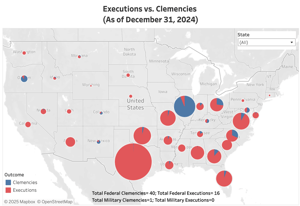
News
Feb 27, 2025
New Podcast: The Past, Present, and Future of the California Racial Justice Act
In the February 2025 episode of 12:01: The Death Penalty in Context, DPI Managing Director Anne Holsinger speaks with three experts on California’s Racial Justice Act (RJA). Natasha Minsker, an attorney and consultant, formerly of the ACLU, speaks on the history of the RJA and the impetus for its passage. Genevie Gold, research and writing fellow at the Office of the State Public Defender (OSPD), describes the process that an RJA claim follows through the legal system, and how the RJA has…
Read More
News
Feb 24, 2025
Article of Interest: Cato Institute Fellow Critiques Medical Ethics Double Standard Around Executions
In a February blog post, Cato Institute Senior Fellow Jeffrey A. Singer criticizes the use of medicalized lethal injection, highlighting the double standard under which procedures that medical professionals are ethically barred from carrying out are not only allowed, but required, of law enforcement personnel. “A doctor who intentionally performs cruel and medically unjustifiable procedures that cause pain and suffering could face criminal charges. If the patient dies, the doctor could face…
Read MoreNews
Feb 19, 2025
Alabama House Joins Florida and Tennessee to Advance Unconstitutional Expansion of Death Penalty that Advocates Say Would Harm Children
On February 11, 2025, the Alabama House of Representatives voted 86 – 5, with nine abstentions, in favor of a bill that would expand the use of the death penalty to those convicted of the rape or sodomy of a child under the age of 12. This bill will be headed to the state Senate. If passed, the law would directly violate United States Supreme Court precedent established in Kennedy V. Louisiana (2008), which found the death penalty an unconstitutional form of punishment for the rape of a child…
Read More
News
Feb 13, 2025
Montana House Legislators Defeat Bill that Would Have Broadened Lethal Injection Methods
On January 30, 2025, the Montana House of Representatives rejected by a vote of 51 – 49 House Bill 205 (HB 205), which would have modified the state’s lethal injection protocol. The bill sought to remove language in the Montana lethal injection protocol that requires the use of an “ultra-fast acting” drug in combination with a “chemical paralytic agent” and replace it with broader terminology that would allow for the use of any “substance or substances in a lethal quantity sufficient to cause…
Read More
News
Feb 04, 2025
Florida Legislature Passes Unconstitutional Bill that Mandates the Death Penalty for “Unauthorized Aliens”
On January 28, 2025, the Florida Legislature passed an immigration bill that includes a provision mandating the automatic imposition of the death penalty for “unauthorized aliens” convicted of a capital offense, despite longstanding U.S. precedent and international law prohibiting mandatory death sentences. The bill was introduced during a short special legislative session called by Governor Ron DeSantis (pictured), leaving little to no time for public review: state senators received the full…
Read More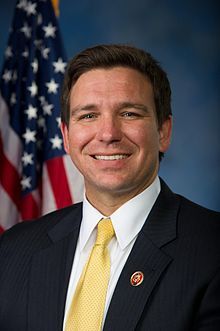
News
Feb 03, 2025
Fired Federal Judge Raises Serious Concerns About Arizona’s Lethal Injection Protocol
Retired federal magistrate Judge David Duncan (pictured), who was hired and then abruptly fired by Arizona Governor Katie Hobbs to review the state’s execution protocol, continues to raise significant concerns about the state’s lethal injection protocol. In an interview with ABC15, Judge Duncan highlighted issues with the chain of command for lethal injection drugs, transparency, and the state documentation process. “It’s shocking irony that one of my tasks was transparency — [and] on the eve of…
Read More
News
Jan 30, 2025
Arizona’s Hourly Compensation for Post-Conviction Capital Counsel Found Inadequate for Certification by Outgoing Attorney General Merrick Garland
In one of his final acts before leaving office, outgoing Attorney General Merrick Garland denied a longstanding request by Arizona state officials for the state to be “certified” so it could take advantage of certain procedural benefits in federal habeas review of capital cases. These changes are available only when a state satisfies certain requirements, and benefit state actors by imposing greater restrictions on a prisoner’s ability to raise claims and by accelerating timing to conclude…
Read MoreNews
Jan 29, 2025
12:01: The Death Penalty in Context — The Death Penalty in 2024
In this month’s episode of 12:01: The Death Penalty in Context, Managing Director Anne Holsinger speaks with DPI Communications Associate Hayley Bedard, about The Death Penalty in 2024, which highlights trends and events related to the death penalty. 2024 marked the tenth consecutive year during which fewer than 30 people were executed (25) and fewer than 50 people were sentenced to death (26), while high profile cases of death-sentenced people attracted significant media attention and new…
Read More
News
Jan 21, 2025
Among Flurry of First-Day Executive Orders, President Trump Issues Order on the Death Penalty
On January 20, 2025, President Donald Trump signed more than two dozen Executive Orders, including a call to “restore” the federal death penalty. The Order, while lacking many important details, instructs the Department of Justice’s Attorney General to “pursue the death penalty for all crimes of a severity demanding its use,” including the killing of a law enforcement officer or “a capital crime committed by an illegal alien present in this country” and to encourage state attorneys general to…
Read More