Entries by Leah Roemer
News
Sep 27, 2024
United States Reaches 1600 Executions, Demonstrating Disconnect Between Elected Officials and Declining Public Support
The United States has reached a milestone in the administration of capital punishment this week. All four scheduled executions in Texas, Missouri, Oklahoma, and Alabama took place, marking the 1600th execution in the modern era of the death penalty in the U.S., despite public opinion polls showing growing concerns about the fairness and accuracy of the death penalty and declining support for its use. The majority of U.S. states have either abandoned use of the death penalty entirely or paused…
Read More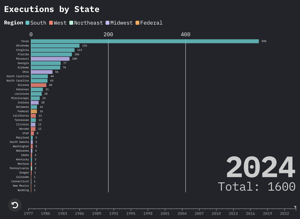
News
Sep 19, 2024
Hispanic Heritage Month: Leonel Herrera and the “Agony of Doubt”
In honor of Hispanic Heritage Month (Sept. 15-Oct. 15), DPI is posting a weekly feature on Hispanic or Latino/a people who have had a significant impact on the death penalty in the U.S. The first post in this series tells the story of Leonel Herrera, the defendant at the center of a key Supreme Court case on innocence. In 1993, the Supreme Court generated widespread outrage when it ruled in Herrera v. Collins that new evidence of actual innocence does not entitle a death-sentenced prisoner to…
Read More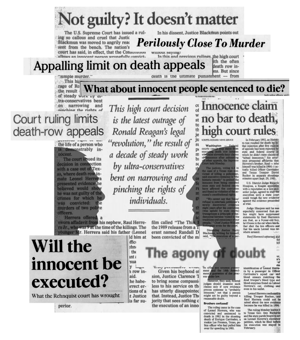
News
Sep 11, 2024
See What Utah Spent on Its First Execution in 14 Years
Taberon Honie was an American Indian from the Hopi-Tewa community whose life was marked by poverty, substance abuse, and generational trauma. His parents were forced to attend Indian boarding schools, which were notoriously abusive and designed to strip Indian children of their cultural heritage. They later suffered from alcoholism and neglected Mr. Honie and his siblings. Mr. Honie first tried alcohol at age 5 and progressed to heroin and meth by the time he was a teenager.
Read More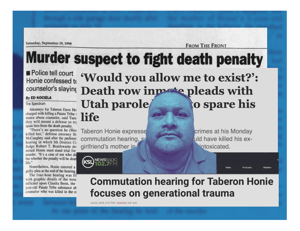
News
Aug 21, 2024
City in Oklahoma Agrees to Pay $7.15 Million to Glynn Simmons, Exonerated After 48 Years in Prison
On August 14, the Associated Press reported that the city of Edmond, Oklahoma agreed to pay $7.15 million to Glynn Simmons, the longest-incarcerated innocent person in the United States. Mr. Simmons spent 48 years in prison, including two years on death row, before he was released last July. Mr. Simmons was officially exonerated by a judge in December 2023 and received $175,000 from the state of Oklahoma, the maximum amount allowed for wrongful convictions under state law. Officials have known…
Read More
News
Aug 13, 2024
New Analysis: Innocent Death-Sentenced Prisoners Wait Longer than Ever for Exoneration
On July 1, after waiting 41 years for his name to be cleared, Larry Roberts became the 200th person exonerated from death row. A new Death Penalty Information Center analysis finds that Mr. Roberts’ experience illustrates a troubling trend: for innocent death-sentenced prisoners, the length of time between wrongful conviction and exoneration is increasing. In the past twenty years, the average length of time before exoneration has roughly tripled, and 2024 has the highest-ever average wait…
Read More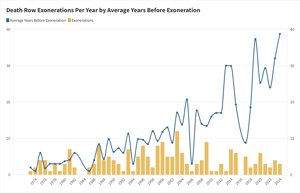
News
Jul 26, 2024
Analysis: Why Executive Officials Grant Clemency
In a new analysis, the Death Penalty Information Center has found that executive officials most often cite disproportionate sentencing, possible innocence, and mitigation factors such as intellectual disability or mental illness as reasons to grant clemency in capital cases. Ineffective defense lawyering and official misconduct are also common factors in clemency grants. While present in fewer cases, support for clemency from the victim’s family or a decisionmaker in the original trial, such as…
Read More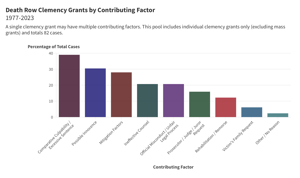
News
Jun 13, 2024
By Reversing Grants of Relief, Supreme Court Signals Lower Courts to Apply Stricter Approach to Review of Ineffective Assistance of Counsel Claims
In the past two weeks, the Supreme Court overturned grants of relief for two death-sentenced prisoners. In both cases, lower courts had found they received ineffective assistance of counsel at trial. The Court’s rulings are in line with its other decisions in death penalty cases restricting appeals for death-sentenced prisoners and extolling the importance of “finality” over merits-based review. Under Strickland v. Washington (1984), an attorney is ineffective when 1) his performance is…
Read More
News
May 29, 2024
Recent Decisions in Capital Cases Reflect Growing Understanding of How Serious Mental Illness Affects Behavior and Culpability
May is Mental Health Awareness Month, and the impact of mental illness is keenly felt on death row: at least two in five people executed have a documented serious mental illness, and research suggests that many more death-sentenced prisoners are undiagnosed. A national majority, 60% of Americans, opposes executing people with serious mental illness. In the past two decades, science and medicine have contributed to a much better understanding of how serious mental illness, which refers to…
Read More
News
May 15, 2024
“I Just Wanted…to Stay Alive”: Who was William Henry Furman, the Prisoner at the Center of a Historic Legal Decision?
Furman v. Georgia was one of the most monumental cases in American legal history: the 1972 decision overturned every state death penalty statute in the country and spared the lives of nearly six hundred people sentenced to die. But the lead petitioner, William Henry Furman, was little aware of his impact. Poor, Black, mentally ill, and physically and intellectually disabled, he was sentenced to death for the killing of a homeowner during a botched robbery, which he maintains was accidental.
Read More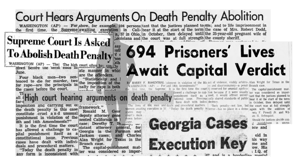
News
Apr 24, 2024
Supreme Court Roundup: Justices Hear Oral Arguments on Ineffective Assistance of Counsel, Cruel and Unusual Punishment; Defend Positions on Stays
On April 17, the Supreme Court heard oral arguments in Thornell v. Jones, a case implicating the test for ineffective assistance of counsel — and the first and only oral argument in a death penalty case scheduled this term. Arizona appealed the Ninth Circuit’s decision vacating the death sentence of Danny Lee Jones, which found that Mr. Jones was prejudiced by his attorney’s failure to present key mitigating evidence as to Mr. Jones’ brain damage, childhood physical and sexual abuse, and…
Read More