Entries by Leah Roemer
News
Jul 26, 2024
Analysis: Why Executive Officials Grant Clemency
In a new analysis, the Death Penalty Information Center has found that executive officials most often cite disproportionate sentencing, possible innocence, and mitigation factors such as intellectual disability or mental illness as reasons to grant clemency in capital cases. Ineffective defense lawyering and official misconduct are also common factors in clemency grants. While present in fewer cases, support for clemency from the victim’s family or a decisionmaker in the original trial, such as…
Read More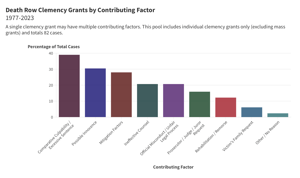
News
Jun 13, 2024
By Reversing Grants of Relief, Supreme Court Signals Lower Courts to Apply Stricter Approach to Review of Ineffective Assistance of Counsel Claims
In the past two weeks, the Supreme Court overturned grants of relief for two death-sentenced prisoners. In both cases, lower courts had found they received ineffective assistance of counsel at trial. The Court’s rulings are in line with its other decisions in death penalty cases restricting appeals for death-sentenced prisoners and extolling the importance of “finality” over merits-based review. Under Strickland v. Washington (1984), an attorney is ineffective when 1) his performance is…
Read More
News
May 29, 2024
Recent Decisions in Capital Cases Reflect Growing Understanding of How Serious Mental Illness Affects Behavior and Culpability
May is Mental Health Awareness Month, and the impact of mental illness is keenly felt on death row: at least two in five people executed have a documented serious mental illness, and research suggests that many more death-sentenced prisoners are undiagnosed. A national majority, 60% of Americans, opposes executing people with serious mental illness. In the past two decades, science and medicine have contributed to a much better understanding of how serious mental illness, which refers to…
Read More
News
May 15, 2024
“I Just Wanted…to Stay Alive”: Who was William Henry Furman, the Prisoner at the Center of a Historic Legal Decision?
Furman v. Georgia was one of the most monumental cases in American legal history: the 1972 decision overturned every state death penalty statute in the country and spared the lives of nearly six hundred people sentenced to die. But the lead petitioner, William Henry Furman, was little aware of his impact. Poor, Black, mentally ill, and physically and intellectually disabled, he was sentenced to death for the killing of a homeowner during a botched robbery, which he maintains was accidental.
Read More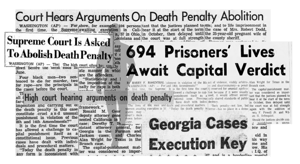
News
Apr 24, 2024
Supreme Court Roundup: Justices Hear Oral Arguments on Ineffective Assistance of Counsel, Cruel and Unusual Punishment; Defend Positions on Stays
On April 17, the Supreme Court heard oral arguments in Thornell v. Jones, a case implicating the test for ineffective assistance of counsel — and the first and only oral argument in a death penalty case scheduled this term. Arizona appealed the Ninth Circuit’s decision vacating the death sentence of Danny Lee Jones, which found that Mr. Jones was prejudiced by his attorney’s failure to present key mitigating evidence as to Mr. Jones’ brain damage, childhood physical and sexual abuse, and…
Read More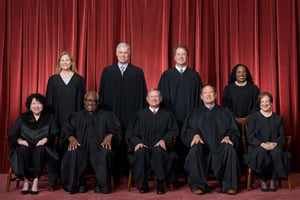
News
Apr 17, 2024
Justices Sotomayor and Jackson Issue Dissents Over Supreme Court’s Refusal to Review Two Capital Misconduct Cases
On Monday, April 15, Justices Ketanji Brown Jackson and Sonia Sotomayor issued dissents over the Supreme Court’s refusal to hear the petitions of two death-sentenced prisoners who alleged official misconduct in their cases. In the first case, Dillion Compton alleged that Texas prosecutors illegally used thirteen of their fifteen peremptory strikes to remove female prospective jurors because of their gender. In the second case, Kurt Michaels argued that California police officers unlawfully…
Read More
News
Apr 02, 2024
Following Stay of Execution, Oklahoma Court Finds Death-Sentenced Prisoner Incompetent to Be Executed Due to Serious Mental Illness
On March 28, Judge Michael Hogan of Pittsburg County ruled that James Ryder is incompetent to be executed after a hearing where experts established Mr. Ryder’s serious mental illness. “[We are] relieved the court reached the only logical conclusion… James has no rational understanding of why Oklahoma plans to execute him,” said Mr. Ryder’s attorney, Emma Rolls, following the decision. “James has suffered from schizophrenia for nearly 40 years and has little connection to objective reality.” Mr.
Read More
News
Mar 07, 2024
Georgia Sets March 20 Execution Date for Willie Pye Despite Strong Evidence of Intellectual Disability and Previous Finding of Ineffective Representation by Attorney with History of Racial Bias
The Georgia Attorney General has announced that Willie James Pye, who previously had his death sentence reversed due to his attorney’s failure to investigate his background, only to see the death sentence reinstated on appeal, is set to be executed on March 20. Mr. Pye’s court-appointed trial attorney, Johnny Mostiler, has been accused of ineffective representation or racial bias in at least four cases involving Black defendants and reportedly called one of his own clients a “little n****r.”
Read More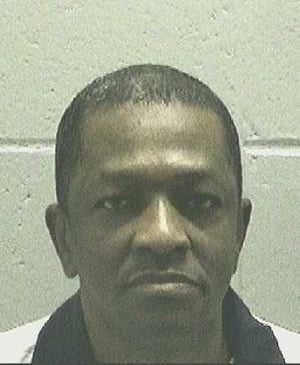
News
Feb 06, 2024
South Carolina Supreme Court Hears Arguments on Constitutionality of Electrocution and Firing Squad, Considers Scope of Secrecy Law
On February 6, 2024, the South Carolina Supreme Court heard oral arguments in Owens v. Stirling, a case in which death-sentenced prisoners challenged the state’s electrocution and firing squad execution methods as unconstitutional. A South Carolina trial court had previously held an extensive evidentiary hearing and issued an injunction against use of those methods based on the state’s constitutional prohibition against “cruel,” “unusual,” or “corporal” punishments. For almost 90 minutes the…
Read More
News
Feb 02, 2024
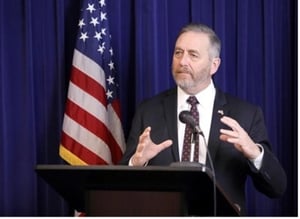
Ohio Officials Divided on Death Penalty as Attorney General Pushes New Bill to Legalize Nitrogen Hypoxia for Executions
On Tuesday, January 30, Ohio Attorney General Dave Yost announced new legislation to authorize the use of nitrogen gas in executions in the state. Joined by several Republican state representatives and Louis Tobin of the Ohio Prosecuting Attorneys Association, AG Yost said that he is seeking to “kickstart” Ohio’s death penalty after a six-year pause in executions due to difficulties obtaining lethal injection drugs. “The status quo is unacceptable,” he said. According to the text of the…
Read More