
Idaho law empowers state courts to review and block certain government actions, such as those imposed without notice or public input, as well as policy changes that are “arbitrary, capricious, or an abuse of discretion.” However, a bill signed March 31 by Gov. Brad Little (R) exempts execution procedures from these oversight requirements. If the prison director decides to alter the execution protocol, death-sentenced prisoners will only be able to challenge those changes on constitutional grounds—likely mooting a lawsuit the Idaho Supreme Court was set to review this year. The bill also expands the state’s execution secrecy apparatus by extending anonymity to members of the firing squad and “any person or entity that provides technical assistance during the execution process.”
The new bill had stalled earlier in the legislative session and was reintroduced in March, when it passed both houses with few objections. Senate Minority Leader Melissa Wintrow, who opposed the bill, “questioned why the state would limit public and legislative input on procedures, particularly for something as significant as executions.” Current IDOC director Bree Derrick testified to a committee of lawmakers that the bill was about “not wanting folks to weigh in — you know, the public or others — to weigh in on rulemaking related to execution procedures, specifically.”
The new law states that execution procedures are not subject to judicial review under Idaho’s Administrative Procedure Act (APA). First passed 80 years ago at the federal level and subsequently adopted with slight variations by all fifty states, the APA lays out the standards government agencies must follow when adopting new rules to ensure public participation, transparency of decision-making, and accountability for decisionmakers. Over the years, state and federal legislators have carved out various exceptions to the APA, and courts around the country are often tasked with deciding whether certain government actions qualify as administrative rulemaking.
Idaho already exempted its Board of Correction, which oversees the Department of Corrections (IDOC) and selects its director, from APA review. However, state officials and advocates had disagreed over whether the IDOC director and his activities — including setting execution procedures — are also exempt. The new law confirms they are. That means the corrections director can now make changes to the state’s execution protocol with no public notice or judicial oversight, short of constitutional challenges (such as arguing that the new protocol constitutes cruel and unusual punishment).
“APA review sets only a minimal standard for government agencies; it simply asks whether a policy is reasonable and not arbitrary,” said the ACLU of Idaho. “Eliminating even this modest oversight is particularly troubling giving IDOC’s recent record.”
After the state’s last lethal injection execution in 2012, officials struggled to secure execution drugs, resorting to dubious tactics including all-cash purchases in parking lots and roadside exchanges. Gov. Little signed a bill in 2022 to shield information about the drugs it used, then in 2023 added the firing squad as an execution method. In February 2024, the state botched its first attempted lethal injection in over a decade; 73-year-old chronically ill prisoner Thomas Creech was returned to his cell after the state unsuccessfully tried for an hour to set an IV line. The IDOC director then modified the lethal injection protocol to allow staff to set a central line, a more invasive procedure involving major rather than peripheral veins.
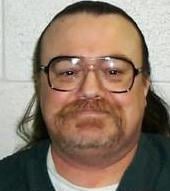
Gerald Pizzuto
Critics argue that the new bill was designed to moot a lawsuit from prisoner Gerald Pizzuto attacking that protocol change. Mr. Pizzuto, who is terminally ill with bladder cancer, has been on death row for 40 years and faced five execution dates. He argued that the director violated the APA by arbitrarily changing the protocol without meeting public accountability requirements. He appealed a state judge’s dismissal of the suit to the Idaho Supreme Court, which had ordered briefing in the case this year. That court ruled against Mr. Pizzuto in a similar challenge in 2022. Mr. Pizzuto was also a party to a lawsuit that revealed details of the state’s lethal injection purchases.
The new law will take effect on July 1 this year, the same day that the firing squad will officially become Idaho’s primary execution method—the only state with that distinction. Officials are spending close to $1 million to convert the execution chamber in preparation, after $200,000 of pentobarbital expired in the wake of Mr. Creech’s botched lethal injection.
The law also includes what could be a significant expansion of the state’s shroud of secrecy over executions. Its proponents characterized the legislation as a “cleanup bill” — merely applying the same anonymity granted to lethal injection team members to the firing squad. However, the law adds new language concealing the identity of “any person or entity that provides technical assistance during the execution process.” Executions typically involve substantial logistical planning, from maintaining lines of contact with courts and the governor’s office to establishing roadblocks and designated areas for protestors. The law does not clarify the scope of “technical assistance.”
- Roemer, L. (2026, April 8). New Idaho Law Shields Execution Procedures from Judicial Review and Public Scrutiny. Death Penalty Information Center. Retrieved October 10, 2026, from https://deathpenaltyinfo.org/new-idaho-law-shields-execution-procedures-from-judicial-review-and-public-scrutiny
- Roemer, Leah. “New Idaho Law Shields Execution Procedures from Judicial Review and Public Scrutiny.” Death Penalty Information Center. April 8, 2026. Accessed October 10, 2026. https://deathpenaltyinfo.org/new-idaho-law-shields-execution-procedures-from-judicial-review-and-public-scrutiny.
- Roemer, Leah. “New Idaho Law Shields Execution Procedures from Judicial Review and Public Scrutiny.” Death Penalty Information Center, 8 Apr. 2026, https://deathpenaltyinfo.org/new-idaho-law-shields-execution-procedures-from-judicial-review-and-public-scrutiny. Accessed 10 Oct. 2026.
House Bill 803, Idaho Legislature (2026); House Bill 525, Idaho Legislature (2026); Kevin Fixler, Judges could no longer review Idaho prison execution decisions under passed bill, Idaho Statesman, Mar. 30, 2026; Minutes, Idaho Senate Judiciary & Rules Committee, Mar. 23, 2026; Kevin Fixler, Court review of Idaho execution procedures would end under proposed law, Idaho Statesman, Mar. 11, 2026; 2026 – HB 803 – Removing Court Review of Idaho Execution Procedures, ACLU of Idaho; Erik Ortiz and Abigail Brooks, An Idaho warden acquired hard to get lethal injection drugs from an undisclosed supplier on a rural road, NBC, Apr. 4, 2025; Kevin Fixler, Idaho prison system revises execution policy after failed lethal injection in February, Idaho Statesman, Oct. 15, 2024; Kevin Fixler, Cash buys, private flights, changing rules: How Idaho hides from execution oversight, Idaho Capital Sun, Jan. 16, 2022.


