Publications & Testimony
Testimony and Statements on the Death Penalty
FROM DPIC
For testimony by former Executive Director Robert Dunham and former Executive Director Richard C. Dieter, please visit our page DPIC Testimony.
FROM RELIGIOUS LEADERS AND ORGANIZATIONS
- News Brief: Pope Francis Calls for Prayer to Abolish the Death Penalty (September 1, 2022)
- Jewish Congregation Renews Request for Department of Justice to Drop Death Penalty in Tree of Life Synagogue Killings (June 24, 2021)
- Orthodox Church Patriarch Calls Death Penalty Incompatible with Christian Beliefs (October 20, 2020)
- Presbyterian Church (U.S.A.) — Statement on the Federal Death Penalty (August 5, 2019)
- Louisiana Christian Faith Leaders Call for State to Abolish Death Penalty (April 25, 2019)
- Pittsburgh Rabbi’s Wife Opposes Death Penalty for Tree of Life Synagogue Killings (March 18, 2019)
- Orthodox Jewish Organization Calls for an End to Capital Punishment in the U.S. | Death Penalty Information Center (February 17, 2016)
- Baptist Theologian Says Death Penalty Does Not Fit With Christian Theology (March 8, 2016)
- Civil and Human Rights: Death Penalty — Church & Society, The United Methodist Church
- Religious Views: Over 150 Catholic Theologians Call for Repeal of the Death Penalty (September 27, 2011)
- Power Over Life and Death — The Power to Save a Life (January 15, 2005)
- Responsibility, Rehabilitation, and Restoration: A Catholic Perspective on Crime and Criminal Justice (November 2000)
- The Challenge of Holiness: A Sermon on the Death Penalty (January 10, 2000)
- General Assembly of the Texas Conference of Churches — Resolution Opposing the Death Penalty (February 24, 1998)
- Statement by Catholic Bishops of Texas on Capital Punishment (October 20, 1997)
- Catholic Church Expresses Strong Opposition to Capital Punishment in Catechism (September 9, 1997)
- Catholic Bishops of Iowa Issue Statement on Death Penalty (February 4, 1998)
- To End the Death Penalty: A Report of the National Jewish/Catholic Consultation
- Transcript of Dr. Pat Robertson’s Speech on the Role of Religion and the Death Penalty at The College of William and Mary
- Collection of Official Catholic Statements on the Death Penalty (1980)
FROM THE INTERNATIONAL COMMUNITY
- UN experts call for universal abolition of the death penalty | OHCHR (October 9, 2023)
- Zambia Becomes 25th Sub-Saharan African Nation to Abolish Death Penalty (December 23, 2022)
- Belgium Wants a World Without the Death Penalty (October 20, 2022)
- As France Prepares to Assume Presidency of European Union, Emmanuel Macron Announces Initiative for Worldwide Abolition of Death Penalty (October 11, 2021)
- U.N. Secretary-General, European Union Ambassador Call for Abolition of “Barbaric” Death Penalty (October 11, 2017)
- European Union Calls for Abolition of Capital Punishment as World Coalition Hosts International Death Penalty Conference (June 27, 2017)
- U.N. Investigator Talks About the Future of Solitary and the Death Penalty (November 7, 2016)
- World Congress Against the Death Penalty Renews Call for Global Moratorium, Pope Sends Message of Support (June 27, 2016)
- Declaration by the Presidency on behalf of the European Union on the 400th execution in Texas from the Council of the European Union (August 21, 2007)
- Resolution Supporting Worldwide Moratorium on Executions from the United Nations Commission on Human Rights (April 1999)
- Mary Robinson, U.N. High Commissioner for Human Rights — Message to the Press Conference organized by the Death Penalty Information Center for the release of the report, “International Perspectives on the Death Penalty” (October 12, 1999)
- Status of the International Covenants on Human Rights from the United Nations Commission on Human Rights (April 1998)
FROM ADVOCACY GROUPS
- Advocacy Group Tells Supreme Court that Negative Stereotypes Distort Perception that Latinos in Death-Penalty Cases Pose Future Danger to Society (April 15, 2022)
- Disability Rights Groups, Legal Experts, and Conservative Advocates Urge Supreme Court to Strike Down Georgia’s Uniquely Harsh Proof Requirements in Death-Penalty Intellectual Disabilities Cases (January 11, 2022)
- NAACP Reaffirms Its Support of Abolishing the Death Penalty (2022)
- More Than 80 Civil Rights and Advocacy Organizations Urge President Biden to End Federal Executions | Death Penalty Information Center (February 9, 2021)
- More Than 250 Conservative Leaders Join Call to End Death Penalty (October 29, 2019)
- National Alliance on Mental Illness: The Death Penalty
- Florida League of Women Voters Calls for Halt to Executions (May 28, 2007)
- Victims Organizations Issue Joint Statement for National Victims’ Rights Week (April 19, 2007)
FROM JUDGES, LEGISLATORS, AND OTHER ORGANIZATIONS
- Republican-led Oklahoma committee considers pause on executions amid death case scrutiny (October 5, 2023)
- Former Pro-Death Penalty District Attorney Explains Why He Now Supports Abolition, and Fears Political Promises to Expand the Use of the Death Penalty (August 20, 2023)
- Pressley, Durbin Reintroduce Bill to End the Federal Death Penalty (July 13, 2023)
- The Lancet Editorial: Physician Involvement in Executions Violates Medical Ethics | Death Penalty Information Center (May 20, 2023)
- APA calls for extending ineligibility for the death penalty to adolescent offenders younger than age 21 (August 4, 2022)
- Why some Republicans are turning against the death penalty | Ron Ferguson | Ohio House of Representatives (March 8, 2022)
- Eight years on Texas’ highest criminal court turned Elsa Alcala into a death penalty skeptic. How will the court change without her? (January 26, 2019)
- AMA to Supreme Court: Doctor participation in executions unethical (August 22, 2018)
- Former Governor Bill Richardson: Death Penalty Is Bad for Business, Out of Step With World’s Views (June 16, 2017)
- Capital Punishment and Nurses’ Participation in Capital Punishment (2016)
- Former Ohio Attorney General Jim Petro Says Death Penalty Unfixable, “Not Worth It Any More” (September 12, 2016)
- Resolution Supporting Repeal of the Death Penalty, National Hispanic Caucus of State Legislators (August 11, 2016)
- Retired Police Captain Says Repealing Death Penalty Is “Smart on Crime” (November 24, 2014)
- Resolution Supporting Abolition of the Death Penalty, Natl. Assoc. of Black Psychologists (2012)
- The Road to Justice and Peace by New Jersey State Senator Raymond Lesniak (February 1, 2009)
- Statement On The Federal Death Penalty System by Senator Feingold (June 7, 2001)
- Statement on the Need for a Federal Moratorium on the Death Penalty Senator Feingold (October 29, 2000)
- Death Penalty: The Torah and Today (August 23, 2000)
- Press Release for Senator Russ Feingold’s Introduction of Senate’s First Death Penalty Moratorium Bill (April 20, 2000)
- Amnesty International Southern Regional Conference: Orlando, Florida Remarks by Former Florida Chief Justice Gerald Kogan (October 23, 1999)
- American Bar Association Resolution on the Death Penalty (February 3, 1997)
FROM MURDER VICTIMS’ FAMILY MEMBERS
Items: 91 — 100
May 05, 2026
New Analysis: In Seeking Firing Squad, Electrocution, and Nitrogen Gas Executions, DOJ Misrepresents American History and Law
On April 24, the U.S. Department of Justice (DOJ) released a report proposing an expansion of the federal death penalty, including adding firing squad, electrocution, and lethal gas as execution methods. The DOJ characterizes the Biden Administration’s moratorium on executions as “an unprecedented break from the [DOJ]’s longstanding approach to the death penalty,” while casting this new effort as a return to form. The DOJ further claims that the three alternative methods of execution have a…
Read More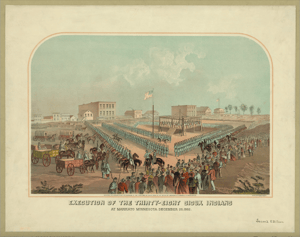
May 04, 2026
Counsel for Brenda Andrew Asks for Rehearing in Tenth Circuit Based on “Rampant Gender Bias”
On April 27, 2026, counsel for Oklahoma death-sentenced prisoner Brenda Andrew, the only woman on the state’s death row, filed a petition asking the U.S. Court of Appeals for the Tenth Circuit to reconsider whether her constitutional right to a fair trial was violated by the prosecution’s use of “rampant gender bias” during her trial. In January 2025, the U.S. Supreme Court, in a per curiam decision, remanded the case for consideration of whether the state’s gendered evidence was so unduly…
Read More
Apr 30, 2026
“The Miscarriage of Batson v. Kentucky”: Forty Years Since the Landmark Ruling Challenging Racial Imbalance in Jury Selection Proceedings
Today, the state of Texas plans to execute James Broadnax, a Black man who challenged the state for its discriminatory use of peremptory strikes to exclude every Black juror at his trial, in violation of the U.S. Supreme Court’s landmark decision in Batson v. Kentucky (1986). Barring a last-minute stay, Mr. Broadnax’s execution will coincide with the 40th anniversary of Batson that put race at the forefront of the jury selection process. Racial bias in jury selection has been a feature of…
Read More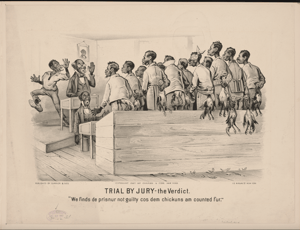
Apr 29, 2026
DPI Podcast 12:01 The Death Penalty in Context: Sherrerd Hartness on Victims’ Needs, Trauma, and the Limits of the Death Penalty
In the April 2026 episode of 12:01: The Death Penalty in Context, DPI Managing Director Anne Holsinger speaks with Sherrerd Hartness, a writer and speaker who advocates for victims’ families and co-victims of murder. In 1977, Ms. Hartness’s sister, Carlotta, was killed — an experience that shaped her understanding of the long-term emotional impact of violent crime on families and communities. Her work now focuses on raising awareness about the needs of co-victims and the emotional challenges they…
Read More
Apr 28, 2026
Pope Leo XIV Calls Death Penalty “Inadmissible,” Lends Support to U.S. Abolition Efforts
On April 24, 2026, Pope Leo XIV delivered a video message offering his support and blessings to those working “for the abolition of the death penalty in the United States of America and around the world.” His message was shared at DePaul University in the Pope’s home city of Chicago, for an event titled “A Beacon of Light in Darkness,” marking the 15th anniversary of Illinois’ abolition of the death penalty. Among those participating in the event were noted author and activist Sister Helen…
Read More
Apr 27, 2026
Department of Justice Releases Memo Calling for Expansion of Federal Death Penalty and New Methods
On April 24, 2026, the Department of Justice’s Office of Legal Policy released a detailed report, Restoring and Strengthening the Federal Death Penalty, calling on the Federal Bureau of Prisons (BOP) to reinstate use of a single-drug (pentobarbital) execution protocol, and urging Congress to enact sweeping legislative changes that would expand the reach and speed of the federal death penalty. Alongside the release of the report, DOJ announced that it has directed BOP to immediately reinstate…
Read MoreApr 24, 2026
New Resource: Forensics, “Junk Science,” and the Death Penalty
Saturday April 25th is National DNA Day, marking the anniversary of the 1953 discovery of DNA’s double helix structure and the 2003 completion of the Human Genome Project. Today, the Death Penalty Information Center is pleased to present a new resource examining the controversial role of “junk science” in capital cases. When DNA testing became one of the most rigorously validated tools in forensic science, its development also prompted greater scrutiny of other forensic techniques. Many…
Read More
Apr 23, 2026
Singapore Executes Man for Cannabis Importation Amid Rising Drug-Related Executions
On April 16, 2026, Singapore executed 46-year-old Omar bin Yacob Bamadhaj for importing 1,009 grams of cannabis, an offense that carries a mandatory death sentence under the country’s Misuse of Drugs Act, which imposes capital punishment for importing more than 500 grams. His execution marks the eighth carried out for drug-related offenses in 2026, already exceeding half of the fifteen drug-related executions recorded in all of 2025. Although the court determined that Mr. Yacob Bamadhaj’s…
Read MoreApr 21, 2026
What to Know: Intellectual Disability & the Death Penalty
DPI’s “What to Know” series examines capital punishment from multiple angles, one topic at a time. Each installment provides essential facts and data on specific aspects of the death penalty. Why it Matters: In 2002, the United States Supreme Court held that executing individuals with intellectual disability is unconstitutional. (Atkins v. Virgina). Before that decision, dozens of people with intellectual disabilities were legally executed. In Atkins, the Supreme Court explained that people…
Read More
Apr 20, 2026
Texas Death Sentence Vacated for Mentally Ill and Intellectually Disabled Man After Half-Century on Death Row — And Nearly 40 Years Without a Lawyer
By the time 21-year-old Clarence Curtis Jordan shot a man during a grocery store burglary in 1977, he had been struggling for most of his life with hallucinations and intellectual deficits. His IQ score placed him in the bottom 0.5% of the population. He identified the president as “John Hill” and said he often saw “old, weird, burnt-up looking people” watching him. The Texas Court of Criminal Appeals (TCCA) found him incompetent to be executed in 1988. But Mr. Jordan then fell through the…
Read More