Publications & Testimony
Testimony and Statements on the Death Penalty
FROM DPIC
For testimony by former Executive Director Robert Dunham and former Executive Director Richard C. Dieter, please visit our page DPIC Testimony.
FROM RELIGIOUS LEADERS AND ORGANIZATIONS
- News Brief: Pope Francis Calls for Prayer to Abolish the Death Penalty (September 1, 2022)
- Jewish Congregation Renews Request for Department of Justice to Drop Death Penalty in Tree of Life Synagogue Killings (June 24, 2021)
- Orthodox Church Patriarch Calls Death Penalty Incompatible with Christian Beliefs (October 20, 2020)
- Presbyterian Church (U.S.A.) — Statement on the Federal Death Penalty (August 5, 2019)
- Louisiana Christian Faith Leaders Call for State to Abolish Death Penalty (April 25, 2019)
- Pittsburgh Rabbi’s Wife Opposes Death Penalty for Tree of Life Synagogue Killings (March 18, 2019)
- Orthodox Jewish Organization Calls for an End to Capital Punishment in the U.S. | Death Penalty Information Center (February 17, 2016)
- Baptist Theologian Says Death Penalty Does Not Fit With Christian Theology (March 8, 2016)
- Civil and Human Rights: Death Penalty — Church & Society, The United Methodist Church
- Religious Views: Over 150 Catholic Theologians Call for Repeal of the Death Penalty (September 27, 2011)
- Power Over Life and Death — The Power to Save a Life (January 15, 2005)
- Responsibility, Rehabilitation, and Restoration: A Catholic Perspective on Crime and Criminal Justice (November 2000)
- The Challenge of Holiness: A Sermon on the Death Penalty (January 10, 2000)
- General Assembly of the Texas Conference of Churches — Resolution Opposing the Death Penalty (February 24, 1998)
- Statement by Catholic Bishops of Texas on Capital Punishment (October 20, 1997)
- Catholic Church Expresses Strong Opposition to Capital Punishment in Catechism (September 9, 1997)
- Catholic Bishops of Iowa Issue Statement on Death Penalty (February 4, 1998)
- To End the Death Penalty: A Report of the National Jewish/Catholic Consultation
- Transcript of Dr. Pat Robertson’s Speech on the Role of Religion and the Death Penalty at The College of William and Mary
- Collection of Official Catholic Statements on the Death Penalty (1980)
FROM THE INTERNATIONAL COMMUNITY
- UN experts call for universal abolition of the death penalty | OHCHR (October 9, 2023)
- Zambia Becomes 25th Sub-Saharan African Nation to Abolish Death Penalty (December 23, 2022)
- Belgium Wants a World Without the Death Penalty (October 20, 2022)
- As France Prepares to Assume Presidency of European Union, Emmanuel Macron Announces Initiative for Worldwide Abolition of Death Penalty (October 11, 2021)
- U.N. Secretary-General, European Union Ambassador Call for Abolition of “Barbaric” Death Penalty (October 11, 2017)
- European Union Calls for Abolition of Capital Punishment as World Coalition Hosts International Death Penalty Conference (June 27, 2017)
- U.N. Investigator Talks About the Future of Solitary and the Death Penalty (November 7, 2016)
- World Congress Against the Death Penalty Renews Call for Global Moratorium, Pope Sends Message of Support (June 27, 2016)
- Declaration by the Presidency on behalf of the European Union on the 400th execution in Texas from the Council of the European Union (August 21, 2007)
- Resolution Supporting Worldwide Moratorium on Executions from the United Nations Commission on Human Rights (April 1999)
- Mary Robinson, U.N. High Commissioner for Human Rights — Message to the Press Conference organized by the Death Penalty Information Center for the release of the report, “International Perspectives on the Death Penalty” (October 12, 1999)
- Status of the International Covenants on Human Rights from the United Nations Commission on Human Rights (April 1998)
FROM ADVOCACY GROUPS
- Advocacy Group Tells Supreme Court that Negative Stereotypes Distort Perception that Latinos in Death-Penalty Cases Pose Future Danger to Society (April 15, 2022)
- Disability Rights Groups, Legal Experts, and Conservative Advocates Urge Supreme Court to Strike Down Georgia’s Uniquely Harsh Proof Requirements in Death-Penalty Intellectual Disabilities Cases (January 11, 2022)
- NAACP Reaffirms Its Support of Abolishing the Death Penalty (2022)
- More Than 80 Civil Rights and Advocacy Organizations Urge President Biden to End Federal Executions | Death Penalty Information Center (February 9, 2021)
- More Than 250 Conservative Leaders Join Call to End Death Penalty (October 29, 2019)
- National Alliance on Mental Illness: The Death Penalty
- Florida League of Women Voters Calls for Halt to Executions (May 28, 2007)
- Victims Organizations Issue Joint Statement for National Victims’ Rights Week (April 19, 2007)
FROM JUDGES, LEGISLATORS, AND OTHER ORGANIZATIONS
- Republican-led Oklahoma committee considers pause on executions amid death case scrutiny (October 5, 2023)
- Former Pro-Death Penalty District Attorney Explains Why He Now Supports Abolition, and Fears Political Promises to Expand the Use of the Death Penalty (August 20, 2023)
- Pressley, Durbin Reintroduce Bill to End the Federal Death Penalty (July 13, 2023)
- The Lancet Editorial: Physician Involvement in Executions Violates Medical Ethics | Death Penalty Information Center (May 20, 2023)
- APA calls for extending ineligibility for the death penalty to adolescent offenders younger than age 21 (August 4, 2022)
- Why some Republicans are turning against the death penalty | Ron Ferguson | Ohio House of Representatives (March 8, 2022)
- Eight years on Texas’ highest criminal court turned Elsa Alcala into a death penalty skeptic. How will the court change without her? (January 26, 2019)
- AMA to Supreme Court: Doctor participation in executions unethical (August 22, 2018)
- Former Governor Bill Richardson: Death Penalty Is Bad for Business, Out of Step With World’s Views (June 16, 2017)
- Capital Punishment and Nurses’ Participation in Capital Punishment (2016)
- Former Ohio Attorney General Jim Petro Says Death Penalty Unfixable, “Not Worth It Any More” (September 12, 2016)
- Resolution Supporting Repeal of the Death Penalty, National Hispanic Caucus of State Legislators (August 11, 2016)
- Retired Police Captain Says Repealing Death Penalty Is “Smart on Crime” (November 24, 2014)
- Resolution Supporting Abolition of the Death Penalty, Natl. Assoc. of Black Psychologists (2012)
- The Road to Justice and Peace by New Jersey State Senator Raymond Lesniak (February 1, 2009)
- Statement On The Federal Death Penalty System by Senator Feingold (June 7, 2001)
- Statement on the Need for a Federal Moratorium on the Death Penalty Senator Feingold (October 29, 2000)
- Death Penalty: The Torah and Today (August 23, 2000)
- Press Release for Senator Russ Feingold’s Introduction of Senate’s First Death Penalty Moratorium Bill (April 20, 2000)
- Amnesty International Southern Regional Conference: Orlando, Florida Remarks by Former Florida Chief Justice Gerald Kogan (October 23, 1999)
- American Bar Association Resolution on the Death Penalty (February 3, 1997)
FROM MURDER VICTIMS’ FAMILY MEMBERS
Items: 2111 — 2120
Nov 12, 2018
A Veterans Day Review: Recent Cases Highlight Concerns About Veterans and the Death Penalty
As Americans become increasingly aware of the role of combat trauma in the development of Post-Traumatic Stress Disorder (PTSD) and other mental health disorders, the shift in public perceptions towards veterans suffering from these disorders has played out in the courts in recent death penalty cases. In 2018, at least four military veterans facing death sentences have instead been sentenced to life in prison, and another two veterans won relief in their death-penalty cases. One military…
Read More
Nov 09, 2018
Florida Supreme Court Reverses Death Sentence That Flouted Legislative Amendments
The Florida Supreme Court has overturned the death sentence imposed on Eriese Tisdale (pictured) in 2016 in violation of a Florida law that had been enacted in an attempt to fix constitutional flaws in the state’s death-penalty statute. The state court ruled on November 8, 2018, that St. Lucie County Circuit Judge Dan Vaughn’s decision to sentence Tisdale to death after three members of the jury had voted to spare his life violated both a Florida law that permitted a death sentence only if at…
Read More
Nov 08, 2018
Supreme Court Hears Argument in Missouri Lethal-Injection Case
The U.S. Supreme Court heard oral argument on November 6, 2018 in Bucklew v. Precythe on whether the use of lethal injection to execute a Missouri prisoner with a rare medical condition would cause him unnecessary and excruciating pain and suffering and whether he was constitutionally required to provide the state with a different way for it to kill him. Media reports suggested that the Court was sharply divided on the issue with newly appointed Justice Brett Kavanaugh likely to provide the…
Read More
Nov 07, 2018
2018 Midterm Elections: Governors in Moratorium States Re-Elected, Controversial California D.A. Ousted
The results of the November 6, 2018 mid-term elections reflected America’s deeply divided views on capital punishment, as voters elected governors who pledged not to resume executions in the three states with death-penalty moratoriums, defeated an incumbent who tried to bring back capital punishment in a non-death-penalty state (click on graphic to enlarge), and re-elected governors who had vetoed legislation abolishing capital punishment in two other states. Continuing a national trend, voters…
Read More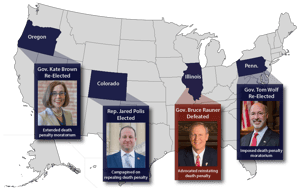
Nov 07, 2018
Clemente Aguirre Exonerated From Florida’s Death Row After DNA Implicates Prosecution Witness
With newly discovered confessions and DNA evidence pointing to the prosecution’s chief witness as the actual killer, prosecutors dropped all charges against Clemente Javier Aguirre (pictured, center, at his exoneration) in a Seminole County, Florida courtroom on November 5, 2018. The dismissal of the charges made Aguirre the 164th wrongfully convicted death-row prisoner to be exonerated in the United States since 1973 and the 28th in Florida. The announcement that prosecutors were dropping all…
Read More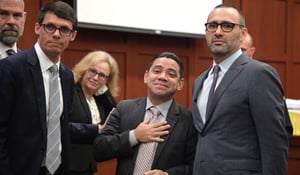
Nov 06, 2018
Supreme Court to Review Mississippi Death-Penalty Case in Which Prosecutor Systematically Excluded Black Jurors
The U.S. Supreme Court has agreed to review whether a prosecutor with a long history of racially discriminatory jury-selection practices unconstitutionally struck black jurors in the trial of Mississippi death-row prisoner Curtis Giovanni Flowers (pictured). On November 2, 2018, the Court granted certiorari in the Flowers’s case on the question of “[w]hether the Mississippi Supreme Court erred in how it applied Batson v. Kentucky,” the landmark 1986 Supreme Court decision barring the use of…
Read More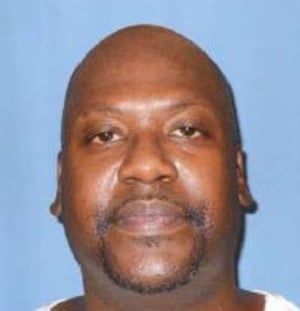
Nov 02, 2018
Arkansas Supreme Court Strikes Down State’s Death-Penalty Mental Competency Law
A divided Arkansas Supreme Court has struck down the state’s death-penalty mental competency law, holding that statutory provisions giving the state’s prison director exclusive authority to determine a death-row prisoner’s competency to be executed violate due process. The 4 – 3 rulings on November 1, 2018 were a victory for two mentally ill death-row prisoners, Bruce Ward (pictured, left) and Jack Greene (pictured, right), who had come within days of execution in 2017. The appeals court directed…
Read More
Nov 01, 2018
Indiana Defendant Files Broad Challenge Seeking to Strike Down State’s Death Penalty
Lawyers for Marcus Dansby (pictured), a defendant facing capital murder charges in Allen County, Indiana, have filed a motion asking the trial judge to declare Indiana’s death penalty unconstitutional and to bar prosecutors from seeking death in his case. In pleadings submitted to the court on October 30, 2018 in support of Dansby’s Motion to Declare Indiana’s Capital Sentencing Statute Unconstitutional, lawyers Michelle Kraus and Robert Gevers allege that systemic defects in the administration…
Read More
Nov 01, 2018
LWOP Post-Repeal
Since 2007, eleven states have abolished the death penalty; all utilize sentences of life without parole (LWOP). Those states have taken a variety of approaches in amending their laws regarding crimes that were death eligible. The chart below compares how the states address sentencing in those cases. Notes: New Mexico, Connecticut, Maryland, and New Hampshire abolished the death penalty prospectively but still had inmates on death row. Maryland’s Governor Martin O’Malley commuted the sentences…
Read MoreOct 31, 2018
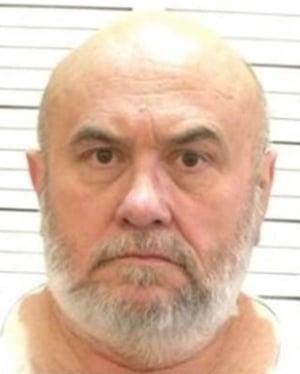
Attorneys Challenge Tennessee’s “Utterly Barbaric” Planned Use of Electric Chair
As Edmund Zagorski faces a November 1, 2018 execution in Tennessee, the courts have required him to choose between death by lethal injection and electrocution. His lawyers argue that both methods, as well as the forced choice between the two, are unconstitutional. In a lawsuit filed in federal district court on October 26, 2018 and appealed to the U.S. Court of Appeals for the Sixth Circuit on October 30, Zagorski’s attorney, Kelley Henry, wrote of electrocution, “while better than lethal…
Read More