Publications & Testimony
Testimony and Statements on the Death Penalty
FROM DPIC
For testimony by former Executive Director Robert Dunham and former Executive Director Richard C. Dieter, please visit our page DPIC Testimony.
FROM RELIGIOUS LEADERS AND ORGANIZATIONS
- News Brief: Pope Francis Calls for Prayer to Abolish the Death Penalty (September 1, 2022)
- Jewish Congregation Renews Request for Department of Justice to Drop Death Penalty in Tree of Life Synagogue Killings (June 24, 2021)
- Orthodox Church Patriarch Calls Death Penalty Incompatible with Christian Beliefs (October 20, 2020)
- Presbyterian Church (U.S.A.) — Statement on the Federal Death Penalty (August 5, 2019)
- Louisiana Christian Faith Leaders Call for State to Abolish Death Penalty (April 25, 2019)
- Pittsburgh Rabbi’s Wife Opposes Death Penalty for Tree of Life Synagogue Killings (March 18, 2019)
- Orthodox Jewish Organization Calls for an End to Capital Punishment in the U.S. | Death Penalty Information Center (February 17, 2016)
- Baptist Theologian Says Death Penalty Does Not Fit With Christian Theology (March 8, 2016)
- Civil and Human Rights: Death Penalty — Church & Society, The United Methodist Church
- Religious Views: Over 150 Catholic Theologians Call for Repeal of the Death Penalty (September 27, 2011)
- Power Over Life and Death — The Power to Save a Life (January 15, 2005)
- Responsibility, Rehabilitation, and Restoration: A Catholic Perspective on Crime and Criminal Justice (November 2000)
- The Challenge of Holiness: A Sermon on the Death Penalty (January 10, 2000)
- General Assembly of the Texas Conference of Churches — Resolution Opposing the Death Penalty (February 24, 1998)
- Statement by Catholic Bishops of Texas on Capital Punishment (October 20, 1997)
- Catholic Church Expresses Strong Opposition to Capital Punishment in Catechism (September 9, 1997)
- Catholic Bishops of Iowa Issue Statement on Death Penalty (February 4, 1998)
- To End the Death Penalty: A Report of the National Jewish/Catholic Consultation
- Transcript of Dr. Pat Robertson’s Speech on the Role of Religion and the Death Penalty at The College of William and Mary
- Collection of Official Catholic Statements on the Death Penalty (1980)
FROM THE INTERNATIONAL COMMUNITY
- UN experts call for universal abolition of the death penalty | OHCHR (October 9, 2023)
- Zambia Becomes 25th Sub-Saharan African Nation to Abolish Death Penalty (December 23, 2022)
- Belgium Wants a World Without the Death Penalty (October 20, 2022)
- As France Prepares to Assume Presidency of European Union, Emmanuel Macron Announces Initiative for Worldwide Abolition of Death Penalty (October 11, 2021)
- U.N. Secretary-General, European Union Ambassador Call for Abolition of “Barbaric” Death Penalty (October 11, 2017)
- European Union Calls for Abolition of Capital Punishment as World Coalition Hosts International Death Penalty Conference (June 27, 2017)
- U.N. Investigator Talks About the Future of Solitary and the Death Penalty (November 7, 2016)
- World Congress Against the Death Penalty Renews Call for Global Moratorium, Pope Sends Message of Support (June 27, 2016)
- Declaration by the Presidency on behalf of the European Union on the 400th execution in Texas from the Council of the European Union (August 21, 2007)
- Resolution Supporting Worldwide Moratorium on Executions from the United Nations Commission on Human Rights (April 1999)
- Mary Robinson, U.N. High Commissioner for Human Rights — Message to the Press Conference organized by the Death Penalty Information Center for the release of the report, “International Perspectives on the Death Penalty” (October 12, 1999)
- Status of the International Covenants on Human Rights from the United Nations Commission on Human Rights (April 1998)
FROM ADVOCACY GROUPS
- Advocacy Group Tells Supreme Court that Negative Stereotypes Distort Perception that Latinos in Death-Penalty Cases Pose Future Danger to Society (April 15, 2022)
- Disability Rights Groups, Legal Experts, and Conservative Advocates Urge Supreme Court to Strike Down Georgia’s Uniquely Harsh Proof Requirements in Death-Penalty Intellectual Disabilities Cases (January 11, 2022)
- NAACP Reaffirms Its Support of Abolishing the Death Penalty (2022)
- More Than 80 Civil Rights and Advocacy Organizations Urge President Biden to End Federal Executions | Death Penalty Information Center (February 9, 2021)
- More Than 250 Conservative Leaders Join Call to End Death Penalty (October 29, 2019)
- National Alliance on Mental Illness: The Death Penalty
- Florida League of Women Voters Calls for Halt to Executions (May 28, 2007)
- Victims Organizations Issue Joint Statement for National Victims’ Rights Week (April 19, 2007)
FROM JUDGES, LEGISLATORS, AND OTHER ORGANIZATIONS
- Republican-led Oklahoma committee considers pause on executions amid death case scrutiny (October 5, 2023)
- Former Pro-Death Penalty District Attorney Explains Why He Now Supports Abolition, and Fears Political Promises to Expand the Use of the Death Penalty (August 20, 2023)
- Pressley, Durbin Reintroduce Bill to End the Federal Death Penalty (July 13, 2023)
- The Lancet Editorial: Physician Involvement in Executions Violates Medical Ethics | Death Penalty Information Center (May 20, 2023)
- APA calls for extending ineligibility for the death penalty to adolescent offenders younger than age 21 (August 4, 2022)
- Why some Republicans are turning against the death penalty | Ron Ferguson | Ohio House of Representatives (March 8, 2022)
- Eight years on Texas’ highest criminal court turned Elsa Alcala into a death penalty skeptic. How will the court change without her? (January 26, 2019)
- AMA to Supreme Court: Doctor participation in executions unethical (August 22, 2018)
- Former Governor Bill Richardson: Death Penalty Is Bad for Business, Out of Step With World’s Views (June 16, 2017)
- Capital Punishment and Nurses’ Participation in Capital Punishment (2016)
- Former Ohio Attorney General Jim Petro Says Death Penalty Unfixable, “Not Worth It Any More” (September 12, 2016)
- Resolution Supporting Repeal of the Death Penalty, National Hispanic Caucus of State Legislators (August 11, 2016)
- Retired Police Captain Says Repealing Death Penalty Is “Smart on Crime” (November 24, 2014)
- Resolution Supporting Abolition of the Death Penalty, Natl. Assoc. of Black Psychologists (2012)
- The Road to Justice and Peace by New Jersey State Senator Raymond Lesniak (February 1, 2009)
- Statement On The Federal Death Penalty System by Senator Feingold (June 7, 2001)
- Statement on the Need for a Federal Moratorium on the Death Penalty Senator Feingold (October 29, 2000)
- Death Penalty: The Torah and Today (August 23, 2000)
- Press Release for Senator Russ Feingold’s Introduction of Senate’s First Death Penalty Moratorium Bill (April 20, 2000)
- Amnesty International Southern Regional Conference: Orlando, Florida Remarks by Former Florida Chief Justice Gerald Kogan (October 23, 1999)
- American Bar Association Resolution on the Death Penalty (February 3, 1997)
FROM MURDER VICTIMS’ FAMILY MEMBERS
Items: 2151 — 2160
Aug 30, 2018
Cincinnati’s Aggressive DA and a Vatican Priest (His High School Classmate) Spar About the Death Penalty
Pope Francis’ recent declaration committing the Catholic Church to opposing capital punishment in all circumstances has produced an unusual public war of words about the practices of Catholic public officials in one of the country’s most aggressive death-penalty counties. Hamilton County, Ohio, has produced more death sentences and executions than any other county in Ohio, and is one of the 2% of U.S. counties responsible for a majority of death sentences and executions in the United States.
Read More
Aug 29, 2018
Congressional Black Caucus Asks Oklahoma Governor to Review Case of Julius Jones
The Congressional Black Caucus has urged Oklahoma Governor Mary Fallin to review the case of death-row prisoner Julius Jones (pictured) and to use her authority to correct what it characterized as his “wrongful conviction.” In an August 21, 2018 letter to the Governor, the Black Caucus — an organization of African-American members of the U.S. House of Representatives — expressed its “deep concerns” about racial bias in the application of the death penalty in Oklahoma and the risk of executing…
Read More
Aug 28, 2018
Amnesty International Issues Report on the Death Penalty in Florida
A new report by Amnesty International says Florida’s approach to redressing the nearly 400 unconstitutional non-unanimous death sentences imposed in the state has deepened its status as an outlier on death-penalty issues by “add[ing] an extra layer of arbitrariness to [the state’s] already discriminatory and error-prone capital justice system.” The report, released on August 23, 2018, examines the impact of Florida’s reponse to U.S. and Florida Supreme Court rulings in Hurst v. Florida and…
Read More
Aug 27, 2018
New Study Finds Link Between Perception of Resource Scarcity and Support for Death Penalty
A new study by an interdisciplinary team of Arizona State University psychology researchers has found a link between the actual and perceived scarcity of resources and support for capital punishment. The study, currently in press but available online on August 10 in the science journal, Evolution and Human Behavior, discovered that countries with greater resource scarcity were more likely to have a death penalty, as were U.S. states with lower per capita income. Building on theories of human…
Read More
Aug 24, 2018
Amidst Nebraska Execution-Secrecy Controversy, California Judge Lets Execution-Access Lawsuit Proceed
As lawyers for Nevada told their state supreme court that a controversial Nebraska execution had been carried out without problems, a federal judge issued a ruling allowing a lawsuit to proceed that would force California to allow media witnesses to observe executions in that state in their entirety. The developments in the cases in the two states highlight an ongoing controversy over the lack of transparency and accountability in recent lethal-injection executions. Attorneys representing the…
Read More
Aug 23, 2018
Article Considers “Frontier Justice” and the West’s Legacy of Lynching
In his recent article, Reckoning with History: The legacy of lynching in the West, historian Adam Sowards challenges the view romanticized in American popular mythology that “frontier justice” was a necessary community response in “a violent frontier where the need for justice sometimes preceded an established legal system.” In fact, he says, although Westerners created an elaborate rhetoric of a “Western vigilante tradition” to differentiate their posse killings from lynchings in the South…
Read More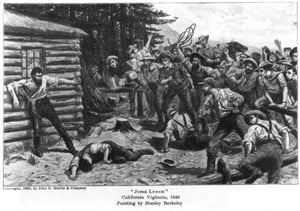
Aug 22, 2018
NEW RESOURCES: Capital Punishment and the State of Criminal Justice 2018
The American Bar Association’s Criminal Justice Section has released its annual report on issues, trends, and significant changes in America’s criminal justice system. The new publication, The State of Criminal Justice 2018, includes a chapter by Ronald J. Tabak, chair of the Death Penalty Committee of the ABA’s Section of Civil Rights and Social Justice, describing significant death penalty cases and capital punishment developments over the past year. Tabak reports that 2017 had the second…
Read More
Aug 21, 2018
In Dissent, Judge Says Death Penalty Violates Arizona State Constitution
An Arizona appeals court judge has urged the state’s supreme court to rule that the death penalty violates Arizona’s state constitutional prohibition against cruel and unusual punishment. In an August 16, 2018 opinion dissenting from the Arizona Supreme Court’s affirmance of death-row prisoner Jason Bush’s conviction and sentence, Court of Appeals Judge Lawrence Winthrop (pictured) — sitting by designation in the case because of the recusal of one of the high court’s justices — wrote that “[t]he…
Read More
Aug 20, 2018
Military Commission Bars Guantánamo Death-Penalty Prosecutors From Using Statements by 9/11 Detainees
A Guantánamo military commission judge has barred prosecutors from using statements five accused 9/11 plotters made to the FBI after they had been subjected to years of torture in CIA black sites. On August 17, 2018, the military judge, Army Colonel James L. Pohl (pictured), suppressed all use of the statements, ruling that restrictions prosecutors had placed on the ability of defense counsel to interview witnesses and investigate the torture made it impossible for the defense to meaningfully…
Read More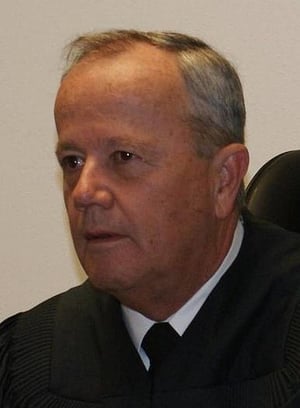
Aug 17, 2018
New Neuroscience Research Suggests Age Limit for Death-Penalty Eligibility May be Too Low
When the U.S. Supreme Court banned the death penalty for juvenile offenders in 2005 in Roper v. Simmons, Justice Anthony Kennedy’s opinion for the Court acknowledged the inherent arbitrariness in selecting an age cutoff. “The qualities that distinguish juveniles from adults do not disappear when an individual turns 18,” he wrote. “However, a line must be drawn.” New neuroscience research suggests that the age-18 line may be too low. The court’s opinion in Roper found that a national consensus…
Read More