Publications & Testimony
Testimony and Statements on the Death Penalty
FROM DPIC
For testimony by former Executive Director Robert Dunham and former Executive Director Richard C. Dieter, please visit our page DPIC Testimony.
FROM RELIGIOUS LEADERS AND ORGANIZATIONS
- News Brief: Pope Francis Calls for Prayer to Abolish the Death Penalty (September 1, 2022)
- Jewish Congregation Renews Request for Department of Justice to Drop Death Penalty in Tree of Life Synagogue Killings (June 24, 2021)
- Orthodox Church Patriarch Calls Death Penalty Incompatible with Christian Beliefs (October 20, 2020)
- Presbyterian Church (U.S.A.) — Statement on the Federal Death Penalty (August 5, 2019)
- Louisiana Christian Faith Leaders Call for State to Abolish Death Penalty (April 25, 2019)
- Pittsburgh Rabbi’s Wife Opposes Death Penalty for Tree of Life Synagogue Killings (March 18, 2019)
- Orthodox Jewish Organization Calls for an End to Capital Punishment in the U.S. | Death Penalty Information Center (February 17, 2016)
- Baptist Theologian Says Death Penalty Does Not Fit With Christian Theology (March 8, 2016)
- Civil and Human Rights: Death Penalty — Church & Society, The United Methodist Church
- Religious Views: Over 150 Catholic Theologians Call for Repeal of the Death Penalty (September 27, 2011)
- Power Over Life and Death — The Power to Save a Life (January 15, 2005)
- Responsibility, Rehabilitation, and Restoration: A Catholic Perspective on Crime and Criminal Justice (November 2000)
- The Challenge of Holiness: A Sermon on the Death Penalty (January 10, 2000)
- General Assembly of the Texas Conference of Churches — Resolution Opposing the Death Penalty (February 24, 1998)
- Statement by Catholic Bishops of Texas on Capital Punishment (October 20, 1997)
- Catholic Church Expresses Strong Opposition to Capital Punishment in Catechism (September 9, 1997)
- Catholic Bishops of Iowa Issue Statement on Death Penalty (February 4, 1998)
- To End the Death Penalty: A Report of the National Jewish/Catholic Consultation
- Transcript of Dr. Pat Robertson’s Speech on the Role of Religion and the Death Penalty at The College of William and Mary
- Collection of Official Catholic Statements on the Death Penalty (1980)
FROM THE INTERNATIONAL COMMUNITY
- UN experts call for universal abolition of the death penalty | OHCHR (October 9, 2023)
- Zambia Becomes 25th Sub-Saharan African Nation to Abolish Death Penalty (December 23, 2022)
- Belgium Wants a World Without the Death Penalty (October 20, 2022)
- As France Prepares to Assume Presidency of European Union, Emmanuel Macron Announces Initiative for Worldwide Abolition of Death Penalty (October 11, 2021)
- U.N. Secretary-General, European Union Ambassador Call for Abolition of “Barbaric” Death Penalty (October 11, 2017)
- European Union Calls for Abolition of Capital Punishment as World Coalition Hosts International Death Penalty Conference (June 27, 2017)
- U.N. Investigator Talks About the Future of Solitary and the Death Penalty (November 7, 2016)
- World Congress Against the Death Penalty Renews Call for Global Moratorium, Pope Sends Message of Support (June 27, 2016)
- Declaration by the Presidency on behalf of the European Union on the 400th execution in Texas from the Council of the European Union (August 21, 2007)
- Resolution Supporting Worldwide Moratorium on Executions from the United Nations Commission on Human Rights (April 1999)
- Mary Robinson, U.N. High Commissioner for Human Rights — Message to the Press Conference organized by the Death Penalty Information Center for the release of the report, “International Perspectives on the Death Penalty” (October 12, 1999)
- Status of the International Covenants on Human Rights from the United Nations Commission on Human Rights (April 1998)
FROM ADVOCACY GROUPS
- Advocacy Group Tells Supreme Court that Negative Stereotypes Distort Perception that Latinos in Death-Penalty Cases Pose Future Danger to Society (April 15, 2022)
- Disability Rights Groups, Legal Experts, and Conservative Advocates Urge Supreme Court to Strike Down Georgia’s Uniquely Harsh Proof Requirements in Death-Penalty Intellectual Disabilities Cases (January 11, 2022)
- NAACP Reaffirms Its Support of Abolishing the Death Penalty (2022)
- More Than 80 Civil Rights and Advocacy Organizations Urge President Biden to End Federal Executions | Death Penalty Information Center (February 9, 2021)
- More Than 250 Conservative Leaders Join Call to End Death Penalty (October 29, 2019)
- National Alliance on Mental Illness: The Death Penalty
- Florida League of Women Voters Calls for Halt to Executions (May 28, 2007)
- Victims Organizations Issue Joint Statement for National Victims’ Rights Week (April 19, 2007)
FROM JUDGES, LEGISLATORS, AND OTHER ORGANIZATIONS
- Republican-led Oklahoma committee considers pause on executions amid death case scrutiny (October 5, 2023)
- Former Pro-Death Penalty District Attorney Explains Why He Now Supports Abolition, and Fears Political Promises to Expand the Use of the Death Penalty (August 20, 2023)
- Pressley, Durbin Reintroduce Bill to End the Federal Death Penalty (July 13, 2023)
- The Lancet Editorial: Physician Involvement in Executions Violates Medical Ethics | Death Penalty Information Center (May 20, 2023)
- APA calls for extending ineligibility for the death penalty to adolescent offenders younger than age 21 (August 4, 2022)
- Why some Republicans are turning against the death penalty | Ron Ferguson | Ohio House of Representatives (March 8, 2022)
- Eight years on Texas’ highest criminal court turned Elsa Alcala into a death penalty skeptic. How will the court change without her? (January 26, 2019)
- AMA to Supreme Court: Doctor participation in executions unethical (August 22, 2018)
- Former Governor Bill Richardson: Death Penalty Is Bad for Business, Out of Step With World’s Views (June 16, 2017)
- Capital Punishment and Nurses’ Participation in Capital Punishment (2016)
- Former Ohio Attorney General Jim Petro Says Death Penalty Unfixable, “Not Worth It Any More” (September 12, 2016)
- Resolution Supporting Repeal of the Death Penalty, National Hispanic Caucus of State Legislators (August 11, 2016)
- Retired Police Captain Says Repealing Death Penalty Is “Smart on Crime” (November 24, 2014)
- Resolution Supporting Abolition of the Death Penalty, Natl. Assoc. of Black Psychologists (2012)
- The Road to Justice and Peace by New Jersey State Senator Raymond Lesniak (February 1, 2009)
- Statement On The Federal Death Penalty System by Senator Feingold (June 7, 2001)
- Statement on the Need for a Federal Moratorium on the Death Penalty Senator Feingold (October 29, 2000)
- Death Penalty: The Torah and Today (August 23, 2000)
- Press Release for Senator Russ Feingold’s Introduction of Senate’s First Death Penalty Moratorium Bill (April 20, 2000)
- Amnesty International Southern Regional Conference: Orlando, Florida Remarks by Former Florida Chief Justice Gerald Kogan (October 23, 1999)
- American Bar Association Resolution on the Death Penalty (February 3, 1997)
FROM MURDER VICTIMS’ FAMILY MEMBERS
Items: 2191 — 2200
Jul 20, 2018
Ohio Governor Commutes Death Sentence Based on Jurors Concerns About Unfair Sentencing
Ohio Governor John Kasich (pictured, left) has commuted the death sentence imposed on Raymond Tibbetts (pictured, right) to life without parole, in response to a juror’s concerns about the unfairness of the sentencing proceedings in the case. It was the seventh time Kasich had commuted a prisoner’s death sentence. The July 20, 2018, news release announcing the commutation explained that Kasich had granted clemency because “fundamental flaws in [the] sentencing phase of [Tibbetts’s] trial …
Read More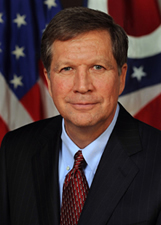
Jul 19, 2018
Court Order: No Executions in Louisiana For Another Year
A Louisiana federal court judge has ordered that executions in the state be stayed for at least another year. On July 16, 2018, in proceedings brought by Louisiana death-row prisoners challenging the state’s lethal-injection protocol, U.S. District Court Judge Shelly Dick granted a request by state officials to extend by one year the temporary stay of execution that has been in effect in Louisiana since 2014. Jeffrey Cody, the state’s lawyer in the case, told the court that continuing the…
Read More
Jul 18, 2018
Texas Executes Another Defendant of Color Over Objection of Victim’s Family
Against the wishes of the victim’s family and amidst charges that the rejection of his clemency application was rooted in racial bias, Texas executed Christopher Young (pictured) on July 17, 2018. Young — who had been drunk and high on drugs when he killed Hashmukh Patel during a failed robbery in 2004 — had repeatedly expressed remorse for the murder and had been mentoring troubled youth in an effort to prevent them from repeating his mistakes. The victim’s son, Mitesh Patel, had urged clemency…
Read More
Jul 17, 2018
POLL: Washington State Voters Overwhelmingly Prefer Life Sentences to Death Penalty
A new poll of likely voters in Washington State shows that Washingtonians are nearly 3 times more likely to prefer some form of a life sentence to the death penalty as punishment for defendants convicted of murder. The poll, commissioned by the Northwest Progressive Institute (NPI), was conducted by Public Policy Polling and released on July 12, 2018. It found that 69% of likely voters in the state preferred some version of a life sentence as punishment for people convicted of murder, as…
Read More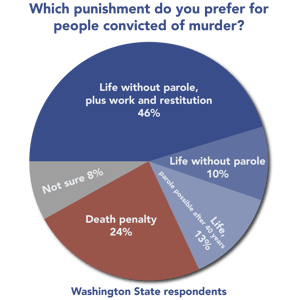
Jul 16, 2018
Amid War-Court Turmoil, Guantánamo Death-Penalty Judge Retires From Military Service
The U.S. Air Force has announced that the Guantánamo military commission’s USS Cole death-penalty judge, Air Force Colonel Vance Spath (pictured) is retiring, injecting new uncertainty into war court proceedings already steeped in chaos. In a one-sentence email to the McClatchey news service on July 5, an Air Force spokesperson confirmed that Spath “has an approved retirement date of Nov. 1, 2018,” well before the controversial trial proceedings in the capital prosecution of Abd al Rahim al…
Read More
Jul 12, 2018
Alabama Prisoners End Execution Lawsuit, State Will Drop Lethal Injection in Favor of Nitrogen Gas
Alabama will not execute eight death-row prisoners by means of the problematic lethal-injection protocol they have been challenging, but will instead carry out the executions using lethal gas. In a Joint Motion to Dismiss the prisoners’ federal litigation over the state’s execution protocol, filed on July 10, 2018, the parties agreed that the lawsuit had been rendered moot by the state’s passage of legislation authorizing execution by nitrogen gas and the prisoners’ election to die by nitrogen…
Read More
Jul 12, 2018
Nevada Execution Halted On Claims State Obtained Execution Drug Through “Subterfuge”
In response to a lawsuit filed by pharmaceutical manufacturer Alvogen, Inc., a Clark County, Nevada District Judge has stayed the July 11, 2018, execution of Scott Dozier and issued a temporary restraining order barring Nevada from using drugs produced by Alvogen to execute Dozier. Saying Nevada had obtained a supply of the drug-maker’s sedative midazolam “by subterfuge,” the multibillion-dollar generic drug company sued Nevada and the state Department of Corrections on July 10 to prevent the…
Read More
Jul 11, 2018
STUDY: The Death Penalty in Tennessee is “a Cruel Lottery”
A new study of Tennessee’s death penalty concludes that the state’s capital-punishment system is “a cruel lottery” that is “riddled with arbitrariness.” The study, published in the summer 2018 issue of the Tennessee Journal of Law and Policy, examined every first-degree murder case in Tennessee since 1977 to determine whether the state had redressed the arbitrariness that led the U.S. Supreme Court to declare the nation’s death-penalty laws unconstitutional in 1972. In their article…
Read More
Jul 10, 2018
Kentucky Legislature Conducts Hearing on the Commonwealth’s Death Penalty
A joint committee of the Kentucky legislature conducted a hearing on July 6, 2018 on the Commonwealth’s rarely used death penalty, including a presentation by supporters and opponents of a bill to abolish capital punishment. The General Assembly’s Interim Joint Committee on Judiciary took testimony from prosecutors, defense attorneys, correctional officials, and legislators on issues ranging from costs and arbitrariness to the length of the appeal process. Though Kentucky currently has 31…
Read More
Jul 09, 2018
Death-Penalty Experts Describe Justice Kennedy’s Mixed Legacy on Capital Punishment
Justice Anthony Kennedy’s votes swung both to the right and to the left on death-penalty issues, professors Carol Steiker (pictured, l.) of Harvard Law School and her brother, Jordan Steiker (pictured, r.) of the University of Texas School of Law write in a commentary for SCOTUSblog, “but [he] declined to swing for the fences.” The Steikers, who co-authored the acclaimed book, Courting Death: The Supreme Court and Capital Punishment, recount Justice Kennedy’s nuanced interpretation of the…
Read More