Publications & Testimony
Testimony and Statements on the Death Penalty
FROM DPIC
For testimony by former Executive Director Robert Dunham and former Executive Director Richard C. Dieter, please visit our page DPIC Testimony.
FROM RELIGIOUS LEADERS AND ORGANIZATIONS
- News Brief: Pope Francis Calls for Prayer to Abolish the Death Penalty (September 1, 2022)
- Jewish Congregation Renews Request for Department of Justice to Drop Death Penalty in Tree of Life Synagogue Killings (June 24, 2021)
- Orthodox Church Patriarch Calls Death Penalty Incompatible with Christian Beliefs (October 20, 2020)
- Presbyterian Church (U.S.A.) — Statement on the Federal Death Penalty (August 5, 2019)
- Louisiana Christian Faith Leaders Call for State to Abolish Death Penalty (April 25, 2019)
- Pittsburgh Rabbi’s Wife Opposes Death Penalty for Tree of Life Synagogue Killings (March 18, 2019)
- Orthodox Jewish Organization Calls for an End to Capital Punishment in the U.S. | Death Penalty Information Center (February 17, 2016)
- Baptist Theologian Says Death Penalty Does Not Fit With Christian Theology (March 8, 2016)
- Civil and Human Rights: Death Penalty — Church & Society, The United Methodist Church
- Religious Views: Over 150 Catholic Theologians Call for Repeal of the Death Penalty (September 27, 2011)
- Power Over Life and Death — The Power to Save a Life (January 15, 2005)
- Responsibility, Rehabilitation, and Restoration: A Catholic Perspective on Crime and Criminal Justice (November 2000)
- The Challenge of Holiness: A Sermon on the Death Penalty (January 10, 2000)
- General Assembly of the Texas Conference of Churches — Resolution Opposing the Death Penalty (February 24, 1998)
- Statement by Catholic Bishops of Texas on Capital Punishment (October 20, 1997)
- Catholic Church Expresses Strong Opposition to Capital Punishment in Catechism (September 9, 1997)
- Catholic Bishops of Iowa Issue Statement on Death Penalty (February 4, 1998)
- To End the Death Penalty: A Report of the National Jewish/Catholic Consultation
- Transcript of Dr. Pat Robertson’s Speech on the Role of Religion and the Death Penalty at The College of William and Mary
- Collection of Official Catholic Statements on the Death Penalty (1980)
FROM THE INTERNATIONAL COMMUNITY
- UN experts call for universal abolition of the death penalty | OHCHR (October 9, 2023)
- Zambia Becomes 25th Sub-Saharan African Nation to Abolish Death Penalty (December 23, 2022)
- Belgium Wants a World Without the Death Penalty (October 20, 2022)
- As France Prepares to Assume Presidency of European Union, Emmanuel Macron Announces Initiative for Worldwide Abolition of Death Penalty (October 11, 2021)
- U.N. Secretary-General, European Union Ambassador Call for Abolition of “Barbaric” Death Penalty (October 11, 2017)
- European Union Calls for Abolition of Capital Punishment as World Coalition Hosts International Death Penalty Conference (June 27, 2017)
- U.N. Investigator Talks About the Future of Solitary and the Death Penalty (November 7, 2016)
- World Congress Against the Death Penalty Renews Call for Global Moratorium, Pope Sends Message of Support (June 27, 2016)
- Declaration by the Presidency on behalf of the European Union on the 400th execution in Texas from the Council of the European Union (August 21, 2007)
- Resolution Supporting Worldwide Moratorium on Executions from the United Nations Commission on Human Rights (April 1999)
- Mary Robinson, U.N. High Commissioner for Human Rights — Message to the Press Conference organized by the Death Penalty Information Center for the release of the report, “International Perspectives on the Death Penalty” (October 12, 1999)
- Status of the International Covenants on Human Rights from the United Nations Commission on Human Rights (April 1998)
FROM ADVOCACY GROUPS
- Advocacy Group Tells Supreme Court that Negative Stereotypes Distort Perception that Latinos in Death-Penalty Cases Pose Future Danger to Society (April 15, 2022)
- Disability Rights Groups, Legal Experts, and Conservative Advocates Urge Supreme Court to Strike Down Georgia’s Uniquely Harsh Proof Requirements in Death-Penalty Intellectual Disabilities Cases (January 11, 2022)
- NAACP Reaffirms Its Support of Abolishing the Death Penalty (2022)
- More Than 80 Civil Rights and Advocacy Organizations Urge President Biden to End Federal Executions | Death Penalty Information Center (February 9, 2021)
- More Than 250 Conservative Leaders Join Call to End Death Penalty (October 29, 2019)
- National Alliance on Mental Illness: The Death Penalty
- Florida League of Women Voters Calls for Halt to Executions (May 28, 2007)
- Victims Organizations Issue Joint Statement for National Victims’ Rights Week (April 19, 2007)
FROM JUDGES, LEGISLATORS, AND OTHER ORGANIZATIONS
- Republican-led Oklahoma committee considers pause on executions amid death case scrutiny (October 5, 2023)
- Former Pro-Death Penalty District Attorney Explains Why He Now Supports Abolition, and Fears Political Promises to Expand the Use of the Death Penalty (August 20, 2023)
- Pressley, Durbin Reintroduce Bill to End the Federal Death Penalty (July 13, 2023)
- The Lancet Editorial: Physician Involvement in Executions Violates Medical Ethics | Death Penalty Information Center (May 20, 2023)
- APA calls for extending ineligibility for the death penalty to adolescent offenders younger than age 21 (August 4, 2022)
- Why some Republicans are turning against the death penalty | Ron Ferguson | Ohio House of Representatives (March 8, 2022)
- Eight years on Texas’ highest criminal court turned Elsa Alcala into a death penalty skeptic. How will the court change without her? (January 26, 2019)
- AMA to Supreme Court: Doctor participation in executions unethical (August 22, 2018)
- Former Governor Bill Richardson: Death Penalty Is Bad for Business, Out of Step With World’s Views (June 16, 2017)
- Capital Punishment and Nurses’ Participation in Capital Punishment (2016)
- Former Ohio Attorney General Jim Petro Says Death Penalty Unfixable, “Not Worth It Any More” (September 12, 2016)
- Resolution Supporting Repeal of the Death Penalty, National Hispanic Caucus of State Legislators (August 11, 2016)
- Retired Police Captain Says Repealing Death Penalty Is “Smart on Crime” (November 24, 2014)
- Resolution Supporting Abolition of the Death Penalty, Natl. Assoc. of Black Psychologists (2012)
- The Road to Justice and Peace by New Jersey State Senator Raymond Lesniak (February 1, 2009)
- Statement On The Federal Death Penalty System by Senator Feingold (June 7, 2001)
- Statement on the Need for a Federal Moratorium on the Death Penalty Senator Feingold (October 29, 2000)
- Death Penalty: The Torah and Today (August 23, 2000)
- Press Release for Senator Russ Feingold’s Introduction of Senate’s First Death Penalty Moratorium Bill (April 20, 2000)
- Amnesty International Southern Regional Conference: Orlando, Florida Remarks by Former Florida Chief Justice Gerald Kogan (October 23, 1999)
- American Bar Association Resolution on the Death Penalty (February 3, 1997)
FROM MURDER VICTIMS’ FAMILY MEMBERS
Items: 2401 — 2410
Sep 14, 2017
Human Rights Groups Urge U.S. Government To Sanction Officials Accused Of Torture, Executions Under New Law
A coalition of 23 human rights groups, including Human Rights First, Human Rights Watch, and Reprieve, has urged the United States government to issue sanctions against foreign government officials who they say have used the death penalty to repress political dissent by torturing peaceful protesters into confessing to capital offenses they did not commit. In a September 12, 2017 letter to Secretary of State Rex Tillerson and Treasury Secretary Steven Mnuchin, the non-governmental organizations…
Read More
Sep 13, 2017
Ohio Executes Gary Otte as State and Federal Courts Decline to Review Use of Death Penalty Against Those Under Age 21
Ohio executed Gary Otte on September 13 after both the United States Supreme Court and the Ohio Supreme Court declined to review his challenge to the constitutionality of applying the death penalty against people who were younger than age 21 at the time of the offense. Otte’s lawyer, supervisory assistant federal public defender Carol Wright, said Otte exhibited “abnormal” chest and stomach movements when he was injected with the execution drug, midazolam, showing signs of struggling for air…
Read More
Sep 12, 2017
NEW PODCAST: DPIC Study Finds No Evidence that Death Penalty Deters Murder or Protects Police
A Death Penalty Information Center analysis of U.S. murder data from 1987 through 2015 has found no evidence that the death penalty deters murder or protects police. Instead, the evidence shows that murder rates, including murders of police officers, are consistently higher in death-penalty states than in states that have abolished the death penalty. And far from experiencing increases in murder rates or open season on law enforcement, the data show that states that have abolished the death…
Read More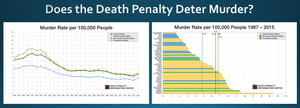
Sep 11, 2017
Sixteen Years Later, No Date in Sight for Death-Penalty Trial of Alleged 9/11 Conspirators
Sixteen years later, the alleged perpetrators of the September 11, 2001 hijackings and attacks on the Pentagon and World Trade Center, and the downing of Flight 93, have yet to be tried, and issues relating to the use of evidence obtained by torture, the appropriateness and legality of trials by military commission, and where and how they should be tried raise questions as to whether and when a trial may take place. The five men charged in the attack — alleged mastermind Khalid Sheikh Mohammed…
Read More
Sep 08, 2017
Virginia, Pennsylvania Death Rows Smallest in a Quarter Century as Death Sentences Show Long-Term Decline
Death rows are shrinking nationwide, and the experience in states like Virginia and Pennsylvania helps explain why. Virginia’s death row has fallen from a reported high of 58 in 1995 to four in September 2017, the lowest it has been since 1979. Pennsylvania’s death row of 160 prisoners is its smallest in nearly 25 years — down from 175 last December and from a reported 247 in April 2002. These declines mirror the national trends, as the number of prisoners removed from death row continues to…
Read More
Sep 07, 2017
For Second Time in Two Years, Georgia Prepares to Execute Black Prisoner Whom White Juror Called N‑Word
For the second time in as many years, Georgia is preparing to execute an intellectually disabled African-American man, despite evidence that the death verdict in his case may have been tainted by a white juror’s profound racial bias. Lawyers for Keith Leroy Tharpe (pictured), whose IQ has been measured in the 60s and whom Georgia has scheduled to be executed on September 26, say the courts should reconsider his case in light of the racial slurs a white juror made about him. They say new U.S.
Read More
Sep 06, 2017
Federal Appeals Court Sides with Alabama Prisoners on Lethal-Injection Case, Sends Back to District Court
The U.S. Court of Appeals for the Eleventh Circuit has issued a ruling reviving a lawsuit brought by Alabama death-row prisoners that challenged the constitutionality of the state’s three-drug execution protocol using the controversial lethal-injection drug midazolam. The unanimous decision by the three-judge federal appeals panel on September 1 reversed a federal district court ruling against several death-row prisoners who sued the Alabama Department of Corrections, alleging that the state’s…
Read More
Sep 05, 2017
Three Years Later, Report Explores Lessons From Two North Carolina Death-Penalty Exonerations
On the third anniversary of their groundbreaking exoneration, a new report by the Center for Death Penalty Litigation (CDPL) reviews in-depth the long path from wrongful convictions and death sentences to freedom traveled by former North Carolina death-row prisoners Henry McCollum and Leon Brown. By the time DNA evidence exonerated the brothers of the 1983 rape and murder of 11-year-old Sabrina Buie, McCollum had spent 30 years on death row and Brown was serving a life sentence for Buie’s…
Read More
Sep 01, 2017
REPORT: Most of the 26 Prisoners Facing Execution in Ohio Through 2020 Severely Abused, Impaired, or Mentally Ill
Almost all of the 26 men scheduled for execution in Ohio over the next three years suffer from mental, emotional, or cognitive impairments or limitations that raise questions as to whether they should have been sentenced to death, according to a new report released August 30 by Harvard’s Fair Punishment Project. While the U.S. Constitution requires that the death penalty be reserved for the worst crimes and the worst offenders, the report — Prisoners on Ohio’s Execution List Defined by…
Read More
Aug 31, 2017
Florida Supreme Court Upholds Removal of Prosecutor From Death-Eligible Cases
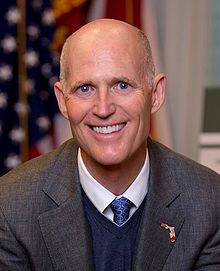
The Florida Supreme Court has upheld Governor Rick Scott’s (pictured, left) removal of Orange and Osceola County State Attorney Aramis Ayala (pictured, right) as prosecutor in more than two dozen murder cases because of her official policy not to seek to seek the death penalty. Over two dissents, the seven-member Court held that Scott had acted “well within the bounds of the Governor’s broad authority” when he replaced Ayala with Lake County State Attorney and death-penalty proponent Brad King…
Read More