Publications & Testimony
Testimony and Statements on the Death Penalty
FROM DPIC
For testimony by former Executive Director Robert Dunham and former Executive Director Richard C. Dieter, please visit our page DPIC Testimony.
FROM RELIGIOUS LEADERS AND ORGANIZATIONS
- News Brief: Pope Francis Calls for Prayer to Abolish the Death Penalty (September 1, 2022)
- Jewish Congregation Renews Request for Department of Justice to Drop Death Penalty in Tree of Life Synagogue Killings (June 24, 2021)
- Orthodox Church Patriarch Calls Death Penalty Incompatible with Christian Beliefs (October 20, 2020)
- Presbyterian Church (U.S.A.) — Statement on the Federal Death Penalty (August 5, 2019)
- Louisiana Christian Faith Leaders Call for State to Abolish Death Penalty (April 25, 2019)
- Pittsburgh Rabbi’s Wife Opposes Death Penalty for Tree of Life Synagogue Killings (March 18, 2019)
- Orthodox Jewish Organization Calls for an End to Capital Punishment in the U.S. | Death Penalty Information Center (February 17, 2016)
- Baptist Theologian Says Death Penalty Does Not Fit With Christian Theology (March 8, 2016)
- Civil and Human Rights: Death Penalty — Church & Society, The United Methodist Church
- Religious Views: Over 150 Catholic Theologians Call for Repeal of the Death Penalty (September 27, 2011)
- Power Over Life and Death — The Power to Save a Life (January 15, 2005)
- Responsibility, Rehabilitation, and Restoration: A Catholic Perspective on Crime and Criminal Justice (November 2000)
- The Challenge of Holiness: A Sermon on the Death Penalty (January 10, 2000)
- General Assembly of the Texas Conference of Churches — Resolution Opposing the Death Penalty (February 24, 1998)
- Statement by Catholic Bishops of Texas on Capital Punishment (October 20, 1997)
- Catholic Church Expresses Strong Opposition to Capital Punishment in Catechism (September 9, 1997)
- Catholic Bishops of Iowa Issue Statement on Death Penalty (February 4, 1998)
- To End the Death Penalty: A Report of the National Jewish/Catholic Consultation
- Transcript of Dr. Pat Robertson’s Speech on the Role of Religion and the Death Penalty at The College of William and Mary
- Collection of Official Catholic Statements on the Death Penalty (1980)
FROM THE INTERNATIONAL COMMUNITY
- UN experts call for universal abolition of the death penalty | OHCHR (October 9, 2023)
- Zambia Becomes 25th Sub-Saharan African Nation to Abolish Death Penalty (December 23, 2022)
- Belgium Wants a World Without the Death Penalty (October 20, 2022)
- As France Prepares to Assume Presidency of European Union, Emmanuel Macron Announces Initiative for Worldwide Abolition of Death Penalty (October 11, 2021)
- U.N. Secretary-General, European Union Ambassador Call for Abolition of “Barbaric” Death Penalty (October 11, 2017)
- European Union Calls for Abolition of Capital Punishment as World Coalition Hosts International Death Penalty Conference (June 27, 2017)
- U.N. Investigator Talks About the Future of Solitary and the Death Penalty (November 7, 2016)
- World Congress Against the Death Penalty Renews Call for Global Moratorium, Pope Sends Message of Support (June 27, 2016)
- Declaration by the Presidency on behalf of the European Union on the 400th execution in Texas from the Council of the European Union (August 21, 2007)
- Resolution Supporting Worldwide Moratorium on Executions from the United Nations Commission on Human Rights (April 1999)
- Mary Robinson, U.N. High Commissioner for Human Rights — Message to the Press Conference organized by the Death Penalty Information Center for the release of the report, “International Perspectives on the Death Penalty” (October 12, 1999)
- Status of the International Covenants on Human Rights from the United Nations Commission on Human Rights (April 1998)
FROM ADVOCACY GROUPS
- Advocacy Group Tells Supreme Court that Negative Stereotypes Distort Perception that Latinos in Death-Penalty Cases Pose Future Danger to Society (April 15, 2022)
- Disability Rights Groups, Legal Experts, and Conservative Advocates Urge Supreme Court to Strike Down Georgia’s Uniquely Harsh Proof Requirements in Death-Penalty Intellectual Disabilities Cases (January 11, 2022)
- NAACP Reaffirms Its Support of Abolishing the Death Penalty (2022)
- More Than 80 Civil Rights and Advocacy Organizations Urge President Biden to End Federal Executions | Death Penalty Information Center (February 9, 2021)
- More Than 250 Conservative Leaders Join Call to End Death Penalty (October 29, 2019)
- National Alliance on Mental Illness: The Death Penalty
- Florida League of Women Voters Calls for Halt to Executions (May 28, 2007)
- Victims Organizations Issue Joint Statement for National Victims’ Rights Week (April 19, 2007)
FROM JUDGES, LEGISLATORS, AND OTHER ORGANIZATIONS
- Republican-led Oklahoma committee considers pause on executions amid death case scrutiny (October 5, 2023)
- Former Pro-Death Penalty District Attorney Explains Why He Now Supports Abolition, and Fears Political Promises to Expand the Use of the Death Penalty (August 20, 2023)
- Pressley, Durbin Reintroduce Bill to End the Federal Death Penalty (July 13, 2023)
- The Lancet Editorial: Physician Involvement in Executions Violates Medical Ethics | Death Penalty Information Center (May 20, 2023)
- APA calls for extending ineligibility for the death penalty to adolescent offenders younger than age 21 (August 4, 2022)
- Why some Republicans are turning against the death penalty | Ron Ferguson | Ohio House of Representatives (March 8, 2022)
- Eight years on Texas’ highest criminal court turned Elsa Alcala into a death penalty skeptic. How will the court change without her? (January 26, 2019)
- AMA to Supreme Court: Doctor participation in executions unethical (August 22, 2018)
- Former Governor Bill Richardson: Death Penalty Is Bad for Business, Out of Step With World’s Views (June 16, 2017)
- Capital Punishment and Nurses’ Participation in Capital Punishment (2016)
- Former Ohio Attorney General Jim Petro Says Death Penalty Unfixable, “Not Worth It Any More” (September 12, 2016)
- Resolution Supporting Repeal of the Death Penalty, National Hispanic Caucus of State Legislators (August 11, 2016)
- Retired Police Captain Says Repealing Death Penalty Is “Smart on Crime” (November 24, 2014)
- Resolution Supporting Abolition of the Death Penalty, Natl. Assoc. of Black Psychologists (2012)
- The Road to Justice and Peace by New Jersey State Senator Raymond Lesniak (February 1, 2009)
- Statement On The Federal Death Penalty System by Senator Feingold (June 7, 2001)
- Statement on the Need for a Federal Moratorium on the Death Penalty Senator Feingold (October 29, 2000)
- Death Penalty: The Torah and Today (August 23, 2000)
- Press Release for Senator Russ Feingold’s Introduction of Senate’s First Death Penalty Moratorium Bill (April 20, 2000)
- Amnesty International Southern Regional Conference: Orlando, Florida Remarks by Former Florida Chief Justice Gerald Kogan (October 23, 1999)
- American Bar Association Resolution on the Death Penalty (February 3, 1997)
FROM MURDER VICTIMS’ FAMILY MEMBERS
Items: 2601 — 2610
Dec 13, 2016
As Supreme Court Rejects Death Penalty Petitions, Justice Breyer Renews Call For Constitutional Review
In the span of one week, the U.S. Supreme Court declined to review petitions from six death row prisoners, denying them relief in their cases. The petitioners raised issues related to DNA procedures, conflict of counsel, a disputed guilty plea, juror bias, judicial override, and a previously botched execution attempt. In two of the cases, the Court allowed executions to proceed in Georgia and Alabama. The case of Ronald Smith left the Court deadlocked 4 – 4, with enough votes to grant review in…
Read More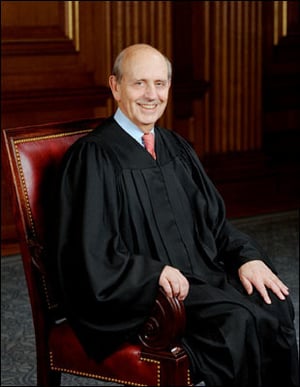
Dec 12, 2016
OUTLIER COUNTIES: Miami-Dade Death Sentences Reflect Constitutional Defects, Misconduct
Miami-Dade County has historically been a significant contributor to Florida’s death row and large proportions of its recent death sentences raise serious constitutional questions about the practices that result in death verdicts and the characteristics of the defendants who are sentenced to death. Miami-Dade imposed five death sentences between 2010 and 2015, placing it among the 16 counties that produced more death sentences than 99.5% of all U.S. counties. The questionable reliability of…
Read More
Dec 09, 2016
Ronald Smith Heaves and Coughs During Alabama Execution After Tie Vote in Supreme Court Denies Him A Stay
After a divided U.S. Supreme Court twice temporarily halted the execution of Ronald Bert Smith, Jr. (pictured), Alabama put Smith to death on December 8 in a 34-minute execution in which Smith heaved, coughed, clenched his left fist, and opened one eye during one 13-minute period. Smith’s jury had recommended by a vote of 7 – 5 that he be sentenced to life without parole, but, in a practice permitted by no other state, his trial judge overrode that recommendation and sentenced Smith to death. At…
Read More
Dec 08, 2016
Experts Say Texas’ Future Dangerousness Concept Is Based on Junk Science
Since 1973, juries in Texas have had to determine whether a defendant presents a future danger to society before imposing a death sentence. But while they have found that each of the 244 men and women currently on the state’s death row poses “a continuing threat to society,” experts argue that juries cannot accurately predict a defendant’s future. According to Dr. Mark Cunningham, a psychologist and leading researcher on the issue of future dangerousness, “[j]uries show absolutely no…
Read More
Dec 07, 2016
American Bar Association Issues White Paper Supporting Death Penalty Exemption for Severe Mental Illness
At a December 6 – 7 national summit on severe mental illness and the death penalty, the American Bar Association Death Penalty Due Process Review Project released a new white paper that it hopes will provide law makers with information and policy analysis to “help states pass laws that will establish clear standards and processes to prevent the execution of those with severe mental illness.” The ABA does not take a position on the death penalty itself, but believes that “[i]ndividuals with severe…
Read More
Dec 06, 2016
Alabama to Execute Ronald Smith Despite Jury’s Vote For Life Sentence
Alabama is set to execute Ronald Smith on December 8, although the sentencing jury in his case recommended that he be sentenced to life. Under a practice that is no longer permitted in any other state, Smith’s judge overrode the jury’s sentencing recommendation and imposed a death sentence. As his execution approaches, Smith has filed a petition in the U.S. Supreme challenging the constitutionality of Alabama’s law. He argues it violates both his right to have a jury determination of all facts…
Read More
Dec 05, 2016
Georgia Set to Execute Man Despite Serious Juror Misconduct that No Court Has Ever Reviewed
UPDATE: The Georgia Board of Pardons and Paroles denied Sallie’s request for clemency. PREVIOUSLY: Georgia plans to execute William Sallie (pictured) on December 6 in a case his attorneys argue is tainted by egregious juror misconduct that no court has considered because Sallie missed a filing deadline during a period in which he was unrepresented and Georgia provided him no right to a lawyer. It is a case that Andrew Cohen, a Fellow at the Brennan Center for Justice and long-time legal…
Read More
Dec 02, 2016
OUTLIER COUNTIES: Dallas County, Texas Imposing Fewer Death Sentences After Years of Discrimination
With 55 executions since the 1970s, Dallas County, Texas, ranks second among all U.S. counties — behind only Harris County (Houston), Texas — in the number of prisoners it has put to death. It is also among the 2% of counties that account for more than half of all prisoners on death row across the country, and produced seven new death sentences and one resentence between 2010 and 2015, more than 99.5% of all U.S. counties during that period. Dallas County has a long history of prosecutorial…
Read More
Dec 01, 2016
Missouri is Disproportionately Producing Federal Death Sentences Amidst Pattern of Inadequate Representation
Federal capital defendants are disproportionately sentenced to death in Missouri compared to other states, with 14.5% of the 62 prisoners currently on federal death row having been prosecuted in Missouri’s federal district courts. By contrast, a DPIC analysis of FBI Uniform Crime Reporting Statistics shows that Missouri accounted for only 2.26% of murders in the United States between 1988, when the current federal death penalty statute was adopted, and 2012. Not surprisingly, an article in The…
Read More
Nov 30, 2016
U.S. Supreme Court Hears Argument in Texas Intellectual Disability Case
During argument November 29 in the case of Moore v. Texas, the U.S. Supreme Court expressed skepticism about Texas’ idiosyncratic method of deciding whether a capital defendant has Intellectual Disability and is therefore ineligible for the death penalty. A trial court, applying the criteria for Intellectual Disability established by the medical community, found that Bobby James Moore (pictured) was not subject to the death penalty. However, the Texas Court of Criminal Appeal reversed that…
Read More