Publications & Testimony
Testimony and Statements on the Death Penalty
FROM DPIC
For testimony by former Executive Director Robert Dunham and former Executive Director Richard C. Dieter, please visit our page DPIC Testimony.
FROM RELIGIOUS LEADERS AND ORGANIZATIONS
- News Brief: Pope Francis Calls for Prayer to Abolish the Death Penalty (September 1, 2022)
- Jewish Congregation Renews Request for Department of Justice to Drop Death Penalty in Tree of Life Synagogue Killings (June 24, 2021)
- Orthodox Church Patriarch Calls Death Penalty Incompatible with Christian Beliefs (October 20, 2020)
- Presbyterian Church (U.S.A.) — Statement on the Federal Death Penalty (August 5, 2019)
- Louisiana Christian Faith Leaders Call for State to Abolish Death Penalty (April 25, 2019)
- Pittsburgh Rabbi’s Wife Opposes Death Penalty for Tree of Life Synagogue Killings (March 18, 2019)
- Orthodox Jewish Organization Calls for an End to Capital Punishment in the U.S. | Death Penalty Information Center (February 17, 2016)
- Baptist Theologian Says Death Penalty Does Not Fit With Christian Theology (March 8, 2016)
- Civil and Human Rights: Death Penalty — Church & Society, The United Methodist Church
- Religious Views: Over 150 Catholic Theologians Call for Repeal of the Death Penalty (September 27, 2011)
- Power Over Life and Death — The Power to Save a Life (January 15, 2005)
- Responsibility, Rehabilitation, and Restoration: A Catholic Perspective on Crime and Criminal Justice (November 2000)
- The Challenge of Holiness: A Sermon on the Death Penalty (January 10, 2000)
- General Assembly of the Texas Conference of Churches — Resolution Opposing the Death Penalty (February 24, 1998)
- Statement by Catholic Bishops of Texas on Capital Punishment (October 20, 1997)
- Catholic Church Expresses Strong Opposition to Capital Punishment in Catechism (September 9, 1997)
- Catholic Bishops of Iowa Issue Statement on Death Penalty (February 4, 1998)
- To End the Death Penalty: A Report of the National Jewish/Catholic Consultation
- Transcript of Dr. Pat Robertson’s Speech on the Role of Religion and the Death Penalty at The College of William and Mary
- Collection of Official Catholic Statements on the Death Penalty (1980)
FROM THE INTERNATIONAL COMMUNITY
- UN experts call for universal abolition of the death penalty | OHCHR (October 9, 2023)
- Zambia Becomes 25th Sub-Saharan African Nation to Abolish Death Penalty (December 23, 2022)
- Belgium Wants a World Without the Death Penalty (October 20, 2022)
- As France Prepares to Assume Presidency of European Union, Emmanuel Macron Announces Initiative for Worldwide Abolition of Death Penalty (October 11, 2021)
- U.N. Secretary-General, European Union Ambassador Call for Abolition of “Barbaric” Death Penalty (October 11, 2017)
- European Union Calls for Abolition of Capital Punishment as World Coalition Hosts International Death Penalty Conference (June 27, 2017)
- U.N. Investigator Talks About the Future of Solitary and the Death Penalty (November 7, 2016)
- World Congress Against the Death Penalty Renews Call for Global Moratorium, Pope Sends Message of Support (June 27, 2016)
- Declaration by the Presidency on behalf of the European Union on the 400th execution in Texas from the Council of the European Union (August 21, 2007)
- Resolution Supporting Worldwide Moratorium on Executions from the United Nations Commission on Human Rights (April 1999)
- Mary Robinson, U.N. High Commissioner for Human Rights — Message to the Press Conference organized by the Death Penalty Information Center for the release of the report, “International Perspectives on the Death Penalty” (October 12, 1999)
- Status of the International Covenants on Human Rights from the United Nations Commission on Human Rights (April 1998)
FROM ADVOCACY GROUPS
- Advocacy Group Tells Supreme Court that Negative Stereotypes Distort Perception that Latinos in Death-Penalty Cases Pose Future Danger to Society (April 15, 2022)
- Disability Rights Groups, Legal Experts, and Conservative Advocates Urge Supreme Court to Strike Down Georgia’s Uniquely Harsh Proof Requirements in Death-Penalty Intellectual Disabilities Cases (January 11, 2022)
- NAACP Reaffirms Its Support of Abolishing the Death Penalty (2022)
- More Than 80 Civil Rights and Advocacy Organizations Urge President Biden to End Federal Executions | Death Penalty Information Center (February 9, 2021)
- More Than 250 Conservative Leaders Join Call to End Death Penalty (October 29, 2019)
- National Alliance on Mental Illness: The Death Penalty
- Florida League of Women Voters Calls for Halt to Executions (May 28, 2007)
- Victims Organizations Issue Joint Statement for National Victims’ Rights Week (April 19, 2007)
FROM JUDGES, LEGISLATORS, AND OTHER ORGANIZATIONS
- Republican-led Oklahoma committee considers pause on executions amid death case scrutiny (October 5, 2023)
- Former Pro-Death Penalty District Attorney Explains Why He Now Supports Abolition, and Fears Political Promises to Expand the Use of the Death Penalty (August 20, 2023)
- Pressley, Durbin Reintroduce Bill to End the Federal Death Penalty (July 13, 2023)
- The Lancet Editorial: Physician Involvement in Executions Violates Medical Ethics | Death Penalty Information Center (May 20, 2023)
- APA calls for extending ineligibility for the death penalty to adolescent offenders younger than age 21 (August 4, 2022)
- Why some Republicans are turning against the death penalty | Ron Ferguson | Ohio House of Representatives (March 8, 2022)
- Eight years on Texas’ highest criminal court turned Elsa Alcala into a death penalty skeptic. How will the court change without her? (January 26, 2019)
- AMA to Supreme Court: Doctor participation in executions unethical (August 22, 2018)
- Former Governor Bill Richardson: Death Penalty Is Bad for Business, Out of Step With World’s Views (June 16, 2017)
- Capital Punishment and Nurses’ Participation in Capital Punishment (2016)
- Former Ohio Attorney General Jim Petro Says Death Penalty Unfixable, “Not Worth It Any More” (September 12, 2016)
- Resolution Supporting Repeal of the Death Penalty, National Hispanic Caucus of State Legislators (August 11, 2016)
- Retired Police Captain Says Repealing Death Penalty Is “Smart on Crime” (November 24, 2014)
- Resolution Supporting Abolition of the Death Penalty, Natl. Assoc. of Black Psychologists (2012)
- The Road to Justice and Peace by New Jersey State Senator Raymond Lesniak (February 1, 2009)
- Statement On The Federal Death Penalty System by Senator Feingold (June 7, 2001)
- Statement on the Need for a Federal Moratorium on the Death Penalty Senator Feingold (October 29, 2000)
- Death Penalty: The Torah and Today (August 23, 2000)
- Press Release for Senator Russ Feingold’s Introduction of Senate’s First Death Penalty Moratorium Bill (April 20, 2000)
- Amnesty International Southern Regional Conference: Orlando, Florida Remarks by Former Florida Chief Justice Gerald Kogan (October 23, 1999)
- American Bar Association Resolution on the Death Penalty (February 3, 1997)
FROM MURDER VICTIMS’ FAMILY MEMBERS
Items: 2711 — 2720
Jul 18, 2016
40 Years After Key Supreme Court Decision, Constitutional and Practical Problems Plague Death Penalty
The execution of John Conner on July 15 ended a two-month period without executions in the United States, the longest such period in the country since 2007 – 2008. A range of state-specific issues have contributed to this stoppage, including questions about the constitutionality of state death penalty practices, problems relating to lethal injection drugs and state execution protocols, and the fallout from botched executions. In an article for The American Prospect, Professor Frank Baumgartner…
Read More
Jul 15, 2016
Court Hearing Under Way on Constitutionality of Federal Death Penalty
A court hearing is under way in the capital trial of Donald Fell in a Vermont federal district court challenging the constitutionality of the federal death penalty. This week, death penalty experts testified for the defense about systemic problems Fell’s lawyers say may render the federal death penalty unconstitutional. Fell was sentenced to death in 2006, but was granted a new trial because of juror misconduct. The hearing began on July 11 and is scheduled to continue until July 22. Judge…
Read More
Jul 14, 2016
Georgia Prepares to Execute John Conner Despite Evidence of Intellectual Impairment, Traumatic Upbringing
Georgia is continuing with preparations to execute John Conner (pictured) on July 14 after the state’s Board of Pardons and Paroles denied his clemency petition and the Georgia Supreme Court denied him a stay of execution. In the clemency proceedings, Conner’s attorneys presented evidence that he is intellectually disabled and that he was raised in poverty and extreme violence in a home filled with chronic drug and alcohol abuse and in which sexual and emotional abuse were the norm. Conner’s…
Read More
Jul 13, 2016
BOOKS: “Race and the Death Penalty: The Legacy of McCleskey v. Kemp”
In a landmark ruling in McCleskey v. Kemp in 1987, a bitterly divided U.S. Supreme Court voted 5 – 4 vote that statistical evidence of racial discrimination in the application of the death penalty was insufficient to overturn an individual death sentence. A new book, Race and the Death Penalty: The Legacy of McCleskey v. Kemp, edited by David P. Keys, associate professor of criminal justice at New Mexico State University and R.J. Maratea of the Youth Research and Resource Center, Inc. explores…
Read More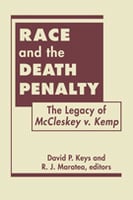
Jul 12, 2016
NEW VOICES: Former FBI Agent Now Opposes Death Penalty, Seeks Exoneration of California Death Row Prisoner Kevin Cooper
During his 45 years in law enforcement, including 24 years with the Federal Bureau of Investigation, homicide investigator Tom Parker (pictured) changed his view on the death penalty. “There were times during my career when I would gladly have pushed the button on a murderer,” he said. “Today, my position would be, life without parole.” Parker says that seeing corrupt homicide investigations convinced him that innocent people could be executed. As result, he now opposes capital punishment and…
Read More
Jul 11, 2016
Nebraska Exonerees Awarded $28 Million, Prosecutor Says Case Made Him Oppose Death Penalty
A federal court jury has awarded six Nebraska exonerees (pictured, at their exoneration) $28 million in damages for official misconduct that led to their wrongful convictions in the 1985 rape and murder of Helen Wilson. The “Beatrice Six,” as the group came to be known, were falsely accused of the killing and threatened with the death penalty. Five of the defendants — James Dean, Kathy Gonzalez, Debra Shelden, Ada JoAnn Taylor, and Tom Winslow — agreed to plea bargains or pled no contest to avoid…
Read More
Jul 08, 2016
ABA Criminal Justice Report Covers Key Death Penalty Trends
In a chapter from the recently released American Bar Association publication, The State of Criminal Justice 2016, Ronald J. Tabak, chair of the Death Penalty Committee of the ABA’s Section of Individual Rights and Responsibilities, describes significant trends and recent cases related to capital punishment. Tabak highlights the ongoing declines in death sentences and executions across the United States, as well as the increasing concentration of the death penalty in a small number of…
Read More
Jul 07, 2016
Status of Arkansas Death Penalty Uncertain Following Expiration of Lethal Injection Drugs
Just days after a split Arkansas Supreme Court upheld the state’s execution protocol, Arkansas’ supply of vecuronium bromide — a paralytic agent used in the state’s three-drug lethal injection protocol — expired, leaving the status of future executions unclear. At that time, Governor Asa Hutchinson said that he wanted the Department of Correction to obtain a new supply of the drug rather than change the state’s method of execution. In 2015, the state spent $25,000 for lethal injection drugs and set…
Read More
Jul 06, 2016
Decline in “Resource-Draining” Death Penalty Trials in Amarillo Texas Mirrors Trends in State, Nation
Forty years after Gregg v. Georgia ushered in the modern era of capital punishment in the United States, the death penalty is in decline across the country and in Texas. The Lone Star State continues to lead the nation in executions — with nearly half of all executions in the U.S. this year — but the Amarillo Globe-News reports that fewer Texas prosecutors are seeking death sentences and fewer juries are imposing them. According to the Globe-News, 26 people have been sentenced to death since 1976…
Read More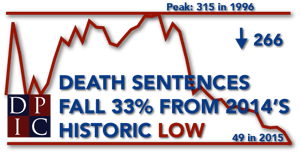
Jul 05, 2016
Arizona Lethal Injection Challenge Proceeds As State Refuses to Rule Out Future Use of Controversial Execution Drug
A federal judge has rebuffed an attempt by Arizona to dismiss a lawsuit filed by the state’s death row prisoners challenging the state’s execution practices. The state argued at a hearing in the case in U.S. District Court on June 29, that the prisoners’ lawsuit should be declared moot because Arizona’s supply of midazolam — the first drug in one of the state’s four execution protocols — had expired and that the state has been unable to obtain a new supply of that drug and other potential execution…
Read More