Publications & Testimony
Testimony and Statements on the Death Penalty
FROM DPIC
For testimony by former Executive Director Robert Dunham and former Executive Director Richard C. Dieter, please visit our page DPIC Testimony.
FROM RELIGIOUS LEADERS AND ORGANIZATIONS
- News Brief: Pope Francis Calls for Prayer to Abolish the Death Penalty (September 1, 2022)
- Jewish Congregation Renews Request for Department of Justice to Drop Death Penalty in Tree of Life Synagogue Killings (June 24, 2021)
- Orthodox Church Patriarch Calls Death Penalty Incompatible with Christian Beliefs (October 20, 2020)
- Presbyterian Church (U.S.A.) — Statement on the Federal Death Penalty (August 5, 2019)
- Louisiana Christian Faith Leaders Call for State to Abolish Death Penalty (April 25, 2019)
- Pittsburgh Rabbi’s Wife Opposes Death Penalty for Tree of Life Synagogue Killings (March 18, 2019)
- Orthodox Jewish Organization Calls for an End to Capital Punishment in the U.S. | Death Penalty Information Center (February 17, 2016)
- Baptist Theologian Says Death Penalty Does Not Fit With Christian Theology (March 8, 2016)
- Civil and Human Rights: Death Penalty — Church & Society, The United Methodist Church
- Religious Views: Over 150 Catholic Theologians Call for Repeal of the Death Penalty (September 27, 2011)
- Power Over Life and Death — The Power to Save a Life (January 15, 2005)
- Responsibility, Rehabilitation, and Restoration: A Catholic Perspective on Crime and Criminal Justice (November 2000)
- The Challenge of Holiness: A Sermon on the Death Penalty (January 10, 2000)
- General Assembly of the Texas Conference of Churches — Resolution Opposing the Death Penalty (February 24, 1998)
- Statement by Catholic Bishops of Texas on Capital Punishment (October 20, 1997)
- Catholic Church Expresses Strong Opposition to Capital Punishment in Catechism (September 9, 1997)
- Catholic Bishops of Iowa Issue Statement on Death Penalty (February 4, 1998)
- To End the Death Penalty: A Report of the National Jewish/Catholic Consultation
- Transcript of Dr. Pat Robertson’s Speech on the Role of Religion and the Death Penalty at The College of William and Mary
- Collection of Official Catholic Statements on the Death Penalty (1980)
FROM THE INTERNATIONAL COMMUNITY
- UN experts call for universal abolition of the death penalty | OHCHR (October 9, 2023)
- Zambia Becomes 25th Sub-Saharan African Nation to Abolish Death Penalty (December 23, 2022)
- Belgium Wants a World Without the Death Penalty (October 20, 2022)
- As France Prepares to Assume Presidency of European Union, Emmanuel Macron Announces Initiative for Worldwide Abolition of Death Penalty (October 11, 2021)
- U.N. Secretary-General, European Union Ambassador Call for Abolition of “Barbaric” Death Penalty (October 11, 2017)
- European Union Calls for Abolition of Capital Punishment as World Coalition Hosts International Death Penalty Conference (June 27, 2017)
- U.N. Investigator Talks About the Future of Solitary and the Death Penalty (November 7, 2016)
- World Congress Against the Death Penalty Renews Call for Global Moratorium, Pope Sends Message of Support (June 27, 2016)
- Declaration by the Presidency on behalf of the European Union on the 400th execution in Texas from the Council of the European Union (August 21, 2007)
- Resolution Supporting Worldwide Moratorium on Executions from the United Nations Commission on Human Rights (April 1999)
- Mary Robinson, U.N. High Commissioner for Human Rights — Message to the Press Conference organized by the Death Penalty Information Center for the release of the report, “International Perspectives on the Death Penalty” (October 12, 1999)
- Status of the International Covenants on Human Rights from the United Nations Commission on Human Rights (April 1998)
FROM ADVOCACY GROUPS
- Advocacy Group Tells Supreme Court that Negative Stereotypes Distort Perception that Latinos in Death-Penalty Cases Pose Future Danger to Society (April 15, 2022)
- Disability Rights Groups, Legal Experts, and Conservative Advocates Urge Supreme Court to Strike Down Georgia’s Uniquely Harsh Proof Requirements in Death-Penalty Intellectual Disabilities Cases (January 11, 2022)
- NAACP Reaffirms Its Support of Abolishing the Death Penalty (2022)
- More Than 80 Civil Rights and Advocacy Organizations Urge President Biden to End Federal Executions | Death Penalty Information Center (February 9, 2021)
- More Than 250 Conservative Leaders Join Call to End Death Penalty (October 29, 2019)
- National Alliance on Mental Illness: The Death Penalty
- Florida League of Women Voters Calls for Halt to Executions (May 28, 2007)
- Victims Organizations Issue Joint Statement for National Victims’ Rights Week (April 19, 2007)
FROM JUDGES, LEGISLATORS, AND OTHER ORGANIZATIONS
- Republican-led Oklahoma committee considers pause on executions amid death case scrutiny (October 5, 2023)
- Former Pro-Death Penalty District Attorney Explains Why He Now Supports Abolition, and Fears Political Promises to Expand the Use of the Death Penalty (August 20, 2023)
- Pressley, Durbin Reintroduce Bill to End the Federal Death Penalty (July 13, 2023)
- The Lancet Editorial: Physician Involvement in Executions Violates Medical Ethics | Death Penalty Information Center (May 20, 2023)
- APA calls for extending ineligibility for the death penalty to adolescent offenders younger than age 21 (August 4, 2022)
- Why some Republicans are turning against the death penalty | Ron Ferguson | Ohio House of Representatives (March 8, 2022)
- Eight years on Texas’ highest criminal court turned Elsa Alcala into a death penalty skeptic. How will the court change without her? (January 26, 2019)
- AMA to Supreme Court: Doctor participation in executions unethical (August 22, 2018)
- Former Governor Bill Richardson: Death Penalty Is Bad for Business, Out of Step With World’s Views (June 16, 2017)
- Capital Punishment and Nurses’ Participation in Capital Punishment (2016)
- Former Ohio Attorney General Jim Petro Says Death Penalty Unfixable, “Not Worth It Any More” (September 12, 2016)
- Resolution Supporting Repeal of the Death Penalty, National Hispanic Caucus of State Legislators (August 11, 2016)
- Retired Police Captain Says Repealing Death Penalty Is “Smart on Crime” (November 24, 2014)
- Resolution Supporting Abolition of the Death Penalty, Natl. Assoc. of Black Psychologists (2012)
- The Road to Justice and Peace by New Jersey State Senator Raymond Lesniak (February 1, 2009)
- Statement On The Federal Death Penalty System by Senator Feingold (June 7, 2001)
- Statement on the Need for a Federal Moratorium on the Death Penalty Senator Feingold (October 29, 2000)
- Death Penalty: The Torah and Today (August 23, 2000)
- Press Release for Senator Russ Feingold’s Introduction of Senate’s First Death Penalty Moratorium Bill (April 20, 2000)
- Amnesty International Southern Regional Conference: Orlando, Florida Remarks by Former Florida Chief Justice Gerald Kogan (October 23, 1999)
- American Bar Association Resolution on the Death Penalty (February 3, 1997)
FROM MURDER VICTIMS’ FAMILY MEMBERS
Items: 2791 — 2800
Mar 22, 2016
Texas Scheduled to Execute Severely Mentally Ill Death-Row Prisoner
The U.S. Court of Appeals for the 5th Circuit says that “Adam Kelly Ward (pictured) has been afflicted with mental illness his entire life.” Yet Texas will execute him on March 22 unless the U.S. Supreme Court grants him a stay to review his case. Ward’s lawyers argue that the execution of a person who is severely mentally ill constitutes cruel and unusual punishment and that, for that reason, Ward should not be executed. The Texas Court of Criminal Appeals denied review of that issue on March…
Read More
Mar 21, 2016
Baptist Theologian Says Death Penalty Does Not Fit With Christian Theology
Baptist ethicist and theologian Dr. Roger E. Olson (pictured) recently issued a call “for Christian churches to publicly stand against the death penalty for Christian reasons.” A professor of Christian Theology and Ethics at Baylor University’s George W. Truett Theological Seminary, Dr. Olson writes in an essay for the theology website Patheos.com that “authentic Christians must oppose the death penalty.” He says that, while “[t]here are many secular reasons to abolish the death penalty,” there…
Read More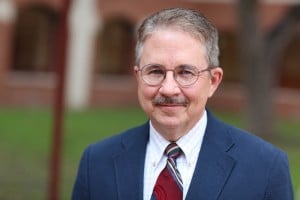
Mar 18, 2016
STUDIES: South Carolina’s Death Penalty Still Arbitrary 40 Years After Gregg
A new article by Cornell Law School Professor John Blume (pictured) and Lindsey Vann of Justice 360 analyzes South Carolina’s experience with the death penalty over the last 40 years and argues that capital punishment in the Palmetto State continues to exhibit the same arbitrary and discriminatory features that led the U.S. Supreme Court to strike down the death penalty in 1972. Using Justice Stephen Breyer’s dissent in Glossip v. Gross as a guide, Blume and Vann point to unreliability…
Read More
Mar 17, 2016
After Initial Botched Execution of Romell Broom, Ohio Supreme Court Gives Approval for State to Try Again
In a divided 4 – 3 decision, the Ohio Supreme Court on March 16, 2016 authorized the state to try for a second time to execute death row inmate Romell Broom (pictured, after the state’s failed first attempt to execute him). The court majority held that a second execution attempt would not violate constitutional protections against twice placing a defendant in jeopardy of life, nor constitute cruel and unusual punishment. Ohio first tried to execute Broom on September 15, 2009, but the attempt…
Read More
Mar 16, 2016
Judge Finds Ronell Wilson Has Intellectual Disability, Removes His Federal Death Sentence
United States District Court Judge Nicholas Garaufis (pictured) ruled on March 15 that federal death row inmate Ronell Wilson is ineligible for the death penalty because he has intellectual disability. In 2002, the U.S. Supreme Court held in Atkins v. Virginia that the death penalty constituted cruel and unusual punishment when applied to people diagnosed with intellectual disability, then known as mental retardation. Wilson was first sentenced to death in New York federal district court in…
Read More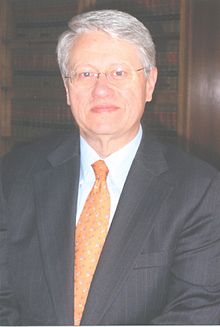
Mar 15, 2016
Ohio Justice, Death Row Exoneree Say Innocence Is Reason Enough to Abolish Capital Punishment
In two separate op-eds, an Ohio Supreme Court Justice and a death row exoneree from Ohio expressed concerns about wrongful convictions that have led them to believe the death penalty should be abolished. In The Highland County Press, Justice Paul Pfeifer (pictured, r.) wrote about the “long and complex” case of Thomas Keenan, who was granted a new trial because prosecutors illegally withheld evidence. Pfeifer points to the misconduct in Keenan’s case as a reason why the death penalty should be…
Read More
Mar 14, 2016
Darryl Hunt, North Carolina Exoneree Who Narrowly Escaped Death Sentence, Dies 12 Years After Release
Darryl Hunt (pictured), an exoneree and anti-death penalty advocate, was found dead in Winston-Salem, North Carolina on March 13, 2016. Hunt was wrongfully convicted of the 1984 rape and murder of Deborah Sykes, a newspaper copy editor. Prosecutors sought the death penalty against him, but he received a life sentence because a single juror refused to vote for death. His conviction was overturned in 1989 and prosecutors offered Hunt a deal for time served, in exchange for pleading guilty.
Read More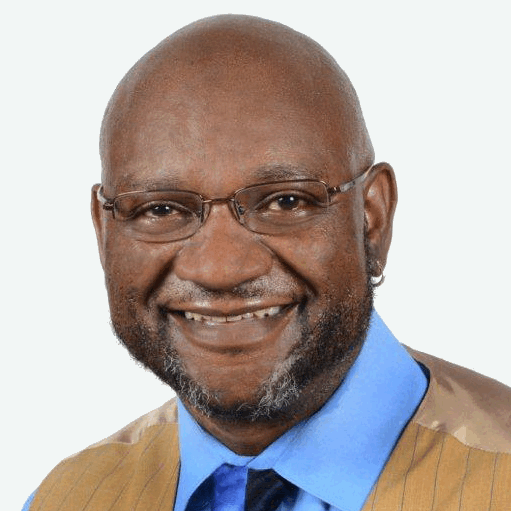
Mar 11, 2016
BOOKS: “13 Ways of Looking at the Death Penalty”
The recent book, 13 Ways of Looking at the Death Penalty, by Mario Marazziti, explores the United States’ continuing use of the death penalty in a world community that is increasingly rejecting the practice. The Philadelphia Inquirer calls the book “an interesting, compelling look at the cultural and religious underpinnings of the death penalty and how we got here. More important, [Marazziti’s] interviews with U.S. death-row inmates — living and now-deceased — their survivors, and their…
Read More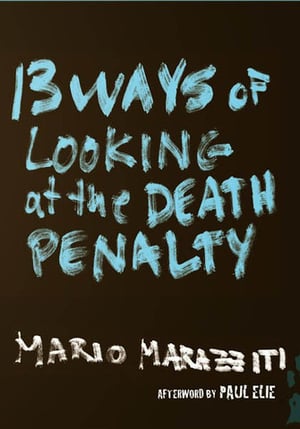
Mar 10, 2016
NEW VOICES: Former Utah Prosecutor Urges Death Penalty Repeal
Creighton Horton spent 30 years as a prosecutor with the Salt Lake District Attorney’s Office and Utah Attorney General’s Office before retiring in 2009. In a recent op-ed, he said his experience handling capital cases led him to believe Utah should abolish the death penalty. Horton noted the negative impact the death penalty can have on victims’ families. “If a capital case goes to trial and the jury returns a verdict of death, that pronouncement is probably the last satisfaction the victim’s…
Read More
Mar 09, 2016
Texas About to Execute Inmate Despite Evidence of Intellectual Disability
UPDATE: Wesbrook was executed on Mar. 9. EARLIER: Coy Wesbrook is scheduled to be executed in Texas on March 9. If the execution proceeds, it will be the eighth in the U.S. this year, half of which have been in Texas. Wesbrook killed five people after a confrontation with his ex-wife. The U.S. Supreme Court has held that defendants with intellectual disability (formerly referred to as “mental retardation”) are exempt from the death penalty. Wesbrook was tested for intellectual disability at the…
Read More