Publications & Testimony
Testimony and Statements on the Death Penalty
FROM DPIC
For testimony by former Executive Director Robert Dunham and former Executive Director Richard C. Dieter, please visit our page DPIC Testimony.
FROM RELIGIOUS LEADERS AND ORGANIZATIONS
- News Brief: Pope Francis Calls for Prayer to Abolish the Death Penalty (September 1, 2022)
- Jewish Congregation Renews Request for Department of Justice to Drop Death Penalty in Tree of Life Synagogue Killings (June 24, 2021)
- Orthodox Church Patriarch Calls Death Penalty Incompatible with Christian Beliefs (October 20, 2020)
- Presbyterian Church (U.S.A.) — Statement on the Federal Death Penalty (August 5, 2019)
- Louisiana Christian Faith Leaders Call for State to Abolish Death Penalty (April 25, 2019)
- Pittsburgh Rabbi’s Wife Opposes Death Penalty for Tree of Life Synagogue Killings (March 18, 2019)
- Orthodox Jewish Organization Calls for an End to Capital Punishment in the U.S. | Death Penalty Information Center (February 17, 2016)
- Baptist Theologian Says Death Penalty Does Not Fit With Christian Theology (March 8, 2016)
- Civil and Human Rights: Death Penalty — Church & Society, The United Methodist Church
- Religious Views: Over 150 Catholic Theologians Call for Repeal of the Death Penalty (September 27, 2011)
- Power Over Life and Death — The Power to Save a Life (January 15, 2005)
- Responsibility, Rehabilitation, and Restoration: A Catholic Perspective on Crime and Criminal Justice (November 2000)
- The Challenge of Holiness: A Sermon on the Death Penalty (January 10, 2000)
- General Assembly of the Texas Conference of Churches — Resolution Opposing the Death Penalty (February 24, 1998)
- Statement by Catholic Bishops of Texas on Capital Punishment (October 20, 1997)
- Catholic Church Expresses Strong Opposition to Capital Punishment in Catechism (September 9, 1997)
- Catholic Bishops of Iowa Issue Statement on Death Penalty (February 4, 1998)
- To End the Death Penalty: A Report of the National Jewish/Catholic Consultation
- Transcript of Dr. Pat Robertson’s Speech on the Role of Religion and the Death Penalty at The College of William and Mary
- Collection of Official Catholic Statements on the Death Penalty (1980)
FROM THE INTERNATIONAL COMMUNITY
- UN experts call for universal abolition of the death penalty | OHCHR (October 9, 2023)
- Zambia Becomes 25th Sub-Saharan African Nation to Abolish Death Penalty (December 23, 2022)
- Belgium Wants a World Without the Death Penalty (October 20, 2022)
- As France Prepares to Assume Presidency of European Union, Emmanuel Macron Announces Initiative for Worldwide Abolition of Death Penalty (October 11, 2021)
- U.N. Secretary-General, European Union Ambassador Call for Abolition of “Barbaric” Death Penalty (October 11, 2017)
- European Union Calls for Abolition of Capital Punishment as World Coalition Hosts International Death Penalty Conference (June 27, 2017)
- U.N. Investigator Talks About the Future of Solitary and the Death Penalty (November 7, 2016)
- World Congress Against the Death Penalty Renews Call for Global Moratorium, Pope Sends Message of Support (June 27, 2016)
- Declaration by the Presidency on behalf of the European Union on the 400th execution in Texas from the Council of the European Union (August 21, 2007)
- Resolution Supporting Worldwide Moratorium on Executions from the United Nations Commission on Human Rights (April 1999)
- Mary Robinson, U.N. High Commissioner for Human Rights — Message to the Press Conference organized by the Death Penalty Information Center for the release of the report, “International Perspectives on the Death Penalty” (October 12, 1999)
- Status of the International Covenants on Human Rights from the United Nations Commission on Human Rights (April 1998)
FROM ADVOCACY GROUPS
- Advocacy Group Tells Supreme Court that Negative Stereotypes Distort Perception that Latinos in Death-Penalty Cases Pose Future Danger to Society (April 15, 2022)
- Disability Rights Groups, Legal Experts, and Conservative Advocates Urge Supreme Court to Strike Down Georgia’s Uniquely Harsh Proof Requirements in Death-Penalty Intellectual Disabilities Cases (January 11, 2022)
- NAACP Reaffirms Its Support of Abolishing the Death Penalty (2022)
- More Than 80 Civil Rights and Advocacy Organizations Urge President Biden to End Federal Executions | Death Penalty Information Center (February 9, 2021)
- More Than 250 Conservative Leaders Join Call to End Death Penalty (October 29, 2019)
- National Alliance on Mental Illness: The Death Penalty
- Florida League of Women Voters Calls for Halt to Executions (May 28, 2007)
- Victims Organizations Issue Joint Statement for National Victims’ Rights Week (April 19, 2007)
FROM JUDGES, LEGISLATORS, AND OTHER ORGANIZATIONS
- Republican-led Oklahoma committee considers pause on executions amid death case scrutiny (October 5, 2023)
- Former Pro-Death Penalty District Attorney Explains Why He Now Supports Abolition, and Fears Political Promises to Expand the Use of the Death Penalty (August 20, 2023)
- Pressley, Durbin Reintroduce Bill to End the Federal Death Penalty (July 13, 2023)
- The Lancet Editorial: Physician Involvement in Executions Violates Medical Ethics | Death Penalty Information Center (May 20, 2023)
- APA calls for extending ineligibility for the death penalty to adolescent offenders younger than age 21 (August 4, 2022)
- Why some Republicans are turning against the death penalty | Ron Ferguson | Ohio House of Representatives (March 8, 2022)
- Eight years on Texas’ highest criminal court turned Elsa Alcala into a death penalty skeptic. How will the court change without her? (January 26, 2019)
- AMA to Supreme Court: Doctor participation in executions unethical (August 22, 2018)
- Former Governor Bill Richardson: Death Penalty Is Bad for Business, Out of Step With World’s Views (June 16, 2017)
- Capital Punishment and Nurses’ Participation in Capital Punishment (2016)
- Former Ohio Attorney General Jim Petro Says Death Penalty Unfixable, “Not Worth It Any More” (September 12, 2016)
- Resolution Supporting Repeal of the Death Penalty, National Hispanic Caucus of State Legislators (August 11, 2016)
- Retired Police Captain Says Repealing Death Penalty Is “Smart on Crime” (November 24, 2014)
- Resolution Supporting Abolition of the Death Penalty, Natl. Assoc. of Black Psychologists (2012)
- The Road to Justice and Peace by New Jersey State Senator Raymond Lesniak (February 1, 2009)
- Statement On The Federal Death Penalty System by Senator Feingold (June 7, 2001)
- Statement on the Need for a Federal Moratorium on the Death Penalty Senator Feingold (October 29, 2000)
- Death Penalty: The Torah and Today (August 23, 2000)
- Press Release for Senator Russ Feingold’s Introduction of Senate’s First Death Penalty Moratorium Bill (April 20, 2000)
- Amnesty International Southern Regional Conference: Orlando, Florida Remarks by Former Florida Chief Justice Gerald Kogan (October 23, 1999)
- American Bar Association Resolution on the Death Penalty (February 3, 1997)
FROM MURDER VICTIMS’ FAMILY MEMBERS
Items: 2911 — 2920
Oct 15, 2015
California Law Aims to Reduce Prosecutorial Misconduct
California has enacted a new law giving judges greater authority to remove individual prosecutors — and in some instances entire prosecutorial offices — from cases if they willfully withhold evidence from the defense. Passage of the law was prompted by disclosure of systemic misuse of jailhouse informants by Orange County prosecuters, which led Superior Court Judge Thomas Goethals (pictured) to bar the entire Orange County District Attorney’s Office from participation in a death penalty case…
Read More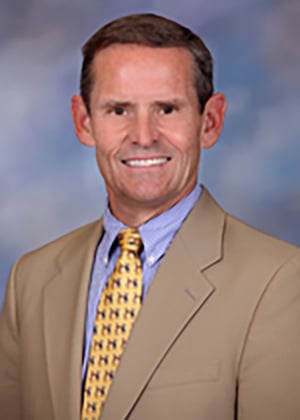
Oct 14, 2015
Death Row Exonerees Meet in Ohio, Call for Abolition of the Death Penalty
A group of death row exonerees, including Kwame Ajamu (pictured), held a press conference in Cleveland on October 9 in which they called for the end of the death penalty. Ajamu — the nation’s 150th death-row exoneree — was freed from Ohio’s death row in 2014 along with his brother, Wiley Bridgeman, and another man, Ricky Jackson. The three had been convicted 39 years earlier on the testimony of a 12-year-old boy who later recanted, saying he had been pressured by police. “We hope that we can…
Read More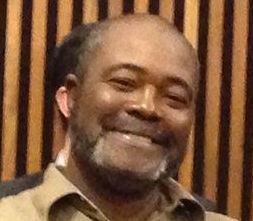
Oct 13, 2015
STUDIES: Requiring Jury Unanimity Would Decrease U.S. Death Sentences by 21%
The U.S. Supreme Court heard oral argument on October 13 in Hurst v. Florida, a case challenging provisions in Florida’s death penalty statute that do not require jurors to unanimously agree to the facts that could subject a defendant to a death sentence or to reach unanimity before recommending that the judge sentence a defendant to death. Florida is one of just three states that does not require a unanimous jury verdict when sentencing someone to death. A study by the Charles Hamilton…
Read More
Oct 12, 2015
NEW VOICES: The Impact of Capital Punishment on Corrections Workers
In an op-ed for the Pittsburgh Post-Gazette, former corrections official David Rose criticizes the arbitrariness and dehumanizing nature of the death penalty. Rose, who spent 30 years working in corrections in Pennsylvania, Florida, and New Jersey, said, “I don’t think the public realizes the impact that executions have on the public servants who are tasked with carrying them out.” Rose draws on his own experiences and those of his colleagues to describe the toll that capital punishment takes…
Read More
Oct 09, 2015
Amid Unavailability of Lethal Injection Drugs, States Push Legal Limits to Carry Out Executions
“Over time lethal injection has become only more problematic and chaotic,” Deborah W. Denno, a professor at Fordham Law School, told the New York Times, summarizing the ongoing battles that have led states to adopt new drug sources or alternative methods of execution. Several states have obtained or sought drugs using sources that may violate pharmaceutical regulations. For the execution of Alfredo Prieto, Virginia obtained pentobarbital from the Texas Department of Criminal Justice, which…
Read More
Oct 08, 2015
Oklahoma Used Wrong Drug, Violated State Protocol, in January Execution of Charles Warner
A report by The Oklahoman has revealed that Oklahoma violated its execution protocol and used the wrong final drug during the execution of Charles Warner on January 15, 2015. Warner, whose final words were “My body is on fire,” was executed using potassium acetate, the same drug that was delivered for Richard Glossip’s aborted execution on September 30. The drug called for in the protocol is potassium chloride. Glossip’s execution was stayed as a result of the mix-up, and Attorney General Scott…
Read More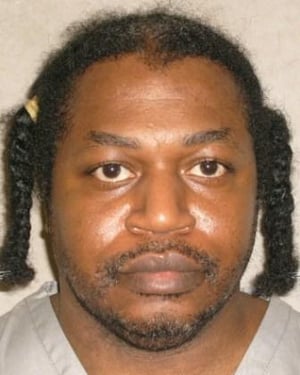
Oct 07, 2015
Montana Judge Puts Executions on Hold
On October 6, Montana District Court Judge Jeffrey Sherlock (pictured) held that the state’s proposed lethal injection protocol violated state law, which requires that an “ultra fast-acting barbiturate” be used in executions. Judge Sherlock said the proposed barbiturate, pentobarbital, does not qualify as such a drug. The ruling stated, “The State of Montana is hereby enjoined from using the drug pentobarbital in its lethal injection protocol unless and until the statute authorizing lethal…
Read More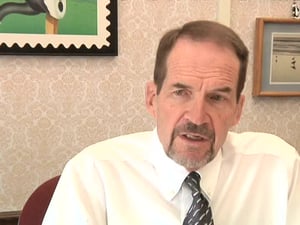
Oct 06, 2015
Arkansas Inmates Seek Stay of 8 Executions; Say New Secrecy Law Violates Settlement Agreement
Eight death-row prisoners whom Arkansas has scheduled to be executed in the next four months have asked a judge to issue a preliminary injunction that would put their executions on hold. They argue that the state’s execution procedures are unconstitutional for multiple reasons and that Arkansas’ secrecy law violates a previous settlement agreement between death row inmates and the state. Arkansas, which has not carried out an execution since November 2005, has scheduled eight executions for…
Read More
Oct 05, 2015
U.S. Supreme Court to Hear Pennsylvania Case Concerning Judicial Bias
The U.S. Supreme Court has agreed to hear Williams v. Pennsylvania, a case challenging former Pennsylvania Supreme Court Chief Justice Ronald Castille’s participation in an appeal of a case that had been tried in Philadelphia while Castille was the city’s district attorney. Terrance Williams (pictured) was convicted and sentenced to death in Philadelphia in 1984 for the murder of a man prosecutors had described to the jury as “a kind man [who had] offered [Williams] a ride home.” Williams was…
Read More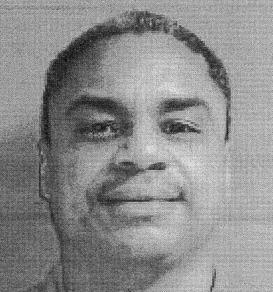
Oct 03, 2015
Missouri Commutes Death Sentence of Kimber Edwards
On October 2, Missouri Governor Jay Nixon commuted the death sentence of Kimber Edwards to life without parole. Edwards had faced execution on October 6 for the alleged murder-for-hire killing of his ex-wife. Prosecutors said Edwards had hired Orthell Wilson to kill his ex-wife to prevent her from testifying in a child-support hearing. Wilson pled guilty and was sentenced to life without parole. He subsequently recanted his story, saying that he had acted alone and had lied about being hired…
Read More