Publications & Testimony
Testimony and Statements on the Death Penalty
FROM DPIC
For testimony by former Executive Director Robert Dunham and former Executive Director Richard C. Dieter, please visit our page DPIC Testimony.
FROM RELIGIOUS LEADERS AND ORGANIZATIONS
- News Brief: Pope Francis Calls for Prayer to Abolish the Death Penalty (September 1, 2022)
- Jewish Congregation Renews Request for Department of Justice to Drop Death Penalty in Tree of Life Synagogue Killings (June 24, 2021)
- Orthodox Church Patriarch Calls Death Penalty Incompatible with Christian Beliefs (October 20, 2020)
- Presbyterian Church (U.S.A.) — Statement on the Federal Death Penalty (August 5, 2019)
- Louisiana Christian Faith Leaders Call for State to Abolish Death Penalty (April 25, 2019)
- Pittsburgh Rabbi’s Wife Opposes Death Penalty for Tree of Life Synagogue Killings (March 18, 2019)
- Orthodox Jewish Organization Calls for an End to Capital Punishment in the U.S. | Death Penalty Information Center (February 17, 2016)
- Baptist Theologian Says Death Penalty Does Not Fit With Christian Theology (March 8, 2016)
- Civil and Human Rights: Death Penalty — Church & Society, The United Methodist Church
- Religious Views: Over 150 Catholic Theologians Call for Repeal of the Death Penalty (September 27, 2011)
- Power Over Life and Death — The Power to Save a Life (January 15, 2005)
- Responsibility, Rehabilitation, and Restoration: A Catholic Perspective on Crime and Criminal Justice (November 2000)
- The Challenge of Holiness: A Sermon on the Death Penalty (January 10, 2000)
- General Assembly of the Texas Conference of Churches — Resolution Opposing the Death Penalty (February 24, 1998)
- Statement by Catholic Bishops of Texas on Capital Punishment (October 20, 1997)
- Catholic Church Expresses Strong Opposition to Capital Punishment in Catechism (September 9, 1997)
- Catholic Bishops of Iowa Issue Statement on Death Penalty (February 4, 1998)
- To End the Death Penalty: A Report of the National Jewish/Catholic Consultation
- Transcript of Dr. Pat Robertson’s Speech on the Role of Religion and the Death Penalty at The College of William and Mary
- Collection of Official Catholic Statements on the Death Penalty (1980)
FROM THE INTERNATIONAL COMMUNITY
- UN experts call for universal abolition of the death penalty | OHCHR (October 9, 2023)
- Zambia Becomes 25th Sub-Saharan African Nation to Abolish Death Penalty (December 23, 2022)
- Belgium Wants a World Without the Death Penalty (October 20, 2022)
- As France Prepares to Assume Presidency of European Union, Emmanuel Macron Announces Initiative for Worldwide Abolition of Death Penalty (October 11, 2021)
- U.N. Secretary-General, European Union Ambassador Call for Abolition of “Barbaric” Death Penalty (October 11, 2017)
- European Union Calls for Abolition of Capital Punishment as World Coalition Hosts International Death Penalty Conference (June 27, 2017)
- U.N. Investigator Talks About the Future of Solitary and the Death Penalty (November 7, 2016)
- World Congress Against the Death Penalty Renews Call for Global Moratorium, Pope Sends Message of Support (June 27, 2016)
- Declaration by the Presidency on behalf of the European Union on the 400th execution in Texas from the Council of the European Union (August 21, 2007)
- Resolution Supporting Worldwide Moratorium on Executions from the United Nations Commission on Human Rights (April 1999)
- Mary Robinson, U.N. High Commissioner for Human Rights — Message to the Press Conference organized by the Death Penalty Information Center for the release of the report, “International Perspectives on the Death Penalty” (October 12, 1999)
- Status of the International Covenants on Human Rights from the United Nations Commission on Human Rights (April 1998)
FROM ADVOCACY GROUPS
- Advocacy Group Tells Supreme Court that Negative Stereotypes Distort Perception that Latinos in Death-Penalty Cases Pose Future Danger to Society (April 15, 2022)
- Disability Rights Groups, Legal Experts, and Conservative Advocates Urge Supreme Court to Strike Down Georgia’s Uniquely Harsh Proof Requirements in Death-Penalty Intellectual Disabilities Cases (January 11, 2022)
- NAACP Reaffirms Its Support of Abolishing the Death Penalty (2022)
- More Than 80 Civil Rights and Advocacy Organizations Urge President Biden to End Federal Executions | Death Penalty Information Center (February 9, 2021)
- More Than 250 Conservative Leaders Join Call to End Death Penalty (October 29, 2019)
- National Alliance on Mental Illness: The Death Penalty
- Florida League of Women Voters Calls for Halt to Executions (May 28, 2007)
- Victims Organizations Issue Joint Statement for National Victims’ Rights Week (April 19, 2007)
FROM JUDGES, LEGISLATORS, AND OTHER ORGANIZATIONS
- Republican-led Oklahoma committee considers pause on executions amid death case scrutiny (October 5, 2023)
- Former Pro-Death Penalty District Attorney Explains Why He Now Supports Abolition, and Fears Political Promises to Expand the Use of the Death Penalty (August 20, 2023)
- Pressley, Durbin Reintroduce Bill to End the Federal Death Penalty (July 13, 2023)
- The Lancet Editorial: Physician Involvement in Executions Violates Medical Ethics | Death Penalty Information Center (May 20, 2023)
- APA calls for extending ineligibility for the death penalty to adolescent offenders younger than age 21 (August 4, 2022)
- Why some Republicans are turning against the death penalty | Ron Ferguson | Ohio House of Representatives (March 8, 2022)
- Eight years on Texas’ highest criminal court turned Elsa Alcala into a death penalty skeptic. How will the court change without her? (January 26, 2019)
- AMA to Supreme Court: Doctor participation in executions unethical (August 22, 2018)
- Former Governor Bill Richardson: Death Penalty Is Bad for Business, Out of Step With World’s Views (June 16, 2017)
- Capital Punishment and Nurses’ Participation in Capital Punishment (2016)
- Former Ohio Attorney General Jim Petro Says Death Penalty Unfixable, “Not Worth It Any More” (September 12, 2016)
- Resolution Supporting Repeal of the Death Penalty, National Hispanic Caucus of State Legislators (August 11, 2016)
- Retired Police Captain Says Repealing Death Penalty Is “Smart on Crime” (November 24, 2014)
- Resolution Supporting Abolition of the Death Penalty, Natl. Assoc. of Black Psychologists (2012)
- The Road to Justice and Peace by New Jersey State Senator Raymond Lesniak (February 1, 2009)
- Statement On The Federal Death Penalty System by Senator Feingold (June 7, 2001)
- Statement on the Need for a Federal Moratorium on the Death Penalty Senator Feingold (October 29, 2000)
- Death Penalty: The Torah and Today (August 23, 2000)
- Press Release for Senator Russ Feingold’s Introduction of Senate’s First Death Penalty Moratorium Bill (April 20, 2000)
- Amnesty International Southern Regional Conference: Orlando, Florida Remarks by Former Florida Chief Justice Gerald Kogan (October 23, 1999)
- American Bar Association Resolution on the Death Penalty (February 3, 1997)
FROM MURDER VICTIMS’ FAMILY MEMBERS
Items: 2931 — 2940
Sep 21, 2015
Conservative Commentator, Texas Editorial Urge End to Death Penalty for Mentally Ill
The U.S. Court of Appeals for the Fifth Circuit will hear arguments on September 23 regarding Scott Panetti’s competency to be executed. Panetti is a severely mentally ill man who represented himself at his trial wearing a cowboy costume, and attempted to subpoena the Pope, John F. Kennedy, and Jesus Christ. As the court prepares to hear Panetti’s case, opinion pieces in two Texas newspapers used it to illustrate larger problems with the death penalty and mental illness. In an op-ed in The…
Read More
Sep 18, 2015
Nebraska’s Attempt to Import Execution Drug Halted in India
A shipment of sodium thiopental, an anesthetic once widely used in executions, was recently stopped in India before it could reach Nebraska. The Indian distributor sold more than $50,000 worth of sodium thiopental to the state in May, but the shipment was stopped before leaving the country because of “improper or missing paperwork.” FedEx said it halted the shipment because it did not have Food And Drug Administration clearance: “As with any international importation of a drug, data about that…
Read More
Sep 17, 2015
Looking Back at the Peak of Texas’s Death Sentencing
So far in 2015, no one has been sentenced to death in Texas. The death row population has dropped to 257, down from 460 at its peak in 1999. In that year, Texas sentenced 48 people to death, the most in any year since the death penalty was reinstated. Among the reasons for the decline in death sentences has been the adoption of the alternative sentence of life without parole (adopted in 2005), and a change in the political climate that had led politicians to compete in trying to appear “tough…
Read More
Sep 16, 2015
In New Book, Media Interviews, Justice Breyer Addresses International Opinion, Arbitrariness of Death Penalty
In his new book, The Court and the World: American Law and the New Global Realities, and in media interviews accompanying its release, Supreme Court Justice Stephen Breyer discusses the relationship between American laws and those of other countries and his dissent in Glossip v. Gross, which questioned the constitutionality of the death penalty. In an interview with The National Law Journal, Breyer summarized the core reasons underlying his Glossip dissent: “You know, sometimes people make…
Read More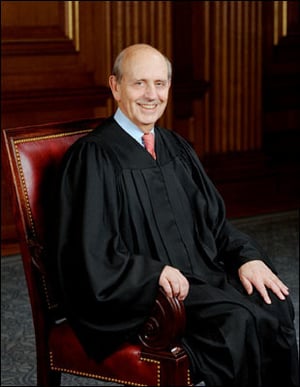
Sep 15, 2015
USA Today Chronicles Declining Death Penalty: It “May Be Living on Borrowed Time”
In a sweeping look at the current state of the U.S. death penalty, USA Today reporters Richard Wolf and Kevin Johnson highlight several recent story lines that collectively illustrate a dramatic decline in the country’s use of capital punishment. Their conclusion: “The death penalty in America may be living on borrowed time.” Wolf and Johnson recount recent cases in which high-profile crimes resulted in a life without parole sentence, in many instances because victims’ families raised concerns…
Read More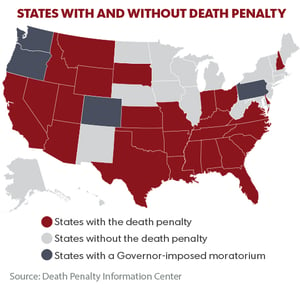
Sep 14, 2015
Former Alabama Death Row Inmate Freed on Evidence of Innocence “Glad to Be Alive”
Montez Spradley, sentenced to death by an Alabama judge in 2008 over a jury’s 10 – 2 recommendation for life without parole, was freed from prison on September 4. Spradley spent 9.5 years incarcerated, including 3.5 years on death row. He was granted a new trial in 2011 as a result of multiple evidentiary errors in his trial. The state’s key witness against Spradley, his ex-girlfriend, Alisha Booker, later testified that she had lied at trial because Spradley was cheating on her. “I just felt he…
Read More
Sep 11, 2015
Richard Glossip’s Innocence Claim Draws Growing Attention [UPDATED]
UPDATE: Former Oklahoma Senator Tom Coburn (pictured), former Oklahoma Sooners and Dallas Cowboys football coach Barry Switzer, and John W. Raley, Jr., the former chief federal prosecutor for the Eastern District of Oklahoma, have joined with innocence advocates Barry Scheck, Co-Director of the Innocence Project, and Samuel Gross, editor of the National Registry of Exonerations, in a letter to Oklahoma Governor Mary Fallin urging her to stay the execution of Richard Glossip. Glossip is…
Read More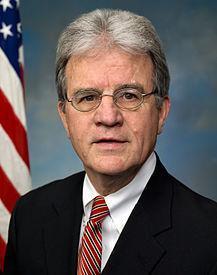
Sep 11, 2015
Richard Glossip’s Innocence Claim Draws Growing Attention
Richard Glossip, who is scheduled to be executed in Oklahoma on September 16, is seeking a stay of execution to allow consideration of his claims of innocence. Glossip was convicted solely on the testimony of Justin Sneed, then 19 years old, who confessed to the crime and said he hired Glossip to help him. No physical evidence linked Glossip to the crime, and Sneed gave investigators multiple contradictory descriptions of the murder before adopting police suggestions that Glossip was involved.
Read More
Sep 10, 2015
Southern California Tops Deep South in New Death Sentences Amid Mounting Evidence of Misconduct
Riverside County, California is “the buckle of a new Death Belt,” says Professor Robert J. Smith of the University of North Carolina at Chapel Hill, producing 7 death sentences in the first half of 2015. This, Smith says, is “more than California’s other 57 counties combined, more than any other state, and more than the whole Deep South combined.” Los Angeles County has produced 33 death sentences since 2010 — the most in the Nation — and 5 Southern California counties (also including Kern…
Read More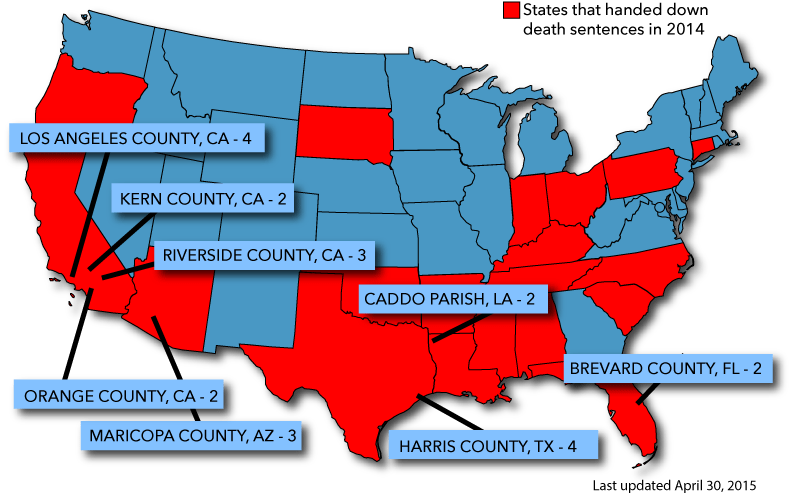
Sep 09, 2015
Former Judge: Pennsylvania Moratorium is “Appropriate” and “Reasonable”
Robert Cindrich, a former U.S. District Judge and U.S. Attorney for the Western District of Pennsylvania, recently wrote an op-ed for the Harrisburg Patriot-News calling Governor Tom Wolf’s moratorium on executions in Pennsylvania “appropriate” and “reasonable.” Expressing concerns about “multiple, serious problems with the death penalty” in Pennsylvania, Judge Cindrich says Governor Wolf “was absolutely correct” that no executions should take place until the Pennsylvania Advisory Committee and…
Read More