Publications & Testimony
Testimony and Statements on the Death Penalty
FROM DPIC
For testimony by former Executive Director Robert Dunham and former Executive Director Richard C. Dieter, please visit our page DPIC Testimony.
FROM RELIGIOUS LEADERS AND ORGANIZATIONS
- News Brief: Pope Francis Calls for Prayer to Abolish the Death Penalty (September 1, 2022)
- Jewish Congregation Renews Request for Department of Justice to Drop Death Penalty in Tree of Life Synagogue Killings (June 24, 2021)
- Orthodox Church Patriarch Calls Death Penalty Incompatible with Christian Beliefs (October 20, 2020)
- Presbyterian Church (U.S.A.) — Statement on the Federal Death Penalty (August 5, 2019)
- Louisiana Christian Faith Leaders Call for State to Abolish Death Penalty (April 25, 2019)
- Pittsburgh Rabbi’s Wife Opposes Death Penalty for Tree of Life Synagogue Killings (March 18, 2019)
- Orthodox Jewish Organization Calls for an End to Capital Punishment in the U.S. | Death Penalty Information Center (February 17, 2016)
- Baptist Theologian Says Death Penalty Does Not Fit With Christian Theology (March 8, 2016)
- Civil and Human Rights: Death Penalty — Church & Society, The United Methodist Church
- Religious Views: Over 150 Catholic Theologians Call for Repeal of the Death Penalty (September 27, 2011)
- Power Over Life and Death — The Power to Save a Life (January 15, 2005)
- Responsibility, Rehabilitation, and Restoration: A Catholic Perspective on Crime and Criminal Justice (November 2000)
- The Challenge of Holiness: A Sermon on the Death Penalty (January 10, 2000)
- General Assembly of the Texas Conference of Churches — Resolution Opposing the Death Penalty (February 24, 1998)
- Statement by Catholic Bishops of Texas on Capital Punishment (October 20, 1997)
- Catholic Church Expresses Strong Opposition to Capital Punishment in Catechism (September 9, 1997)
- Catholic Bishops of Iowa Issue Statement on Death Penalty (February 4, 1998)
- To End the Death Penalty: A Report of the National Jewish/Catholic Consultation
- Transcript of Dr. Pat Robertson’s Speech on the Role of Religion and the Death Penalty at The College of William and Mary
- Collection of Official Catholic Statements on the Death Penalty (1980)
FROM THE INTERNATIONAL COMMUNITY
- UN experts call for universal abolition of the death penalty | OHCHR (October 9, 2023)
- Zambia Becomes 25th Sub-Saharan African Nation to Abolish Death Penalty (December 23, 2022)
- Belgium Wants a World Without the Death Penalty (October 20, 2022)
- As France Prepares to Assume Presidency of European Union, Emmanuel Macron Announces Initiative for Worldwide Abolition of Death Penalty (October 11, 2021)
- U.N. Secretary-General, European Union Ambassador Call for Abolition of “Barbaric” Death Penalty (October 11, 2017)
- European Union Calls for Abolition of Capital Punishment as World Coalition Hosts International Death Penalty Conference (June 27, 2017)
- U.N. Investigator Talks About the Future of Solitary and the Death Penalty (November 7, 2016)
- World Congress Against the Death Penalty Renews Call for Global Moratorium, Pope Sends Message of Support (June 27, 2016)
- Declaration by the Presidency on behalf of the European Union on the 400th execution in Texas from the Council of the European Union (August 21, 2007)
- Resolution Supporting Worldwide Moratorium on Executions from the United Nations Commission on Human Rights (April 1999)
- Mary Robinson, U.N. High Commissioner for Human Rights — Message to the Press Conference organized by the Death Penalty Information Center for the release of the report, “International Perspectives on the Death Penalty” (October 12, 1999)
- Status of the International Covenants on Human Rights from the United Nations Commission on Human Rights (April 1998)
FROM ADVOCACY GROUPS
- Advocacy Group Tells Supreme Court that Negative Stereotypes Distort Perception that Latinos in Death-Penalty Cases Pose Future Danger to Society (April 15, 2022)
- Disability Rights Groups, Legal Experts, and Conservative Advocates Urge Supreme Court to Strike Down Georgia’s Uniquely Harsh Proof Requirements in Death-Penalty Intellectual Disabilities Cases (January 11, 2022)
- NAACP Reaffirms Its Support of Abolishing the Death Penalty (2022)
- More Than 80 Civil Rights and Advocacy Organizations Urge President Biden to End Federal Executions | Death Penalty Information Center (February 9, 2021)
- More Than 250 Conservative Leaders Join Call to End Death Penalty (October 29, 2019)
- National Alliance on Mental Illness: The Death Penalty
- Florida League of Women Voters Calls for Halt to Executions (May 28, 2007)
- Victims Organizations Issue Joint Statement for National Victims’ Rights Week (April 19, 2007)
FROM JUDGES, LEGISLATORS, AND OTHER ORGANIZATIONS
- Republican-led Oklahoma committee considers pause on executions amid death case scrutiny (October 5, 2023)
- Former Pro-Death Penalty District Attorney Explains Why He Now Supports Abolition, and Fears Political Promises to Expand the Use of the Death Penalty (August 20, 2023)
- Pressley, Durbin Reintroduce Bill to End the Federal Death Penalty (July 13, 2023)
- The Lancet Editorial: Physician Involvement in Executions Violates Medical Ethics | Death Penalty Information Center (May 20, 2023)
- APA calls for extending ineligibility for the death penalty to adolescent offenders younger than age 21 (August 4, 2022)
- Why some Republicans are turning against the death penalty | Ron Ferguson | Ohio House of Representatives (March 8, 2022)
- Eight years on Texas’ highest criminal court turned Elsa Alcala into a death penalty skeptic. How will the court change without her? (January 26, 2019)
- AMA to Supreme Court: Doctor participation in executions unethical (August 22, 2018)
- Former Governor Bill Richardson: Death Penalty Is Bad for Business, Out of Step With World’s Views (June 16, 2017)
- Capital Punishment and Nurses’ Participation in Capital Punishment (2016)
- Former Ohio Attorney General Jim Petro Says Death Penalty Unfixable, “Not Worth It Any More” (September 12, 2016)
- Resolution Supporting Repeal of the Death Penalty, National Hispanic Caucus of State Legislators (August 11, 2016)
- Retired Police Captain Says Repealing Death Penalty Is “Smart on Crime” (November 24, 2014)
- Resolution Supporting Abolition of the Death Penalty, Natl. Assoc. of Black Psychologists (2012)
- The Road to Justice and Peace by New Jersey State Senator Raymond Lesniak (February 1, 2009)
- Statement On The Federal Death Penalty System by Senator Feingold (June 7, 2001)
- Statement on the Need for a Federal Moratorium on the Death Penalty Senator Feingold (October 29, 2000)
- Death Penalty: The Torah and Today (August 23, 2000)
- Press Release for Senator Russ Feingold’s Introduction of Senate’s First Death Penalty Moratorium Bill (April 20, 2000)
- Amnesty International Southern Regional Conference: Orlando, Florida Remarks by Former Florida Chief Justice Gerald Kogan (October 23, 1999)
- American Bar Association Resolution on the Death Penalty (February 3, 1997)
FROM MURDER VICTIMS’ FAMILY MEMBERS
Items: 3181 — 3190
Oct 23, 2014
Death Penalty Support Remains Near 40-Year Low
In a Gallup poll released on October 23, support for the death penalty was 63%, remaining within the margin of error of a 40-year low of 60% last year. These results represent a dramatic shift in Americans’ views on the death penalty since the 1990’s, when support for the death penalty peaked at 80%. Opposition to the death penalty has grown significantly among Democrats, more than doubling over the last 20 years, from 22% in 1994 to 46% today. When offered the alternative punishment of life…
Read More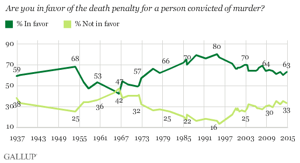
Oct 22, 2014
Former Death-Row Prisoners Freed In North Carolina
On September 2, 2014, Leon Brown (above) and Henry McCollum (below) were exonerated and released from prison in North Carolina. The two men, who are half brothers, had been convicted of the rape and murder of an 11-year-old girl and sentenced to death in 1984. Brown was 15 at the time of the crime and McCollum was 19. Both men have intellectual disabilities and were interrogated under duress until they confessed to the crime. In 2010, Brown turned to the North Carolina Innocence Inquiry…
Read More
Oct 22, 2014
International Events Highlight Death Penalty Concerns
Two recent international gatherings emphasized concerns about the death penalty in the U.S. and around the world. On October 14, the Organization of American States hosted an address by the President of the International Institute of Human Rights, Jean-Paul Costa, focusing on the relatively few countries still practicing capital punishment in North and South America. On October 21, the Delegation of the European Union to the U.S. presented a panel discussion featuring DPIC’s Executive Director…
Read More
Oct 21, 2014
Supreme Court to Review Impact of Eliminating Black and Hispanic Jurors in Capital Case
On October 20, the U.S. Supreme Court agreed to hear Chappell v. Ayala (No. 13 – 1428), a death penalty case from California in which all the black and Hispanic potential jurors were struck from the defendant’s trial. Hector Ayala was convicted in 1989 of three murders in San Diego. At his trial, Ayala’s attorneys argued that the prosecutor was improperly striking jurors on the basis of race. The judge reviewed the prosecutor’s explanation for the strikes without defense attorneys present, saying…
Read More
Oct 20, 2014
North Carolina Innocence Commission Frees Another Inmate, 38 Years Late
The same Commission that freed former death row inmates Henry McCollum and Leon Brown in September exonerated another man who had been convicted of murder, Willie Womble (l.). The North Carolina Innocence Inquiry Commission freed Womble on October 17, dismissing his 1976 first-degree murder conviction and life sentence. Womble had been convicted of acting as a lookout while another man, Joseph Perry, robbed a convenience store and killed the cashier. Both Perry and Womble received life…
Read More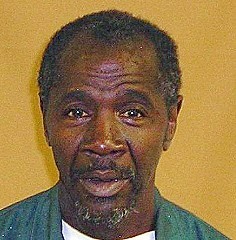
Oct 17, 2014
Florida’s Troubled History With the Death Penalty
A recent retrospective in the Fort Myers Florida Weekly on the state’s death penalty traced some of the problems that have arisen since Florida resumed executions in 1979. During the execution of Jesse Tafero in 1990, six-inch flames shot from the prisoner’s head, and three separate jolts of electricity were required to kill him. Prison officials attributed it to “inadvertent human error.” In the execution of Pedro Medina in 1997, flames and smoke again spewed out from under the head gear. Ron…
Read More
Oct 16, 2014
NEW RESOURCES: Podcast Series on Each State’s Death Penalty
DPIC has recently added four podcasts to our new series on important facts about the death penalty in each state. Seven state podcasts are now available: Michigan, Wisconsin, Maine, Minnesota, North Dakota, Alaska, and Hawaii. We expect to add new episodes each week, with two more coming tomorow (Oct. 17). The series has begun with states that have abolished the death penalty, and focuses on the developments leading to repeal in those states. The issues that brought those states to abolition…
Read MoreOct 15, 2014
Lawsuit Following Botched Oklahoma Execution Names Participating Doctor
On October 14 a lawsuit was filed by the family of Clayton Lockett (l.) against the state of Oklahoma for damages related to his botched execution in April. The suit alleges “unsound procedures and inadequately trained personnel” and claims that Dr. Johnny Zellmer was the physician present at Lockett’s execution. The family asserts that Zellmer, “was willing to, and did in fact, conduct the medical experiment engaged in by Defendants to kill Clayton Lockett regardless of the fact that these…
Read More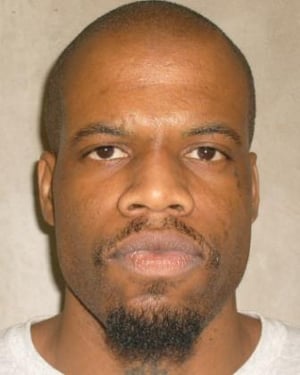
Oct 14, 2014
Death Penalty Lawyer Called America’s Mandela
In a recent column in the New York Times, Nicholas Kristof highlighted the work of Bryan Stevenson (pictured), referring to him as “America’s Nelson Mandela.” Stevenson, the founder of the Equal Justice Initiative in Alabama, has focused his career on representing indigent defendants, especially those on death row throughout the south. In his new book, Just Mercy, Stevenson tells the story of representing and eventually winning the exoneration of Walter McMillian, a black man unjustly convicted…
Read More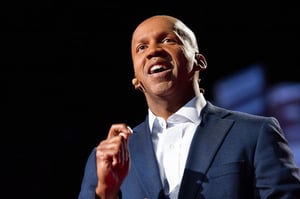
Oct 13, 2014
Botched Execution Results in $100,000 Renovation and Fewer Media Witnesses
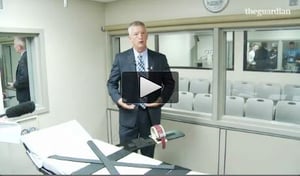
The Oklahoma Department of Corrections recently gave the media a tour (see video here) of its newly renovated execution chamber. The state spent over $100,000 updating the rooms in response to the botched execution of Clayton Lockett in April. Among the changes are a new gurney (an “electric bed”), a new intercom, and an atomic clock. Previously, communications included colored sticks pushed through a wall, with a red stick indicating something had gone wrong. Correctional officials were…
Read More