Publications & Testimony
Testimony and Statements on the Death Penalty
FROM DPIC
For testimony by former Executive Director Robert Dunham and former Executive Director Richard C. Dieter, please visit our page DPIC Testimony.
FROM RELIGIOUS LEADERS AND ORGANIZATIONS
- News Brief: Pope Francis Calls for Prayer to Abolish the Death Penalty (September 1, 2022)
- Jewish Congregation Renews Request for Department of Justice to Drop Death Penalty in Tree of Life Synagogue Killings (June 24, 2021)
- Orthodox Church Patriarch Calls Death Penalty Incompatible with Christian Beliefs (October 20, 2020)
- Presbyterian Church (U.S.A.) — Statement on the Federal Death Penalty (August 5, 2019)
- Louisiana Christian Faith Leaders Call for State to Abolish Death Penalty (April 25, 2019)
- Pittsburgh Rabbi’s Wife Opposes Death Penalty for Tree of Life Synagogue Killings (March 18, 2019)
- Orthodox Jewish Organization Calls for an End to Capital Punishment in the U.S. | Death Penalty Information Center (February 17, 2016)
- Baptist Theologian Says Death Penalty Does Not Fit With Christian Theology (March 8, 2016)
- Civil and Human Rights: Death Penalty — Church & Society, The United Methodist Church
- Religious Views: Over 150 Catholic Theologians Call for Repeal of the Death Penalty (September 27, 2011)
- Power Over Life and Death — The Power to Save a Life (January 15, 2005)
- Responsibility, Rehabilitation, and Restoration: A Catholic Perspective on Crime and Criminal Justice (November 2000)
- The Challenge of Holiness: A Sermon on the Death Penalty (January 10, 2000)
- General Assembly of the Texas Conference of Churches — Resolution Opposing the Death Penalty (February 24, 1998)
- Statement by Catholic Bishops of Texas on Capital Punishment (October 20, 1997)
- Catholic Church Expresses Strong Opposition to Capital Punishment in Catechism (September 9, 1997)
- Catholic Bishops of Iowa Issue Statement on Death Penalty (February 4, 1998)
- To End the Death Penalty: A Report of the National Jewish/Catholic Consultation
- Transcript of Dr. Pat Robertson’s Speech on the Role of Religion and the Death Penalty at The College of William and Mary
- Collection of Official Catholic Statements on the Death Penalty (1980)
FROM THE INTERNATIONAL COMMUNITY
- UN experts call for universal abolition of the death penalty | OHCHR (October 9, 2023)
- Zambia Becomes 25th Sub-Saharan African Nation to Abolish Death Penalty (December 23, 2022)
- Belgium Wants a World Without the Death Penalty (October 20, 2022)
- As France Prepares to Assume Presidency of European Union, Emmanuel Macron Announces Initiative for Worldwide Abolition of Death Penalty (October 11, 2021)
- U.N. Secretary-General, European Union Ambassador Call for Abolition of “Barbaric” Death Penalty (October 11, 2017)
- European Union Calls for Abolition of Capital Punishment as World Coalition Hosts International Death Penalty Conference (June 27, 2017)
- U.N. Investigator Talks About the Future of Solitary and the Death Penalty (November 7, 2016)
- World Congress Against the Death Penalty Renews Call for Global Moratorium, Pope Sends Message of Support (June 27, 2016)
- Declaration by the Presidency on behalf of the European Union on the 400th execution in Texas from the Council of the European Union (August 21, 2007)
- Resolution Supporting Worldwide Moratorium on Executions from the United Nations Commission on Human Rights (April 1999)
- Mary Robinson, U.N. High Commissioner for Human Rights — Message to the Press Conference organized by the Death Penalty Information Center for the release of the report, “International Perspectives on the Death Penalty” (October 12, 1999)
- Status of the International Covenants on Human Rights from the United Nations Commission on Human Rights (April 1998)
FROM ADVOCACY GROUPS
- Advocacy Group Tells Supreme Court that Negative Stereotypes Distort Perception that Latinos in Death-Penalty Cases Pose Future Danger to Society (April 15, 2022)
- Disability Rights Groups, Legal Experts, and Conservative Advocates Urge Supreme Court to Strike Down Georgia’s Uniquely Harsh Proof Requirements in Death-Penalty Intellectual Disabilities Cases (January 11, 2022)
- NAACP Reaffirms Its Support of Abolishing the Death Penalty (2022)
- More Than 80 Civil Rights and Advocacy Organizations Urge President Biden to End Federal Executions | Death Penalty Information Center (February 9, 2021)
- More Than 250 Conservative Leaders Join Call to End Death Penalty (October 29, 2019)
- National Alliance on Mental Illness: The Death Penalty
- Florida League of Women Voters Calls for Halt to Executions (May 28, 2007)
- Victims Organizations Issue Joint Statement for National Victims’ Rights Week (April 19, 2007)
FROM JUDGES, LEGISLATORS, AND OTHER ORGANIZATIONS
- Republican-led Oklahoma committee considers pause on executions amid death case scrutiny (October 5, 2023)
- Former Pro-Death Penalty District Attorney Explains Why He Now Supports Abolition, and Fears Political Promises to Expand the Use of the Death Penalty (August 20, 2023)
- Pressley, Durbin Reintroduce Bill to End the Federal Death Penalty (July 13, 2023)
- The Lancet Editorial: Physician Involvement in Executions Violates Medical Ethics | Death Penalty Information Center (May 20, 2023)
- APA calls for extending ineligibility for the death penalty to adolescent offenders younger than age 21 (August 4, 2022)
- Why some Republicans are turning against the death penalty | Ron Ferguson | Ohio House of Representatives (March 8, 2022)
- Eight years on Texas’ highest criminal court turned Elsa Alcala into a death penalty skeptic. How will the court change without her? (January 26, 2019)
- AMA to Supreme Court: Doctor participation in executions unethical (August 22, 2018)
- Former Governor Bill Richardson: Death Penalty Is Bad for Business, Out of Step With World’s Views (June 16, 2017)
- Capital Punishment and Nurses’ Participation in Capital Punishment (2016)
- Former Ohio Attorney General Jim Petro Says Death Penalty Unfixable, “Not Worth It Any More” (September 12, 2016)
- Resolution Supporting Repeal of the Death Penalty, National Hispanic Caucus of State Legislators (August 11, 2016)
- Retired Police Captain Says Repealing Death Penalty Is “Smart on Crime” (November 24, 2014)
- Resolution Supporting Abolition of the Death Penalty, Natl. Assoc. of Black Psychologists (2012)
- The Road to Justice and Peace by New Jersey State Senator Raymond Lesniak (February 1, 2009)
- Statement On The Federal Death Penalty System by Senator Feingold (June 7, 2001)
- Statement on the Need for a Federal Moratorium on the Death Penalty Senator Feingold (October 29, 2000)
- Death Penalty: The Torah and Today (August 23, 2000)
- Press Release for Senator Russ Feingold’s Introduction of Senate’s First Death Penalty Moratorium Bill (April 20, 2000)
- Amnesty International Southern Regional Conference: Orlando, Florida Remarks by Former Florida Chief Justice Gerald Kogan (October 23, 1999)
- American Bar Association Resolution on the Death Penalty (February 3, 1997)
FROM MURDER VICTIMS’ FAMILY MEMBERS
Items: 3211 — 3220
Oct 08, 2014
Former Death Row Inmate in Texas Freed Because Attorneys Missed Evidence
On October 8, 2014 former death row inmate Manuel Velez (pictured with his son before his arrest) was freed from a Texas prison, following a “no contest” plea to a lesser charge on August 25. Velez had been convicted of killing his girlfriend’s one-year-old son but consistently maintained his complete innocence. Velez’s conviction was overturned in 2013 because his attorney failed to present evidence that the injuries leading to the child’s death were sustained while Velez was 1,000 miles away.
Read More
Oct 07, 2014
NEW VOICES: Judge Calls Ohio Death Penalty Costs ‘Astronomical’
County Judge Michael P. Donnelly, a member of Ohio’s Death Penalty Task Force appointed by the Chief Justice of the Supreme Court, recently called the costs of capital trials “astronomical.” He went on to say that a county’s budget may be a factor in decisions to seek the death penalty: “[W]ith 88 different prosecutors who have complete discretion on whether to pursue it or not, and you have to draw the inference that, in some counties, it’s not pursued because it’s just not economically…
Read More
Oct 06, 2014
Pennsylvania Has 90% Reversal Rate for Death Penalty Cases Completing Appeals
On September 24, Pennsylvania reached a new milestone with the 250th death-sentence reversal since the death penalty was reinstated in 1978. The state has imposed approximately 412 death sentences since reinstatement. Only three prisoners were executed, and all three waived at least part of their appeals. There have been no executions in Pennsylvania for 15 years. Over 60% of all death sentences imposed in the state have been overturned by state or federal courts; 190 prisoners remain on death…
Read More
Oct 03, 2014
Supreme Court Begins New Term with at Least One Capital Case
The U.S. Supreme Court will begin its 2014 – 15 term on October 6. One of the cases the Court will hear during its first month is Jennings v. Stephens, a Texas death penalty case involving ineffectiveness of counsel and whether a separate appeal is necessary for each such claim. Oral arguments will take place on October 15. The Court has been asked to review an appeal from Scott Panetti, another death row inmate from Texas, who may be mentally incompetent. Last year, the Supreme Court struck down…
Read More
Oct 02, 2014
ARTICLES: Excluding Blacks from Death Penalty Juries Violates Rights As Citizens
An article in the most recent issue of the Virginia Quarterly Review examines the practice of excluding African-Americans from jury service, particularly in death penalty cases in North Carolina. In Bias in the Box, Dax-Devlon Ross notes, “Alongside the right to vote, the right to serve on a jury is an enduring pillar of our democracy….Nevertheless, there is perhaps no arena of public life where racial bias has been as broadly overlooked or casually tolerated as jury exclusion.” Ross traces the…
Read More
Oct 01, 2014
Georgia Judge Would Allow Execution of Intellectually Disabled Man, But Calls for Higher Court Review
A county judge in Georgia denied relief for Warren Hill, a death row inmate whose diagnosed intellectual disabilities have failed to meet the state’s narrow standard for exemption from the death penalty. However, the judge encouraged the state Supreme Court to consider whether a recent U.S. Supreme Court ruling, Hall v. Florida, should require Georgia to modify its standard. Chief Judge Thomas Wilson of Butts County said, “In light of the severity of the penalty in this case, this Court hopes…
Read More
Sep 30, 2014
BOOKS: “Just Mercy” by Bryan Stevenson
Bryan Stevenson, founder of the Equal Justice Initiative in Alabama, has written a new book, Just Mercy, about his experiences defending the poor and the wrongfully convicted throughout the south. It includes the story of one of Stevenson’s first cases as a young lawyer, that of Walter McMillian, who was eventually exonerated and freed from death row. McMillian, a black man, had been convicted of the murder of a white woman in Monroeville, Alabama. His trial lasted just a day and a half…
Read More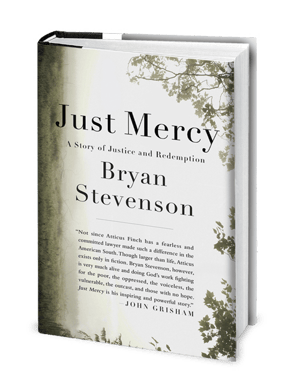
Sep 29, 2014
Supreme Court Again Asked to Consider Competence to be Executed in Texas Case
is a death row inmate in Texas, who has been diagnosed with schizophrenia and schizoaffective disorder and believes he is at the center of a struggle between God and Satan. The state has continued to insist he is competent to be executed. Panetti represented himself at his trial, appearing in court wearing a cowboy outfit and making bizarre, rambling statements. He attempted to subpoena Jesus Christ, the pope, and 200 others. He was convicted and sentenced to death. In 2007, the U.S. Supreme…
Read More
Sep 26, 2014
The Angolite Features Louisiana’s Death Row Exonerees
An article in the latest edition of The Angolite, a magazine published by prisoners at the Louisiana State Penitentiary in Angola, tells the stories of the ten men who have been exonerated from death row in that state. The piece prominently features Glenn Ford, the state’s most recent inmate to be freed. Ford spent 30 years on death row before being released in 2014. Among the other cases described is that of John Thompson, who was freed after it was revealed that prosecutors intentionally…
Read More
Sep 25, 2014
REPRESENTATON: Death Row Inmate Received Bizarre Defense
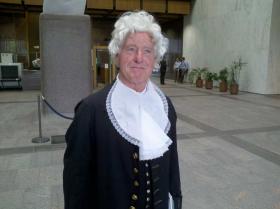
Phillip Cheatham was represented at his death penalty trial by a lawyer who failed to develop a readily available alibi defense and portrayed Cheatham as a possible killer. The lawyer, Ira Dennis Hawver (pictured at his disbarment hearing, left), presented Cheatham as a drug-dealing killer who would not have left a witness alive to identify him and would have taken fewer shots to kill the victims. Hawyer admitted he might not have jumped through every “American Bar Association hoop” in…
Read More