Publications & Testimony
Testimony and Statements on the Death Penalty
FROM DPIC
For testimony by former Executive Director Robert Dunham and former Executive Director Richard C. Dieter, please visit our page DPIC Testimony.
FROM RELIGIOUS LEADERS AND ORGANIZATIONS
- News Brief: Pope Francis Calls for Prayer to Abolish the Death Penalty (September 1, 2022)
- Jewish Congregation Renews Request for Department of Justice to Drop Death Penalty in Tree of Life Synagogue Killings (June 24, 2021)
- Orthodox Church Patriarch Calls Death Penalty Incompatible with Christian Beliefs (October 20, 2020)
- Presbyterian Church (U.S.A.) — Statement on the Federal Death Penalty (August 5, 2019)
- Louisiana Christian Faith Leaders Call for State to Abolish Death Penalty (April 25, 2019)
- Pittsburgh Rabbi’s Wife Opposes Death Penalty for Tree of Life Synagogue Killings (March 18, 2019)
- Orthodox Jewish Organization Calls for an End to Capital Punishment in the U.S. | Death Penalty Information Center (February 17, 2016)
- Baptist Theologian Says Death Penalty Does Not Fit With Christian Theology (March 8, 2016)
- Civil and Human Rights: Death Penalty — Church & Society, The United Methodist Church
- Religious Views: Over 150 Catholic Theologians Call for Repeal of the Death Penalty (September 27, 2011)
- Power Over Life and Death — The Power to Save a Life (January 15, 2005)
- Responsibility, Rehabilitation, and Restoration: A Catholic Perspective on Crime and Criminal Justice (November 2000)
- The Challenge of Holiness: A Sermon on the Death Penalty (January 10, 2000)
- General Assembly of the Texas Conference of Churches — Resolution Opposing the Death Penalty (February 24, 1998)
- Statement by Catholic Bishops of Texas on Capital Punishment (October 20, 1997)
- Catholic Church Expresses Strong Opposition to Capital Punishment in Catechism (September 9, 1997)
- Catholic Bishops of Iowa Issue Statement on Death Penalty (February 4, 1998)
- To End the Death Penalty: A Report of the National Jewish/Catholic Consultation
- Transcript of Dr. Pat Robertson’s Speech on the Role of Religion and the Death Penalty at The College of William and Mary
- Collection of Official Catholic Statements on the Death Penalty (1980)
FROM THE INTERNATIONAL COMMUNITY
- UN experts call for universal abolition of the death penalty | OHCHR (October 9, 2023)
- Zambia Becomes 25th Sub-Saharan African Nation to Abolish Death Penalty (December 23, 2022)
- Belgium Wants a World Without the Death Penalty (October 20, 2022)
- As France Prepares to Assume Presidency of European Union, Emmanuel Macron Announces Initiative for Worldwide Abolition of Death Penalty (October 11, 2021)
- U.N. Secretary-General, European Union Ambassador Call for Abolition of “Barbaric” Death Penalty (October 11, 2017)
- European Union Calls for Abolition of Capital Punishment as World Coalition Hosts International Death Penalty Conference (June 27, 2017)
- U.N. Investigator Talks About the Future of Solitary and the Death Penalty (November 7, 2016)
- World Congress Against the Death Penalty Renews Call for Global Moratorium, Pope Sends Message of Support (June 27, 2016)
- Declaration by the Presidency on behalf of the European Union on the 400th execution in Texas from the Council of the European Union (August 21, 2007)
- Resolution Supporting Worldwide Moratorium on Executions from the United Nations Commission on Human Rights (April 1999)
- Mary Robinson, U.N. High Commissioner for Human Rights — Message to the Press Conference organized by the Death Penalty Information Center for the release of the report, “International Perspectives on the Death Penalty” (October 12, 1999)
- Status of the International Covenants on Human Rights from the United Nations Commission on Human Rights (April 1998)
FROM ADVOCACY GROUPS
- Advocacy Group Tells Supreme Court that Negative Stereotypes Distort Perception that Latinos in Death-Penalty Cases Pose Future Danger to Society (April 15, 2022)
- Disability Rights Groups, Legal Experts, and Conservative Advocates Urge Supreme Court to Strike Down Georgia’s Uniquely Harsh Proof Requirements in Death-Penalty Intellectual Disabilities Cases (January 11, 2022)
- NAACP Reaffirms Its Support of Abolishing the Death Penalty (2022)
- More Than 80 Civil Rights and Advocacy Organizations Urge President Biden to End Federal Executions | Death Penalty Information Center (February 9, 2021)
- More Than 250 Conservative Leaders Join Call to End Death Penalty (October 29, 2019)
- National Alliance on Mental Illness: The Death Penalty
- Florida League of Women Voters Calls for Halt to Executions (May 28, 2007)
- Victims Organizations Issue Joint Statement for National Victims’ Rights Week (April 19, 2007)
FROM JUDGES, LEGISLATORS, AND OTHER ORGANIZATIONS
- Republican-led Oklahoma committee considers pause on executions amid death case scrutiny (October 5, 2023)
- Former Pro-Death Penalty District Attorney Explains Why He Now Supports Abolition, and Fears Political Promises to Expand the Use of the Death Penalty (August 20, 2023)
- Pressley, Durbin Reintroduce Bill to End the Federal Death Penalty (July 13, 2023)
- The Lancet Editorial: Physician Involvement in Executions Violates Medical Ethics | Death Penalty Information Center (May 20, 2023)
- APA calls for extending ineligibility for the death penalty to adolescent offenders younger than age 21 (August 4, 2022)
- Why some Republicans are turning against the death penalty | Ron Ferguson | Ohio House of Representatives (March 8, 2022)
- Eight years on Texas’ highest criminal court turned Elsa Alcala into a death penalty skeptic. How will the court change without her? (January 26, 2019)
- AMA to Supreme Court: Doctor participation in executions unethical (August 22, 2018)
- Former Governor Bill Richardson: Death Penalty Is Bad for Business, Out of Step With World’s Views (June 16, 2017)
- Capital Punishment and Nurses’ Participation in Capital Punishment (2016)
- Former Ohio Attorney General Jim Petro Says Death Penalty Unfixable, “Not Worth It Any More” (September 12, 2016)
- Resolution Supporting Repeal of the Death Penalty, National Hispanic Caucus of State Legislators (August 11, 2016)
- Retired Police Captain Says Repealing Death Penalty Is “Smart on Crime” (November 24, 2014)
- Resolution Supporting Abolition of the Death Penalty, Natl. Assoc. of Black Psychologists (2012)
- The Road to Justice and Peace by New Jersey State Senator Raymond Lesniak (February 1, 2009)
- Statement On The Federal Death Penalty System by Senator Feingold (June 7, 2001)
- Statement on the Need for a Federal Moratorium on the Death Penalty Senator Feingold (October 29, 2000)
- Death Penalty: The Torah and Today (August 23, 2000)
- Press Release for Senator Russ Feingold’s Introduction of Senate’s First Death Penalty Moratorium Bill (April 20, 2000)
- Amnesty International Southern Regional Conference: Orlando, Florida Remarks by Former Florida Chief Justice Gerald Kogan (October 23, 1999)
- American Bar Association Resolution on the Death Penalty (February 3, 1997)
FROM MURDER VICTIMS’ FAMILY MEMBERS
Items: 3211 — 3220
Sep 12, 2014
PUBLIC OPINION: Support for Death Penalty in California Lowest in 50 Years
(Click to enlarge graph) A Field Poll of voters in California found that support for capital punishment has reached its lowest level since 1965. Only 56% of respondents said they favored keeping the death penalty, down from 69% in 2011. Support for the death penalty among Californians peaked in the mid-1980s at 83%. Some of the strongest opposition to keeping the death penalty came from voters under 30, African Americans, and Democrats. Daisy Vieyra, a spokesperson for the ACLU of Northern…
Read More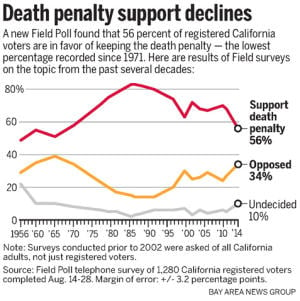
Sep 11, 2014
BOOKS: “America’s Experiment with Capital Punishment”
The highly acclaimed resource on the death penalty — “America’s Experiment with Capital Punishment” — has just been released in its Third Edition. This compendium of essays by experts covers the history, politics, and law of the death penalty, as well as related issues, such as innocence, intellectual disability, and race. DPIC’s Executive Director, Richard Dieter, contributed a chapter on the costs of the death penalty. The editors encourage readers to grapple with the many questions…
Read More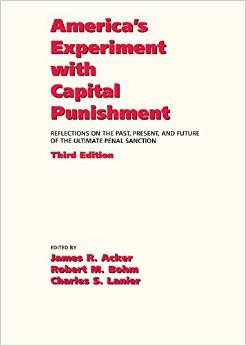
Sep 10, 2014
A Special Request from DPIC
Today, along with our news update, we are making a special request of our readers. Please take a moment to consider the value of the information we provide, and make a donation to support DPIC’s work. By contributing, you help us expand our efforts to provide the most up-to-date information on capital punishment and produce innovative resources for journalists, educators, legal professionals, and others. News stories citing our information appear in the media on a daily basis and in every part…
Read MoreSep 10, 2014
Department of Justice Releases Special Report, “Mending Justice”
A new report from the National Institute of Justice examines ways to reduce and prevent errors, such as the wrongful conviction of an innocent person. The report proposes “sentinel event reviews” — the examination of mistakes with a view of finding systemic problems. The report uses the death penalty exoneration of John Thompson in Louisiana to illustrate its goal: “In Connick [v. Thompson], the trial prosecutor withheld crime lab results from the defense, removed a blood sample from the…
Read More
Sep 09, 2014
STUDIES: White Jurors More Likely to Recommend Death Sentences for Latino Defendants
A 2014 study by Professors Cynthia Willis-Esqueda (pictured) of the University of Nebraska-Lincoln (UNL) and Russ K.E. Espinoza of California State University found that white jurors were more likely to recommend a death sentence for Latino defendants than for white defendants in California. Researchers gave case descriptions to 500 white and Latino people who had reported for jury duty in southern California, then asked them to choose a sentence of life without parole or death. The description…
Read More
Sep 08, 2014
INNOCENCE: Attorney for Freed Death Row Prisoner Calls Case a “Tragedy”
In an op-ed for the Washington Post, Kenneth Rose, an attorney for the recently freed Henry McCollum, expressed his frustrations with the death-penalty system that allowed such mistakes to happen in the first place: “I am angry that we live in a world where two disabled boys can have their lives stolen from them, where cops can lie and intimidate with impunity, where innocent people can be condemned to die and where injustice is so difficult to bring to light. As I lie awake at night, mulling…
Read More
Sep 05, 2014
Missouri Inmates Were Given Controversial Drug Before Executions
An investigation by St. Louis Public Radio has revealed that Missouri has been administering Midazolam to inmates prior to their execution since November 2013. Midazolam is a sedative that was used in all three of this year’s most seriously botched executions in Ohio, Oklahoma, and Arizona. Missouri officials had testified earlier that the state had not used Midazolam in executions and did not plan to use it. New documents, however, show that the drug was given to inmates as a sedative before…
Read More
Sep 04, 2014
Oklahoma’s Own Investigation Points to Only Minor Problems in Botched Execution
On September 4, Oklahoma released a report from its investigation into the botched execution of Clayton Lockett. The review, which was conducted by investigators from the Oklahoma Highway Patrol, found several problems that may have contributed to the prolonged execution attempt on April 29. The execution was stopped by the warden, curtains were drawn in the chamber, but the inmate died afterwards, reportedly from the residues of the lethal drugs in his system. The state report found…
Read More
Sep 04, 2014
Lethal Injection: Official Actions and Court Cases
Report from the Oklahoma Department of Public Safety on the execution of Clayton Lockett (Sept. 4, 2014) QUOTATIONS FROM THE OKLAHOMA REPORT: The physician had never attempted femoral vein access with a 11⁄4 inch needle/catheter; however, it was the longest DOC had readily available. An additional central venous catheterization kit was available, but the physician did not think about utilizing one for femoral access. The physician approached Lockett and indicated to Warden Trammell that…
Read MoreSep 03, 2014
NEW VOICES: Al Sharpton Debates the Death Penalty at Yale
Baptist minister and civil rights leader Rev. Al Sharpton spoke in opposition to the death penalty in a recent debate at the Yale Political Union. Sharpton noted the dispropotion of blacks who are to sentenced to death compared to whites. He also raised concerns about the risk of executing the innocent, pointing out that many inmates have been exonerated from death row. He said the lower murder rates in states that do not have the death penalty indicate the death penalty does not deter murder.
Read More