Publications & Testimony
Testimony and Statements on the Death Penalty
FROM DPIC
For testimony by former Executive Director Robert Dunham and former Executive Director Richard C. Dieter, please visit our page DPIC Testimony.
FROM RELIGIOUS LEADERS AND ORGANIZATIONS
- News Brief: Pope Francis Calls for Prayer to Abolish the Death Penalty (September 1, 2022)
- Jewish Congregation Renews Request for Department of Justice to Drop Death Penalty in Tree of Life Synagogue Killings (June 24, 2021)
- Orthodox Church Patriarch Calls Death Penalty Incompatible with Christian Beliefs (October 20, 2020)
- Presbyterian Church (U.S.A.) — Statement on the Federal Death Penalty (August 5, 2019)
- Louisiana Christian Faith Leaders Call for State to Abolish Death Penalty (April 25, 2019)
- Pittsburgh Rabbi’s Wife Opposes Death Penalty for Tree of Life Synagogue Killings (March 18, 2019)
- Orthodox Jewish Organization Calls for an End to Capital Punishment in the U.S. | Death Penalty Information Center (February 17, 2016)
- Baptist Theologian Says Death Penalty Does Not Fit With Christian Theology (March 8, 2016)
- Civil and Human Rights: Death Penalty — Church & Society, The United Methodist Church
- Religious Views: Over 150 Catholic Theologians Call for Repeal of the Death Penalty (September 27, 2011)
- Power Over Life and Death — The Power to Save a Life (January 15, 2005)
- Responsibility, Rehabilitation, and Restoration: A Catholic Perspective on Crime and Criminal Justice (November 2000)
- The Challenge of Holiness: A Sermon on the Death Penalty (January 10, 2000)
- General Assembly of the Texas Conference of Churches — Resolution Opposing the Death Penalty (February 24, 1998)
- Statement by Catholic Bishops of Texas on Capital Punishment (October 20, 1997)
- Catholic Church Expresses Strong Opposition to Capital Punishment in Catechism (September 9, 1997)
- Catholic Bishops of Iowa Issue Statement on Death Penalty (February 4, 1998)
- To End the Death Penalty: A Report of the National Jewish/Catholic Consultation
- Transcript of Dr. Pat Robertson’s Speech on the Role of Religion and the Death Penalty at The College of William and Mary
- Collection of Official Catholic Statements on the Death Penalty (1980)
FROM THE INTERNATIONAL COMMUNITY
- UN experts call for universal abolition of the death penalty | OHCHR (October 9, 2023)
- Zambia Becomes 25th Sub-Saharan African Nation to Abolish Death Penalty (December 23, 2022)
- Belgium Wants a World Without the Death Penalty (October 20, 2022)
- As France Prepares to Assume Presidency of European Union, Emmanuel Macron Announces Initiative for Worldwide Abolition of Death Penalty (October 11, 2021)
- U.N. Secretary-General, European Union Ambassador Call for Abolition of “Barbaric” Death Penalty (October 11, 2017)
- European Union Calls for Abolition of Capital Punishment as World Coalition Hosts International Death Penalty Conference (June 27, 2017)
- U.N. Investigator Talks About the Future of Solitary and the Death Penalty (November 7, 2016)
- World Congress Against the Death Penalty Renews Call for Global Moratorium, Pope Sends Message of Support (June 27, 2016)
- Declaration by the Presidency on behalf of the European Union on the 400th execution in Texas from the Council of the European Union (August 21, 2007)
- Resolution Supporting Worldwide Moratorium on Executions from the United Nations Commission on Human Rights (April 1999)
- Mary Robinson, U.N. High Commissioner for Human Rights — Message to the Press Conference organized by the Death Penalty Information Center for the release of the report, “International Perspectives on the Death Penalty” (October 12, 1999)
- Status of the International Covenants on Human Rights from the United Nations Commission on Human Rights (April 1998)
FROM ADVOCACY GROUPS
- Advocacy Group Tells Supreme Court that Negative Stereotypes Distort Perception that Latinos in Death-Penalty Cases Pose Future Danger to Society (April 15, 2022)
- Disability Rights Groups, Legal Experts, and Conservative Advocates Urge Supreme Court to Strike Down Georgia’s Uniquely Harsh Proof Requirements in Death-Penalty Intellectual Disabilities Cases (January 11, 2022)
- NAACP Reaffirms Its Support of Abolishing the Death Penalty (2022)
- More Than 80 Civil Rights and Advocacy Organizations Urge President Biden to End Federal Executions | Death Penalty Information Center (February 9, 2021)
- More Than 250 Conservative Leaders Join Call to End Death Penalty (October 29, 2019)
- National Alliance on Mental Illness: The Death Penalty
- Florida League of Women Voters Calls for Halt to Executions (May 28, 2007)
- Victims Organizations Issue Joint Statement for National Victims’ Rights Week (April 19, 2007)
FROM JUDGES, LEGISLATORS, AND OTHER ORGANIZATIONS
- Republican-led Oklahoma committee considers pause on executions amid death case scrutiny (October 5, 2023)
- Former Pro-Death Penalty District Attorney Explains Why He Now Supports Abolition, and Fears Political Promises to Expand the Use of the Death Penalty (August 20, 2023)
- Pressley, Durbin Reintroduce Bill to End the Federal Death Penalty (July 13, 2023)
- The Lancet Editorial: Physician Involvement in Executions Violates Medical Ethics | Death Penalty Information Center (May 20, 2023)
- APA calls for extending ineligibility for the death penalty to adolescent offenders younger than age 21 (August 4, 2022)
- Why some Republicans are turning against the death penalty | Ron Ferguson | Ohio House of Representatives (March 8, 2022)
- Eight years on Texas’ highest criminal court turned Elsa Alcala into a death penalty skeptic. How will the court change without her? (January 26, 2019)
- AMA to Supreme Court: Doctor participation in executions unethical (August 22, 2018)
- Former Governor Bill Richardson: Death Penalty Is Bad for Business, Out of Step With World’s Views (June 16, 2017)
- Capital Punishment and Nurses’ Participation in Capital Punishment (2016)
- Former Ohio Attorney General Jim Petro Says Death Penalty Unfixable, “Not Worth It Any More” (September 12, 2016)
- Resolution Supporting Repeal of the Death Penalty, National Hispanic Caucus of State Legislators (August 11, 2016)
- Retired Police Captain Says Repealing Death Penalty Is “Smart on Crime” (November 24, 2014)
- Resolution Supporting Abolition of the Death Penalty, Natl. Assoc. of Black Psychologists (2012)
- The Road to Justice and Peace by New Jersey State Senator Raymond Lesniak (February 1, 2009)
- Statement On The Federal Death Penalty System by Senator Feingold (June 7, 2001)
- Statement on the Need for a Federal Moratorium on the Death Penalty Senator Feingold (October 29, 2000)
- Death Penalty: The Torah and Today (August 23, 2000)
- Press Release for Senator Russ Feingold’s Introduction of Senate’s First Death Penalty Moratorium Bill (April 20, 2000)
- Amnesty International Southern Regional Conference: Orlando, Florida Remarks by Former Florida Chief Justice Gerald Kogan (October 23, 1999)
- American Bar Association Resolution on the Death Penalty (February 3, 1997)
FROM MURDER VICTIMS’ FAMILY MEMBERS
Items: 3451 — 3460
Oct 04, 2013
LETHAL INJECTION: Many States Changing Lethal Injection Process
On October 4, Ohio announced it will be obtaining its execution drug, pentobarbital, from a compounding pharmacy if it is not available from the manufacturer. Texas made a similar announcement a few days earler. In the past, some compounding pharmacies have been implicated in providing contaminated drugs with fatal side effects. These local companies are not regulated by the Food and Drug Administration. Florida announced it will be using a new drug, midazolam, in its October 15 execution. The…
Read More
Oct 03, 2013
What the Media Is Saying About DPIC’s “The 2% Death Penalty”
Since DPIC released its new report, The 2% Death Penalty, on October 2, both national and international media have been reporting on its findings. The Washington Post noted, “Two percent of the counties in the country were responsible for [most] 685 of 1,320 executions from 1976, when the Supreme Court reinstated the death penalty, to 2012.” The Los Angeles Times, quoted DPIC’s Executive Director, “‘The death penalty is not as American or as widespread as people might assume. It is clustered in…
Read More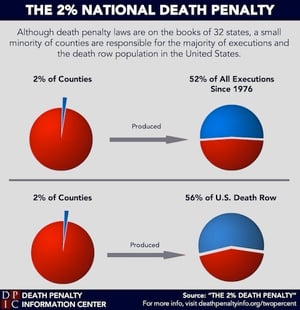
Oct 02, 2013
NEW DPIC REPORT: Only 2% of Counties Responsible for Majority of U.S. Death Penalty
On October 2 the Death Penalty Information Center released a new report, The 2% Death Penalty: How a Minority of Counties Produce Most Death Cases at Enormous Costs to All. The report shows that, contrary to the assumption that the death penalty is widely used in the U.S., only a few jurisdictions employ capital punishment extensively. Only 2% of the counties in the U.S. have been responsible for the majority of cases leading to executions since 1976. Likewise, only 2% of the counties are…
Read More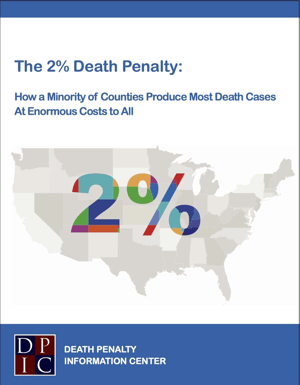
Oct 01, 2013
Death Penalty Now Rarely Used in Utah
An analysis of the death penalty in Utah shows how rarely it has been used in recent years. Prosecutors have sought it in only 7 cases in the last 5 years, and none has resulted in a death sentence. Utah has had only 1 execution in the past 13 years. Experts have offered several reasons for the declining use: the alternative sentence of life without parole is now avaialble; the appeal of a death sentence is costly and slow; and many victims’ families wish to see a more timely end to the…
Read More
Oct 01, 2013
The 2% Death Penalty: Press Release
ONLY 2% OF COUNTIES ARE RESPONSIBLE FOR THE MAJORITY OF THE NATION’S DEATH PENALTY, NEW REPORT FINDS Capital Punishment Costs are Shifted from the Few Jurisdictions that Use it the Most to the Majority that Barely Use it At All WASHINGTON, DC – Contrary to the assumption that the death penalty is widely used in the U.S., only a few jurisdictions employ capital punishment extensively, according to a new report released today by the Death Penalty Information Center (DPIC). Only two percent of…
Read MoreSep 30, 2013
EDITORIALS: Boston Globe Recommends No Death Penalty For Marathon Bomber
A recent Boston Globe editorial called on U.S. Attorney General Eric Holder not to seek the death penalty for Dzhokhar Tsarnaev, the man accused of carrying out the bombing at the Boston Marathon. The editors said the lengthy death-penalty process would put the spotlight on the defendant to the detriment of the victims: “Years of proceedings, and their potential culmination in a death sentence, would also give Tsarnaev what he and his brother apparently sought: publicity and notoriety. Much…
Read More
Sep 27, 2013
Ohio Panel Recommends Banning Death Penalty for Severely Mentally Ill
On September 26, the Joint Task Force to Review the Administration of Ohio’s Death Penalty voted 15 – 2 to recommend a ban on death sentences for people with severe mental illness. The panel of legal experts was created by the Ohio Supreme Court and the Ohio State Bar Association and includes judges, attorneys, and legislators. Their proposal will be submitted with other recommendations to the governor and the General Assembly in 2014. Terry Russell, executive director of the National Alliance on…
Read More
Sep 26, 2013
BOOKS: “Grave Injustice: Unearthing Wrongful Executions”
Grave Injustice, a new book by Richard Stack, presents a critical examination of the death penalty through profiles of individuals who were executed but may have been innocent. Their stories are used to illustrate flaws in the death penalty, including faulty eyewitness identification, government misconduct, and ineffective representation. In examining these problems, Stack writes that the possible end of the death penalty “will not be based on its immorality…but on its poor track record… and…
Read More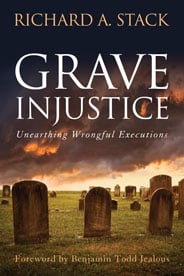
Sep 25, 2013
Kansas May Consider Death Penalty Repeal in 2014
Legislators in Kansas have said they may debate the repeal of the death penalty in 2014. Senate Vice President Jeff King said a recent session on other criminal justice issues indicated a need for a broader discussion of sentences for murder. Senator David Haley, who supports repeal of the death penalty, said, “I believe now is the time for a discussion among those in the Legislature who consider religion a main part of their public service to decide whether it’s necessary for a barbaric and…
Read More
Sep 24, 2013
LETHAL INJECTION: The Ongoing Controversy Over How People Are Executed
One of the nation’s leading academic experts on the death penalty has written a new article describing how the controversy surrounding lethal injections has greatly intensified since the Supreme Court’s ruling on the subject in 2008 (Baze v. Rees). Deborah Denno, a law professor at Fordham University, analyzed over 300 court decisions in the last five years citing Baze. She found there have been more changes in lethal injection protocols in that time than in the last 30 years, some of which…
Read More