Publications & Testimony
Testimony and Statements on the Death Penalty
FROM DPIC
For testimony by former Executive Director Robert Dunham and former Executive Director Richard C. Dieter, please visit our page DPIC Testimony.
FROM RELIGIOUS LEADERS AND ORGANIZATIONS
- News Brief: Pope Francis Calls for Prayer to Abolish the Death Penalty (September 1, 2022)
- Jewish Congregation Renews Request for Department of Justice to Drop Death Penalty in Tree of Life Synagogue Killings (June 24, 2021)
- Orthodox Church Patriarch Calls Death Penalty Incompatible with Christian Beliefs (October 20, 2020)
- Presbyterian Church (U.S.A.) — Statement on the Federal Death Penalty (August 5, 2019)
- Louisiana Christian Faith Leaders Call for State to Abolish Death Penalty (April 25, 2019)
- Pittsburgh Rabbi’s Wife Opposes Death Penalty for Tree of Life Synagogue Killings (March 18, 2019)
- Orthodox Jewish Organization Calls for an End to Capital Punishment in the U.S. | Death Penalty Information Center (February 17, 2016)
- Baptist Theologian Says Death Penalty Does Not Fit With Christian Theology (March 8, 2016)
- Civil and Human Rights: Death Penalty — Church & Society, The United Methodist Church
- Religious Views: Over 150 Catholic Theologians Call for Repeal of the Death Penalty (September 27, 2011)
- Power Over Life and Death — The Power to Save a Life (January 15, 2005)
- Responsibility, Rehabilitation, and Restoration: A Catholic Perspective on Crime and Criminal Justice (November 2000)
- The Challenge of Holiness: A Sermon on the Death Penalty (January 10, 2000)
- General Assembly of the Texas Conference of Churches — Resolution Opposing the Death Penalty (February 24, 1998)
- Statement by Catholic Bishops of Texas on Capital Punishment (October 20, 1997)
- Catholic Church Expresses Strong Opposition to Capital Punishment in Catechism (September 9, 1997)
- Catholic Bishops of Iowa Issue Statement on Death Penalty (February 4, 1998)
- To End the Death Penalty: A Report of the National Jewish/Catholic Consultation
- Transcript of Dr. Pat Robertson’s Speech on the Role of Religion and the Death Penalty at The College of William and Mary
- Collection of Official Catholic Statements on the Death Penalty (1980)
FROM THE INTERNATIONAL COMMUNITY
- UN experts call for universal abolition of the death penalty | OHCHR (October 9, 2023)
- Zambia Becomes 25th Sub-Saharan African Nation to Abolish Death Penalty (December 23, 2022)
- Belgium Wants a World Without the Death Penalty (October 20, 2022)
- As France Prepares to Assume Presidency of European Union, Emmanuel Macron Announces Initiative for Worldwide Abolition of Death Penalty (October 11, 2021)
- U.N. Secretary-General, European Union Ambassador Call for Abolition of “Barbaric” Death Penalty (October 11, 2017)
- European Union Calls for Abolition of Capital Punishment as World Coalition Hosts International Death Penalty Conference (June 27, 2017)
- U.N. Investigator Talks About the Future of Solitary and the Death Penalty (November 7, 2016)
- World Congress Against the Death Penalty Renews Call for Global Moratorium, Pope Sends Message of Support (June 27, 2016)
- Declaration by the Presidency on behalf of the European Union on the 400th execution in Texas from the Council of the European Union (August 21, 2007)
- Resolution Supporting Worldwide Moratorium on Executions from the United Nations Commission on Human Rights (April 1999)
- Mary Robinson, U.N. High Commissioner for Human Rights — Message to the Press Conference organized by the Death Penalty Information Center for the release of the report, “International Perspectives on the Death Penalty” (October 12, 1999)
- Status of the International Covenants on Human Rights from the United Nations Commission on Human Rights (April 1998)
FROM ADVOCACY GROUPS
- Advocacy Group Tells Supreme Court that Negative Stereotypes Distort Perception that Latinos in Death-Penalty Cases Pose Future Danger to Society (April 15, 2022)
- Disability Rights Groups, Legal Experts, and Conservative Advocates Urge Supreme Court to Strike Down Georgia’s Uniquely Harsh Proof Requirements in Death-Penalty Intellectual Disabilities Cases (January 11, 2022)
- NAACP Reaffirms Its Support of Abolishing the Death Penalty (2022)
- More Than 80 Civil Rights and Advocacy Organizations Urge President Biden to End Federal Executions | Death Penalty Information Center (February 9, 2021)
- More Than 250 Conservative Leaders Join Call to End Death Penalty (October 29, 2019)
- National Alliance on Mental Illness: The Death Penalty
- Florida League of Women Voters Calls for Halt to Executions (May 28, 2007)
- Victims Organizations Issue Joint Statement for National Victims’ Rights Week (April 19, 2007)
FROM JUDGES, LEGISLATORS, AND OTHER ORGANIZATIONS
- Republican-led Oklahoma committee considers pause on executions amid death case scrutiny (October 5, 2023)
- Former Pro-Death Penalty District Attorney Explains Why He Now Supports Abolition, and Fears Political Promises to Expand the Use of the Death Penalty (August 20, 2023)
- Pressley, Durbin Reintroduce Bill to End the Federal Death Penalty (July 13, 2023)
- The Lancet Editorial: Physician Involvement in Executions Violates Medical Ethics | Death Penalty Information Center (May 20, 2023)
- APA calls for extending ineligibility for the death penalty to adolescent offenders younger than age 21 (August 4, 2022)
- Why some Republicans are turning against the death penalty | Ron Ferguson | Ohio House of Representatives (March 8, 2022)
- Eight years on Texas’ highest criminal court turned Elsa Alcala into a death penalty skeptic. How will the court change without her? (January 26, 2019)
- AMA to Supreme Court: Doctor participation in executions unethical (August 22, 2018)
- Former Governor Bill Richardson: Death Penalty Is Bad for Business, Out of Step With World’s Views (June 16, 2017)
- Capital Punishment and Nurses’ Participation in Capital Punishment (2016)
- Former Ohio Attorney General Jim Petro Says Death Penalty Unfixable, “Not Worth It Any More” (September 12, 2016)
- Resolution Supporting Repeal of the Death Penalty, National Hispanic Caucus of State Legislators (August 11, 2016)
- Retired Police Captain Says Repealing Death Penalty Is “Smart on Crime” (November 24, 2014)
- Resolution Supporting Abolition of the Death Penalty, Natl. Assoc. of Black Psychologists (2012)
- The Road to Justice and Peace by New Jersey State Senator Raymond Lesniak (February 1, 2009)
- Statement On The Federal Death Penalty System by Senator Feingold (June 7, 2001)
- Statement on the Need for a Federal Moratorium on the Death Penalty Senator Feingold (October 29, 2000)
- Death Penalty: The Torah and Today (August 23, 2000)
- Press Release for Senator Russ Feingold’s Introduction of Senate’s First Death Penalty Moratorium Bill (April 20, 2000)
- Amnesty International Southern Regional Conference: Orlando, Florida Remarks by Former Florida Chief Justice Gerald Kogan (October 23, 1999)
- American Bar Association Resolution on the Death Penalty (February 3, 1997)
FROM MURDER VICTIMS’ FAMILY MEMBERS
Items: 3561 — 3570
Apr 29, 2013
Controversial Texas Case on Mental Retardation Results in Life Sentence
Texas death row inmate Jose Garcia Briseño, whose case was used by the Texas courts to establish a very restrictive definition of mental retardation, has been resentenced to life without parole. His sentence was the result of a plea bargain ending years of litigation. Briseño has been on death row for over 20 years, and received a stay of execution in 2009 just 5 days before he was to be executed. Briseño’s lawyers have argued he is intellectually disabled, and therefore ineligible for the…
Read More
Apr 26, 2013
NEW VOICES: Conservative Judge Who Imposed Death Sentences Changes His Mind
As a Superior Court judge in Delaware, Norman Barron was referred to as “the hanging judge” because of his willingness to impose death sentences. In a recent op-ed for Delaware Online, the now-retired judge expressed how his views on the death penalty have changed: “I believe the application of the death penalty is quirky and capricious… it is impossible to justify why some murderers receive the death penalty while others, whose crimes are arguably worse in degree or savagery, do not.” He also…
Read More
Apr 25, 2013
LETHAL INJECTION: Arkansas Plans to Use Untested Drug in Executions
The Arkansas Department of Corrections recently announced it will use a new drug, phenobarbital, for lethal injections. Phenobarbital is used to treat seizures but has never been used for executions in the U.S. Some experts are concerned that using drugs that are untested for this purpose could result in inhumane treatment. David Lubarsky, who chairs the anesthesiology department at the University of Miami’s medical school, said, “People should not be using inmates as an experiment. And that is…
Read More
Apr 24, 2013
INTELLECTUAL DISABILITY: Federal Appeals Court Says Evidence of Mental Retardation Is Too Late
On April 22, a divided U.S. Court of Appeals for the Eleventh Circuit denied Warren Hill’s appeal to halt his execution based on new evidence of his intellectual disability. The Court ruled that Hill’s claim of intellectual disability (mental retardation) was presented in an earlier petition and cannot be presented again, despite the new evidence. The judges also held that, even if Hill’s claim is a new one, it only challenges his eligibility for the death penalty, not his underlying guilt, and…
Read More
Apr 23, 2013
Connecticut Supreme Court Considers Executions After Death Penalty Repeal
On April 23, the Connecticut Supreme Court will consider whether the 11 inmates who remained on the state’s row after the legislature voted to repeal the death penalty in 2012 can still be executed. Mark Rademacher, an attorney for one of the inmates, argued that the legislature’s repeal of the death penalty demonstrated the punishment is no longer necessary and, hence, executing his client would be cruel and unusual punishment. Rademacher also asserted that the law’s prospective nature…
Read More
Apr 22, 2013
EDITORIALS: “Conservatives and Death Penalty”
A recent editorial in the Lincoln (Neb.) Journal Star highlighted some of the conservative arguments opposing the death penalty. Edward Crane (pictured), founder of the CATO Institute, a libertarian think tank, said, “My own view on capital punishment is that it is morally justified but that the government is often so inept and corrupt that innocent people might die as a result. Thus, I personally oppose capital punishment.” The editorial also quoted Mary Kate Cary, former speechwriter for…
Read More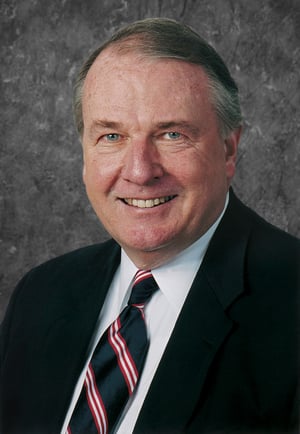
Apr 19, 2013
NEW VOICES: Cost and Impact on Victims’ Families Among Concerns for Conservative Christians
A recent article in the Liberty Champion, a publication of Liberty University, discussed the concerns some conservative Christians have about the death penalty. The article by student Whitney Rutherford focused on the financial costs of the death penalty and its emotional toll on murder victims’ families: “Rather than providing victims, their families, and the family of the accused an expedient result, these groups are dragged through the emotional upheaval of waiting and watching the justice…
Read More
Apr 18, 2013
RECENT LEGISLATION: Texas Legislature Examining Problems of Innocence and Racial Bias
Two bills under consideration in Texas aim to address issues in the state’s death penalty. House Bill 2458 would allow defendants to appeal their death sentences if they can prove that race was a significant factor in the decision to seek or impose the death penalty. Statistical evidence of bias can be used to support such a claim. Similar bills, referred to as the Racial Justice Act, have been considered in other states. Testimony in favor of the bill mentioned the case of Duane Buck, an…
Read More
Apr 17, 2013
FEDERAL DEATH PENALTY: A Puerto Rican Jury Again Votes Against Death Penalty
On April 11, a jury in Puerto Rico rejected a death sentence for a defendant convicted of murdering an undercover policeman. Instead, Lashaun Casey will be sentenced life in prison without parole. The defendant was eligible for the death penalty because the case was tried under federal law rather than the law of Puerto Rico, which abolished the death penalty under the constitution it enacted in 1952. The Commonwealth has not carried out an execution since 1927. Anti-death penalty protestors…
Read More
Apr 16, 2013
NEW VOICES: PBS Airing of “The Central Park Five” Underscores Problem of Innocence
George F. Will, conservative commentator of the Washington Post, recently drew a lesson about the death penalty from the documentary The Central Park Five, which airs on PBS on Tuesday, April 16. Will wrote, “[T]his recounting of a multifaceted but, fortunately, not fatal failure of the criminal justice system buttresses the conservative case against the death penalty: Its finality leaves no room for rectifying mistakes.” The Central Park Five tells the story of five juvenile defendants (four…
Read More