Publications & Testimony
Testimony and Statements on the Death Penalty
FROM DPIC
For testimony by former Executive Director Robert Dunham and former Executive Director Richard C. Dieter, please visit our page DPIC Testimony.
FROM RELIGIOUS LEADERS AND ORGANIZATIONS
- News Brief: Pope Francis Calls for Prayer to Abolish the Death Penalty (September 1, 2022)
- Jewish Congregation Renews Request for Department of Justice to Drop Death Penalty in Tree of Life Synagogue Killings (June 24, 2021)
- Orthodox Church Patriarch Calls Death Penalty Incompatible with Christian Beliefs (October 20, 2020)
- Presbyterian Church (U.S.A.) — Statement on the Federal Death Penalty (August 5, 2019)
- Louisiana Christian Faith Leaders Call for State to Abolish Death Penalty (April 25, 2019)
- Pittsburgh Rabbi’s Wife Opposes Death Penalty for Tree of Life Synagogue Killings (March 18, 2019)
- Orthodox Jewish Organization Calls for an End to Capital Punishment in the U.S. | Death Penalty Information Center (February 17, 2016)
- Baptist Theologian Says Death Penalty Does Not Fit With Christian Theology (March 8, 2016)
- Civil and Human Rights: Death Penalty — Church & Society, The United Methodist Church
- Religious Views: Over 150 Catholic Theologians Call for Repeal of the Death Penalty (September 27, 2011)
- Power Over Life and Death — The Power to Save a Life (January 15, 2005)
- Responsibility, Rehabilitation, and Restoration: A Catholic Perspective on Crime and Criminal Justice (November 2000)
- The Challenge of Holiness: A Sermon on the Death Penalty (January 10, 2000)
- General Assembly of the Texas Conference of Churches — Resolution Opposing the Death Penalty (February 24, 1998)
- Statement by Catholic Bishops of Texas on Capital Punishment (October 20, 1997)
- Catholic Church Expresses Strong Opposition to Capital Punishment in Catechism (September 9, 1997)
- Catholic Bishops of Iowa Issue Statement on Death Penalty (February 4, 1998)
- To End the Death Penalty: A Report of the National Jewish/Catholic Consultation
- Transcript of Dr. Pat Robertson’s Speech on the Role of Religion and the Death Penalty at The College of William and Mary
- Collection of Official Catholic Statements on the Death Penalty (1980)
FROM THE INTERNATIONAL COMMUNITY
- UN experts call for universal abolition of the death penalty | OHCHR (October 9, 2023)
- Zambia Becomes 25th Sub-Saharan African Nation to Abolish Death Penalty (December 23, 2022)
- Belgium Wants a World Without the Death Penalty (October 20, 2022)
- As France Prepares to Assume Presidency of European Union, Emmanuel Macron Announces Initiative for Worldwide Abolition of Death Penalty (October 11, 2021)
- U.N. Secretary-General, European Union Ambassador Call for Abolition of “Barbaric” Death Penalty (October 11, 2017)
- European Union Calls for Abolition of Capital Punishment as World Coalition Hosts International Death Penalty Conference (June 27, 2017)
- U.N. Investigator Talks About the Future of Solitary and the Death Penalty (November 7, 2016)
- World Congress Against the Death Penalty Renews Call for Global Moratorium, Pope Sends Message of Support (June 27, 2016)
- Declaration by the Presidency on behalf of the European Union on the 400th execution in Texas from the Council of the European Union (August 21, 2007)
- Resolution Supporting Worldwide Moratorium on Executions from the United Nations Commission on Human Rights (April 1999)
- Mary Robinson, U.N. High Commissioner for Human Rights — Message to the Press Conference organized by the Death Penalty Information Center for the release of the report, “International Perspectives on the Death Penalty” (October 12, 1999)
- Status of the International Covenants on Human Rights from the United Nations Commission on Human Rights (April 1998)
FROM ADVOCACY GROUPS
- Advocacy Group Tells Supreme Court that Negative Stereotypes Distort Perception that Latinos in Death-Penalty Cases Pose Future Danger to Society (April 15, 2022)
- Disability Rights Groups, Legal Experts, and Conservative Advocates Urge Supreme Court to Strike Down Georgia’s Uniquely Harsh Proof Requirements in Death-Penalty Intellectual Disabilities Cases (January 11, 2022)
- NAACP Reaffirms Its Support of Abolishing the Death Penalty (2022)
- More Than 80 Civil Rights and Advocacy Organizations Urge President Biden to End Federal Executions | Death Penalty Information Center (February 9, 2021)
- More Than 250 Conservative Leaders Join Call to End Death Penalty (October 29, 2019)
- National Alliance on Mental Illness: The Death Penalty
- Florida League of Women Voters Calls for Halt to Executions (May 28, 2007)
- Victims Organizations Issue Joint Statement for National Victims’ Rights Week (April 19, 2007)
FROM JUDGES, LEGISLATORS, AND OTHER ORGANIZATIONS
- Republican-led Oklahoma committee considers pause on executions amid death case scrutiny (October 5, 2023)
- Former Pro-Death Penalty District Attorney Explains Why He Now Supports Abolition, and Fears Political Promises to Expand the Use of the Death Penalty (August 20, 2023)
- Pressley, Durbin Reintroduce Bill to End the Federal Death Penalty (July 13, 2023)
- The Lancet Editorial: Physician Involvement in Executions Violates Medical Ethics | Death Penalty Information Center (May 20, 2023)
- APA calls for extending ineligibility for the death penalty to adolescent offenders younger than age 21 (August 4, 2022)
- Why some Republicans are turning against the death penalty | Ron Ferguson | Ohio House of Representatives (March 8, 2022)
- Eight years on Texas’ highest criminal court turned Elsa Alcala into a death penalty skeptic. How will the court change without her? (January 26, 2019)
- AMA to Supreme Court: Doctor participation in executions unethical (August 22, 2018)
- Former Governor Bill Richardson: Death Penalty Is Bad for Business, Out of Step With World’s Views (June 16, 2017)
- Capital Punishment and Nurses’ Participation in Capital Punishment (2016)
- Former Ohio Attorney General Jim Petro Says Death Penalty Unfixable, “Not Worth It Any More” (September 12, 2016)
- Resolution Supporting Repeal of the Death Penalty, National Hispanic Caucus of State Legislators (August 11, 2016)
- Retired Police Captain Says Repealing Death Penalty Is “Smart on Crime” (November 24, 2014)
- Resolution Supporting Abolition of the Death Penalty, Natl. Assoc. of Black Psychologists (2012)
- The Road to Justice and Peace by New Jersey State Senator Raymond Lesniak (February 1, 2009)
- Statement On The Federal Death Penalty System by Senator Feingold (June 7, 2001)
- Statement on the Need for a Federal Moratorium on the Death Penalty Senator Feingold (October 29, 2000)
- Death Penalty: The Torah and Today (August 23, 2000)
- Press Release for Senator Russ Feingold’s Introduction of Senate’s First Death Penalty Moratorium Bill (April 20, 2000)
- Amnesty International Southern Regional Conference: Orlando, Florida Remarks by Former Florida Chief Justice Gerald Kogan (October 23, 1999)
- American Bar Association Resolution on the Death Penalty (February 3, 1997)
FROM MURDER VICTIMS’ FAMILY MEMBERS
Items: 3631 — 3640
Jan 21, 2013
NEW VOICES: Conservative Leader Says Its Time to Rethink the Death Penalty
Richard Viguerie has been called the “funding father of the conservative movement,” and has helped start such initiatives as the Conservative Digest and the Moral Majority. He was recently interviewed in Sojourners Magazine, where he spoke about his faith-based opposition to capital punishment. He said the issue of innocence was a key problem: “I’ve become aware that throughout history, many innocent people have been convicted of crimes and executed. There are few things more horrendous than…
Read More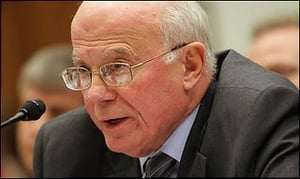
Jan 18, 2013
BOOKS: “Where Justice and Mercy Meet: Catholic Opposition to the Death Penalty”
A new book, “Where Justice and Mercy Meet: Catholic Opposition to the Death Penalty,” offers a comprehensive discussion of Catholic teaching on capital punishment. It explores a wide range of issues related to the death penalty, including racism, mental illness, and economic disparities. The book is edited by Trudy Conway and David Matzko McCarthy, both professors at Mount St. Mary’s University, and Vicki Schieber — the mother of a murder victim. It includes a foreword by Sister Helen Prejean…
Read More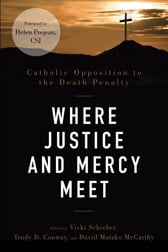
Jan 17, 2013
NEW VOICES: Arkansas Governor Reverses Position on Death Penalty
Arkansas Governor Mike Beebe recently said he would sign legislation outlawing the death penalty if legislators were to send him such a bill. Beebe ran for governor as a supporter of capital punishment, but said the experience of signing a death warrant for the first time caused his thinking on the issue to change. “It is an agonizing process, whether you’re for the death penalty or against the death penalty,” the governor said. “Everybody can claim they’re for it until you’re actually the…
Read More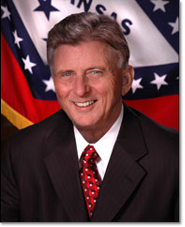
Jan 16, 2013
First Inmate to be Executed in 2013 Asked for Death Penalty; Exhibited Severe Mental Illness
Robert Gleason is scheduled to be the first person executed in the U.S. in 2013 on the night of January 16 in Virginia. At his trial, he told the court he wanted the death penalty and has waived all his appeals since his conviction. He has chosen to be executed by electrocution. Gleason’s lawyers maintain he is severely mentally ill and his mental capacity has deteriorated during his time on death row. He suffers from extreme paranoia, delusional thinking, severe anxiety and other mental…
Read More
Jan 15, 2013
LEGISLATION: Maryland Governor Makes Death Penalty Repeal a Priority
On January 15 at a press conference with leaders of the NAACP, Maryland’s Governor Martin O’Malley announced he will be making the repeal of capital punishment a priority in the upcoming legislative session and will submit a repeal bill to the legislature later this week. Among the concerns about the death penalty expressed by the governor were its high costs and the lack of any benefit to society: “Is it worth wasting taxpayer dollars on a policy that does not work?” Senate President Mike…
Read More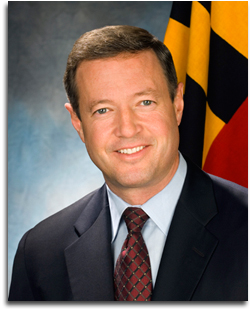
Jan 14, 2013
PUBLIC OPINION: 2012 Gallup Poll Shows Support for Death Penalty Remains Near 40-Year Low
A recent Gallup Poll measured Americans’ abstract support for the death penalty at 63%, the second-lowest level of support for capital punishment since 1978, and a significant decline from 1994, when 80% of respondents were in favor of the death penalty. Gallup noted the results of the poll may have been affected by the fact that it was conducted a few days after the shootings in Newtown, Connecticut. In 2011 Gallup found 61% in support of the death penalty, the lowest level in 40 years. When…
Read More
Jan 11, 2013
NEW RESOURCES: New Death Sentencing Information for 2012
The Death Penalty Information Center is pleased to offer a new resource page on death sentences in 2012. Seventy-eight (78) people were sentenced to death in 2012, the second lowest number of sentences since the death penalty was reinstated in 1976. Of those sentenced, 3 were women; 49% were black; 40% were white. Four states (FL, CA, TX, and PA) were responsible for 65% of the death sentences, and only 9 counties produced over a third of the death sentences in the country. Information is…
Read More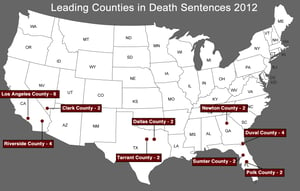
Jan 10, 2013
Mississippi Inmate Faces Execution Despite Questionable Evidence from Overworked Medical Examiner
Jeffrey Havard (pictured) is facing execution in Mississippi despite the fact that key evidence against him came from a medical examiner who has been harshly criticized by experts in his field. Havard was convicted of murdering his girlfriend’s 6‑month-old daughter, based primarily on the testimony of Steven Hayne, a state pathologist. Dr. Hayne testified he found symptoms of “shaken baby syndrome” and sexual abuse on the infant. Recent investigations into Hayne’s credentials indicate he had…
Read More
Jan 09, 2013
Supreme Court Allows Death Penalty Review to Proceed Even Without Competent Defendant
On January 8, the U.S. Supreme Court unanimously rejected indefinite delays in the federal review of death penalty cases when inmates are mentally incompetent to assist their attorneys. Writing for the Court, Justice Clarence Thomas said such appeals are usually based on established facts, not requiring further input from the defendant. “Given the backward-looking, record-based nature of most federal habeas proceedings, counsel can generally provide effective representation to a habeas…
Read More
Jan 08, 2013
Drug-Addicted, Suicidal Lawyer Files Improper Appeal, But Death Row Inmate Suffers Consequences
In his recent Sidebar column, Adam Liptak, Supreme Court reporter for the New York Times, discussed the plight that Alabama death row inmate Ronald Smith suffered at the hands of a drug-addicted lawyer and an unsympathetic court. In December, the U.S. Court of Appeals for the Eleventh Circuit ruled that Smith could not challenge his conviction and sentence because his lawyer failed to properly file his post-conviction appeal. However, as Liptak explained, the court did not “place much weight on…
Read More