Publications & Testimony
Testimony and Statements on the Death Penalty
FROM DPIC
For testimony by former Executive Director Robert Dunham and former Executive Director Richard C. Dieter, please visit our page DPIC Testimony.
FROM RELIGIOUS LEADERS AND ORGANIZATIONS
- News Brief: Pope Francis Calls for Prayer to Abolish the Death Penalty (September 1, 2022)
- Jewish Congregation Renews Request for Department of Justice to Drop Death Penalty in Tree of Life Synagogue Killings (June 24, 2021)
- Orthodox Church Patriarch Calls Death Penalty Incompatible with Christian Beliefs (October 20, 2020)
- Presbyterian Church (U.S.A.) — Statement on the Federal Death Penalty (August 5, 2019)
- Louisiana Christian Faith Leaders Call for State to Abolish Death Penalty (April 25, 2019)
- Pittsburgh Rabbi’s Wife Opposes Death Penalty for Tree of Life Synagogue Killings (March 18, 2019)
- Orthodox Jewish Organization Calls for an End to Capital Punishment in the U.S. | Death Penalty Information Center (February 17, 2016)
- Baptist Theologian Says Death Penalty Does Not Fit With Christian Theology (March 8, 2016)
- Civil and Human Rights: Death Penalty — Church & Society, The United Methodist Church
- Religious Views: Over 150 Catholic Theologians Call for Repeal of the Death Penalty (September 27, 2011)
- Power Over Life and Death — The Power to Save a Life (January 15, 2005)
- Responsibility, Rehabilitation, and Restoration: A Catholic Perspective on Crime and Criminal Justice (November 2000)
- The Challenge of Holiness: A Sermon on the Death Penalty (January 10, 2000)
- General Assembly of the Texas Conference of Churches — Resolution Opposing the Death Penalty (February 24, 1998)
- Statement by Catholic Bishops of Texas on Capital Punishment (October 20, 1997)
- Catholic Church Expresses Strong Opposition to Capital Punishment in Catechism (September 9, 1997)
- Catholic Bishops of Iowa Issue Statement on Death Penalty (February 4, 1998)
- To End the Death Penalty: A Report of the National Jewish/Catholic Consultation
- Transcript of Dr. Pat Robertson’s Speech on the Role of Religion and the Death Penalty at The College of William and Mary
- Collection of Official Catholic Statements on the Death Penalty (1980)
FROM THE INTERNATIONAL COMMUNITY
- UN experts call for universal abolition of the death penalty | OHCHR (October 9, 2023)
- Zambia Becomes 25th Sub-Saharan African Nation to Abolish Death Penalty (December 23, 2022)
- Belgium Wants a World Without the Death Penalty (October 20, 2022)
- As France Prepares to Assume Presidency of European Union, Emmanuel Macron Announces Initiative for Worldwide Abolition of Death Penalty (October 11, 2021)
- U.N. Secretary-General, European Union Ambassador Call for Abolition of “Barbaric” Death Penalty (October 11, 2017)
- European Union Calls for Abolition of Capital Punishment as World Coalition Hosts International Death Penalty Conference (June 27, 2017)
- U.N. Investigator Talks About the Future of Solitary and the Death Penalty (November 7, 2016)
- World Congress Against the Death Penalty Renews Call for Global Moratorium, Pope Sends Message of Support (June 27, 2016)
- Declaration by the Presidency on behalf of the European Union on the 400th execution in Texas from the Council of the European Union (August 21, 2007)
- Resolution Supporting Worldwide Moratorium on Executions from the United Nations Commission on Human Rights (April 1999)
- Mary Robinson, U.N. High Commissioner for Human Rights — Message to the Press Conference organized by the Death Penalty Information Center for the release of the report, “International Perspectives on the Death Penalty” (October 12, 1999)
- Status of the International Covenants on Human Rights from the United Nations Commission on Human Rights (April 1998)
FROM ADVOCACY GROUPS
- Advocacy Group Tells Supreme Court that Negative Stereotypes Distort Perception that Latinos in Death-Penalty Cases Pose Future Danger to Society (April 15, 2022)
- Disability Rights Groups, Legal Experts, and Conservative Advocates Urge Supreme Court to Strike Down Georgia’s Uniquely Harsh Proof Requirements in Death-Penalty Intellectual Disabilities Cases (January 11, 2022)
- NAACP Reaffirms Its Support of Abolishing the Death Penalty (2022)
- More Than 80 Civil Rights and Advocacy Organizations Urge President Biden to End Federal Executions | Death Penalty Information Center (February 9, 2021)
- More Than 250 Conservative Leaders Join Call to End Death Penalty (October 29, 2019)
- National Alliance on Mental Illness: The Death Penalty
- Florida League of Women Voters Calls for Halt to Executions (May 28, 2007)
- Victims Organizations Issue Joint Statement for National Victims’ Rights Week (April 19, 2007)
FROM JUDGES, LEGISLATORS, AND OTHER ORGANIZATIONS
- Republican-led Oklahoma committee considers pause on executions amid death case scrutiny (October 5, 2023)
- Former Pro-Death Penalty District Attorney Explains Why He Now Supports Abolition, and Fears Political Promises to Expand the Use of the Death Penalty (August 20, 2023)
- Pressley, Durbin Reintroduce Bill to End the Federal Death Penalty (July 13, 2023)
- The Lancet Editorial: Physician Involvement in Executions Violates Medical Ethics | Death Penalty Information Center (May 20, 2023)
- APA calls for extending ineligibility for the death penalty to adolescent offenders younger than age 21 (August 4, 2022)
- Why some Republicans are turning against the death penalty | Ron Ferguson | Ohio House of Representatives (March 8, 2022)
- Eight years on Texas’ highest criminal court turned Elsa Alcala into a death penalty skeptic. How will the court change without her? (January 26, 2019)
- AMA to Supreme Court: Doctor participation in executions unethical (August 22, 2018)
- Former Governor Bill Richardson: Death Penalty Is Bad for Business, Out of Step With World’s Views (June 16, 2017)
- Capital Punishment and Nurses’ Participation in Capital Punishment (2016)
- Former Ohio Attorney General Jim Petro Says Death Penalty Unfixable, “Not Worth It Any More” (September 12, 2016)
- Resolution Supporting Repeal of the Death Penalty, National Hispanic Caucus of State Legislators (August 11, 2016)
- Retired Police Captain Says Repealing Death Penalty Is “Smart on Crime” (November 24, 2014)
- Resolution Supporting Abolition of the Death Penalty, Natl. Assoc. of Black Psychologists (2012)
- The Road to Justice and Peace by New Jersey State Senator Raymond Lesniak (February 1, 2009)
- Statement On The Federal Death Penalty System by Senator Feingold (June 7, 2001)
- Statement on the Need for a Federal Moratorium on the Death Penalty Senator Feingold (October 29, 2000)
- Death Penalty: The Torah and Today (August 23, 2000)
- Press Release for Senator Russ Feingold’s Introduction of Senate’s First Death Penalty Moratorium Bill (April 20, 2000)
- Amnesty International Southern Regional Conference: Orlando, Florida Remarks by Former Florida Chief Justice Gerald Kogan (October 23, 1999)
- American Bar Association Resolution on the Death Penalty (February 3, 1997)
FROM MURDER VICTIMS’ FAMILY MEMBERS
Items: 3711 — 3720
Sep 26, 2012
MENTAL ILLNESS: Evangelical Leaders Call for Mercy for Condemned Inmate
On September 26, Florida Governor Rick Scott (pictured) agreed to temporarily stay the pending execution of John Errol Ferguson in order to allow time for a panel of psychiatrists to determine whether Ferguson is mentally competent. The day before, evangelical leaders, including Dr. Joel C. Hunter, Senior Pastor of the 15,000-member Northland Church in Central Florida, sent a letter to the governor urging that Ferguson be allowed to live. They wrote, “The State’s psychiatrists have consistently…
Read More
Sep 25, 2012
NEW VOICES: Victims and Relatives Support Life Sentence in Alabama Mass Shooting
On September 24, a jury in Alabama found that Amy Bishop was indeed guilty of capital murder, a crime for which she had already pled guilty on September 11. Because of this finding and plea, she will be spared the death penalty for killing three members and wounding three others of the University of Alabama’s biology faculty in 2010 after some of them voted against granting her tenure. Madison County District Attorney Rob Broussard agreed to the life without parole sentence after learning that…
Read More
Sep 25, 2012
INNOCENCE: Award-Winning Play About Former Death Row Inmates Returns
This Fall the Culture Project is hosting a limited engagement of its award-winning production, The Exonerated. The play is a groundbreaking dramatization of the real-life stories of six death row inmates who were freed after being cleared of their capital charge. The production, which premiered a decade ago and traveled the country, is culled from interviews, letters, transcripts, case files, and court records. Former U.S. Attorney General Janet Reno described The Exonerated as follows: “What…
Read More
Sep 24, 2012
LAW REVIEWS: Should Mentally Incompetent Death Row Inmates be Forcibly Medicated?
A recent article by Professors Brian D. Shannon (pictured) of Texas Tech and Victor R. Scarano of the University of Houston examines the ethical implications of forcibly medicating mentally incompetent death-row inmates in order to prepare them for execution. According to the authors, this issue, particulary in Texas, pits “the ethical duties of the medical and legal professions in opposition and casts a shadow over the legitimate and appropriate intentions and professional responsibilities of…
Read More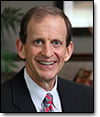
Sep 21, 2012
STUDIES: Reasons Behind the Abolition of the Death Penalty in Illinois
A new report by Rob Warden (pictured), Executive Director of the Center on Wrongful Convictions, explores the conditions that led to the end of Illinois’s death penalty in 2011. Warden says abolition came about because of a series of fortuitous circumstances, but also because of the work of countless attorneys, academics, journalists and activists who took advantage of these developments. The cavalcade of exonerations from death row, including the high-profile release of Anthony Porter, who was…
Read More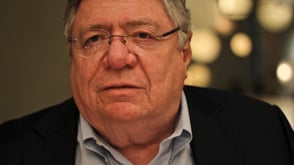
Sep 20, 2012
INNOCENCE: Wrongful Convictions Demonstrate Risk with California Death Penalty
Several cases in California illustrate the inherent risk with the death penalty that an innocent person could be executed. Lee Farmer was freed from death row in 1999 after winning a new trial based on newly discovered evidence that an accomplice admitted to the crime for which he faced execution. Farmer was acquitted of murder at his retrial. Troy Lee Jones (pictured) was sentenced to death even though there were no eyewitnesses to the murder of which he was accused. Jones’s conviction and…
Read More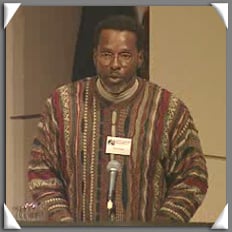
Sep 19, 2012
NEW VOICES: Conservatives Seek to Repeal the Death Penalty in Montana
In Montana, a conservative political group is calling for an end to the death penalty after a recent court ruling held the state’s execution protocol unconstitutional. Former Republican state Senator Roy Brown said, “Conservatives dislike waste and inefficiency. That is why we should cast a critical eye when the state is involved with the business of executing people…. When it takes over 20 years and hundreds of thousands of tax payer dollars for extra legal fees and court costs, it is obvious…
Read More
Sep 18, 2012
NEW VOICES: A Mother Shares Her Grief and Joins the Call for Mercy
When Vicki Schieber’s (pictured) daughter, Shannon, was murdered in Philadelphia in 1998, she and her family felt enormous grief. “Losing a loved one to murder,” she recently wrote in the Philadelphia Inquirer, “is a tragedy of unimaginable proportions. At first, my husband and I didn’t know how we could go on with our lives.” Nevertheless, because of their beliefs, “we did not want the man who murdered our daughter to be put to death.” Now she is speaking out in support of Mamie Norwood, whose…
Read More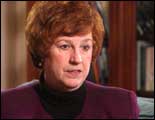
Sep 17, 2012
REPRESENTATION: Georgia Death Sentence Upheld Despite Drunk Trial Attorney
A federal appeals court upheld the death sentence of Georgia inmate Robert Holsey (pictured), despite the fact that Holsey’s lead lawyer drank a quart of vodka every day during the trial and was about to be sued for stealing client funds. The attorney himself testified that he “probably shouldn’t have been allowed to represent anybody.” The court assumed the attorney’s incompetence, but gave great deference to the Georgia Supreme Court’s opinion that his poor performance did not affect the…
Read More
Sep 14, 2012
EDITORIALS: Evidence Does Not Support Death Penalty As Deterrent
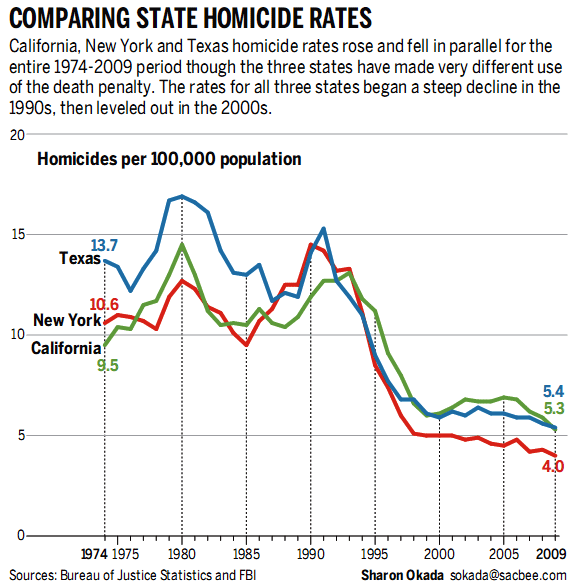
In a recent editorial, the Sacramento Bee of California sharply challenged the theory that the death penalty deters murders. The paper illustrated that homicide rates in California, New York and Texas have tracked virtually identically between 1974 and 2009, and yet each state has differed widely in its use of capital punishment (see chart). The editorial stated, “[D]uring that time Texas had 447 executions and New York had none; California had 13. Clearly, something other than executions has…
Read More