Publications & Testimony
Testimony and Statements on the Death Penalty
FROM DPIC
For testimony by former Executive Director Robert Dunham and former Executive Director Richard C. Dieter, please visit our page DPIC Testimony.
FROM RELIGIOUS LEADERS AND ORGANIZATIONS
- News Brief: Pope Francis Calls for Prayer to Abolish the Death Penalty (September 1, 2022)
- Jewish Congregation Renews Request for Department of Justice to Drop Death Penalty in Tree of Life Synagogue Killings (June 24, 2021)
- Orthodox Church Patriarch Calls Death Penalty Incompatible with Christian Beliefs (October 20, 2020)
- Presbyterian Church (U.S.A.) — Statement on the Federal Death Penalty (August 5, 2019)
- Louisiana Christian Faith Leaders Call for State to Abolish Death Penalty (April 25, 2019)
- Pittsburgh Rabbi’s Wife Opposes Death Penalty for Tree of Life Synagogue Killings (March 18, 2019)
- Orthodox Jewish Organization Calls for an End to Capital Punishment in the U.S. | Death Penalty Information Center (February 17, 2016)
- Baptist Theologian Says Death Penalty Does Not Fit With Christian Theology (March 8, 2016)
- Civil and Human Rights: Death Penalty — Church & Society, The United Methodist Church
- Religious Views: Over 150 Catholic Theologians Call for Repeal of the Death Penalty (September 27, 2011)
- Power Over Life and Death — The Power to Save a Life (January 15, 2005)
- Responsibility, Rehabilitation, and Restoration: A Catholic Perspective on Crime and Criminal Justice (November 2000)
- The Challenge of Holiness: A Sermon on the Death Penalty (January 10, 2000)
- General Assembly of the Texas Conference of Churches — Resolution Opposing the Death Penalty (February 24, 1998)
- Statement by Catholic Bishops of Texas on Capital Punishment (October 20, 1997)
- Catholic Church Expresses Strong Opposition to Capital Punishment in Catechism (September 9, 1997)
- Catholic Bishops of Iowa Issue Statement on Death Penalty (February 4, 1998)
- To End the Death Penalty: A Report of the National Jewish/Catholic Consultation
- Transcript of Dr. Pat Robertson’s Speech on the Role of Religion and the Death Penalty at The College of William and Mary
- Collection of Official Catholic Statements on the Death Penalty (1980)
FROM THE INTERNATIONAL COMMUNITY
- UN experts call for universal abolition of the death penalty | OHCHR (October 9, 2023)
- Zambia Becomes 25th Sub-Saharan African Nation to Abolish Death Penalty (December 23, 2022)
- Belgium Wants a World Without the Death Penalty (October 20, 2022)
- As France Prepares to Assume Presidency of European Union, Emmanuel Macron Announces Initiative for Worldwide Abolition of Death Penalty (October 11, 2021)
- U.N. Secretary-General, European Union Ambassador Call for Abolition of “Barbaric” Death Penalty (October 11, 2017)
- European Union Calls for Abolition of Capital Punishment as World Coalition Hosts International Death Penalty Conference (June 27, 2017)
- U.N. Investigator Talks About the Future of Solitary and the Death Penalty (November 7, 2016)
- World Congress Against the Death Penalty Renews Call for Global Moratorium, Pope Sends Message of Support (June 27, 2016)
- Declaration by the Presidency on behalf of the European Union on the 400th execution in Texas from the Council of the European Union (August 21, 2007)
- Resolution Supporting Worldwide Moratorium on Executions from the United Nations Commission on Human Rights (April 1999)
- Mary Robinson, U.N. High Commissioner for Human Rights — Message to the Press Conference organized by the Death Penalty Information Center for the release of the report, “International Perspectives on the Death Penalty” (October 12, 1999)
- Status of the International Covenants on Human Rights from the United Nations Commission on Human Rights (April 1998)
FROM ADVOCACY GROUPS
- Advocacy Group Tells Supreme Court that Negative Stereotypes Distort Perception that Latinos in Death-Penalty Cases Pose Future Danger to Society (April 15, 2022)
- Disability Rights Groups, Legal Experts, and Conservative Advocates Urge Supreme Court to Strike Down Georgia’s Uniquely Harsh Proof Requirements in Death-Penalty Intellectual Disabilities Cases (January 11, 2022)
- NAACP Reaffirms Its Support of Abolishing the Death Penalty (2022)
- More Than 80 Civil Rights and Advocacy Organizations Urge President Biden to End Federal Executions | Death Penalty Information Center (February 9, 2021)
- More Than 250 Conservative Leaders Join Call to End Death Penalty (October 29, 2019)
- National Alliance on Mental Illness: The Death Penalty
- Florida League of Women Voters Calls for Halt to Executions (May 28, 2007)
- Victims Organizations Issue Joint Statement for National Victims’ Rights Week (April 19, 2007)
FROM JUDGES, LEGISLATORS, AND OTHER ORGANIZATIONS
- Republican-led Oklahoma committee considers pause on executions amid death case scrutiny (October 5, 2023)
- Former Pro-Death Penalty District Attorney Explains Why He Now Supports Abolition, and Fears Political Promises to Expand the Use of the Death Penalty (August 20, 2023)
- Pressley, Durbin Reintroduce Bill to End the Federal Death Penalty (July 13, 2023)
- The Lancet Editorial: Physician Involvement in Executions Violates Medical Ethics | Death Penalty Information Center (May 20, 2023)
- APA calls for extending ineligibility for the death penalty to adolescent offenders younger than age 21 (August 4, 2022)
- Why some Republicans are turning against the death penalty | Ron Ferguson | Ohio House of Representatives (March 8, 2022)
- Eight years on Texas’ highest criminal court turned Elsa Alcala into a death penalty skeptic. How will the court change without her? (January 26, 2019)
- AMA to Supreme Court: Doctor participation in executions unethical (August 22, 2018)
- Former Governor Bill Richardson: Death Penalty Is Bad for Business, Out of Step With World’s Views (June 16, 2017)
- Capital Punishment and Nurses’ Participation in Capital Punishment (2016)
- Former Ohio Attorney General Jim Petro Says Death Penalty Unfixable, “Not Worth It Any More” (September 12, 2016)
- Resolution Supporting Repeal of the Death Penalty, National Hispanic Caucus of State Legislators (August 11, 2016)
- Retired Police Captain Says Repealing Death Penalty Is “Smart on Crime” (November 24, 2014)
- Resolution Supporting Abolition of the Death Penalty, Natl. Assoc. of Black Psychologists (2012)
- The Road to Justice and Peace by New Jersey State Senator Raymond Lesniak (February 1, 2009)
- Statement On The Federal Death Penalty System by Senator Feingold (June 7, 2001)
- Statement on the Need for a Federal Moratorium on the Death Penalty Senator Feingold (October 29, 2000)
- Death Penalty: The Torah and Today (August 23, 2000)
- Press Release for Senator Russ Feingold’s Introduction of Senate’s First Death Penalty Moratorium Bill (April 20, 2000)
- Amnesty International Southern Regional Conference: Orlando, Florida Remarks by Former Florida Chief Justice Gerald Kogan (October 23, 1999)
- American Bar Association Resolution on the Death Penalty (February 3, 1997)
FROM MURDER VICTIMS’ FAMILY MEMBERS
Items: 4001 — 4010
Sep 06, 2011
NEW RESOURCES: States Ranked by Executions Per Death Sentence
DPIC has updated its Executions Per Death Death Sentence page to reflect data through 2010. This page lists states in order of the percentage of death sentences resulting in an execution since the death penalty was reinstated in 1976. If every death sentence resulted in an execution, the state would be at 100%, or a rate of 1.00. Using this ratio of executions per death sentence, the first five states are Virginia (.725), Texas (.498), Utah (.368), Missouri (.347), and Delaware (.311). Of those…
Read More
Sep 05, 2011
With Evidence Still Not Tested for DNA, Texas Attorneys Move to Halt Execution
Texas is planning to execute Hank Skinner on November 9 despite the fact that vital evidence from the crime scene in his case has not been subjected to DNA testing. Skinner has always maintained his innocence. In 2011, the U.S. Supreme Court held that Skinner could file in federal court to compel the testing, but that litigation has not been completed. Moreover, a new Texas law became effective on September 1 to ensure that procedural barriers do not prevent the testing of biological evidence…
Read More
Sep 02, 2011
Only Texas Inmate Not Resentenced After Admittedly Racially Biased Testimony Faces Execution
Texas inmate Duane Buck (pictured) is one of seven death row inmates whose death sentences were tainted by improper racial testimony presented at their trials. In 2000, then-Texas Attorney General John Cornyn (now Senator) confessed the state’s error to the U.S. Supreme Court, noting that seven cases had been tainted by improper prosecution testimony. “It is inappropriate to allow race to be considered as a factor in our criminal justice system,” Cornyn said. “The people of Texas want and…
Read More
Sep 01, 2011
STUDIES: Significant Racial Disparities Found in Military Death Penalty
A soon-to-be-published study has found significant racial disparities in the U.S. military’s death penalty. The study, which will be published in the Journal of Criminal Law and Criminology, found that minorities in the military are twice as likely to be sentenced to death as whites accused of similar crimes. The study examined all 105 potential capital cases since the military death penalty was reinstated in 1984. Of the 16 death sentences handed down in that time, 10 were of minority…
Read More
Aug 31, 2011
UPCOMING EXECUTION: Florida Case Raises Numerous Legal Concerns
Florida has set an execution date of Septmeber 6 for Manuel Valle (pictured), a foreign national from Cuba who was deprived of his rights under the Vienna Convention on Consular Relations. The European Union’s ambassador to the U.S. has asked Florida to halt the execution, and Florida’s Catholic Bishops have also requested clemency for Valle, saying, “Killing someone because they killed diminishes respect for life and promotes a culture of violence and vengeance.” The state plans to introduce…
Read More
Aug 30, 2011
LETHAL INJECTIONS: Ohio and Other States Face New Hurdles with Their Execution Process
Ohio is the only state currently using a single dose of the drug pentobarbital to execute inmates, while other states are using pentobarbital as part of a three-drug protocol. According to the Ohio Department of Rehabilitation and Correction (DRC), the state’s supply of the drug will last only until February. Lundbeck, Inc., the manufacturer of pentobarbital, has said they are putting systems in place to block the use of their product in executions. Ohio recently announced changes to its…
Read More
Aug 29, 2011
California “Taxpayers for Justice” Launches Initiative to Put Death Penalty on 2012 Ballot
After years of reports about the high costs of California’s death penalty, including a recent study that found the state has already spent $4 billion on capital punishment resulting in 13 executions, a group of Californians has announced a citizens’ initiative to put death penalty repeal on the 2012 ballot. The group, Taxpayers for Justice, includes over 100 law enforcement leaders, in addition to crime-victim advocates and exonerated individuals. Among them is former Los Angeles County…
Read More
Aug 26, 2011
INNOCENCE: Barry Scheck Challenges Texas Decision Blocking Innocence Investigation
Barry Scheck, co-director of the Innocence Project in New York, recently disagreed with the opinion issued by the Texas Attorney General limiting the power of the Forensic Science Commission to investigate the case of a possibly innocent man who was executed in 2004. The AG’s decision held that the Commission does not have jurisdiction to examine evidence prior to 2005 and therefore could not look at evidence from the case of Cameron Todd Willingham (pictured), who was executed for arson based…
Read More
Aug 25, 2011
NEW VOICES: Rhode Island’s Governor Explains His Resistance to Federal Death Penalty Case
Rhode Island Governor Lincoln D. Chafee (Indep.) recently explained his denial of a request to transfer Jason Pleau to the federal government for a potential death penalty prosecution. Chafee stated, ” As a matter of public policy, Rhode Islanders have long opposed the death penalty, even for the most heinous crimes. To voluntarily let Mr. Pleau be exposed to the federal death penalty for a crime committed in Rhode Island would be an abdication of one of my core responsibilities as governor…
Read More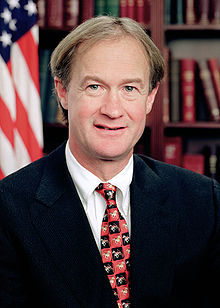
Aug 24, 2011
STUDIES: “Minority Practice, Majority’s Burden: The Death Penalty Today”
A new report by Professor James S. Liebman (pictured) and Peter Clarke from Columbia University Law School analyzes the declining use of the death penalty and concludes that, although it is abstractly supported by two-thirds of the public, the death penalty is actually practiced by only a distinct minority of jurisdictions in the United States. In their forthcoming article, “Minority Practice, Majority’s Burden: The Death Penalty Today,” Liebman and Clarke attempt to explain why the use of the…
Read More