Publications & Testimony
Testimony and Statements on the Death Penalty
FROM DPIC
For testimony by former Executive Director Robert Dunham and former Executive Director Richard C. Dieter, please visit our page DPIC Testimony.
FROM RELIGIOUS LEADERS AND ORGANIZATIONS
- News Brief: Pope Francis Calls for Prayer to Abolish the Death Penalty (September 1, 2022)
- Jewish Congregation Renews Request for Department of Justice to Drop Death Penalty in Tree of Life Synagogue Killings (June 24, 2021)
- Orthodox Church Patriarch Calls Death Penalty Incompatible with Christian Beliefs (October 20, 2020)
- Presbyterian Church (U.S.A.) — Statement on the Federal Death Penalty (August 5, 2019)
- Louisiana Christian Faith Leaders Call for State to Abolish Death Penalty (April 25, 2019)
- Pittsburgh Rabbi’s Wife Opposes Death Penalty for Tree of Life Synagogue Killings (March 18, 2019)
- Orthodox Jewish Organization Calls for an End to Capital Punishment in the U.S. | Death Penalty Information Center (February 17, 2016)
- Baptist Theologian Says Death Penalty Does Not Fit With Christian Theology (March 8, 2016)
- Civil and Human Rights: Death Penalty — Church & Society, The United Methodist Church
- Religious Views: Over 150 Catholic Theologians Call for Repeal of the Death Penalty (September 27, 2011)
- Power Over Life and Death — The Power to Save a Life (January 15, 2005)
- Responsibility, Rehabilitation, and Restoration: A Catholic Perspective on Crime and Criminal Justice (November 2000)
- The Challenge of Holiness: A Sermon on the Death Penalty (January 10, 2000)
- General Assembly of the Texas Conference of Churches — Resolution Opposing the Death Penalty (February 24, 1998)
- Statement by Catholic Bishops of Texas on Capital Punishment (October 20, 1997)
- Catholic Church Expresses Strong Opposition to Capital Punishment in Catechism (September 9, 1997)
- Catholic Bishops of Iowa Issue Statement on Death Penalty (February 4, 1998)
- To End the Death Penalty: A Report of the National Jewish/Catholic Consultation
- Transcript of Dr. Pat Robertson’s Speech on the Role of Religion and the Death Penalty at The College of William and Mary
- Collection of Official Catholic Statements on the Death Penalty (1980)
FROM THE INTERNATIONAL COMMUNITY
- UN experts call for universal abolition of the death penalty | OHCHR (October 9, 2023)
- Zambia Becomes 25th Sub-Saharan African Nation to Abolish Death Penalty (December 23, 2022)
- Belgium Wants a World Without the Death Penalty (October 20, 2022)
- As France Prepares to Assume Presidency of European Union, Emmanuel Macron Announces Initiative for Worldwide Abolition of Death Penalty (October 11, 2021)
- U.N. Secretary-General, European Union Ambassador Call for Abolition of “Barbaric” Death Penalty (October 11, 2017)
- European Union Calls for Abolition of Capital Punishment as World Coalition Hosts International Death Penalty Conference (June 27, 2017)
- U.N. Investigator Talks About the Future of Solitary and the Death Penalty (November 7, 2016)
- World Congress Against the Death Penalty Renews Call for Global Moratorium, Pope Sends Message of Support (June 27, 2016)
- Declaration by the Presidency on behalf of the European Union on the 400th execution in Texas from the Council of the European Union (August 21, 2007)
- Resolution Supporting Worldwide Moratorium on Executions from the United Nations Commission on Human Rights (April 1999)
- Mary Robinson, U.N. High Commissioner for Human Rights — Message to the Press Conference organized by the Death Penalty Information Center for the release of the report, “International Perspectives on the Death Penalty” (October 12, 1999)
- Status of the International Covenants on Human Rights from the United Nations Commission on Human Rights (April 1998)
FROM ADVOCACY GROUPS
- Advocacy Group Tells Supreme Court that Negative Stereotypes Distort Perception that Latinos in Death-Penalty Cases Pose Future Danger to Society (April 15, 2022)
- Disability Rights Groups, Legal Experts, and Conservative Advocates Urge Supreme Court to Strike Down Georgia’s Uniquely Harsh Proof Requirements in Death-Penalty Intellectual Disabilities Cases (January 11, 2022)
- NAACP Reaffirms Its Support of Abolishing the Death Penalty (2022)
- More Than 80 Civil Rights and Advocacy Organizations Urge President Biden to End Federal Executions | Death Penalty Information Center (February 9, 2021)
- More Than 250 Conservative Leaders Join Call to End Death Penalty (October 29, 2019)
- National Alliance on Mental Illness: The Death Penalty
- Florida League of Women Voters Calls for Halt to Executions (May 28, 2007)
- Victims Organizations Issue Joint Statement for National Victims’ Rights Week (April 19, 2007)
FROM JUDGES, LEGISLATORS, AND OTHER ORGANIZATIONS
- Republican-led Oklahoma committee considers pause on executions amid death case scrutiny (October 5, 2023)
- Former Pro-Death Penalty District Attorney Explains Why He Now Supports Abolition, and Fears Political Promises to Expand the Use of the Death Penalty (August 20, 2023)
- Pressley, Durbin Reintroduce Bill to End the Federal Death Penalty (July 13, 2023)
- The Lancet Editorial: Physician Involvement in Executions Violates Medical Ethics | Death Penalty Information Center (May 20, 2023)
- APA calls for extending ineligibility for the death penalty to adolescent offenders younger than age 21 (August 4, 2022)
- Why some Republicans are turning against the death penalty | Ron Ferguson | Ohio House of Representatives (March 8, 2022)
- Eight years on Texas’ highest criminal court turned Elsa Alcala into a death penalty skeptic. How will the court change without her? (January 26, 2019)
- AMA to Supreme Court: Doctor participation in executions unethical (August 22, 2018)
- Former Governor Bill Richardson: Death Penalty Is Bad for Business, Out of Step With World’s Views (June 16, 2017)
- Capital Punishment and Nurses’ Participation in Capital Punishment (2016)
- Former Ohio Attorney General Jim Petro Says Death Penalty Unfixable, “Not Worth It Any More” (September 12, 2016)
- Resolution Supporting Repeal of the Death Penalty, National Hispanic Caucus of State Legislators (August 11, 2016)
- Retired Police Captain Says Repealing Death Penalty Is “Smart on Crime” (November 24, 2014)
- Resolution Supporting Abolition of the Death Penalty, Natl. Assoc. of Black Psychologists (2012)
- The Road to Justice and Peace by New Jersey State Senator Raymond Lesniak (February 1, 2009)
- Statement On The Federal Death Penalty System by Senator Feingold (June 7, 2001)
- Statement on the Need for a Federal Moratorium on the Death Penalty Senator Feingold (October 29, 2000)
- Death Penalty: The Torah and Today (August 23, 2000)
- Press Release for Senator Russ Feingold’s Introduction of Senate’s First Death Penalty Moratorium Bill (April 20, 2000)
- Amnesty International Southern Regional Conference: Orlando, Florida Remarks by Former Florida Chief Justice Gerald Kogan (October 23, 1999)
- American Bar Association Resolution on the Death Penalty (February 3, 1997)
FROM MURDER VICTIMS’ FAMILY MEMBERS
Items: 4101 — 4110
Apr 21, 2011
STUDIES: Texas Forensic Science Panel Calls for Changes but Says Nothing About Possible Wrongful Execution
On April 15, the Texas Forensic Science Commission recommended more education and training for fire investigators following its review of the controversial case of Cameron Todd Willingham (pictured), who was executed in 2004 for setting the fire that killed his three daughters. The Commission made 16 recommendations for investigators, lawyers and lawmakers. It did not, however, decide whether arson investigators in Willingham’s case were negligent or guilty of professional misconduct, and was…
Read More
Apr 21, 2011
NEW RESOURCE: “Legacy of Violence”
“Legacy of Violence: Lynch Mobs and Executions in Minnesota,” a book by John D. Bessler (University of Minnesota Press, 2003), examines the history of illegal and state-sanctioned executions in Minnesota, one of twelve states that currently does not have the death penalty. The book is timely in that the current governor, Tim Pawlenty, has proposed reinstating the death penalty, which was abolished in 1911. The book includes detailed personal accounts from those who were involved in the events…
Read MoreApr 21, 2011
NEW VOICES: Former Supporter Will Oppose Any Measure to Restore Minnesota Death Penalty
Minnesota Senator Tom Neuville, the leading Republican committee member on the state’s Senate Judiciary Committee, says he will oppose Governor Tim Pawlenty’s efforts to reinstate death penalty. Neuville’s basic opposition is moral: “If we solve violence by becoming violent ourselves, we become diminished.” Neuville, a former death penalty supporter whose reexamination of his pro-life beliefs led him to change his mind on the issue, feels that many of his colleagues share his concerns. “Life is…
Read MoreApr 21, 2011
Virginia Man Denied Consular Rights, Will Not Face Death Penalty
A Virginia judge ruled that prosecutors may not seek the death penalty against a Vietnamese man accused of murdering two people because police violated the man’s rights under the Vienna Convention on Consular Relations by not informing him that he could contact his country’s consulate. “[T]he duty to give notice is absolute… . [T]he idea that the state can completely ignore its treaty obligations without consequence essentially obliterates the purpose for which the rights under the Vienna…
Read MoreApr 20, 2011
IN MEMORIAM: Marie Deans, A Life of Commitment to Justice and Founder of Murder Victims’ Families for Reconciliation
On April 15, 2011, Marie McFadden Deans died in Charlottesville, Virginia. For three decades, Deans sought justice for death row inmates who had no other recourse and who had been poorly represented. Professor Todd Peppers of Roanoke College wrote in an op-ed about her life that she brought “basic conditions of decency to the men who inhabited Virginia’s death row,… refin[ed] the use of mitigation evidence in death penalty trials, [and] struggl[ed] to exonerate factually innocent men.” Deans’s…
Read More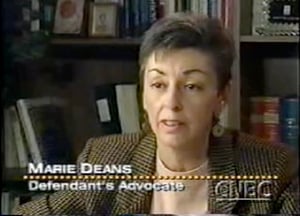
Apr 19, 2011
States Engage in “Swap Club” to Obtain Lethal Injection Drugs
In what was described in the New York Times as a “legally quesionable swap club,” states searching for a scarce execution drug have gone to great lengths to obtain sodium thiopental for carrying out their death sentences. In Arkansas, a deputy director of the Department of Corrections revealed that states often shared their supply of sodium thiopental with each other. Wendy Kelly, who has personally traveled to obtain drugs from other states, said, “I went wherever they had them. As best as I’m…
Read More
Apr 18, 2011
NEW RESOURCES: New Database for International Death Penalty
Northwestern University School of Law, in conjunction with the World Coalition Against the Death Penalty, has compiled a new resource on the use of the death penalty in every country around the world. This searchable database, www.deathpenaltyworldwide.org, contains information on each country’s death penalty status, methods of execution, number of executions, and crimes punishable by the death penalty. The database also includes demographic information on each country, relevant treaties…
Read More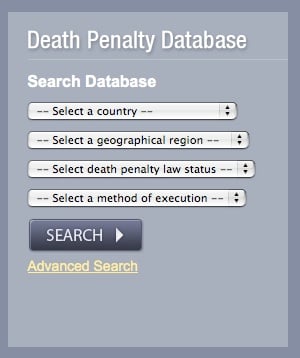
Apr 15, 2011
Texas Psychologist Who Approved Defendants for Execution Barred from Future Work
The Texas State Board of Examiners of Psychologists recently reprimanded and fined Dr. George Denkowski, a psychologist who examined many death row inmates for intellectual disabilities, including two who were subsequently executed. Despite using unscientific methods that have been sharply criticized by other psychologists, Dr. Denkowski found 16 inmates qualified for execution. As part of a settlement, Dr. Denkowski agreed not to conduct intellectual disability evaluations in future criminal…
Read MoreApr 14, 2011
COSTS: Federal Government Spending Millions Pursuing Death Penalty for Inmate with Life Sentence
An expensive federal death penalty trial under way in New York illustrates many of the concerns about such prosecutions. New York is a state that no longer has its own death penalty. Nevertheless, the federal government is seeking a death sentence for Vincent Basciano, who is already serving life without parole. Because the death penalty is being sought, the case has already costs millions of dollars and the final bill will likely be $10 million or more. Moreover, the chief witness against…
Read MoreApr 13, 2011
Key Connecticut Committee Approves Death Penalty Repeal Bill
On April 12, the Connecticut legislature’s Judiciary Committee approved (26 – 17) a bill to repeal the death penalty for future crimes and replace the sentence with life without parole. Supporters of the bill said it would avoid the risk of wrongful executions and save taxpayers the costs of lengthy trials and appeals. Both supporters and opponents of capital punishment agreed that the state’s current system is not working. Sen. Eric Coleman said the state’s justice system “is not infallible.” He…
Read More