Publications & Testimony
Testimony and Statements on the Death Penalty
FROM DPIC
For testimony by former Executive Director Robert Dunham and former Executive Director Richard C. Dieter, please visit our page DPIC Testimony.
FROM RELIGIOUS LEADERS AND ORGANIZATIONS
- News Brief: Pope Francis Calls for Prayer to Abolish the Death Penalty (September 1, 2022)
- Jewish Congregation Renews Request for Department of Justice to Drop Death Penalty in Tree of Life Synagogue Killings (June 24, 2021)
- Orthodox Church Patriarch Calls Death Penalty Incompatible with Christian Beliefs (October 20, 2020)
- Presbyterian Church (U.S.A.) — Statement on the Federal Death Penalty (August 5, 2019)
- Louisiana Christian Faith Leaders Call for State to Abolish Death Penalty (April 25, 2019)
- Pittsburgh Rabbi’s Wife Opposes Death Penalty for Tree of Life Synagogue Killings (March 18, 2019)
- Orthodox Jewish Organization Calls for an End to Capital Punishment in the U.S. | Death Penalty Information Center (February 17, 2016)
- Baptist Theologian Says Death Penalty Does Not Fit With Christian Theology (March 8, 2016)
- Civil and Human Rights: Death Penalty — Church & Society, The United Methodist Church
- Religious Views: Over 150 Catholic Theologians Call for Repeal of the Death Penalty (September 27, 2011)
- Power Over Life and Death — The Power to Save a Life (January 15, 2005)
- Responsibility, Rehabilitation, and Restoration: A Catholic Perspective on Crime and Criminal Justice (November 2000)
- The Challenge of Holiness: A Sermon on the Death Penalty (January 10, 2000)
- General Assembly of the Texas Conference of Churches — Resolution Opposing the Death Penalty (February 24, 1998)
- Statement by Catholic Bishops of Texas on Capital Punishment (October 20, 1997)
- Catholic Church Expresses Strong Opposition to Capital Punishment in Catechism (September 9, 1997)
- Catholic Bishops of Iowa Issue Statement on Death Penalty (February 4, 1998)
- To End the Death Penalty: A Report of the National Jewish/Catholic Consultation
- Transcript of Dr. Pat Robertson’s Speech on the Role of Religion and the Death Penalty at The College of William and Mary
- Collection of Official Catholic Statements on the Death Penalty (1980)
FROM THE INTERNATIONAL COMMUNITY
- UN experts call for universal abolition of the death penalty | OHCHR (October 9, 2023)
- Zambia Becomes 25th Sub-Saharan African Nation to Abolish Death Penalty (December 23, 2022)
- Belgium Wants a World Without the Death Penalty (October 20, 2022)
- As France Prepares to Assume Presidency of European Union, Emmanuel Macron Announces Initiative for Worldwide Abolition of Death Penalty (October 11, 2021)
- U.N. Secretary-General, European Union Ambassador Call for Abolition of “Barbaric” Death Penalty (October 11, 2017)
- European Union Calls for Abolition of Capital Punishment as World Coalition Hosts International Death Penalty Conference (June 27, 2017)
- U.N. Investigator Talks About the Future of Solitary and the Death Penalty (November 7, 2016)
- World Congress Against the Death Penalty Renews Call for Global Moratorium, Pope Sends Message of Support (June 27, 2016)
- Declaration by the Presidency on behalf of the European Union on the 400th execution in Texas from the Council of the European Union (August 21, 2007)
- Resolution Supporting Worldwide Moratorium on Executions from the United Nations Commission on Human Rights (April 1999)
- Mary Robinson, U.N. High Commissioner for Human Rights — Message to the Press Conference organized by the Death Penalty Information Center for the release of the report, “International Perspectives on the Death Penalty” (October 12, 1999)
- Status of the International Covenants on Human Rights from the United Nations Commission on Human Rights (April 1998)
FROM ADVOCACY GROUPS
- Advocacy Group Tells Supreme Court that Negative Stereotypes Distort Perception that Latinos in Death-Penalty Cases Pose Future Danger to Society (April 15, 2022)
- Disability Rights Groups, Legal Experts, and Conservative Advocates Urge Supreme Court to Strike Down Georgia’s Uniquely Harsh Proof Requirements in Death-Penalty Intellectual Disabilities Cases (January 11, 2022)
- NAACP Reaffirms Its Support of Abolishing the Death Penalty (2022)
- More Than 80 Civil Rights and Advocacy Organizations Urge President Biden to End Federal Executions | Death Penalty Information Center (February 9, 2021)
- More Than 250 Conservative Leaders Join Call to End Death Penalty (October 29, 2019)
- National Alliance on Mental Illness: The Death Penalty
- Florida League of Women Voters Calls for Halt to Executions (May 28, 2007)
- Victims Organizations Issue Joint Statement for National Victims’ Rights Week (April 19, 2007)
FROM JUDGES, LEGISLATORS, AND OTHER ORGANIZATIONS
- Republican-led Oklahoma committee considers pause on executions amid death case scrutiny (October 5, 2023)
- Former Pro-Death Penalty District Attorney Explains Why He Now Supports Abolition, and Fears Political Promises to Expand the Use of the Death Penalty (August 20, 2023)
- Pressley, Durbin Reintroduce Bill to End the Federal Death Penalty (July 13, 2023)
- The Lancet Editorial: Physician Involvement in Executions Violates Medical Ethics | Death Penalty Information Center (May 20, 2023)
- APA calls for extending ineligibility for the death penalty to adolescent offenders younger than age 21 (August 4, 2022)
- Why some Republicans are turning against the death penalty | Ron Ferguson | Ohio House of Representatives (March 8, 2022)
- Eight years on Texas’ highest criminal court turned Elsa Alcala into a death penalty skeptic. How will the court change without her? (January 26, 2019)
- AMA to Supreme Court: Doctor participation in executions unethical (August 22, 2018)
- Former Governor Bill Richardson: Death Penalty Is Bad for Business, Out of Step With World’s Views (June 16, 2017)
- Capital Punishment and Nurses’ Participation in Capital Punishment (2016)
- Former Ohio Attorney General Jim Petro Says Death Penalty Unfixable, “Not Worth It Any More” (September 12, 2016)
- Resolution Supporting Repeal of the Death Penalty, National Hispanic Caucus of State Legislators (August 11, 2016)
- Retired Police Captain Says Repealing Death Penalty Is “Smart on Crime” (November 24, 2014)
- Resolution Supporting Abolition of the Death Penalty, Natl. Assoc. of Black Psychologists (2012)
- The Road to Justice and Peace by New Jersey State Senator Raymond Lesniak (February 1, 2009)
- Statement On The Federal Death Penalty System by Senator Feingold (June 7, 2001)
- Statement on the Need for a Federal Moratorium on the Death Penalty Senator Feingold (October 29, 2000)
- Death Penalty: The Torah and Today (August 23, 2000)
- Press Release for Senator Russ Feingold’s Introduction of Senate’s First Death Penalty Moratorium Bill (April 20, 2000)
- Amnesty International Southern Regional Conference: Orlando, Florida Remarks by Former Florida Chief Justice Gerald Kogan (October 23, 1999)
- American Bar Association Resolution on the Death Penalty (February 3, 1997)
FROM MURDER VICTIMS’ FAMILY MEMBERS
Items: 4111 — 4120
Mar 31, 2011
NEW VOICES: Former Prison Director Urges Clemency for Condemned Ohio Inmate
The former Director of Ohio Prisons, Terry Collins, recently urged Gov. John Kasich to spare the life of Clarence Carter, who is scheduled to be executed on April 12 for the murder of another inmate. Carter killed the inmate during a jailhouse fight in 1988. Collins, who had 30 years of experience working with prisoners, discussed whether this crime merited the death penalty, “It is much more likely that this was an inmate fight that got tragically out of hand. Inmate-on-inmate violence in…
Read MoreMar 31, 2011
The History of the Death Penalty: A Timeline
Eighteenth Century B.C. — first established death penalty laws. Eleventh Century A.D. — William the Conqueror will not allow persons to be hanged except in cases of murder. 1608 — Captain George Kendall becomes the first recorded execution in the new colonies. 1632 — Jane Champion becomes the first woman executed in the new colonies. 1767 — Cesare Beccaria’s essay, On Crimes and Punishment, theorizes that there is no justification for the state to take a life. Late 1700s — United States…
Read MoreMar 30, 2011
NEW VOICES: Prominent Texans Support Death Penalty Moratorium Legislation
The Texas Criminal Jurisprudence Committee of the House of Representatives heard testimony on March 29 regarding HB 1641, a bill that would put a hold on executions while the death penalty was being studied. Charles Terrell, former Chairman of the state’s Department of Criminal Justice, supported the moratorium in a statement to the committee, expressing concerns about: “fairness to those convicted on the limited testimony of witnesses, racial fairness in some areas of our state, the absence of…
Read More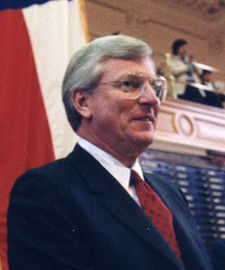
Mar 29, 2011
INTERNATIONAL: Amnesty International Report Finds Global Trend Away from Death Penalty
A new report issued by Amnesty International, Death Sentences and Executions 2010, shows a global trend away from the use of the death penalty. According to the report, only four countries in the G20 (representing the world’s major economies) carried out executions in 2010 (China, Japan, Saudi Arabia and the U.S.), 36 of the 53 African Union member states are abolitionist in law or in practice, and only 21 of the 192 UN member states carried out executions in 2010. The report stated, “At the…
Read More
Mar 28, 2011
NEW VOICES: Former Los Angeles D.A. States “California’s Death Penalty Doesn’t Serve Justice”
Gil Garcetti, the former district attorney of Los Angeles who pursued numerous death sentences, recently said California’s death penalty is dysfunctional and the resources spent on it should be diverted to more pressing needs. In an op-ed in the Los Angeles Times, Garcetti said the death penalty causes ongoing torment to family members and friends of murder victims: “The living victims of a particular crime might think that a death verdict provides closure, but for most, there was no such…
Read More
Mar 25, 2011
Connecticut Weighs Legislation to Repeal Death Penalty
Earlier in March, hearings were held in Connecticut before the House Judiciary Committee on a bill to replace the death penalty for future crimes with a sentence of life without parole. Many religious leaders, scholars, former death row inmates, and families of murder victims families testified in favor of the bill. Catholic Bishop Peter Rosazza, retired auxiliary bishop of the Archdiocese of Hartford, said, “The death penalty diminishes us all. We cannot teach respect for life by taking a…
Read More
Mar 24, 2011
BOOKS: The Death Penalty from an International Perspective
A recent book by Sanaz Alasti, “Cruel and Unusual Punishment: Comparative Perspective in International Conventions, the United States and Iran,” explores the question of what constitutes cruel and unusual punishment on an international level. The book reviews current practices in both Iran and the United States, focusing on the death penalty and the harshness of such practices as corporal punishment, long terms of imprisonment, and inflexibile laws mandating punishment. Punishments are…
Read MoreMar 23, 2011
COSTS: One Death Penalty Case Could Drain County’s Budget in Washington
As Yakima County, Washington, faces the possibility of its first death penalty trial since 1989, the danger that the high cost of a capital case could drain the county’s budget is a deep concern. Harold Delia, Yakima County court administrative consultant questioned the wisdom of seeking the death penalty against a defendant recently charged with murder, “You really have to wonder whether this really makes sense when you look at the cost-benefit analysis,” he said. “In Yakima County, we have no…
Read More
Mar 22, 2011
Supreme Court to Hear Case of Man Facing Execution Because of Mailroom Mixup
On March 21, the U.S. Supreme Court agreed to hear an appeal from death-row inmate Cory Maples (pictured), who is facing execution because of a missed filing deadline in his state appeal. Copies of an Alabama court ruling in his case were sent to the New York law firm handling his appeals pro bono but were returned unopened to the court because the attorneys representing Maples had left the firm. Maples himself was not informed of the Alabama ruling or the fact that his attorneys had left. By…
Read More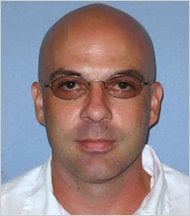
Mar 21, 2011
Trial Prosecutor Now Opposes Death Sentence as Arizona Execution Approaches
Daniel Cook is scheduled for execution on April 5 in Arizona, despite the fact that the lead prosecutor at his 1988 capital trial has said that he would not have sought the death penalty if he had known more about Cook’s traumatic background and mental illness. At trial, Cook waived his right to counsel and represented himself after learning his appointed lawyer was suffering from bipolar disorder and was drinking heavily. The judge denied Cook’s petition for a mental heath expert, and Cook…
Read More