Publications & Testimony
Testimony and Statements on the Death Penalty
FROM DPIC
For testimony by former Executive Director Robert Dunham and former Executive Director Richard C. Dieter, please visit our page DPIC Testimony.
FROM RELIGIOUS LEADERS AND ORGANIZATIONS
- News Brief: Pope Francis Calls for Prayer to Abolish the Death Penalty (September 1, 2022)
- Jewish Congregation Renews Request for Department of Justice to Drop Death Penalty in Tree of Life Synagogue Killings (June 24, 2021)
- Orthodox Church Patriarch Calls Death Penalty Incompatible with Christian Beliefs (October 20, 2020)
- Presbyterian Church (U.S.A.) — Statement on the Federal Death Penalty (August 5, 2019)
- Louisiana Christian Faith Leaders Call for State to Abolish Death Penalty (April 25, 2019)
- Pittsburgh Rabbi’s Wife Opposes Death Penalty for Tree of Life Synagogue Killings (March 18, 2019)
- Orthodox Jewish Organization Calls for an End to Capital Punishment in the U.S. | Death Penalty Information Center (February 17, 2016)
- Baptist Theologian Says Death Penalty Does Not Fit With Christian Theology (March 8, 2016)
- Civil and Human Rights: Death Penalty — Church & Society, The United Methodist Church
- Religious Views: Over 150 Catholic Theologians Call for Repeal of the Death Penalty (September 27, 2011)
- Power Over Life and Death — The Power to Save a Life (January 15, 2005)
- Responsibility, Rehabilitation, and Restoration: A Catholic Perspective on Crime and Criminal Justice (November 2000)
- The Challenge of Holiness: A Sermon on the Death Penalty (January 10, 2000)
- General Assembly of the Texas Conference of Churches — Resolution Opposing the Death Penalty (February 24, 1998)
- Statement by Catholic Bishops of Texas on Capital Punishment (October 20, 1997)
- Catholic Church Expresses Strong Opposition to Capital Punishment in Catechism (September 9, 1997)
- Catholic Bishops of Iowa Issue Statement on Death Penalty (February 4, 1998)
- To End the Death Penalty: A Report of the National Jewish/Catholic Consultation
- Transcript of Dr. Pat Robertson’s Speech on the Role of Religion and the Death Penalty at The College of William and Mary
- Collection of Official Catholic Statements on the Death Penalty (1980)
FROM THE INTERNATIONAL COMMUNITY
- UN experts call for universal abolition of the death penalty | OHCHR (October 9, 2023)
- Zambia Becomes 25th Sub-Saharan African Nation to Abolish Death Penalty (December 23, 2022)
- Belgium Wants a World Without the Death Penalty (October 20, 2022)
- As France Prepares to Assume Presidency of European Union, Emmanuel Macron Announces Initiative for Worldwide Abolition of Death Penalty (October 11, 2021)
- U.N. Secretary-General, European Union Ambassador Call for Abolition of “Barbaric” Death Penalty (October 11, 2017)
- European Union Calls for Abolition of Capital Punishment as World Coalition Hosts International Death Penalty Conference (June 27, 2017)
- U.N. Investigator Talks About the Future of Solitary and the Death Penalty (November 7, 2016)
- World Congress Against the Death Penalty Renews Call for Global Moratorium, Pope Sends Message of Support (June 27, 2016)
- Declaration by the Presidency on behalf of the European Union on the 400th execution in Texas from the Council of the European Union (August 21, 2007)
- Resolution Supporting Worldwide Moratorium on Executions from the United Nations Commission on Human Rights (April 1999)
- Mary Robinson, U.N. High Commissioner for Human Rights — Message to the Press Conference organized by the Death Penalty Information Center for the release of the report, “International Perspectives on the Death Penalty” (October 12, 1999)
- Status of the International Covenants on Human Rights from the United Nations Commission on Human Rights (April 1998)
FROM ADVOCACY GROUPS
- Advocacy Group Tells Supreme Court that Negative Stereotypes Distort Perception that Latinos in Death-Penalty Cases Pose Future Danger to Society (April 15, 2022)
- Disability Rights Groups, Legal Experts, and Conservative Advocates Urge Supreme Court to Strike Down Georgia’s Uniquely Harsh Proof Requirements in Death-Penalty Intellectual Disabilities Cases (January 11, 2022)
- NAACP Reaffirms Its Support of Abolishing the Death Penalty (2022)
- More Than 80 Civil Rights and Advocacy Organizations Urge President Biden to End Federal Executions | Death Penalty Information Center (February 9, 2021)
- More Than 250 Conservative Leaders Join Call to End Death Penalty (October 29, 2019)
- National Alliance on Mental Illness: The Death Penalty
- Florida League of Women Voters Calls for Halt to Executions (May 28, 2007)
- Victims Organizations Issue Joint Statement for National Victims’ Rights Week (April 19, 2007)
FROM JUDGES, LEGISLATORS, AND OTHER ORGANIZATIONS
- Republican-led Oklahoma committee considers pause on executions amid death case scrutiny (October 5, 2023)
- Former Pro-Death Penalty District Attorney Explains Why He Now Supports Abolition, and Fears Political Promises to Expand the Use of the Death Penalty (August 20, 2023)
- Pressley, Durbin Reintroduce Bill to End the Federal Death Penalty (July 13, 2023)
- The Lancet Editorial: Physician Involvement in Executions Violates Medical Ethics | Death Penalty Information Center (May 20, 2023)
- APA calls for extending ineligibility for the death penalty to adolescent offenders younger than age 21 (August 4, 2022)
- Why some Republicans are turning against the death penalty | Ron Ferguson | Ohio House of Representatives (March 8, 2022)
- Eight years on Texas’ highest criminal court turned Elsa Alcala into a death penalty skeptic. How will the court change without her? (January 26, 2019)
- AMA to Supreme Court: Doctor participation in executions unethical (August 22, 2018)
- Former Governor Bill Richardson: Death Penalty Is Bad for Business, Out of Step With World’s Views (June 16, 2017)
- Capital Punishment and Nurses’ Participation in Capital Punishment (2016)
- Former Ohio Attorney General Jim Petro Says Death Penalty Unfixable, “Not Worth It Any More” (September 12, 2016)
- Resolution Supporting Repeal of the Death Penalty, National Hispanic Caucus of State Legislators (August 11, 2016)
- Retired Police Captain Says Repealing Death Penalty Is “Smart on Crime” (November 24, 2014)
- Resolution Supporting Abolition of the Death Penalty, Natl. Assoc. of Black Psychologists (2012)
- The Road to Justice and Peace by New Jersey State Senator Raymond Lesniak (February 1, 2009)
- Statement On The Federal Death Penalty System by Senator Feingold (June 7, 2001)
- Statement on the Need for a Federal Moratorium on the Death Penalty Senator Feingold (October 29, 2000)
- Death Penalty: The Torah and Today (August 23, 2000)
- Press Release for Senator Russ Feingold’s Introduction of Senate’s First Death Penalty Moratorium Bill (April 20, 2000)
- Amnesty International Southern Regional Conference: Orlando, Florida Remarks by Former Florida Chief Justice Gerald Kogan (October 23, 1999)
- American Bar Association Resolution on the Death Penalty (February 3, 1997)
FROM MURDER VICTIMS’ FAMILY MEMBERS
Items: 4211 — 4220
Dec 02, 2010
Conditions on Death Row in Texas
In an article entitled “Solitary Men” in The Texas Observer, Dave Mann describes the conditions for inmates on Texas’s death row. Inmates in the Polunsky Unit near Livingston, Texas, spend almost their entire time alone in a 60-square-foot cell. He writes, “The cells have a small window at one end. The steel door has a narrow window and, at the bottom, a slit through which guards slide trays of food… .Little penetrates these cement boxes except sound. Prison is a loud place, and sound can cause…
Read More
Dec 01, 2010
OP-ED: America’s Death Penalty “Broken Beyond Repair”
An op-ed by Bob Herbert of the New York Times highlights issues raised by former Supreme Court Justice John Paul Stevens that changed his mind on the death penalty in the U.S. Herbert cites information collected by the Death Penalty Information Center and points to shoddy defense and state misconduct in the deliberate withholding of evidence as prominent abuses in the system. “Executions have been upheld in cases in which defense lawyers slept through crucial proceedings. Alcoholic…
Read More
Dec 01, 2010
New Hampshire Death Penalty Study Commission
New Hampshire Death Penalty Study Commission — Final Report Individual Statement of Commissioner Renny Cushing Dec. 1, 2010 There were a number of family members of murder victims who appeared before the Commission to share their personal experiences with homicide and the criminal justice system. They expressed their opposition, as victims, to the death penalty. As I listened to their testimony, and as I do when I listen to the experiences of any family member of a murder victim, whether…
Read MoreDec 01, 2010
New Hampshire Death Penalty Study Commission — Final Report: Individual Statement of Commissioner Renny Cushing
There were a number of family members of murder victims who appeared before the Commission to share their personal experiences with homicide and the criminal justice system. They expressed their opposition, as victims, to the death penalty. As I listened to their testimony, and as I do when I listen to the experiences of any family member of a murder victim, whether they support, oppose, or have no opinion on the death penalty, I felt a sense of shared experience, empathy, and solidarity. My…
Read MoreNov 29, 2010
Revision to List of Exonerated Individuals
Thanks to additional research by Prof. Samuel Gross of the University of Michigan, DPIC has learned that one of the individuals on its list of exonerated death row inmates had conceded his guilt to a lesser offense in connection with the crime that originally sent him to death row. He was, however, acquitted on the murder charge. James Bo Cochran was originally found guilty of a 1976 murder in Alabama in connection with a robbery at a grocery store. His first trial resulted in a mistrial and…
Read MoreNov 28, 2010
NEW RESOURCES: Congressional Quarterly Publishes Death Penalty Review
Kenneth Jost of Congressional Quarterly has prepared a comprehensive review of the death penalty in the U.S. for the recent edition of the CQ Researcher. The overview looks at death penalty trends in the past 10 years, public opinion, and arguments for and against repealing the death penalty. Jost quotes many experts, including DPIC’s Executive Director concerning the recent direction of capital punishment in the U.S. “‘The decline in the use of the death penalty is the continuing story,’ says…
Read MoreNov 24, 2010
Tennessee Judge Declares State’s Execution Process Unconstitutional; Other States Confront Same Issue
On Nov.19, a Davidson County judge ruled that Tennessee’s lethal injection procedure was unconstitutional, possibly delaying the execution of Stephen Michael West and others on death row. Chancellor Claudia Bonnyman, who issued the ruling, said that the state’s lethal injection procedure “allows for death by suffocation while conscious,” because it did not specify a sufficient dosage for sodium thiopental, the first of three drugs used in lethal injections. In Baze v. Rees, the U.S. Supreme…
Read More
Nov 23, 2010
NEW VOICES: Former Florida Justice and Texas Governor Urge Supreme Court to Examine Faulty Representation
Gerald Kogan, a former Florida Supreme Court Justice, and Mark White, former governor of Texas (pictured), recently urged the U.S. Supreme Court to consider the death penalty appeal of Boyd v. Allen because of inadequate defense representation. According to the authors of an op-ed appearing in the National Law Journal, William Boyd’s defense lawyers in Alabama were barely paid and did very little to try to save his life. They failed to present mitigating evidence of Boyd’s abused childhood…
Read More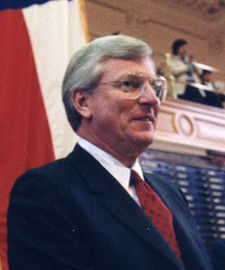
Nov 22, 2010
INTERNATIONAL: United Nations Resolution Shows Increasing Support for International Moratorium
In November, a preliminary resolution was presented to the United Nations General Assembly for a moratorium on the use of the death penalty around the world. Panama, the European Union, Paraguay, Philippines, East Timor, Rwanda, Mozambique and Russia were among the resolution’s sponsors. Other co-sponsors included nations in Africa, Asia and Latin America. The resolution received 107 votes in favor, 38 against and 36 abstentions. In 2007, a similar resolution was adopted by the General…
Read More
Nov 19, 2010
EDITORIALS: Illinois – “Outlaw Death Penalty to Save Lives and Cash”
In a recent editorial, the Chicago Sun-Times supported the abolition of the death penalty in Illinois during the current legislative session. The paper noted its past support for capital punishment: “In the past, we’ve supported the death penalty as long as the legal system gives the accused a fair trial that results in a verdict of guilt beyond resonable doubt. Sadly, in light of experiences in recent years, that goal seems unrealistic.” Among the reasons for favoring abolition, the paper…
Read More