Publications & Testimony
Testimony and Statements on the Death Penalty
FROM DPIC
For testimony by former Executive Director Robert Dunham and former Executive Director Richard C. Dieter, please visit our page DPIC Testimony.
FROM RELIGIOUS LEADERS AND ORGANIZATIONS
- News Brief: Pope Francis Calls for Prayer to Abolish the Death Penalty (September 1, 2022)
- Jewish Congregation Renews Request for Department of Justice to Drop Death Penalty in Tree of Life Synagogue Killings (June 24, 2021)
- Orthodox Church Patriarch Calls Death Penalty Incompatible with Christian Beliefs (October 20, 2020)
- Presbyterian Church (U.S.A.) — Statement on the Federal Death Penalty (August 5, 2019)
- Louisiana Christian Faith Leaders Call for State to Abolish Death Penalty (April 25, 2019)
- Pittsburgh Rabbi’s Wife Opposes Death Penalty for Tree of Life Synagogue Killings (March 18, 2019)
- Orthodox Jewish Organization Calls for an End to Capital Punishment in the U.S. | Death Penalty Information Center (February 17, 2016)
- Baptist Theologian Says Death Penalty Does Not Fit With Christian Theology (March 8, 2016)
- Civil and Human Rights: Death Penalty — Church & Society, The United Methodist Church
- Religious Views: Over 150 Catholic Theologians Call for Repeal of the Death Penalty (September 27, 2011)
- Power Over Life and Death — The Power to Save a Life (January 15, 2005)
- Responsibility, Rehabilitation, and Restoration: A Catholic Perspective on Crime and Criminal Justice (November 2000)
- The Challenge of Holiness: A Sermon on the Death Penalty (January 10, 2000)
- General Assembly of the Texas Conference of Churches — Resolution Opposing the Death Penalty (February 24, 1998)
- Statement by Catholic Bishops of Texas on Capital Punishment (October 20, 1997)
- Catholic Church Expresses Strong Opposition to Capital Punishment in Catechism (September 9, 1997)
- Catholic Bishops of Iowa Issue Statement on Death Penalty (February 4, 1998)
- To End the Death Penalty: A Report of the National Jewish/Catholic Consultation
- Transcript of Dr. Pat Robertson’s Speech on the Role of Religion and the Death Penalty at The College of William and Mary
- Collection of Official Catholic Statements on the Death Penalty (1980)
FROM THE INTERNATIONAL COMMUNITY
- UN experts call for universal abolition of the death penalty | OHCHR (October 9, 2023)
- Zambia Becomes 25th Sub-Saharan African Nation to Abolish Death Penalty (December 23, 2022)
- Belgium Wants a World Without the Death Penalty (October 20, 2022)
- As France Prepares to Assume Presidency of European Union, Emmanuel Macron Announces Initiative for Worldwide Abolition of Death Penalty (October 11, 2021)
- U.N. Secretary-General, European Union Ambassador Call for Abolition of “Barbaric” Death Penalty (October 11, 2017)
- European Union Calls for Abolition of Capital Punishment as World Coalition Hosts International Death Penalty Conference (June 27, 2017)
- U.N. Investigator Talks About the Future of Solitary and the Death Penalty (November 7, 2016)
- World Congress Against the Death Penalty Renews Call for Global Moratorium, Pope Sends Message of Support (June 27, 2016)
- Declaration by the Presidency on behalf of the European Union on the 400th execution in Texas from the Council of the European Union (August 21, 2007)
- Resolution Supporting Worldwide Moratorium on Executions from the United Nations Commission on Human Rights (April 1999)
- Mary Robinson, U.N. High Commissioner for Human Rights — Message to the Press Conference organized by the Death Penalty Information Center for the release of the report, “International Perspectives on the Death Penalty” (October 12, 1999)
- Status of the International Covenants on Human Rights from the United Nations Commission on Human Rights (April 1998)
FROM ADVOCACY GROUPS
- Advocacy Group Tells Supreme Court that Negative Stereotypes Distort Perception that Latinos in Death-Penalty Cases Pose Future Danger to Society (April 15, 2022)
- Disability Rights Groups, Legal Experts, and Conservative Advocates Urge Supreme Court to Strike Down Georgia’s Uniquely Harsh Proof Requirements in Death-Penalty Intellectual Disabilities Cases (January 11, 2022)
- NAACP Reaffirms Its Support of Abolishing the Death Penalty (2022)
- More Than 80 Civil Rights and Advocacy Organizations Urge President Biden to End Federal Executions | Death Penalty Information Center (February 9, 2021)
- More Than 250 Conservative Leaders Join Call to End Death Penalty (October 29, 2019)
- National Alliance on Mental Illness: The Death Penalty
- Florida League of Women Voters Calls for Halt to Executions (May 28, 2007)
- Victims Organizations Issue Joint Statement for National Victims’ Rights Week (April 19, 2007)
FROM JUDGES, LEGISLATORS, AND OTHER ORGANIZATIONS
- Republican-led Oklahoma committee considers pause on executions amid death case scrutiny (October 5, 2023)
- Former Pro-Death Penalty District Attorney Explains Why He Now Supports Abolition, and Fears Political Promises to Expand the Use of the Death Penalty (August 20, 2023)
- Pressley, Durbin Reintroduce Bill to End the Federal Death Penalty (July 13, 2023)
- The Lancet Editorial: Physician Involvement in Executions Violates Medical Ethics | Death Penalty Information Center (May 20, 2023)
- APA calls for extending ineligibility for the death penalty to adolescent offenders younger than age 21 (August 4, 2022)
- Why some Republicans are turning against the death penalty | Ron Ferguson | Ohio House of Representatives (March 8, 2022)
- Eight years on Texas’ highest criminal court turned Elsa Alcala into a death penalty skeptic. How will the court change without her? (January 26, 2019)
- AMA to Supreme Court: Doctor participation in executions unethical (August 22, 2018)
- Former Governor Bill Richardson: Death Penalty Is Bad for Business, Out of Step With World’s Views (June 16, 2017)
- Capital Punishment and Nurses’ Participation in Capital Punishment (2016)
- Former Ohio Attorney General Jim Petro Says Death Penalty Unfixable, “Not Worth It Any More” (September 12, 2016)
- Resolution Supporting Repeal of the Death Penalty, National Hispanic Caucus of State Legislators (August 11, 2016)
- Retired Police Captain Says Repealing Death Penalty Is “Smart on Crime” (November 24, 2014)
- Resolution Supporting Abolition of the Death Penalty, Natl. Assoc. of Black Psychologists (2012)
- The Road to Justice and Peace by New Jersey State Senator Raymond Lesniak (February 1, 2009)
- Statement On The Federal Death Penalty System by Senator Feingold (June 7, 2001)
- Statement on the Need for a Federal Moratorium on the Death Penalty Senator Feingold (October 29, 2000)
- Death Penalty: The Torah and Today (August 23, 2000)
- Press Release for Senator Russ Feingold’s Introduction of Senate’s First Death Penalty Moratorium Bill (April 20, 2000)
- Amnesty International Southern Regional Conference: Orlando, Florida Remarks by Former Florida Chief Justice Gerald Kogan (October 23, 1999)
- American Bar Association Resolution on the Death Penalty (February 3, 1997)
FROM MURDER VICTIMS’ FAMILY MEMBERS
Items: 4291 — 4300
Aug 16, 2010
Another Death Row Inmate Offers Scientific Evidence to Dispute Arson Charge
Another death row inmate is challenging his conviction with new evidence that the charge of arson in his case was based on faulty science. Daniel Dougherty, a Pennsylvania man who faces execution for setting a fire that killed his children in their home in 1985, has always maintained his innocence. In 2006, Dougherty filed an appeal with the Pennsylvania Supreme Court containing the reports of two arson investigators who re-examined his case and found no conclusive indicators of arson. In 2004…
Read MoreAug 13, 2010
After Two Trials With Grossly Inadequate Representation, Death Row Inmate is Allowed to Plead and Leave State
James Fisher, who spent 27 years on Oklahoma’s death row, was recently released to a re-entry program at the Equal Justice Initiative (EJI) in Montgomery, Alabama, after he accepted a plea agreement with prosecutors. Fisher, who is now working at EJI, had been sentenced to death twice, and in both instances, higher courts overturned his death sentence after finding that his defense attorneys provided him inadequate representation. His first lawyer, E. Melvin Porter, was unwilling or unable to…
Read MoreAug 12, 2010
EDITORIALS: Life Sentence Plea Helps California Victim’s Family Move On
Recently, a California man pled guilty to the 2006 murder of Highway Patrolman Earl Scott. The defendant, Columbus Allen Jr., whose pre-trial proceedings took more than four years, will now spend the rest of his life in prison, having waived his appeals. The Stanislaus County district attorney originally sought the death penalty against Allen, but there were no guarantees that verdict would have been reached. Additionally, when the death penalty is imposed in California, years of appeals often…
Read MoreAug 11, 2010
NEW VOICES: Ohio “Timeout from Death”-Part II
Although the number of executions in Ohio in the past two years is second only to those in Texas, there is considerable support in Ohio for a review of the entire system. Two former prison directors, Reginald Wilkinson and Terry Collins, agree that death row cases should be reviewed to decide whether they are the “worst of the worst.” Wilkinson (pictured), who was director from 1991 to 2006 and witnessed many executions, would take it even further: “I’m of the opinion that we should eliminate…
Read More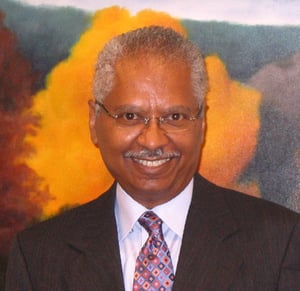
Aug 10, 2010
Ohio Governor and Attorney General Urge DNA Testing in Death Row Case
Ohio Governor Ted Strickland and Attorney General Richard Cordray recently urged prosecutors in seven criminal cases to allow DNA testing that could either prove innocence or confirm the defendant’s guilt. The seven cases include one man currently on death row, Tyrone Noling, two inmates serving long sentences, three men who are no longer in prison but want to clear their names, and a man who died in prison in 2006. Gov. Strickland said, “I really think it’s irrational not to take advantage of…
Read More
Aug 09, 2010
Ohio Leaders Express Concern about State’s Death Penalty as Troublesome Execution Approaches
Prominent leaders in Ohio are calling for a comprehensive review of the state’s death penalty system, particularly as an execution nears for a man whose guilt is being seriously questioned. Kevin Keith (pictured) has been on Ohio’s death row for over 15 years and has an execution date of September 15. But new evidence has arisen about the unreliability of those who originally testified against him. Ohio’s governor, Ted Strickland, recently said Keith’s case, “has circumstances that I find…
Read More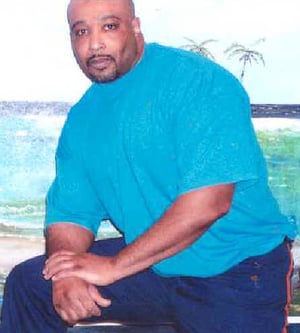
Aug 06, 2010
EDITORIALS: Implications of Texas Execution Based on Flawed Science
A recent editorial in the Fort Worth Star-Telegram raised questions about Texas’ entire death penalty system, given the preliminary finding by the Texas Forensic Science Commission that arson experts relied on outdated and flawed science during their investigation of a death penalty case. Cameron Willingham was executed in 2004 for setting a fire that killed his three daughters in 1991 based on this faulty research. Now it appears that the fire may not have been deliberate at all. The…
Read More
Aug 05, 2010
Alabama Inmate May Face Execution Because of Mailroom Mix-Up
Cory Maples, an inmate on Alabama’s death row, may pay for a simple clerical error with his life. When copies of an Alabama court ruling in his case were sent to the New York law firm handling his appeals, both copies were returned unopened because the firm’s attorneys representing Maples had left the firm. By the time the error was discovered, Maples’s time to appeal had expired. So far, the firm has failed to persuade a federal appeals court to waive the deadline for filing an appeal.
Read More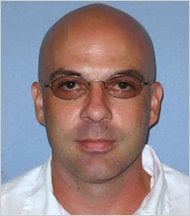
Aug 04, 2010
First North Carolina Death Row Inmates File Appeal Under Racial Justice Act
Five men on North Carolina’s death row filed motions to have their death sentences reduced to life without parole based on data that indicate racial disparities in the state’s justice system. These cases are the first to request application of North Carolina’s Racial Justice Act, which allows the use of statewide or regional statistical studies to challenge a death sentence because of racial bias. In all five cases, the victims in the underlying murder were white and the defendants were black.
Read MoreAug 03, 2010
BOOKS: “Ending the Death Penalty: The European Experience in Global Perspective”
A new book by Andrew Hammel offers insights into the different perspectives on the death penalty in America and Europe. “Ending the Death Penalty: The European Experience in Global Perspective” examines three countries that do not have the death penalty (Germany, France and the United Kingdom), and analyzes how capital punishment was ended in those countries. Hammel ultimately believes that the governmental structure, culture, and political traditions in the U.S. make the European model of…
Read More