Publications & Testimony
Testimony and Statements on the Death Penalty
FROM DPIC
For testimony by former Executive Director Robert Dunham and former Executive Director Richard C. Dieter, please visit our page DPIC Testimony.
FROM RELIGIOUS LEADERS AND ORGANIZATIONS
- News Brief: Pope Francis Calls for Prayer to Abolish the Death Penalty (September 1, 2022)
- Jewish Congregation Renews Request for Department of Justice to Drop Death Penalty in Tree of Life Synagogue Killings (June 24, 2021)
- Orthodox Church Patriarch Calls Death Penalty Incompatible with Christian Beliefs (October 20, 2020)
- Presbyterian Church (U.S.A.) — Statement on the Federal Death Penalty (August 5, 2019)
- Louisiana Christian Faith Leaders Call for State to Abolish Death Penalty (April 25, 2019)
- Pittsburgh Rabbi’s Wife Opposes Death Penalty for Tree of Life Synagogue Killings (March 18, 2019)
- Orthodox Jewish Organization Calls for an End to Capital Punishment in the U.S. | Death Penalty Information Center (February 17, 2016)
- Baptist Theologian Says Death Penalty Does Not Fit With Christian Theology (March 8, 2016)
- Civil and Human Rights: Death Penalty — Church & Society, The United Methodist Church
- Religious Views: Over 150 Catholic Theologians Call for Repeal of the Death Penalty (September 27, 2011)
- Power Over Life and Death — The Power to Save a Life (January 15, 2005)
- Responsibility, Rehabilitation, and Restoration: A Catholic Perspective on Crime and Criminal Justice (November 2000)
- The Challenge of Holiness: A Sermon on the Death Penalty (January 10, 2000)
- General Assembly of the Texas Conference of Churches — Resolution Opposing the Death Penalty (February 24, 1998)
- Statement by Catholic Bishops of Texas on Capital Punishment (October 20, 1997)
- Catholic Church Expresses Strong Opposition to Capital Punishment in Catechism (September 9, 1997)
- Catholic Bishops of Iowa Issue Statement on Death Penalty (February 4, 1998)
- To End the Death Penalty: A Report of the National Jewish/Catholic Consultation
- Transcript of Dr. Pat Robertson’s Speech on the Role of Religion and the Death Penalty at The College of William and Mary
- Collection of Official Catholic Statements on the Death Penalty (1980)
FROM THE INTERNATIONAL COMMUNITY
- UN experts call for universal abolition of the death penalty | OHCHR (October 9, 2023)
- Zambia Becomes 25th Sub-Saharan African Nation to Abolish Death Penalty (December 23, 2022)
- Belgium Wants a World Without the Death Penalty (October 20, 2022)
- As France Prepares to Assume Presidency of European Union, Emmanuel Macron Announces Initiative for Worldwide Abolition of Death Penalty (October 11, 2021)
- U.N. Secretary-General, European Union Ambassador Call for Abolition of “Barbaric” Death Penalty (October 11, 2017)
- European Union Calls for Abolition of Capital Punishment as World Coalition Hosts International Death Penalty Conference (June 27, 2017)
- U.N. Investigator Talks About the Future of Solitary and the Death Penalty (November 7, 2016)
- World Congress Against the Death Penalty Renews Call for Global Moratorium, Pope Sends Message of Support (June 27, 2016)
- Declaration by the Presidency on behalf of the European Union on the 400th execution in Texas from the Council of the European Union (August 21, 2007)
- Resolution Supporting Worldwide Moratorium on Executions from the United Nations Commission on Human Rights (April 1999)
- Mary Robinson, U.N. High Commissioner for Human Rights — Message to the Press Conference organized by the Death Penalty Information Center for the release of the report, “International Perspectives on the Death Penalty” (October 12, 1999)
- Status of the International Covenants on Human Rights from the United Nations Commission on Human Rights (April 1998)
FROM ADVOCACY GROUPS
- Advocacy Group Tells Supreme Court that Negative Stereotypes Distort Perception that Latinos in Death-Penalty Cases Pose Future Danger to Society (April 15, 2022)
- Disability Rights Groups, Legal Experts, and Conservative Advocates Urge Supreme Court to Strike Down Georgia’s Uniquely Harsh Proof Requirements in Death-Penalty Intellectual Disabilities Cases (January 11, 2022)
- NAACP Reaffirms Its Support of Abolishing the Death Penalty (2022)
- More Than 80 Civil Rights and Advocacy Organizations Urge President Biden to End Federal Executions | Death Penalty Information Center (February 9, 2021)
- More Than 250 Conservative Leaders Join Call to End Death Penalty (October 29, 2019)
- National Alliance on Mental Illness: The Death Penalty
- Florida League of Women Voters Calls for Halt to Executions (May 28, 2007)
- Victims Organizations Issue Joint Statement for National Victims’ Rights Week (April 19, 2007)
FROM JUDGES, LEGISLATORS, AND OTHER ORGANIZATIONS
- Republican-led Oklahoma committee considers pause on executions amid death case scrutiny (October 5, 2023)
- Former Pro-Death Penalty District Attorney Explains Why He Now Supports Abolition, and Fears Political Promises to Expand the Use of the Death Penalty (August 20, 2023)
- Pressley, Durbin Reintroduce Bill to End the Federal Death Penalty (July 13, 2023)
- The Lancet Editorial: Physician Involvement in Executions Violates Medical Ethics | Death Penalty Information Center (May 20, 2023)
- APA calls for extending ineligibility for the death penalty to adolescent offenders younger than age 21 (August 4, 2022)
- Why some Republicans are turning against the death penalty | Ron Ferguson | Ohio House of Representatives (March 8, 2022)
- Eight years on Texas’ highest criminal court turned Elsa Alcala into a death penalty skeptic. How will the court change without her? (January 26, 2019)
- AMA to Supreme Court: Doctor participation in executions unethical (August 22, 2018)
- Former Governor Bill Richardson: Death Penalty Is Bad for Business, Out of Step With World’s Views (June 16, 2017)
- Capital Punishment and Nurses’ Participation in Capital Punishment (2016)
- Former Ohio Attorney General Jim Petro Says Death Penalty Unfixable, “Not Worth It Any More” (September 12, 2016)
- Resolution Supporting Repeal of the Death Penalty, National Hispanic Caucus of State Legislators (August 11, 2016)
- Retired Police Captain Says Repealing Death Penalty Is “Smart on Crime” (November 24, 2014)
- Resolution Supporting Abolition of the Death Penalty, Natl. Assoc. of Black Psychologists (2012)
- The Road to Justice and Peace by New Jersey State Senator Raymond Lesniak (February 1, 2009)
- Statement On The Federal Death Penalty System by Senator Feingold (June 7, 2001)
- Statement on the Need for a Federal Moratorium on the Death Penalty Senator Feingold (October 29, 2000)
- Death Penalty: The Torah and Today (August 23, 2000)
- Press Release for Senator Russ Feingold’s Introduction of Senate’s First Death Penalty Moratorium Bill (April 20, 2000)
- Amnesty International Southern Regional Conference: Orlando, Florida Remarks by Former Florida Chief Justice Gerald Kogan (October 23, 1999)
- American Bar Association Resolution on the Death Penalty (February 3, 1997)
FROM MURDER VICTIMS’ FAMILY MEMBERS
Items: 4621 — 4630
May 01, 2009
DPIC RESOURCES: Death Sentences on a Per Capita Basis by State and Executions in Proportion to Death Sentences by State
DPIC has two new resources for comparing the use of the death penalty in the various states. The first is a chart listing the states in order of their total death sentences as a fraction of their population. The second measures the total executions in each state as compared to the total number of death sentences. Even though Texas leads the country with the most executions since the reinstatement of the death penalty in 1976, it is eleventh in the U.S. in terms of death sentences per capita…
Read MoreApr 30, 2009
Twenty-five Years After Trial, U.S. Supreme Court Orders New Hearing for Tennessee Death Row Inmate
On April 28 by a vote of 7 – 2, the United States Supreme Court overturned a lower court ruling and granted a new hearing to Tennessee death row inmate Gary Cone because the state had withheld evidence from the defense. During his trial in 1984, Cone, a Vietnam veteran, presented an insanity defense, arguing that psychosis induced by his drug use negated his guilt. While the prosecution denied any evidence of Cone’s drug use and referred to his defense as “baloney,” police reports, FBI files and…
Read More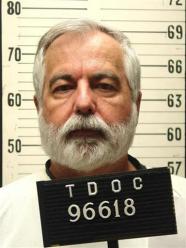
Apr 28, 2009
Federal Judge Upholds Ohio’s Execution Process While Finding Persistent Flaws
U.S. District Court Judge Gregory Frost found continued problems with the way Ohio executes inmates, but nevertheless upheld the state’s excution process. In a 159-page ruling on a complaint brought by death row inmate Kenneth Biros, Frost said that it is possible further evidence could demonstrate that the state’s process constitutes cruel and unusual punishment. He found problems with both Ohio’s written protocols and the training the state provides the execution team. “Ohio’s method of…
Read More
Apr 27, 2009
EDITORIAL: ‘Can Oregon Afford the Death Penalty?’ – as School Funding is Reduced
An editorial The Daily Astorian, contrasts the state’s use of funds for the death penalty to the state’s reduction in funding for education. “The glaring contrast to our unquestioning spending on the death penalty — which Judge Lipscomb called ‘this largely futile attempt’ — is our disinvestment in education,” the paper noted. “Investment in education is about the future, and it is about hope. Investment in prisons and especially in the death penalty is about a final reckoning, an admission of…
Read MoreApr 24, 2009
DPIC RESOURCES: Per Capita Executions by State
Although Texas leads the country by far with the most executions (436) since the reinstatement of the death penalty in 1976, it is second to Oklahoma in terms of executions as a fraction of the state’s population. The other leading execution states on a per capita basis are Delaware, Virginia, Missouri, and Arkansas. The full ranking of executions per capita by state may be found here. In 2009, there have been 22 executions as of April 27, with 100% of them occurring in the South. Of the 22…
Read MoreApr 24, 2009
The Angolite Reviews Developments in Capital Punishment
The Angolite, an award-winning magazine produced by the inmates at Angola Prison in Louisiana, recently published an extensive review of the developments in the death penalty in 2008. The article by Lane Nelson addressed nationwide trends, Supreme Court decisions, the issues of cost, the risks of executing innocent people, and the problem of inadequate representation. The article concluded, “[N]ational debates, legislative studies, court rulings and blue-ribbon commission recommendations in…
Read MoreApr 23, 2009
STUDIES: Justice Denied: America’s Continuing Neglect of Our Constitutional Right to Counsel
The Constitution Project has released a comprehensive report on the U.S. system of representation for indigent defendants, “Justice Denied: America’s Continuing Neglect of Our Constitutional Right to Counsel.” The report finds deep flaws in the country’s public defense system and makes 22 recommendations for state and federal officials for reforming the system. Among the problems that this study identifies are excessive caseloads for indigent defense systems, inadequate funding, ethical…
Read More
Apr 22, 2009
Colorado’s House Passes Bill to Repeal the Death Penalty; Money Saved Would Go to Cold Cases
On April 20, Colorado’s House voted 33 – 32 to repeal the death penalty. The bill, which now heads to the Senate, would shift funds used to prosecute cases and maintain the death penalty to the Colorado Bureau of Investigation for closing unsolved murder cases. Proponents of the bill believe the state would save close to $4 million by repealing the death penalty, and dozens of family members with unsolved murder cases testified that those funds could be better used solving cold cases. While there…
Read More
Apr 21, 2009
Georgia’s Death Penalty Prosecutions Stalled by Insufficient Funds
Georgia’s system of representation in death penalty cases is in crisis because of insufficient funding and cases are grinding to a halt. Almost 1 in 5 of all pending capital cases in the state are stalled because of a lack of funds to pay for defense work. “We can’t defend the case without any money,” said James Yancey, one death penalty defense lawyer. “The experts we need won’t work for free.” Forsyth Superior Court Judge Jeffrey Bagley called it “a constitutional crisis,” as defense…
Read MoreApr 20, 2009
Alabama Murder Cases Reopened After Exposure of Botched Autopsy
Bridget Lee spent nine months in jail in Alabama after being charged with the murder of her newborn child. Prosecutors filed capital murder charges based on an autopsy performed by Dr. Corinne Stern. Stern’s autopsy concluded the baby had been suffocated because of bruises on the forehead and mouth. But when Lee’s attorneys questioned the autopsy, the District Attorney had other experts review the case, and six different forensics experts found the baby was stillborn and had died of infection.
Read More