Publications & Testimony
Testimony and Statements on the Death Penalty
FROM DPIC
For testimony by former Executive Director Robert Dunham and former Executive Director Richard C. Dieter, please visit our page DPIC Testimony.
FROM RELIGIOUS LEADERS AND ORGANIZATIONS
- News Brief: Pope Francis Calls for Prayer to Abolish the Death Penalty (September 1, 2022)
- Jewish Congregation Renews Request for Department of Justice to Drop Death Penalty in Tree of Life Synagogue Killings (June 24, 2021)
- Orthodox Church Patriarch Calls Death Penalty Incompatible with Christian Beliefs (October 20, 2020)
- Presbyterian Church (U.S.A.) — Statement on the Federal Death Penalty (August 5, 2019)
- Louisiana Christian Faith Leaders Call for State to Abolish Death Penalty (April 25, 2019)
- Pittsburgh Rabbi’s Wife Opposes Death Penalty for Tree of Life Synagogue Killings (March 18, 2019)
- Orthodox Jewish Organization Calls for an End to Capital Punishment in the U.S. | Death Penalty Information Center (February 17, 2016)
- Baptist Theologian Says Death Penalty Does Not Fit With Christian Theology (March 8, 2016)
- Civil and Human Rights: Death Penalty — Church & Society, The United Methodist Church
- Religious Views: Over 150 Catholic Theologians Call for Repeal of the Death Penalty (September 27, 2011)
- Power Over Life and Death — The Power to Save a Life (January 15, 2005)
- Responsibility, Rehabilitation, and Restoration: A Catholic Perspective on Crime and Criminal Justice (November 2000)
- The Challenge of Holiness: A Sermon on the Death Penalty (January 10, 2000)
- General Assembly of the Texas Conference of Churches — Resolution Opposing the Death Penalty (February 24, 1998)
- Statement by Catholic Bishops of Texas on Capital Punishment (October 20, 1997)
- Catholic Church Expresses Strong Opposition to Capital Punishment in Catechism (September 9, 1997)
- Catholic Bishops of Iowa Issue Statement on Death Penalty (February 4, 1998)
- To End the Death Penalty: A Report of the National Jewish/Catholic Consultation
- Transcript of Dr. Pat Robertson’s Speech on the Role of Religion and the Death Penalty at The College of William and Mary
- Collection of Official Catholic Statements on the Death Penalty (1980)
FROM THE INTERNATIONAL COMMUNITY
- UN experts call for universal abolition of the death penalty | OHCHR (October 9, 2023)
- Zambia Becomes 25th Sub-Saharan African Nation to Abolish Death Penalty (December 23, 2022)
- Belgium Wants a World Without the Death Penalty (October 20, 2022)
- As France Prepares to Assume Presidency of European Union, Emmanuel Macron Announces Initiative for Worldwide Abolition of Death Penalty (October 11, 2021)
- U.N. Secretary-General, European Union Ambassador Call for Abolition of “Barbaric” Death Penalty (October 11, 2017)
- European Union Calls for Abolition of Capital Punishment as World Coalition Hosts International Death Penalty Conference (June 27, 2017)
- U.N. Investigator Talks About the Future of Solitary and the Death Penalty (November 7, 2016)
- World Congress Against the Death Penalty Renews Call for Global Moratorium, Pope Sends Message of Support (June 27, 2016)
- Declaration by the Presidency on behalf of the European Union on the 400th execution in Texas from the Council of the European Union (August 21, 2007)
- Resolution Supporting Worldwide Moratorium on Executions from the United Nations Commission on Human Rights (April 1999)
- Mary Robinson, U.N. High Commissioner for Human Rights — Message to the Press Conference organized by the Death Penalty Information Center for the release of the report, “International Perspectives on the Death Penalty” (October 12, 1999)
- Status of the International Covenants on Human Rights from the United Nations Commission on Human Rights (April 1998)
FROM ADVOCACY GROUPS
- Advocacy Group Tells Supreme Court that Negative Stereotypes Distort Perception that Latinos in Death-Penalty Cases Pose Future Danger to Society (April 15, 2022)
- Disability Rights Groups, Legal Experts, and Conservative Advocates Urge Supreme Court to Strike Down Georgia’s Uniquely Harsh Proof Requirements in Death-Penalty Intellectual Disabilities Cases (January 11, 2022)
- NAACP Reaffirms Its Support of Abolishing the Death Penalty (2022)
- More Than 80 Civil Rights and Advocacy Organizations Urge President Biden to End Federal Executions | Death Penalty Information Center (February 9, 2021)
- More Than 250 Conservative Leaders Join Call to End Death Penalty (October 29, 2019)
- National Alliance on Mental Illness: The Death Penalty
- Florida League of Women Voters Calls for Halt to Executions (May 28, 2007)
- Victims Organizations Issue Joint Statement for National Victims’ Rights Week (April 19, 2007)
FROM JUDGES, LEGISLATORS, AND OTHER ORGANIZATIONS
- Republican-led Oklahoma committee considers pause on executions amid death case scrutiny (October 5, 2023)
- Former Pro-Death Penalty District Attorney Explains Why He Now Supports Abolition, and Fears Political Promises to Expand the Use of the Death Penalty (August 20, 2023)
- Pressley, Durbin Reintroduce Bill to End the Federal Death Penalty (July 13, 2023)
- The Lancet Editorial: Physician Involvement in Executions Violates Medical Ethics | Death Penalty Information Center (May 20, 2023)
- APA calls for extending ineligibility for the death penalty to adolescent offenders younger than age 21 (August 4, 2022)
- Why some Republicans are turning against the death penalty | Ron Ferguson | Ohio House of Representatives (March 8, 2022)
- Eight years on Texas’ highest criminal court turned Elsa Alcala into a death penalty skeptic. How will the court change without her? (January 26, 2019)
- AMA to Supreme Court: Doctor participation in executions unethical (August 22, 2018)
- Former Governor Bill Richardson: Death Penalty Is Bad for Business, Out of Step With World’s Views (June 16, 2017)
- Capital Punishment and Nurses’ Participation in Capital Punishment (2016)
- Former Ohio Attorney General Jim Petro Says Death Penalty Unfixable, “Not Worth It Any More” (September 12, 2016)
- Resolution Supporting Repeal of the Death Penalty, National Hispanic Caucus of State Legislators (August 11, 2016)
- Retired Police Captain Says Repealing Death Penalty Is “Smart on Crime” (November 24, 2014)
- Resolution Supporting Abolition of the Death Penalty, Natl. Assoc. of Black Psychologists (2012)
- The Road to Justice and Peace by New Jersey State Senator Raymond Lesniak (February 1, 2009)
- Statement On The Federal Death Penalty System by Senator Feingold (June 7, 2001)
- Statement on the Need for a Federal Moratorium on the Death Penalty Senator Feingold (October 29, 2000)
- Death Penalty: The Torah and Today (August 23, 2000)
- Press Release for Senator Russ Feingold’s Introduction of Senate’s First Death Penalty Moratorium Bill (April 20, 2000)
- Amnesty International Southern Regional Conference: Orlando, Florida Remarks by Former Florida Chief Justice Gerald Kogan (October 23, 1999)
- American Bar Association Resolution on the Death Penalty (February 3, 1997)
FROM MURDER VICTIMS’ FAMILY MEMBERS
Items: 5481 — 5490
Apr 28, 2006
BOOKS: Stories about Executions
“A Meal to Die For” is a short story by Professor Robert Johnson examining capital punishment through the eyes of a man approaching his execution. The story is part of The Crying Wall and Other Prison Stories, a larger collection of short stories by a variety of authors. In “A Meal to Die For,” Johnson weaves the death row prisoner’s last meal with the gradual process of lethal injection, resulting in a painful death. Robert Johnson is a Professor of Justice, Law and Society at American…
Read MoreApr 28, 2006
New Research Examines Racial Stereotypes and the Death Penalty
“Looking Deathworthy: Perceived Stereotypicality of Black Defendants Predicts Capital-Sentencing Outcomes” contains new research on race conducted by professors from Stanford, UCLA, Yale and Cornell, led by Prof. Jennifer Eberhardt. The article, to be published in the May 2006 edition of Psychological Science, examines whether the likelihood of being sentenced to death is influenced by the degree to which a black defendant is perceived to have a stereotypically black appearance. Using data from…
Read MoreApr 28, 2006
LETHAL INJECTIONS: Hearings in California and Missouri Delayed by Federal Courts
Two of the leading cases challenging the lethal injection process as a civil rights violation were significantly delayed to allow the parties more time to gather information. In California, the federal District Court overseeing the case of Michael Morales postponed the scheduled May 2 hearing until September 19, 2006. In Missouri, the U.S. Court of Appeals for the Eighth Circuit granted a 60-day extension for discovery and a hearing in the case of Michael Taylor. Both inmates had come within…
Read MoreApr 27, 2006
Texas Death Row Inmate To Be Forcibly Medicated For Execution
On April 11, Texas Judge Wayne Salvant ruled that death row inmate Steven Kenneth Staley could be physically forced to take anti-psychotic medication that could render him competent enough to be executed. The decision came nearly two months after the judge stopped Staley’s scheduled execution following testimony from two doctors who stated that Staley suffers from paranoid schizophrenia and is too mentally ill to be executed. The law requires that Staley be mentally competent before he is…
Read MoreApr 27, 2006
Human Rights Watch Report on Lethal Injection
A new report issued by Human Rights Watch notes that most U.S. states use execution methods that needlessly risk excruciating pain for inmates subjected to lethal injections. The report examines the history of lethal injections and the widespread use of protocols that were created three decades ago with no scientific research. Excerpts from the report: Although supporters of lethal injection believe the prisoner dies painlessly, there is mounting evidence that prisoners may have experienced…
Read More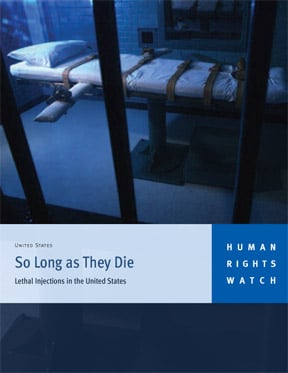
Apr 27, 2006
DETERRENCE: Nevada Executions – 11 out 12 Preferred Execution over Appeals
Daryl Mack, who repeatedly noted that he would rather be executed than spend the next 20 years of his life on death row pursuing legal appeals, was executed Wednesday for a 1988 murder in Reno. Mack was convicted in 2002. He was the 12th person executed in Nevada since capital punishment was reinstated in 1977, and the 11th to waive remaining appeals at the time of execution. He was the first black man to be executed in the Nevada since executions resumed in the state. On the same day that…
Read MoreApr 26, 2006
Harvard Conference Explores Race and the Death Penalty
A May 2006 conference held at the Charles Hamilton Houston Institute for Race and Justice at Harvard Law School examined new research, legal defense, and public response to the issue of race and the death penalty. The conference, “From Lynch Mobs to the Killing State: A National Conference on Race and the Death Penalty,” featured a number of national academic and legal experts including Barry Scheck, Peter Neufeld, Charles Ogletree, Rubin “Hurricane” Carter, George Kendall, Stephen Bright…
Read More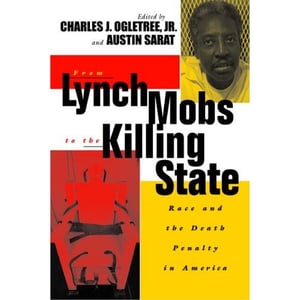
Apr 26, 2006
Juries Choosing Death Penalty Less Often in Federal Cases
The percentage of federal death penalty cases resulting in death sentences has declined from the 1990s to the present. Since 1991, juries chose a death sentence in 51 cases compared with 93 cases that ended with a sentence of life in prison, according to Federal Death Penalty Resource Counsel, a rate of 35% for death sentences. Since 2000, juries have returned 29 death sentences and 69 life sentences, a rate of 30%. (Washington Post, April 25, 2006).
Read MoreApr 25, 2006
United Methodist Church Marks 50th Anniversary of Stance Against Death Penalty
Marking the 50th anniversary of the United Methodist Church’s public call for an end to the death penalty, the church’s General Board of Church and Society recently issued a statement echoing the sentiments of the church’s original call for abolition and urging all United Methodists “to practice transformative love, to comfort the victims of crime, to humanize those convicted of crime, and to advocate for an end to the death penalty in our criminal justice system.” The statement comes five…
Read MoreApr 24, 2006
Amnesty International Report Finds Declining Executions and Trend Toward Abolition
Amnesty International’s most recent death penalty report, “The Death Penalty Worldwide: Developments in 2005,” revealed a substantial drop in recorded executions around the world, as well as a growing number of nations that have abandoned the death penalty. According to the report, four nations accounted for 94% of the 2,148 recorded executions carried out around the world in 2005, a total that is significantly less than the 3,797 executions recorded in 2004 (however, in many countries the…
Read More