Publications & Testimony
Testimony and Statements on the Death Penalty
FROM DPIC
For testimony by former Executive Director Robert Dunham and former Executive Director Richard C. Dieter, please visit our page DPIC Testimony.
FROM RELIGIOUS LEADERS AND ORGANIZATIONS
- News Brief: Pope Francis Calls for Prayer to Abolish the Death Penalty (September 1, 2022)
- Jewish Congregation Renews Request for Department of Justice to Drop Death Penalty in Tree of Life Synagogue Killings (June 24, 2021)
- Orthodox Church Patriarch Calls Death Penalty Incompatible with Christian Beliefs (October 20, 2020)
- Presbyterian Church (U.S.A.) — Statement on the Federal Death Penalty (August 5, 2019)
- Louisiana Christian Faith Leaders Call for State to Abolish Death Penalty (April 25, 2019)
- Pittsburgh Rabbi’s Wife Opposes Death Penalty for Tree of Life Synagogue Killings (March 18, 2019)
- Orthodox Jewish Organization Calls for an End to Capital Punishment in the U.S. | Death Penalty Information Center (February 17, 2016)
- Baptist Theologian Says Death Penalty Does Not Fit With Christian Theology (March 8, 2016)
- Civil and Human Rights: Death Penalty — Church & Society, The United Methodist Church
- Religious Views: Over 150 Catholic Theologians Call for Repeal of the Death Penalty (September 27, 2011)
- Power Over Life and Death — The Power to Save a Life (January 15, 2005)
- Responsibility, Rehabilitation, and Restoration: A Catholic Perspective on Crime and Criminal Justice (November 2000)
- The Challenge of Holiness: A Sermon on the Death Penalty (January 10, 2000)
- General Assembly of the Texas Conference of Churches — Resolution Opposing the Death Penalty (February 24, 1998)
- Statement by Catholic Bishops of Texas on Capital Punishment (October 20, 1997)
- Catholic Church Expresses Strong Opposition to Capital Punishment in Catechism (September 9, 1997)
- Catholic Bishops of Iowa Issue Statement on Death Penalty (February 4, 1998)
- To End the Death Penalty: A Report of the National Jewish/Catholic Consultation
- Transcript of Dr. Pat Robertson’s Speech on the Role of Religion and the Death Penalty at The College of William and Mary
- Collection of Official Catholic Statements on the Death Penalty (1980)
FROM THE INTERNATIONAL COMMUNITY
- UN experts call for universal abolition of the death penalty | OHCHR (October 9, 2023)
- Zambia Becomes 25th Sub-Saharan African Nation to Abolish Death Penalty (December 23, 2022)
- Belgium Wants a World Without the Death Penalty (October 20, 2022)
- As France Prepares to Assume Presidency of European Union, Emmanuel Macron Announces Initiative for Worldwide Abolition of Death Penalty (October 11, 2021)
- U.N. Secretary-General, European Union Ambassador Call for Abolition of “Barbaric” Death Penalty (October 11, 2017)
- European Union Calls for Abolition of Capital Punishment as World Coalition Hosts International Death Penalty Conference (June 27, 2017)
- U.N. Investigator Talks About the Future of Solitary and the Death Penalty (November 7, 2016)
- World Congress Against the Death Penalty Renews Call for Global Moratorium, Pope Sends Message of Support (June 27, 2016)
- Declaration by the Presidency on behalf of the European Union on the 400th execution in Texas from the Council of the European Union (August 21, 2007)
- Resolution Supporting Worldwide Moratorium on Executions from the United Nations Commission on Human Rights (April 1999)
- Mary Robinson, U.N. High Commissioner for Human Rights — Message to the Press Conference organized by the Death Penalty Information Center for the release of the report, “International Perspectives on the Death Penalty” (October 12, 1999)
- Status of the International Covenants on Human Rights from the United Nations Commission on Human Rights (April 1998)
FROM ADVOCACY GROUPS
- Advocacy Group Tells Supreme Court that Negative Stereotypes Distort Perception that Latinos in Death-Penalty Cases Pose Future Danger to Society (April 15, 2022)
- Disability Rights Groups, Legal Experts, and Conservative Advocates Urge Supreme Court to Strike Down Georgia’s Uniquely Harsh Proof Requirements in Death-Penalty Intellectual Disabilities Cases (January 11, 2022)
- NAACP Reaffirms Its Support of Abolishing the Death Penalty (2022)
- More Than 80 Civil Rights and Advocacy Organizations Urge President Biden to End Federal Executions | Death Penalty Information Center (February 9, 2021)
- More Than 250 Conservative Leaders Join Call to End Death Penalty (October 29, 2019)
- National Alliance on Mental Illness: The Death Penalty
- Florida League of Women Voters Calls for Halt to Executions (May 28, 2007)
- Victims Organizations Issue Joint Statement for National Victims’ Rights Week (April 19, 2007)
FROM JUDGES, LEGISLATORS, AND OTHER ORGANIZATIONS
- Republican-led Oklahoma committee considers pause on executions amid death case scrutiny (October 5, 2023)
- Former Pro-Death Penalty District Attorney Explains Why He Now Supports Abolition, and Fears Political Promises to Expand the Use of the Death Penalty (August 20, 2023)
- Pressley, Durbin Reintroduce Bill to End the Federal Death Penalty (July 13, 2023)
- The Lancet Editorial: Physician Involvement in Executions Violates Medical Ethics | Death Penalty Information Center (May 20, 2023)
- APA calls for extending ineligibility for the death penalty to adolescent offenders younger than age 21 (August 4, 2022)
- Why some Republicans are turning against the death penalty | Ron Ferguson | Ohio House of Representatives (March 8, 2022)
- Eight years on Texas’ highest criminal court turned Elsa Alcala into a death penalty skeptic. How will the court change without her? (January 26, 2019)
- AMA to Supreme Court: Doctor participation in executions unethical (August 22, 2018)
- Former Governor Bill Richardson: Death Penalty Is Bad for Business, Out of Step With World’s Views (June 16, 2017)
- Capital Punishment and Nurses’ Participation in Capital Punishment (2016)
- Former Ohio Attorney General Jim Petro Says Death Penalty Unfixable, “Not Worth It Any More” (September 12, 2016)
- Resolution Supporting Repeal of the Death Penalty, National Hispanic Caucus of State Legislators (August 11, 2016)
- Retired Police Captain Says Repealing Death Penalty Is “Smart on Crime” (November 24, 2014)
- Resolution Supporting Abolition of the Death Penalty, Natl. Assoc. of Black Psychologists (2012)
- The Road to Justice and Peace by New Jersey State Senator Raymond Lesniak (February 1, 2009)
- Statement On The Federal Death Penalty System by Senator Feingold (June 7, 2001)
- Statement on the Need for a Federal Moratorium on the Death Penalty Senator Feingold (October 29, 2000)
- Death Penalty: The Torah and Today (August 23, 2000)
- Press Release for Senator Russ Feingold’s Introduction of Senate’s First Death Penalty Moratorium Bill (April 20, 2000)
- Amnesty International Southern Regional Conference: Orlando, Florida Remarks by Former Florida Chief Justice Gerald Kogan (October 23, 1999)
- American Bar Association Resolution on the Death Penalty (February 3, 1997)
FROM MURDER VICTIMS’ FAMILY MEMBERS
Latest
Oct 22, 2026
“A Symbol of Racial Bias”: Remembering Curtis Flowers and the Impact of Flowers v. Mississippi
Curtis Flowers, a Black Mississippi man who spent nearly 23 years imprisoned for a crime he did not commit, died at his home on October 7, 2026, at age 56. His case came to embody both the human cost of racial discrimination in jury selection and the endurance required to survive it. Over the course of six trials, Mr. Flowers received four death sentences, with two trials ending in mistrials. According to the Innocence Project, the district attorney failed to secure a conviction whenever more…
Read More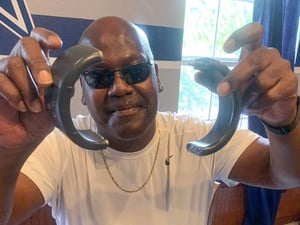
Oct 21, 2026
Victims’ Father Calls for Clemency for Jeffrey Weisheit
Steven Lynch, whose children, Alyssa and Caleb Lynch, were killed in a house fire set by Jeffrey Weisheit, is asking Indiana Governor Mike Braun to stop his execution by granting Mr. Weisheit clemency. In an affidavit submitted to the Indiana Supreme Court, Mr. Lynch wrote, “I request that Jeffrey Weisheit receive life in prison without eligibility for parole. With the remaining years of his life, he would be able to continue seeking the Lord’s forgiveness and redemption for his actions.” Mr.
Read MoreOct 21, 2026
Alabama Governor Kay Ivey Grants Clemency to Toforest Johnson
On October 20, 2026, Alabama Governor Kay Ivey granted clemency to death row prisoner Toforest Johnson (pictured, center), commuting his sentence to life without parole. Mr. Johnson has maintained his innocence in the 1995 death of Jefferson County Deputy Sheriff William Hardy. His case gained notoriety as the subject of the award-winning podcast Earwitness. “When presented with Mr. Johnson’s case, I had concerns there was not enough direct evidence to carry out the most serious punishment…
Read More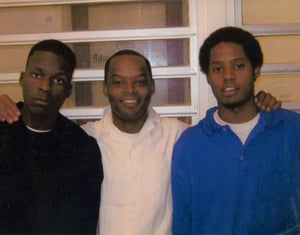
Oct 20, 2026
Last of Four Confessions Obtained in Guantánamo from Alleged 9/11 Conspirators Ruled Inadmissible
On October 7, 2026, Judge Colonel Michael Schrama ruled Walid bin Attash’s statements to the FBI inadmissible at trial due to the agency’s failure to notify him that earlier statements extracted during CIA interrogations could not be used against him. This decision marks the last confession to be ruled inadmissible in the joint capital prosecution against four defendants (Mr. bin Attash, Khalid Shaikh Mohammed, Mustafa al Hawsawi, and Ammar al-Baluchi), all alleged 9/11 conspirators — the first…
Read MoreOct 19, 2026
What to Know: Human Rights and the Death Penalty
DPI’s “What to Know” series examines capital punishment from multiple angles, one topic at a time. Each installment provides essential facts and data on specific aspects of the death penalty. This installment considers the death penalty through a human-rights lens, looking at the standards and frameworks that may come into play from sentencing through review, death-row confinement, and execution, as well as how those standards intersect with U.S. law and practice. Why it matters Human-rights…
Read MoreOct 16, 2026
William Reaves, Vietnam Veteran Whose Jury Did Not Learn Critical Mitigation Evidence about His Service-Related Injury, is Set for Execution in Florida
Florida Governor Ron DeSantis has scheduled the execution of William Reaves, a 77-year-old Vietnam veteran, for October 20. Mr. Reaves was sentenced to death for the 1986 shooting death of Sheriff’s Deputy Richard Raczkoski. In a recent op-ed in Slate, Chance Meyer, one of Mr. Reaves’ former attorneys, writes that the jury that recommended his death sentence never heard expert testimony about the role Mr. Reaves’ combat-related post-traumatic stress disorder played in the commission of his…
Read MoreOct 15, 2026
President Trump Announces the Military Will Not Publicly Livestream Nidal Hasan’s Execution
On October 7, 2026, Defense Secretary Pete Hegseth announced in a media interview that Nidal Hasan’s execution would be publicly live-streamed. The announcement quickly drew bipartisan criticism, with both Republicans and Democrats condemning the plan, some saying it would violate American values, fuel terrorist recruitment, or even reward Mr. Hasan. CNN subsequently reported that President Donald Trump had not known Mr. Hasan is paralyzed from the waist down and uses a wheelchair, a detail…
Read MoreOct 15, 2026
DPI Podcast 12:01 The Death Penalty in Context: Amy Bergquist on the World Coalition Against the Death Penalty and Human Rights
In the October 2026 episode of 12:01: The Death Penalty in Context, DPI Managing Director Anne Holsinger speaks with Amy Bergquist, a member of the Steering Committee of the World Coalition Against the Death Penalty. She discusses her work with the Coalition and as Associate Program Director at the Advocates for Human Rights, an organization dedicated to implementing international human rights standards to promote civil society and reinforce the rule of law. Their conversation begins with…
Read More
Oct 14, 2026
The Racialized American History Behind Public Executions
On October 7, 2026, U.S. Defense Secretary Pete Hegseth announced that the execution of Nidal Hasan — a man of Middle Eastern descent sentenced to death for the 2009 mass killing on the Fort Hood military base — would be livestreamed for the public. The announcement echoes an era where executions — particularly for Black men — functioned as public celebratory gatherings. Public executions in the United States, especially in southern states, have a painful and racialized history. The last widely…
Read More
Oct 13, 2026
What to Know: Latinos and the Death Penalty
DPI’s “What to Know” series examines capital punishment from multiple angles, one topic at a time. Each installment provides essential facts and data on specific aspects of the death penalty. In observance of Hispanic Heritage Month, this installment examines Latinos and the death penalty. Why it matters: Since 1977, Latinos have made up 9% of individuals who have been sentenced to death and 8% of individuals who have been executed. According to the National Bureau of Justice Statistics, 15%…
Read More