Publications & Testimony
Testimony and Statements on the Death Penalty
FROM DPIC
For testimony by former Executive Director Robert Dunham and former Executive Director Richard C. Dieter, please visit our page DPIC Testimony.
FROM RELIGIOUS LEADERS AND ORGANIZATIONS
- News Brief: Pope Francis Calls for Prayer to Abolish the Death Penalty (September 1, 2022)
- Jewish Congregation Renews Request for Department of Justice to Drop Death Penalty in Tree of Life Synagogue Killings (June 24, 2021)
- Orthodox Church Patriarch Calls Death Penalty Incompatible with Christian Beliefs (October 20, 2020)
- Presbyterian Church (U.S.A.) — Statement on the Federal Death Penalty (August 5, 2019)
- Louisiana Christian Faith Leaders Call for State to Abolish Death Penalty (April 25, 2019)
- Pittsburgh Rabbi’s Wife Opposes Death Penalty for Tree of Life Synagogue Killings (March 18, 2019)
- Orthodox Jewish Organization Calls for an End to Capital Punishment in the U.S. | Death Penalty Information Center (February 17, 2016)
- Baptist Theologian Says Death Penalty Does Not Fit With Christian Theology (March 8, 2016)
- Civil and Human Rights: Death Penalty — Church & Society, The United Methodist Church
- Religious Views: Over 150 Catholic Theologians Call for Repeal of the Death Penalty (September 27, 2011)
- Power Over Life and Death — The Power to Save a Life (January 15, 2005)
- Responsibility, Rehabilitation, and Restoration: A Catholic Perspective on Crime and Criminal Justice (November 2000)
- The Challenge of Holiness: A Sermon on the Death Penalty (January 10, 2000)
- General Assembly of the Texas Conference of Churches — Resolution Opposing the Death Penalty (February 24, 1998)
- Statement by Catholic Bishops of Texas on Capital Punishment (October 20, 1997)
- Catholic Church Expresses Strong Opposition to Capital Punishment in Catechism (September 9, 1997)
- Catholic Bishops of Iowa Issue Statement on Death Penalty (February 4, 1998)
- To End the Death Penalty: A Report of the National Jewish/Catholic Consultation
- Transcript of Dr. Pat Robertson’s Speech on the Role of Religion and the Death Penalty at The College of William and Mary
- Collection of Official Catholic Statements on the Death Penalty (1980)
FROM THE INTERNATIONAL COMMUNITY
- UN experts call for universal abolition of the death penalty | OHCHR (October 9, 2023)
- Zambia Becomes 25th Sub-Saharan African Nation to Abolish Death Penalty (December 23, 2022)
- Belgium Wants a World Without the Death Penalty (October 20, 2022)
- As France Prepares to Assume Presidency of European Union, Emmanuel Macron Announces Initiative for Worldwide Abolition of Death Penalty (October 11, 2021)
- U.N. Secretary-General, European Union Ambassador Call for Abolition of “Barbaric” Death Penalty (October 11, 2017)
- European Union Calls for Abolition of Capital Punishment as World Coalition Hosts International Death Penalty Conference (June 27, 2017)
- U.N. Investigator Talks About the Future of Solitary and the Death Penalty (November 7, 2016)
- World Congress Against the Death Penalty Renews Call for Global Moratorium, Pope Sends Message of Support (June 27, 2016)
- Declaration by the Presidency on behalf of the European Union on the 400th execution in Texas from the Council of the European Union (August 21, 2007)
- Resolution Supporting Worldwide Moratorium on Executions from the United Nations Commission on Human Rights (April 1999)
- Mary Robinson, U.N. High Commissioner for Human Rights — Message to the Press Conference organized by the Death Penalty Information Center for the release of the report, “International Perspectives on the Death Penalty” (October 12, 1999)
- Status of the International Covenants on Human Rights from the United Nations Commission on Human Rights (April 1998)
FROM ADVOCACY GROUPS
- Advocacy Group Tells Supreme Court that Negative Stereotypes Distort Perception that Latinos in Death-Penalty Cases Pose Future Danger to Society (April 15, 2022)
- Disability Rights Groups, Legal Experts, and Conservative Advocates Urge Supreme Court to Strike Down Georgia’s Uniquely Harsh Proof Requirements in Death-Penalty Intellectual Disabilities Cases (January 11, 2022)
- NAACP Reaffirms Its Support of Abolishing the Death Penalty (2022)
- More Than 80 Civil Rights and Advocacy Organizations Urge President Biden to End Federal Executions | Death Penalty Information Center (February 9, 2021)
- More Than 250 Conservative Leaders Join Call to End Death Penalty (October 29, 2019)
- National Alliance on Mental Illness: The Death Penalty
- Florida League of Women Voters Calls for Halt to Executions (May 28, 2007)
- Victims Organizations Issue Joint Statement for National Victims’ Rights Week (April 19, 2007)
FROM JUDGES, LEGISLATORS, AND OTHER ORGANIZATIONS
- Republican-led Oklahoma committee considers pause on executions amid death case scrutiny (October 5, 2023)
- Former Pro-Death Penalty District Attorney Explains Why He Now Supports Abolition, and Fears Political Promises to Expand the Use of the Death Penalty (August 20, 2023)
- Pressley, Durbin Reintroduce Bill to End the Federal Death Penalty (July 13, 2023)
- The Lancet Editorial: Physician Involvement in Executions Violates Medical Ethics | Death Penalty Information Center (May 20, 2023)
- APA calls for extending ineligibility for the death penalty to adolescent offenders younger than age 21 (August 4, 2022)
- Why some Republicans are turning against the death penalty | Ron Ferguson | Ohio House of Representatives (March 8, 2022)
- Eight years on Texas’ highest criminal court turned Elsa Alcala into a death penalty skeptic. How will the court change without her? (January 26, 2019)
- AMA to Supreme Court: Doctor participation in executions unethical (August 22, 2018)
- Former Governor Bill Richardson: Death Penalty Is Bad for Business, Out of Step With World’s Views (June 16, 2017)
- Capital Punishment and Nurses’ Participation in Capital Punishment (2016)
- Former Ohio Attorney General Jim Petro Says Death Penalty Unfixable, “Not Worth It Any More” (September 12, 2016)
- Resolution Supporting Repeal of the Death Penalty, National Hispanic Caucus of State Legislators (August 11, 2016)
- Retired Police Captain Says Repealing Death Penalty Is “Smart on Crime” (November 24, 2014)
- Resolution Supporting Abolition of the Death Penalty, Natl. Assoc. of Black Psychologists (2012)
- The Road to Justice and Peace by New Jersey State Senator Raymond Lesniak (February 1, 2009)
- Statement On The Federal Death Penalty System by Senator Feingold (June 7, 2001)
- Statement on the Need for a Federal Moratorium on the Death Penalty Senator Feingold (October 29, 2000)
- Death Penalty: The Torah and Today (August 23, 2000)
- Press Release for Senator Russ Feingold’s Introduction of Senate’s First Death Penalty Moratorium Bill (April 20, 2000)
- Amnesty International Southern Regional Conference: Orlando, Florida Remarks by Former Florida Chief Justice Gerald Kogan (October 23, 1999)
- American Bar Association Resolution on the Death Penalty (February 3, 1997)
FROM MURDER VICTIMS’ FAMILY MEMBERS
Latest
Oct 01, 2026
Tennessee Botches Another Execution Despite Earlier Warnings from Attorneys; Christa Pike Was Alive Hours After Attempt Began
Christa Pike remained alive more than an hour after the state of Tennessee began its attempt to execute her on September 30, 2026. It was the latest in a series of troubled executions by the Tennessee Department of Corrections. At a press conference outside the prison, media witnesses sharing their observations were interrupted by emergency vehicles arriving to take Ms. Pike to a local hospital. As outlined in the new execution protocol, Tennessee prison officials administered two doses of…
Read More
Sep 30, 2026
Arizona Co-Victims Speak Out, Wanting Death Penalty Money Redirected
During a local news conference on September 21, 2026, family members of homicide victims whose cases remain unsolved in Arizona called for sustained attention and resources for unsolved homicide cases. The call, supported by Arizonans for Effective Public Safety — a project of Death Penalty Alternatives for Arizona — comes amid broader questions about the costs and effectiveness of capital punishment in Arizona, and whether resources devoted to capital punishment and felony murder prosecutions…
Read More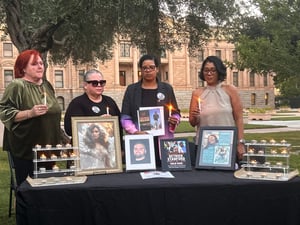
Sep 29, 2026
Governor Bill Lee Denies Clemency for Christa Pike, Refusing to Stop Tennessee’s First Execution of a Woman in More Than 200 Years
For updates on the botched execution attempt of Christa Pike on September 30, please see our full story here. On September 28, 2026, Governor Bill Lee denied a clemency request from death-sentenced prisoner Christa Pike, who is scheduled to be executed on September 30. Gov. Lee announced, “[a]fter deliberate consideration of Christa Gail Pike’s request for clemency, and after a thorough review of the case,” he said he would uphold “the sentence of the State of Tennessee,” noting he did not…
Read More
Sep 28, 2026
Texas Court of Criminal Appeals Refuses to Grant Relief to Melissa Lucio, Despite Trial Court’s Finding of Actual Innocence
Nearly two years after District Judge Arturo Nelson declared Texas death-sentenced prisoner Melissa Lucio “actually innocent,” the Texas Court of Criminal Appeals (TCCA) refused to accept the recommendation of the lower court to overturn her conviction. A closely divided TCCA declined “to adopt any of the habeas court’s findings and conclusions,” which the majority of the court wrote “exclusively reflect [Ms. Lucio’s] interpretation of the evidence and are often unsupported.” In its 5 – 4…
Read More
Sep 24, 2026
William Thompson Faces Execution in Florida Amid Dementia, Terminal Illness Concerns
UPDATE: On September 25, counsel for William Thompson filed a new federal lawsuit in the Middle District of Florida, accusing several state actors and prison healthcare providers of denying Mr. Thompson of his “constitutional right to adequate medical care.” The lawsuit does not challenge Mr. Thompson’s death sentence or scheduled execution but rather asks the federal court to require that the named officials provide constitutionally required medical care for Mr. Thompson. The lawsuit asks for…
Read More
Sep 23, 2026
DPI Podcast 12:01 The Death Penalty in Context: Emmjolee Mendoza Waters on the Work of the Catholic Mobilizing Network
In the September 2026 episode of 12:01: The Death Penalty in Context, DPI Managing Director Anne Holsinger speaks with Emmjolee Mendoza Waters, Director of Death Penalty Abolition for Catholic Mobilizing Network (CMN), a national organization mobilizing people of Catholic faith and moral conviction around issues of criminal justice, including death penalty abolition and restorative justice. Ms. Mendoza Waters discusses why the Catholic Church opposes the death penalty and calls believers to…
Read More
Sep 22, 2026
New Death Sentences for Defendants Under Age 21 Have Virtually Vanished — Yet Three of Them Are Scheduled for Execution This Month
The death penalty has been unconstitutional for juveniles since 2005, when the U.S. Supreme Court ruled that people under age 18 lack the impulse control, foresight, and individuality that make adults more culpable for their crimes. In that decision, the Court acknowledged that the “qualities that distinguish juveniles from adults do not disappear when an individual turns 18.” Indeed, in the two decades since, experts have reached a broad consensus that emerging adults age 18, 19, and 20…
Read More
Sep 21, 2026
Former Portage County Sheriff Says Tyrone Noling is Innocent and Should Be Pardoned, Citing ‘Egregious’ Official Misconduct
In a September 17, 2026 op-ed, P. Ken Howe — who served as sheriff of Portage County, Ohio from 1989 to 1993 and was present at the crime scene — called on Governor Mike DeWine to grant a full pardon to Tyrone Noling, who has spent three decades on death row after being convicted of the 1990 murders of Cora and Bernhardt Harting. Mr. Noling has always maintained his innocence. Mr. Howe’s public request follows an August 25 decision from the Ohio Parole Board recommending that Gov. DeWine grant Mr.
Read MoreSep 17, 2026
Article of Interest: Georgia Records Reveal Rising Costs and Continued Secrecy Around Lethal Injection
The state of Georgia planned to execute Stacey Humphreys by lethal injection on September 16, 2026, but Cobb County Superior Court Judge Tyler Browning issued a stay that was upheld by the Georgia Supreme Court citing the Georgia Survivor Justice Act — a state law that allows the courts to consider a defendant’s history of abuse and trauma in sentencing. Mr. Humphreys’ execution would have marked Georgia’s first execution in two years. Critics have long raised concerns about Georgia’s lethal…
Read More
Sep 16, 2026
Alabama Is Scheduled to Execute Jeffery Lee Despite a Jury’s Recommendation for a Life Sentence
UPDATE: On September 17, 2026, the US Supreme Court denied Mr. Lee’s writ for certiorari and denied to stay his execution. Alabama carried out his execution later that evening. Alabama is scheduled to execute Jeffery Lee by lethal injection on September 17, 2026, nearly three decades after a jury in Dallas County voted to sentence him to life without the possibility of parole. Mr. Lee was convicted and sentenced to death for the 1998 murders of Jimmy Ellis and Elaine Thompson during a robbery…
Read More