Entries by Taylor Bonner
News
Oct 05, 2026
Public Reaction to Tennessee’s Failed Execution of Christa Pike
The attempted execution of Christa Pike in Tennessee has drawn national and international attention after Tennessee Department of Correction officials administered two doses of lethal-injection drugs but Ms. Pike survived. Christa Pike, sentenced to death for the 1995 killing of Colleen Slemmer when Ms. Pike was 18, remains in critical condition and is receiving life-saving treatment at a hospital as of October 5, according to her attorneys. The case is unprecedented in the modern era of…
Read More
News
Sep 30, 2026
Arizona Co-Victims Speak Out, Wanting Death Penalty Money Redirected
During a local news conference on September 21, 2026, family members of homicide victims whose cases remain unsolved in Arizona called for sustained attention and resources for unsolved homicide cases. The call, supported by Arizonans for Effective Public Safety — a project of Death Penalty Alternatives for Arizona — comes amid broader questions about the costs and effectiveness of capital punishment in Arizona, and whether resources devoted to capital punishment and felony murder prosecutions…
Read More
News
Sep 17, 2026
Article of Interest: Georgia Records Reveal Rising Costs and Continued Secrecy Around Lethal Injection
The state of Georgia planned to execute Stacey Humphreys by lethal injection on September 16, 2026, but Cobb County Superior Court Judge Tyler Browning issued a stay that was upheld by the Georgia Supreme Court citing the Georgia Survivor Justice Act — a state law that allows the courts to consider a defendant’s history of abuse and trauma in sentencing. Mr. Humphreys’ execution would have marked Georgia’s first execution in two years. Critics have long raised concerns about Georgia’s lethal…
Read More
News
Aug 27, 2026
NEW DPI Racial Justice Report Examines Racially Disparate Impact of the Death Penalty in Georgia
The Death Penalty Information Center’s new report on race and the death penalty in Georgia places the state’s death penalty system in historical context, documenting how racial and state sanctioned violence continue to influence today’s administration of the death penalty. Examining Georgia’s History of Racial Violence and Capital Punishment released August 2026, notes the state’s well-documented use of state-sanctioned violence that has disproportionately affected Black communities for nearly…
Read More
News
Jun 15, 2026
California Racial Justice Act Results in Death Sentence Reversal for Black Man Characterized by Prosecutors as a ‘Bengal Tiger’
On June 1, 2026, the California Supreme Court reversed the death sentence of Anthony Bankston under the retroactive application of the California Racial Justice Act (CRJA) – the first capital punishment reversal under this Act in California’s history. The opinion asserts: “In light of the passage of the RJA, we now make clear that, whatever the intent behind telling the story may be, the Bengal tiger story should no longer be told in California courtrooms. We have previously cautioned that…
Read More
News
May 21, 2026
NEW DPI Racial Justice Report Examines Racially Disparate Impact of the Death Penalty in South Carolina
The Death Penalty Information Center’s new report on race and the death penalty in South Carolina places the state’s death penalty system in historical context, documenting how racial and state sanctioned violence continue to influence the administration of the death penalty. Examining South Carolina’s History of Racial Violence and Capital Punishment, released May 2026, notes the state’s well-documented use of state-sanctioned violence that has disproportionately affected Black communities for…
Read More
News
Apr 30, 2026
“The Miscarriage of Batson v. Kentucky”: Forty Years Since the Landmark Ruling Challenging Racial Imbalance in Jury Selection Proceedings
Today, the state of Texas plans to execute James Broadnax, a Black man who challenged the state for its discriminatory use of peremptory strikes to exclude every Black juror at his trial, in violation of the U.S. Supreme Court’s landmark decision in Batson v. Kentucky (1986). Barring a last-minute stay, Mr. Broadnax’s execution will coincide with the 40th anniversary of Batson that put race at the forefront of the jury selection process. Racial bias in jury selection has been a feature of…
Read More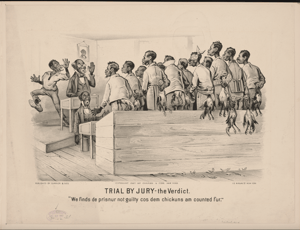
News
Apr 07, 2026
What to Know: Race of Victim Effect and the Death Penalty
DPI’s “What to Know” series examines capital punishment from multiple angles, one topic at a time. Each installment provides essential facts and data on specific aspects of the death penalty. Why it matters:The race of victims weighs heavily in capital punishment decisions. Studies confirm that defendants with white victims are more likely to be charged capitally, sentenced to death, have those sentences upheld on appeal, and be executed. “The strongest…
Read More
News
Mar 10, 2026
California Racial Justice Act Claim Succeeds in Granting Franklin Lynch a New Trial
After spending 32 years under a death sentence, on February 9, 2026, the Superior Court of the State of California, Alameda County vacated the conviction and sentence of Franklin Lynch and ordered a new trial under California’s Racial Justice Act (CRJA). Mr. Lynch’s attorneys argued that racial bias pervaded his trial, alleging the discriminatory use of preemptory strikes in jury selection in violation of the Supreme Court’s ruling in Batson v. Kentucky, and the use of racially discriminatory…
Read More
News
Feb 25, 2026
Black History: Forty Years After Supreme Court Upheld “Death Qualification” of Juries, Data Consistently Shows Disproportionate Racial Exclusion
The Constitution mandates that juries be drawn from a “fair cross-section” of the community. Yet public opinion polls show that a substantial portion of the community opposes the death penalty. How, then, can the government seat a jury that will fairly decide whether to impose the death penalty and protect a defendant’s constitutional jury rights? The legal system’s longstanding answer to this question is a procedure called “death qualification,” which allows prosecutors to dismiss any…
Read More