Publications & Testimony
Testimony and Statements on the Death Penalty
FROM DPIC
For testimony by former Executive Director Robert Dunham and former Executive Director Richard C. Dieter, please visit our page DPIC Testimony.
FROM RELIGIOUS LEADERS AND ORGANIZATIONS
- News Brief: Pope Francis Calls for Prayer to Abolish the Death Penalty (September 1, 2022)
- Jewish Congregation Renews Request for Department of Justice to Drop Death Penalty in Tree of Life Synagogue Killings (June 24, 2021)
- Orthodox Church Patriarch Calls Death Penalty Incompatible with Christian Beliefs (October 20, 2020)
- Presbyterian Church (U.S.A.) — Statement on the Federal Death Penalty (August 5, 2019)
- Louisiana Christian Faith Leaders Call for State to Abolish Death Penalty (April 25, 2019)
- Pittsburgh Rabbi’s Wife Opposes Death Penalty for Tree of Life Synagogue Killings (March 18, 2019)
- Orthodox Jewish Organization Calls for an End to Capital Punishment in the U.S. | Death Penalty Information Center (February 17, 2016)
- Baptist Theologian Says Death Penalty Does Not Fit With Christian Theology (March 8, 2016)
- Civil and Human Rights: Death Penalty — Church & Society, The United Methodist Church
- Religious Views: Over 150 Catholic Theologians Call for Repeal of the Death Penalty (September 27, 2011)
- Power Over Life and Death — The Power to Save a Life (January 15, 2005)
- Responsibility, Rehabilitation, and Restoration: A Catholic Perspective on Crime and Criminal Justice (November 2000)
- The Challenge of Holiness: A Sermon on the Death Penalty (January 10, 2000)
- General Assembly of the Texas Conference of Churches — Resolution Opposing the Death Penalty (February 24, 1998)
- Statement by Catholic Bishops of Texas on Capital Punishment (October 20, 1997)
- Catholic Church Expresses Strong Opposition to Capital Punishment in Catechism (September 9, 1997)
- Catholic Bishops of Iowa Issue Statement on Death Penalty (February 4, 1998)
- To End the Death Penalty: A Report of the National Jewish/Catholic Consultation
- Transcript of Dr. Pat Robertson’s Speech on the Role of Religion and the Death Penalty at The College of William and Mary
- Collection of Official Catholic Statements on the Death Penalty (1980)
FROM THE INTERNATIONAL COMMUNITY
- UN experts call for universal abolition of the death penalty | OHCHR (October 9, 2023)
- Zambia Becomes 25th Sub-Saharan African Nation to Abolish Death Penalty (December 23, 2022)
- Belgium Wants a World Without the Death Penalty (October 20, 2022)
- As France Prepares to Assume Presidency of European Union, Emmanuel Macron Announces Initiative for Worldwide Abolition of Death Penalty (October 11, 2021)
- U.N. Secretary-General, European Union Ambassador Call for Abolition of “Barbaric” Death Penalty (October 11, 2017)
- European Union Calls for Abolition of Capital Punishment as World Coalition Hosts International Death Penalty Conference (June 27, 2017)
- U.N. Investigator Talks About the Future of Solitary and the Death Penalty (November 7, 2016)
- World Congress Against the Death Penalty Renews Call for Global Moratorium, Pope Sends Message of Support (June 27, 2016)
- Declaration by the Presidency on behalf of the European Union on the 400th execution in Texas from the Council of the European Union (August 21, 2007)
- Resolution Supporting Worldwide Moratorium on Executions from the United Nations Commission on Human Rights (April 1999)
- Mary Robinson, U.N. High Commissioner for Human Rights — Message to the Press Conference organized by the Death Penalty Information Center for the release of the report, “International Perspectives on the Death Penalty” (October 12, 1999)
- Status of the International Covenants on Human Rights from the United Nations Commission on Human Rights (April 1998)
FROM ADVOCACY GROUPS
- Advocacy Group Tells Supreme Court that Negative Stereotypes Distort Perception that Latinos in Death-Penalty Cases Pose Future Danger to Society (April 15, 2022)
- Disability Rights Groups, Legal Experts, and Conservative Advocates Urge Supreme Court to Strike Down Georgia’s Uniquely Harsh Proof Requirements in Death-Penalty Intellectual Disabilities Cases (January 11, 2022)
- NAACP Reaffirms Its Support of Abolishing the Death Penalty (2022)
- More Than 80 Civil Rights and Advocacy Organizations Urge President Biden to End Federal Executions | Death Penalty Information Center (February 9, 2021)
- More Than 250 Conservative Leaders Join Call to End Death Penalty (October 29, 2019)
- National Alliance on Mental Illness: The Death Penalty
- Florida League of Women Voters Calls for Halt to Executions (May 28, 2007)
- Victims Organizations Issue Joint Statement for National Victims’ Rights Week (April 19, 2007)
FROM JUDGES, LEGISLATORS, AND OTHER ORGANIZATIONS
- Republican-led Oklahoma committee considers pause on executions amid death case scrutiny (October 5, 2023)
- Former Pro-Death Penalty District Attorney Explains Why He Now Supports Abolition, and Fears Political Promises to Expand the Use of the Death Penalty (August 20, 2023)
- Pressley, Durbin Reintroduce Bill to End the Federal Death Penalty (July 13, 2023)
- The Lancet Editorial: Physician Involvement in Executions Violates Medical Ethics | Death Penalty Information Center (May 20, 2023)
- APA calls for extending ineligibility for the death penalty to adolescent offenders younger than age 21 (August 4, 2022)
- Why some Republicans are turning against the death penalty | Ron Ferguson | Ohio House of Representatives (March 8, 2022)
- Eight years on Texas’ highest criminal court turned Elsa Alcala into a death penalty skeptic. How will the court change without her? (January 26, 2019)
- AMA to Supreme Court: Doctor participation in executions unethical (August 22, 2018)
- Former Governor Bill Richardson: Death Penalty Is Bad for Business, Out of Step With World’s Views (June 16, 2017)
- Capital Punishment and Nurses’ Participation in Capital Punishment (2016)
- Former Ohio Attorney General Jim Petro Says Death Penalty Unfixable, “Not Worth It Any More” (September 12, 2016)
- Resolution Supporting Repeal of the Death Penalty, National Hispanic Caucus of State Legislators (August 11, 2016)
- Retired Police Captain Says Repealing Death Penalty Is “Smart on Crime” (November 24, 2014)
- Resolution Supporting Abolition of the Death Penalty, Natl. Assoc. of Black Psychologists (2012)
- The Road to Justice and Peace by New Jersey State Senator Raymond Lesniak (February 1, 2009)
- Statement On The Federal Death Penalty System by Senator Feingold (June 7, 2001)
- Statement on the Need for a Federal Moratorium on the Death Penalty Senator Feingold (October 29, 2000)
- Death Penalty: The Torah and Today (August 23, 2000)
- Press Release for Senator Russ Feingold’s Introduction of Senate’s First Death Penalty Moratorium Bill (April 20, 2000)
- Amnesty International Southern Regional Conference: Orlando, Florida Remarks by Former Florida Chief Justice Gerald Kogan (October 23, 1999)
- American Bar Association Resolution on the Death Penalty (February 3, 1997)
FROM MURDER VICTIMS’ FAMILY MEMBERS
Items: 161 — 170
Dec 16, 2025
Georgia Parole Board Postpones Stacey Humphreys’ Execution Amid Allegations of “Extreme Juror Misconduct” and Parole Board Conflicts of Interest
On December 15, 2025, the Georgia Board of Pardons and Parole put a hold on the execution of Stacey Humphreys and postponed his clemency hearing, originally scheduled for December 16, “indefinitely.” Mr. Humphreys was to be executed December 17 — despite claims that his trial was tainted by what three Supreme Court justices described as “extreme juror misconduct.” He was the first person scheduled for execution in Georgia in 2025. Last week, Mr. Humphreys’ attorneys petitioned Fulton County…
Read MoreDec 15, 2025
DPI Year End Report 2025: Majority of Capital Juries in 2025 Rejected Death Sentences
The Death Penalty Information Center released its Year End Report today, detailing the death penalty practices of 2025. The Report notes divergent and contradictory trends. On one hand, public opinion polls recorded historically low support for the death penalty, and the highest opposition in 50 years. New research about death sentencing is consistent with these findings. DPI found that when capital juries were asked to choose between life and death, the majority, 56%*, rejected the death…
Read More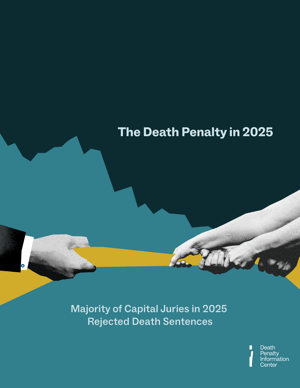
Dec 12, 2025
Should Medical Research Regulations and Informed Consent Principles Apply to States’ Use of Experimental Execution Methods?
New drugs and medical treatments undergo rigorous testing to ensure they are safe and effective for public use. Under federal and state regulations, this testing typically involves clinical trials with human subjects, who face significant health and safety risks as the first people exposed to experimental treatments. That is why the law requires them to be fully informed of the potential effects and give their voluntary consent to participate in trials. Yet these regulations have not been…
Read More
Dec 11, 2025
Tennessee Co-Victim Says Capital Punishment is Not Restorative
“We don’t need more death. We need more care.” — Anna Lee, victim family member
- In a December 9, 2025, opinion article in The Tennessean, Anna Lee, a murder-victim family member whose beloved great-uncle’s killer, Nick Sutton, was executed six years ago explains how the death penalty has not brought her family healing or justice. In the piece, Ms. Lee compassionately describes the long-term emotional and financial toll the capital punishment system imposes…

Dec 09, 2025
Roundup of 2025 Legislation to Modify Execution Protocols
On December 15, 2025, the Death Penalty Information Center will release its annual Year End Report detailing nationwide death penalty trends, including executions, new death sentences, legislation, public opinion, and the legal challenges in the Supreme Court. This article highlights the legislation introduced this year to modify execution protocols. This year, legislators in more than half of states that retain the death penalty proposed changes to their execution protocols. Five states…
Read MoreDec 08, 2025
Tennessee Execution Set to Proceed Despite Mounting Concerns Over State’s Lethal Injection Protocol
Harold Nichols is scheduled to be executed by lethal injection on December 11, 2025, despite questions from doctors and lawyers about whether Tennessee’s execution protocol causes unnecessary pain and suffering. Mr. Nichols was sentenced to death for the 1988 rape and murder of Karen Pooley, a Chattanooga State University student, and his case involves a broader legal battle over the secrecy of Tennessee’s lethal injection protocol. At the center of the controversy surrounding the state’s…
Read More
Dec 04, 2025
When Conservative Principles Meet 48 Years of Injustice
Glynn Simmons keeps a copy of his death warrant, signed by the Oklahoma governor 50 years ago, ordering his execution in the electric chair. He was 22 years old at the time, convicted of a murder he did not commit. Forty-eight years later, after becoming the longest-incarcerated wrongfully convicted person in U.S. history, Mr. Simmons’ story has become central to a growing conservative movement questioning capital punishment — one that Nan Tolson is building in Texas. Ms. Tolson leads Texas…
Read MoreDec 03, 2025
Women in Prison and on Death Row: A Global Analysis
The Guardian’s recent four-part series examines the experiences of women in prison around the world, with a focus on those facing the death penalty. The series illuminates a largely overlooked issue within global criminal legal systems: the failure to recognize how gender-based violence shapes women’s journeys to incarceration and death row. The global incarceration of women has reached its highest levels, with more than 733,000 women and girls held in prisons and jails worldwide. This number…
Read MoreDec 02, 2025
Louisiana Death Row Prisoner Jimmie Duncan Released on Bail After Evidence Shows He is “Factually Innocent”
On November 26, 2025, Jimmie Duncan was released on bail from Louisiana’s Angola prison after spending 27 years on death row for a crime that a court now says never occurred. Ouachita Parish District Attorney Robert Tew opposed Mr. Duncan’s release on bail and maintains that he is guilty of rape and murder. Mr. Duncan’s attorneys dispute this and say Judge Alvin Sharp’s bail ruling “acknowledged the clear and convincing evidence showing Mr. Duncan is factually innocent.” “[T]his court finds…
Read More
Dec 01, 2025
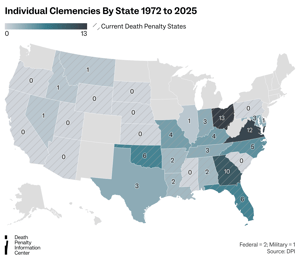
Facts About the Death Penalty – The Rarity of Clemency Grants
Supreme Court Chief Justice William Rehnquist once explained that executive clemency is intended to operate as the “fail safe” of the capital punishment system. It is the final opportunity, after all legal avenues have been exhausted, for an executive to decide whether to spare a prisoner from execution. Most grants of individual clemency come after consideration of one or more factors, including evidence of official misconduct or other unfair legal processes, ineffective assistance of counsel…
Read More