Publications & Testimony
Testimony and Statements on the Death Penalty
FROM DPIC
For testimony by former Executive Director Robert Dunham and former Executive Director Richard C. Dieter, please visit our page DPIC Testimony.
FROM RELIGIOUS LEADERS AND ORGANIZATIONS
- News Brief: Pope Francis Calls for Prayer to Abolish the Death Penalty (September 1, 2022)
- Jewish Congregation Renews Request for Department of Justice to Drop Death Penalty in Tree of Life Synagogue Killings (June 24, 2021)
- Orthodox Church Patriarch Calls Death Penalty Incompatible with Christian Beliefs (October 20, 2020)
- Presbyterian Church (U.S.A.) — Statement on the Federal Death Penalty (August 5, 2019)
- Louisiana Christian Faith Leaders Call for State to Abolish Death Penalty (April 25, 2019)
- Pittsburgh Rabbi’s Wife Opposes Death Penalty for Tree of Life Synagogue Killings (March 18, 2019)
- Orthodox Jewish Organization Calls for an End to Capital Punishment in the U.S. | Death Penalty Information Center (February 17, 2016)
- Baptist Theologian Says Death Penalty Does Not Fit With Christian Theology (March 8, 2016)
- Civil and Human Rights: Death Penalty — Church & Society, The United Methodist Church
- Religious Views: Over 150 Catholic Theologians Call for Repeal of the Death Penalty (September 27, 2011)
- Power Over Life and Death — The Power to Save a Life (January 15, 2005)
- Responsibility, Rehabilitation, and Restoration: A Catholic Perspective on Crime and Criminal Justice (November 2000)
- The Challenge of Holiness: A Sermon on the Death Penalty (January 10, 2000)
- General Assembly of the Texas Conference of Churches — Resolution Opposing the Death Penalty (February 24, 1998)
- Statement by Catholic Bishops of Texas on Capital Punishment (October 20, 1997)
- Catholic Church Expresses Strong Opposition to Capital Punishment in Catechism (September 9, 1997)
- Catholic Bishops of Iowa Issue Statement on Death Penalty (February 4, 1998)
- To End the Death Penalty: A Report of the National Jewish/Catholic Consultation
- Transcript of Dr. Pat Robertson’s Speech on the Role of Religion and the Death Penalty at The College of William and Mary
- Collection of Official Catholic Statements on the Death Penalty (1980)
FROM THE INTERNATIONAL COMMUNITY
- UN experts call for universal abolition of the death penalty | OHCHR (October 9, 2023)
- Zambia Becomes 25th Sub-Saharan African Nation to Abolish Death Penalty (December 23, 2022)
- Belgium Wants a World Without the Death Penalty (October 20, 2022)
- As France Prepares to Assume Presidency of European Union, Emmanuel Macron Announces Initiative for Worldwide Abolition of Death Penalty (October 11, 2021)
- U.N. Secretary-General, European Union Ambassador Call for Abolition of “Barbaric” Death Penalty (October 11, 2017)
- European Union Calls for Abolition of Capital Punishment as World Coalition Hosts International Death Penalty Conference (June 27, 2017)
- U.N. Investigator Talks About the Future of Solitary and the Death Penalty (November 7, 2016)
- World Congress Against the Death Penalty Renews Call for Global Moratorium, Pope Sends Message of Support (June 27, 2016)
- Declaration by the Presidency on behalf of the European Union on the 400th execution in Texas from the Council of the European Union (August 21, 2007)
- Resolution Supporting Worldwide Moratorium on Executions from the United Nations Commission on Human Rights (April 1999)
- Mary Robinson, U.N. High Commissioner for Human Rights — Message to the Press Conference organized by the Death Penalty Information Center for the release of the report, “International Perspectives on the Death Penalty” (October 12, 1999)
- Status of the International Covenants on Human Rights from the United Nations Commission on Human Rights (April 1998)
FROM ADVOCACY GROUPS
- Advocacy Group Tells Supreme Court that Negative Stereotypes Distort Perception that Latinos in Death-Penalty Cases Pose Future Danger to Society (April 15, 2022)
- Disability Rights Groups, Legal Experts, and Conservative Advocates Urge Supreme Court to Strike Down Georgia’s Uniquely Harsh Proof Requirements in Death-Penalty Intellectual Disabilities Cases (January 11, 2022)
- NAACP Reaffirms Its Support of Abolishing the Death Penalty (2022)
- More Than 80 Civil Rights and Advocacy Organizations Urge President Biden to End Federal Executions | Death Penalty Information Center (February 9, 2021)
- More Than 250 Conservative Leaders Join Call to End Death Penalty (October 29, 2019)
- National Alliance on Mental Illness: The Death Penalty
- Florida League of Women Voters Calls for Halt to Executions (May 28, 2007)
- Victims Organizations Issue Joint Statement for National Victims’ Rights Week (April 19, 2007)
FROM JUDGES, LEGISLATORS, AND OTHER ORGANIZATIONS
- Republican-led Oklahoma committee considers pause on executions amid death case scrutiny (October 5, 2023)
- Former Pro-Death Penalty District Attorney Explains Why He Now Supports Abolition, and Fears Political Promises to Expand the Use of the Death Penalty (August 20, 2023)
- Pressley, Durbin Reintroduce Bill to End the Federal Death Penalty (July 13, 2023)
- The Lancet Editorial: Physician Involvement in Executions Violates Medical Ethics | Death Penalty Information Center (May 20, 2023)
- APA calls for extending ineligibility for the death penalty to adolescent offenders younger than age 21 (August 4, 2022)
- Why some Republicans are turning against the death penalty | Ron Ferguson | Ohio House of Representatives (March 8, 2022)
- Eight years on Texas’ highest criminal court turned Elsa Alcala into a death penalty skeptic. How will the court change without her? (January 26, 2019)
- AMA to Supreme Court: Doctor participation in executions unethical (August 22, 2018)
- Former Governor Bill Richardson: Death Penalty Is Bad for Business, Out of Step With World’s Views (June 16, 2017)
- Capital Punishment and Nurses’ Participation in Capital Punishment (2016)
- Former Ohio Attorney General Jim Petro Says Death Penalty Unfixable, “Not Worth It Any More” (September 12, 2016)
- Resolution Supporting Repeal of the Death Penalty, National Hispanic Caucus of State Legislators (August 11, 2016)
- Retired Police Captain Says Repealing Death Penalty Is “Smart on Crime” (November 24, 2014)
- Resolution Supporting Abolition of the Death Penalty, Natl. Assoc. of Black Psychologists (2012)
- The Road to Justice and Peace by New Jersey State Senator Raymond Lesniak (February 1, 2009)
- Statement On The Federal Death Penalty System by Senator Feingold (June 7, 2001)
- Statement on the Need for a Federal Moratorium on the Death Penalty Senator Feingold (October 29, 2000)
- Death Penalty: The Torah and Today (August 23, 2000)
- Press Release for Senator Russ Feingold’s Introduction of Senate’s First Death Penalty Moratorium Bill (April 20, 2000)
- Amnesty International Southern Regional Conference: Orlando, Florida Remarks by Former Florida Chief Justice Gerald Kogan (October 23, 1999)
- American Bar Association Resolution on the Death Penalty (February 3, 1997)
FROM MURDER VICTIMS’ FAMILY MEMBERS
Items: 2351 — 2360
Dec 01, 2017
Underfunding of Capital Defense Services in Louisiana Leaves Defendants Without Lawyers
Facing court challenges for underfunding the state’s public defender system and pressure from prosecutors angered by the zealous capital representation provided in the state by non-profit capital defense organizations, the Louisiana legislature enacted a law last year redirecting $3 million to local public defenders that had previously been allocated to fund capital defenders. As it has nearly every winter, however, the Louisiana public defender system has run out of money, and the underfunded…
Read More
Nov 30, 2017
History of Lynchings of Mexican Americans Provides Context for Recent Challenges to U.S. Death Penalty
From 1846 to 1870, more than 100 men and women were hanged on the branches of the notorious “Hanging Tree” in Goliad, Texas. Many were Mexicans or Mexican Americans and many were killed by lynching. In a November 25 op-ed in the San Antonio Express-News, historian Alfredo Torres, Jr. writes that these public killings are a reminder that “the noose, [which] has been identified as emblematic of violence and oppression toward African-Americans, [is] often overlooked as a symbol of terror for…
Read More
Nov 29, 2017
Louisiana Justice Recused From “Angola 5” Death-Penalty Appeal After Radio Interview Commenting on the Case
Louisiana Supreme Court Justice Scott Crichton (pictured) will not participate in deciding the appeal of a prisoner sentenced to death in a controversial, high-profile prison killing, after Crichton publicly commented on the case during an appearance on a local radio program. On November 21, Crichton recused himself from the pending appeal of death-row prisoner David Brown, one day after Brown’s lawyers sought his removal from the case because of Crichton’s on-air comments about the “Angola 5”…
Read More
Nov 28, 2017
Senior U.N. Official Assails Death-Penalty Secrecy As Obstruction of Human Rights
A senior United Nations human rights official has criticized the secrecy with which countries carry out the death penalty and called for greater transparency by countries that still employ capital punishment. “There is far too much secrecy,” United Nations Assistant Secretary-General for Human Rights Andrew Gilmour (pictured) said in an interview released November 21 by the U.N. News Centre, “and it’s quite indicative the fact that although many countries are giving up the practice, those that…
Read More
Nov 27, 2017
BOOKS: Deadly Justice — A Statistical Portrait of the Death Penalty
In their new book, Deadly Justice: A Statistical Portrait of the Death Penalty, a team of researchers led by University of North Carolina-Chapel Hill political science professor Frank Baumgartner uses forty years of empirical data to assess whether the modern death penalty avoids the defects that led the U.S. Supreme Court to declare in Furman v. Georigia (1972) that the nation’s application of capital punishment was unconstitutionally arbitrary and capricious. Their conclusion: “A reasoned…
Read More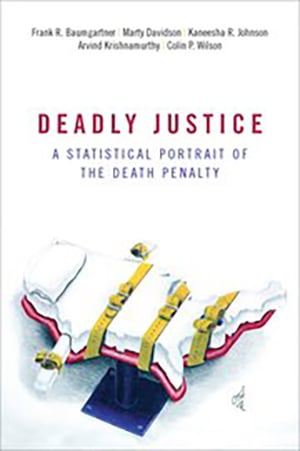
Nov 22, 2017
South Carolina Seeks Drug-Secrecy Law to Carry Out Execution that was Never Going to Happen
Claiming that a lack of lethal-injection drugs was preventing the state from executing Bobby Wayne Stone (pictured, right) on December 1, South Carolina Governor Henry McMaster (pictured, left) urged state legislators to act quickly to enact an execution-drug secrecy law. But as McMaster and Department of Corrections Director Bryan Stirling held a press conference outside barbed-wire fences at the Broad River Capital Punishment Facility in Columbia, South Carolina on November 20, they knew…
Read More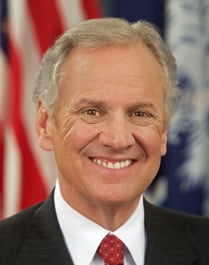
Nov 21, 2017
Ex-Virginia Death-Row Prisoner With Strong Claim of Innocence Get Parole After 38 Years
Joseph M. Giarratano (pictured), a former Virginia death-row prisoner who came within two days of execution, has been been granted parole after 38 years in jail for a rape and double murder that lawyers and supporters have long said he did not commit. On November 20, twenty-six years after Governor L. Douglas Wilder commuted Giarratano’s death sentence to life, the Virginia State Parole Board voted to grant him parole. Giarratano was convicted and sentenced to death in Norfolk, Virginia in…
Read More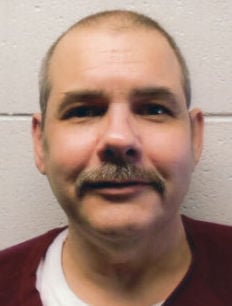
Nov 20, 2017
Lawyer Says North Carolina Client’s Brutally Traumatic Childhood Characteristic of Many on Death Row
The life of Terry Ball (pictured) “is worth remembering,” says his appeal lawyer, Elizabeth Hambourger. She says Ball’s life, which ended October 18 when he died of natural causes on North Carolina’s death row, “hold[s] keys to understanding the origins of crime and our shared humanity with people labeled the worst of the worst.” His “story of childhood trauma and brain damage” is characteristic of the backgrounds of many on death row, Hambourger says, but “was barely told at trial.” Ball was…
Read More
Nov 17, 2017
Nevada Pardons Man Imprisoned 21 Years as a Result of Wrongful Capital Murder Prosecution
Nevada has pardoned Fred Steese (pictured), who spent 21 years in prison after Las Vegas prosecutors wrongly sought the death penalty against him while witholding evidence that he was not even in the state at the time the murder occurred. In what news reports described as “a clear rebuke to the Las Vegas prosecutors,” the Nevada Board of Pardons Commissioners voted 8 – 1 on November 8 to grant Steese a full pardon. “I’m a new man now,” Steese said. “It’s lifted a black cloud over me.” The seven…
Read More
Nov 16, 2017
Ohio Halts Execution of Physically Debilitated Prisoner After It Cannot Find Vein for Intravenous Line
Having failed to find a suitable vein in which to set an intravenous execution line, Ohio called off the scheduled November 15 execution of gravely ill and physically debilitated death-row prisoner, Alva Campbell (pictured). After execution personnel failed in four attempts to find a vein for the IV line, Ohio Department of Rehabilitation and Correction Director Gary Mohr stopped the execution and Governor John Kasich granted Campbell a temporary reprieve. Kasich rescheduled Campbell’s…
Read More