Publications & Testimony
Testimony and Statements on the Death Penalty
FROM DPIC
For testimony by former Executive Director Robert Dunham and former Executive Director Richard C. Dieter, please visit our page DPIC Testimony.
FROM RELIGIOUS LEADERS AND ORGANIZATIONS
- News Brief: Pope Francis Calls for Prayer to Abolish the Death Penalty (September 1, 2022)
- Jewish Congregation Renews Request for Department of Justice to Drop Death Penalty in Tree of Life Synagogue Killings (June 24, 2021)
- Orthodox Church Patriarch Calls Death Penalty Incompatible with Christian Beliefs (October 20, 2020)
- Presbyterian Church (U.S.A.) — Statement on the Federal Death Penalty (August 5, 2019)
- Louisiana Christian Faith Leaders Call for State to Abolish Death Penalty (April 25, 2019)
- Pittsburgh Rabbi’s Wife Opposes Death Penalty for Tree of Life Synagogue Killings (March 18, 2019)
- Orthodox Jewish Organization Calls for an End to Capital Punishment in the U.S. | Death Penalty Information Center (February 17, 2016)
- Baptist Theologian Says Death Penalty Does Not Fit With Christian Theology (March 8, 2016)
- Civil and Human Rights: Death Penalty — Church & Society, The United Methodist Church
- Religious Views: Over 150 Catholic Theologians Call for Repeal of the Death Penalty (September 27, 2011)
- Power Over Life and Death — The Power to Save a Life (January 15, 2005)
- Responsibility, Rehabilitation, and Restoration: A Catholic Perspective on Crime and Criminal Justice (November 2000)
- The Challenge of Holiness: A Sermon on the Death Penalty (January 10, 2000)
- General Assembly of the Texas Conference of Churches — Resolution Opposing the Death Penalty (February 24, 1998)
- Statement by Catholic Bishops of Texas on Capital Punishment (October 20, 1997)
- Catholic Church Expresses Strong Opposition to Capital Punishment in Catechism (September 9, 1997)
- Catholic Bishops of Iowa Issue Statement on Death Penalty (February 4, 1998)
- To End the Death Penalty: A Report of the National Jewish/Catholic Consultation
- Transcript of Dr. Pat Robertson’s Speech on the Role of Religion and the Death Penalty at The College of William and Mary
- Collection of Official Catholic Statements on the Death Penalty (1980)
FROM THE INTERNATIONAL COMMUNITY
- UN experts call for universal abolition of the death penalty | OHCHR (October 9, 2023)
- Zambia Becomes 25th Sub-Saharan African Nation to Abolish Death Penalty (December 23, 2022)
- Belgium Wants a World Without the Death Penalty (October 20, 2022)
- As France Prepares to Assume Presidency of European Union, Emmanuel Macron Announces Initiative for Worldwide Abolition of Death Penalty (October 11, 2021)
- U.N. Secretary-General, European Union Ambassador Call for Abolition of “Barbaric” Death Penalty (October 11, 2017)
- European Union Calls for Abolition of Capital Punishment as World Coalition Hosts International Death Penalty Conference (June 27, 2017)
- U.N. Investigator Talks About the Future of Solitary and the Death Penalty (November 7, 2016)
- World Congress Against the Death Penalty Renews Call for Global Moratorium, Pope Sends Message of Support (June 27, 2016)
- Declaration by the Presidency on behalf of the European Union on the 400th execution in Texas from the Council of the European Union (August 21, 2007)
- Resolution Supporting Worldwide Moratorium on Executions from the United Nations Commission on Human Rights (April 1999)
- Mary Robinson, U.N. High Commissioner for Human Rights — Message to the Press Conference organized by the Death Penalty Information Center for the release of the report, “International Perspectives on the Death Penalty” (October 12, 1999)
- Status of the International Covenants on Human Rights from the United Nations Commission on Human Rights (April 1998)
FROM ADVOCACY GROUPS
- Advocacy Group Tells Supreme Court that Negative Stereotypes Distort Perception that Latinos in Death-Penalty Cases Pose Future Danger to Society (April 15, 2022)
- Disability Rights Groups, Legal Experts, and Conservative Advocates Urge Supreme Court to Strike Down Georgia’s Uniquely Harsh Proof Requirements in Death-Penalty Intellectual Disabilities Cases (January 11, 2022)
- NAACP Reaffirms Its Support of Abolishing the Death Penalty (2022)
- More Than 80 Civil Rights and Advocacy Organizations Urge President Biden to End Federal Executions | Death Penalty Information Center (February 9, 2021)
- More Than 250 Conservative Leaders Join Call to End Death Penalty (October 29, 2019)
- National Alliance on Mental Illness: The Death Penalty
- Florida League of Women Voters Calls for Halt to Executions (May 28, 2007)
- Victims Organizations Issue Joint Statement for National Victims’ Rights Week (April 19, 2007)
FROM JUDGES, LEGISLATORS, AND OTHER ORGANIZATIONS
- Republican-led Oklahoma committee considers pause on executions amid death case scrutiny (October 5, 2023)
- Former Pro-Death Penalty District Attorney Explains Why He Now Supports Abolition, and Fears Political Promises to Expand the Use of the Death Penalty (August 20, 2023)
- Pressley, Durbin Reintroduce Bill to End the Federal Death Penalty (July 13, 2023)
- The Lancet Editorial: Physician Involvement in Executions Violates Medical Ethics | Death Penalty Information Center (May 20, 2023)
- APA calls for extending ineligibility for the death penalty to adolescent offenders younger than age 21 (August 4, 2022)
- Why some Republicans are turning against the death penalty | Ron Ferguson | Ohio House of Representatives (March 8, 2022)
- Eight years on Texas’ highest criminal court turned Elsa Alcala into a death penalty skeptic. How will the court change without her? (January 26, 2019)
- AMA to Supreme Court: Doctor participation in executions unethical (August 22, 2018)
- Former Governor Bill Richardson: Death Penalty Is Bad for Business, Out of Step With World’s Views (June 16, 2017)
- Capital Punishment and Nurses’ Participation in Capital Punishment (2016)
- Former Ohio Attorney General Jim Petro Says Death Penalty Unfixable, “Not Worth It Any More” (September 12, 2016)
- Resolution Supporting Repeal of the Death Penalty, National Hispanic Caucus of State Legislators (August 11, 2016)
- Retired Police Captain Says Repealing Death Penalty Is “Smart on Crime” (November 24, 2014)
- Resolution Supporting Abolition of the Death Penalty, Natl. Assoc. of Black Psychologists (2012)
- The Road to Justice and Peace by New Jersey State Senator Raymond Lesniak (February 1, 2009)
- Statement On The Federal Death Penalty System by Senator Feingold (June 7, 2001)
- Statement on the Need for a Federal Moratorium on the Death Penalty Senator Feingold (October 29, 2000)
- Death Penalty: The Torah and Today (August 23, 2000)
- Press Release for Senator Russ Feingold’s Introduction of Senate’s First Death Penalty Moratorium Bill (April 20, 2000)
- Amnesty International Southern Regional Conference: Orlando, Florida Remarks by Former Florida Chief Justice Gerald Kogan (October 23, 1999)
- American Bar Association Resolution on the Death Penalty (February 3, 1997)
FROM MURDER VICTIMS’ FAMILY MEMBERS
Items: 2961 — 2970
Aug 11, 2015
False and Contaminated Confessions Prevalent in Death Row Exonerations
A report by University of Virginia Law Professor Brandon L. Garrett describes the effects of false confessions in cases in which DNA evidence later led to an exoneration. Garrett reports that half of the 20 death row inmates who were exonerated by DNA testing had falsely confessed to the crime. He uses the recent exonerations of intellectually disabled defendants Leon Brown and Henry McCollum in North Carolina to illustrate the problem: “The police claimed that Brown and McCollum had each…
Read More
Aug 10, 2015
Mentally Ill James Holmes Sentenced to Life in Prison in Aurora, CO Theater Shooting
On August 7, a jury in Aurora, Colorado, sentenced James Holmes to life in prison without the possibility of parole for the 2012 movie theater shooting that killed 12 people and injured dozens more. The jury said they could not reach a unanimous decision on Holmes’ sentence, an outcome that results in a sentence of life without parole. After the trial, one juror said that the prosecution had not persuaded three of the jurors to impose a death sentence. The deliberations, she said, were very…
Read More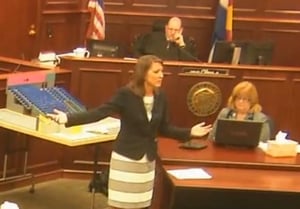
Aug 07, 2015
125 Years Ago, First Execution Using Electric Chair Was Botched
On August 6, 1890, New York executed William Kemmler. It was the first time ever a state used the electric chair to carry out an execution. Proponents of electrocution — including Thomas Edison — touted the new method as quick, effective, painless, and humane: the same arguments later used by legislators to support lethal injection and execution by nitrogen gas. In May 1890, the U.S. Supreme Court rejected Kemmler’s challenge that the electric chair was cruel and unusual punishment.
Read More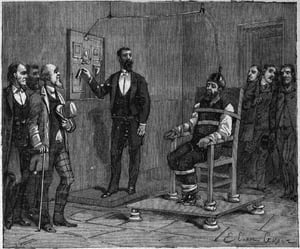
Aug 06, 2015
Ex-Prosecutors Ask Supreme Court to Overturn Georgia Death Sentence for Race Discrimination in Jury Selection
Eight former state and federal prosecutors have asked the U.S. Supreme Court to overturn Timothy Foster’s death sentence because Georgia prosecutors discriminatorily used their discretionary strikes during jury selection in his case “to ensure that a black defendant accused of a crime against a white victim would face an all-white jury.” In their “amici curiae” (friends-of-the-court) brief in Foster v. Chatman, the former prosecutors said that “race discrimination persists in jury selection”…
Read More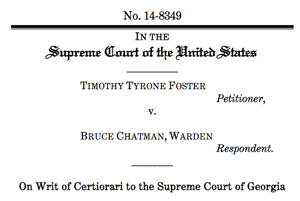
Aug 05, 2015
NEW RESOURCES: Capital Punishment and the State of Criminal Justice 2015
The American Bar Association has released a new publication, The State of Criminal Justice 2015, examining major issues, trends, and significant changes in America’s criminal justice system. The chapter devoted to capital punishment was written by Ronald Tabak, an attorney at Skadden Arps and board member of the Death Penalty Information Center. Tabak presents evidence of the declining use of the death penalty in death sentences and executions, particularly noting the growing geographic…
Read More
Aug 04, 2015
New Study Shows Discrimination in Colorado Prosecutors’ Use of Death Penalty
A new study to be published in the University of Denver Law Review shows that whether prosecutors seek the death penalty in Colorado “depends to an alarming extent on the race and geographic location of the defendant.” The study — based upon 10 years of data collected by attorney Meg Beardsley and University of Denver law professors Sam Kamin and Justin Marceau and sociology professor Scott Phillips — shows that race and place are statistically significant predictors of whether prosecutors will…
Read More
Aug 03, 2015
Former Prosecutor Says Texas “Can Live Without the Death Penalty”
Former Texas prosecutor, Tim Cole — described by the Dallas Morning News as “a no-holds-barred lawman” in 4 terms as District Attorney for Archer, Clay, and Montague counties — now says that “Texas should join the 19 U.S. states where the death penalty has been abolished.” In an op-ed in The Fort Worth Star-Telegram, Cole says Texas’ dramatic decline in imposing the death penalty, from a record 49 death sentences in 1994 and 48 in 1999 to none in the first 7 months of 2015, is “proving as a…
Read More
Aug 01, 2015
United States Supreme Court Decisions : 2014 – 2015 Term
Cert. granted Jan. 23, 2015 Argument April 29, 2015 Decided June 29, 2015 Rehearing denied Aug. 28, 2015 (on constitutionality of death penalty) On June 29, the U.S. Supreme Court held (5 – 4) that Oklahoma inmates “failed to establish a likelihood of success on the merits of their claim that the use of midazolam violates the Eighth Amendment.” Three inmates on Oklahoma’s death row had challenged the state’s use of midazolam as the first drug in a three-drug protocol, saying that it “fails to…
Read MoreAug 01, 2015
Glossip v. Gross Coverage and Commentary Recap
On June 29, the U.S. Supreme Court held (5 – 4) that Oklahoma inmates “failed to establish a likelihood of success on the merits of their claim that the use of midazolam violates the Eighth Amendment.” Three inmates on Oklahoma’s death row had challenged the state’s use of midazolam as the first drug in a three-drug protocol, saying that it “fails to render a person insensate to pain.” In a narrow decision written by Justice Samuel Alito, the Court deferred to a District Court ruling upholding…
Read More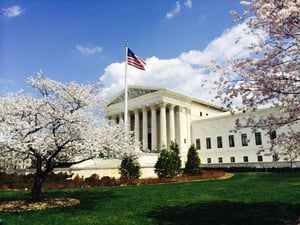
Jul 31, 2015
Justice Ginsburg Discusses Glossip Dissent
In an interview at Duke Law School, Justice Ruth Bader Ginsburg reflected on the past term at the U.S. Supreme Court. She discussed several landmark cases from the past year, including Glossip v. Gross, in which she joined Justice Stephen Breyer in a dissent that questioned the constitutionality of the death penalty. Ginsburg said she had waited to take such a stance on the death penalty because past justices, “took themselves out of the running,” when they did so, leaving, “no room for them to…
Read More