Publications & Testimony
Testimony and Statements on the Death Penalty
FROM DPIC
For testimony by former Executive Director Robert Dunham and former Executive Director Richard C. Dieter, please visit our page DPIC Testimony.
FROM RELIGIOUS LEADERS AND ORGANIZATIONS
- News Brief: Pope Francis Calls for Prayer to Abolish the Death Penalty (September 1, 2022)
- Jewish Congregation Renews Request for Department of Justice to Drop Death Penalty in Tree of Life Synagogue Killings (June 24, 2021)
- Orthodox Church Patriarch Calls Death Penalty Incompatible with Christian Beliefs (October 20, 2020)
- Presbyterian Church (U.S.A.) — Statement on the Federal Death Penalty (August 5, 2019)
- Louisiana Christian Faith Leaders Call for State to Abolish Death Penalty (April 25, 2019)
- Pittsburgh Rabbi’s Wife Opposes Death Penalty for Tree of Life Synagogue Killings (March 18, 2019)
- Orthodox Jewish Organization Calls for an End to Capital Punishment in the U.S. | Death Penalty Information Center (February 17, 2016)
- Baptist Theologian Says Death Penalty Does Not Fit With Christian Theology (March 8, 2016)
- Civil and Human Rights: Death Penalty — Church & Society, The United Methodist Church
- Religious Views: Over 150 Catholic Theologians Call for Repeal of the Death Penalty (September 27, 2011)
- Power Over Life and Death — The Power to Save a Life (January 15, 2005)
- Responsibility, Rehabilitation, and Restoration: A Catholic Perspective on Crime and Criminal Justice (November 2000)
- The Challenge of Holiness: A Sermon on the Death Penalty (January 10, 2000)
- General Assembly of the Texas Conference of Churches — Resolution Opposing the Death Penalty (February 24, 1998)
- Statement by Catholic Bishops of Texas on Capital Punishment (October 20, 1997)
- Catholic Church Expresses Strong Opposition to Capital Punishment in Catechism (September 9, 1997)
- Catholic Bishops of Iowa Issue Statement on Death Penalty (February 4, 1998)
- To End the Death Penalty: A Report of the National Jewish/Catholic Consultation
- Transcript of Dr. Pat Robertson’s Speech on the Role of Religion and the Death Penalty at The College of William and Mary
- Collection of Official Catholic Statements on the Death Penalty (1980)
FROM THE INTERNATIONAL COMMUNITY
- UN experts call for universal abolition of the death penalty | OHCHR (October 9, 2023)
- Zambia Becomes 25th Sub-Saharan African Nation to Abolish Death Penalty (December 23, 2022)
- Belgium Wants a World Without the Death Penalty (October 20, 2022)
- As France Prepares to Assume Presidency of European Union, Emmanuel Macron Announces Initiative for Worldwide Abolition of Death Penalty (October 11, 2021)
- U.N. Secretary-General, European Union Ambassador Call for Abolition of “Barbaric” Death Penalty (October 11, 2017)
- European Union Calls for Abolition of Capital Punishment as World Coalition Hosts International Death Penalty Conference (June 27, 2017)
- U.N. Investigator Talks About the Future of Solitary and the Death Penalty (November 7, 2016)
- World Congress Against the Death Penalty Renews Call for Global Moratorium, Pope Sends Message of Support (June 27, 2016)
- Declaration by the Presidency on behalf of the European Union on the 400th execution in Texas from the Council of the European Union (August 21, 2007)
- Resolution Supporting Worldwide Moratorium on Executions from the United Nations Commission on Human Rights (April 1999)
- Mary Robinson, U.N. High Commissioner for Human Rights — Message to the Press Conference organized by the Death Penalty Information Center for the release of the report, “International Perspectives on the Death Penalty” (October 12, 1999)
- Status of the International Covenants on Human Rights from the United Nations Commission on Human Rights (April 1998)
FROM ADVOCACY GROUPS
- Advocacy Group Tells Supreme Court that Negative Stereotypes Distort Perception that Latinos in Death-Penalty Cases Pose Future Danger to Society (April 15, 2022)
- Disability Rights Groups, Legal Experts, and Conservative Advocates Urge Supreme Court to Strike Down Georgia’s Uniquely Harsh Proof Requirements in Death-Penalty Intellectual Disabilities Cases (January 11, 2022)
- NAACP Reaffirms Its Support of Abolishing the Death Penalty (2022)
- More Than 80 Civil Rights and Advocacy Organizations Urge President Biden to End Federal Executions | Death Penalty Information Center (February 9, 2021)
- More Than 250 Conservative Leaders Join Call to End Death Penalty (October 29, 2019)
- National Alliance on Mental Illness: The Death Penalty
- Florida League of Women Voters Calls for Halt to Executions (May 28, 2007)
- Victims Organizations Issue Joint Statement for National Victims’ Rights Week (April 19, 2007)
FROM JUDGES, LEGISLATORS, AND OTHER ORGANIZATIONS
- Republican-led Oklahoma committee considers pause on executions amid death case scrutiny (October 5, 2023)
- Former Pro-Death Penalty District Attorney Explains Why He Now Supports Abolition, and Fears Political Promises to Expand the Use of the Death Penalty (August 20, 2023)
- Pressley, Durbin Reintroduce Bill to End the Federal Death Penalty (July 13, 2023)
- The Lancet Editorial: Physician Involvement in Executions Violates Medical Ethics | Death Penalty Information Center (May 20, 2023)
- APA calls for extending ineligibility for the death penalty to adolescent offenders younger than age 21 (August 4, 2022)
- Why some Republicans are turning against the death penalty | Ron Ferguson | Ohio House of Representatives (March 8, 2022)
- Eight years on Texas’ highest criminal court turned Elsa Alcala into a death penalty skeptic. How will the court change without her? (January 26, 2019)
- AMA to Supreme Court: Doctor participation in executions unethical (August 22, 2018)
- Former Governor Bill Richardson: Death Penalty Is Bad for Business, Out of Step With World’s Views (June 16, 2017)
- Capital Punishment and Nurses’ Participation in Capital Punishment (2016)
- Former Ohio Attorney General Jim Petro Says Death Penalty Unfixable, “Not Worth It Any More” (September 12, 2016)
- Resolution Supporting Repeal of the Death Penalty, National Hispanic Caucus of State Legislators (August 11, 2016)
- Retired Police Captain Says Repealing Death Penalty Is “Smart on Crime” (November 24, 2014)
- Resolution Supporting Abolition of the Death Penalty, Natl. Assoc. of Black Psychologists (2012)
- The Road to Justice and Peace by New Jersey State Senator Raymond Lesniak (February 1, 2009)
- Statement On The Federal Death Penalty System by Senator Feingold (June 7, 2001)
- Statement on the Need for a Federal Moratorium on the Death Penalty Senator Feingold (October 29, 2000)
- Death Penalty: The Torah and Today (August 23, 2000)
- Press Release for Senator Russ Feingold’s Introduction of Senate’s First Death Penalty Moratorium Bill (April 20, 2000)
- Amnesty International Southern Regional Conference: Orlando, Florida Remarks by Former Florida Chief Justice Gerald Kogan (October 23, 1999)
- American Bar Association Resolution on the Death Penalty (February 3, 1997)
FROM MURDER VICTIMS’ FAMILY MEMBERS
Items: 2991 — 3000
Jul 02, 2015
Texas Death Row Continues to Shrink As No Death Sentences Imposed in First Half of 2015
Death row in Texas has shrunk from 460 men and women at its peak in 1999 to 260 today. The main reason for that drop, according to an article in The Texas Tribune, is the dramatic decline in death sentences imposed in the state. In 1999 alone, Texas sentenced 48 people to death. But in the first 6 months of 2015, no death sentences have been imposed in Texas. This development is unprecedented, according to the Texas Defender Service (TDS). “This is the longest we’ve gone in a calendar year in…
Read More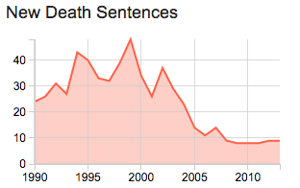
Jul 01, 2015
Former Death Row Inmate Michelle Byrom Released from Mississippi Prison
Michelle Byrom (pictured, seated) was released from prison in Mississippi on June 26 after spending 16 years behind bars, 14 of them on death row, for the murder of her husband. Byrom maintains her innocence for the crime, but agreed to an Alford plea — which means that she pleaded no contest to the charges against her — in exchange for her release. In 2014, the Mississippi Supreme Court reversed Byrom’s conviction and death sentence and ordered a new trial, citing numerous problems in her…
Read More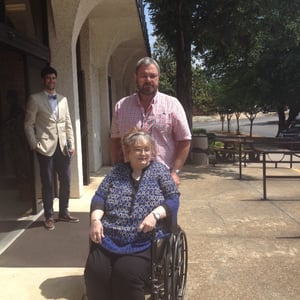
Jun 30, 2015
Death Row Exoneree Glenn Ford Dies One Year After Release
Glenn Ford, who was exonerated last year after spending almost 30 years on Louisiana’s death row, died of lung cancer on June 29 at the age of 65. At the time of his release, Ford was the nation’s longest-serving death row exoneree. Just hours after his death, Ford’s case was cited in the dissenting opinion of Justice Breyer in Glossip v. Gross, as providing “striking” evidence “that the death penalty has been wrongly imposed.” Justice Breyer mentioned innocence, prosecutorial wrongdoing, the…
Read More
Jun 29, 2015
Excerpts from Glossip v. Gross Citing DPIC Resources
On June 29, 2015, the U.S. Supreme Court denied Oklahoma prisoners’ lethal injection challenge in Glossip v. Gross. In a sweeping dissenting opinion, Justice Stephen Breyer, joined by Justice Ruth Bader Ginsburg, raised serious questions about the administration of the death penalty. Below are excerpts from the opinion with links to the DPIC resources cited in that opinion. Today’s administration of the death penalty involves three fundamental constitutional defects: (1) serious unreliability…
Read MoreJun 29, 2015
Supreme Court Narrowly Upholds Use of Lethal Injection Drug
On June 29, the U.S. Supreme Court held (5 – 4) in Glossip v. Gross that Oklahoma inmates “failed to establish a likelihood of success on the merits of their claim that the use of midazolam violates the Eighth Amendment.” Three inmates on Oklahoma’s death row had challenged the state’s use of midazolam as the first drug in a three-drug protocol, saying that it “fails to render a person insensate to pain.” In a narrow decision written by Justice Samuel Alito, the Court deferred to a District…
Read More
Jun 26, 2015
Recent Texas Execution: Did An Innocent Man Fall Through Death Penalty Procedural Cracks?
Lester Bower was executed in Texas on June 3 despite maintaining his innocence throughout the 30 years he spent on death row. The evidence of Bower’s innocence included testimony from a woman who said that her boyfriend and three of his friends — not Bower — had committed the murders for which Bower was executed. The witness came forward in 1989, after reading that Bower had been sentenced to death for the crime her boyfriend had confessed to committing six years earlier. In 2012, a judge…
Read More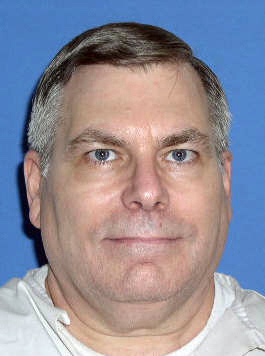
Jun 25, 2015
Bryan Stevenson Puts the Charleston Massacre and the Use of the Death Penalty in Historical Context
In an interview with The Marshall Project, Bryan Stevenson (pictured), director of the Equal Justice Initiative and author of Just Mercy, discussed the role the history of slavery, lynchings, and racial terrorism in the South played in the racially-motivated killings of nine black people in an historic black church in Charleston, South Carolina. In the interview, Stevenson described the historical use of the death penalty as a tool to reinforce a racially discriminatory social order. This, he…
Read More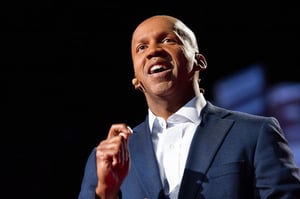
Jun 24, 2015
As Court Prepares to Hear Juror Exclusion Case, A Look at Tactics That Exclude Blacks from Juries
This fall, the U.S. Supreme Court will hear a Georgia case, Foster v. Humphrey, in which an all-white jury sentenced a black man to death after prosecutors struck every black prospective juror in the case. The Court will determine whether prosecutors violated the Court’s 1986 decision in Batson v. Kentucky, which banned the practice of dismissing potential jurors on the basis of race. In anticipation of the case, The New Yorker published an analysis of tactics used to evade Batson challenges by…
Read More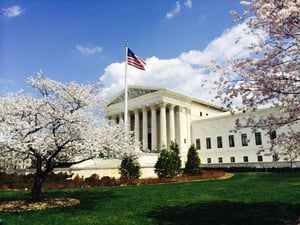
Jun 23, 2015
Editorials in Major Death Penalty States Call for Its Abolition
Recent editorials from leading newspapers in three of the largest death row states critique flaws in the death penalty and call for its abolition. The Sacramento Bee quoted federal district court judge Cormac Carney’s recent ruling finding California’s death penalty unconstitutional because executions are so rare that they “serve no retributive or deterrent purpose.” The Bee called the state’s capital punishment system “an abject failure” and said, “[t]he death penalty has not worked, and never…
Read More
Jun 22, 2015
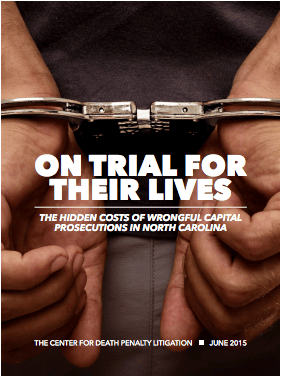
STUDY: “The Hidden Costs of Wrongful Capital Prosecutions in North Carolina”
A new study by North Carolina’s Center for Death Penalty Litigation examines the financial and human costs of cases in which, “prosecutors sought the death penalty despite a clear lack of evidence, resulting in acquittal or dismissal of charges.” The report found 56 such cases in North Carolina since 1989, in which innocent people spent a total of 112 years spent in jail, with $2.4 million spent in defense costs alone in these weak death penalty cases. The authors compare these cases to those…
Read More