Publications & Testimony
Testimony and Statements on the Death Penalty
FROM DPIC
For testimony by former Executive Director Robert Dunham and former Executive Director Richard C. Dieter, please visit our page DPIC Testimony.
FROM RELIGIOUS LEADERS AND ORGANIZATIONS
- News Brief: Pope Francis Calls for Prayer to Abolish the Death Penalty (September 1, 2022)
- Jewish Congregation Renews Request for Department of Justice to Drop Death Penalty in Tree of Life Synagogue Killings (June 24, 2021)
- Orthodox Church Patriarch Calls Death Penalty Incompatible with Christian Beliefs (October 20, 2020)
- Presbyterian Church (U.S.A.) — Statement on the Federal Death Penalty (August 5, 2019)
- Louisiana Christian Faith Leaders Call for State to Abolish Death Penalty (April 25, 2019)
- Pittsburgh Rabbi’s Wife Opposes Death Penalty for Tree of Life Synagogue Killings (March 18, 2019)
- Orthodox Jewish Organization Calls for an End to Capital Punishment in the U.S. | Death Penalty Information Center (February 17, 2016)
- Baptist Theologian Says Death Penalty Does Not Fit With Christian Theology (March 8, 2016)
- Civil and Human Rights: Death Penalty — Church & Society, The United Methodist Church
- Religious Views: Over 150 Catholic Theologians Call for Repeal of the Death Penalty (September 27, 2011)
- Power Over Life and Death — The Power to Save a Life (January 15, 2005)
- Responsibility, Rehabilitation, and Restoration: A Catholic Perspective on Crime and Criminal Justice (November 2000)
- The Challenge of Holiness: A Sermon on the Death Penalty (January 10, 2000)
- General Assembly of the Texas Conference of Churches — Resolution Opposing the Death Penalty (February 24, 1998)
- Statement by Catholic Bishops of Texas on Capital Punishment (October 20, 1997)
- Catholic Church Expresses Strong Opposition to Capital Punishment in Catechism (September 9, 1997)
- Catholic Bishops of Iowa Issue Statement on Death Penalty (February 4, 1998)
- To End the Death Penalty: A Report of the National Jewish/Catholic Consultation
- Transcript of Dr. Pat Robertson’s Speech on the Role of Religion and the Death Penalty at The College of William and Mary
- Collection of Official Catholic Statements on the Death Penalty (1980)
FROM THE INTERNATIONAL COMMUNITY
- UN experts call for universal abolition of the death penalty | OHCHR (October 9, 2023)
- Zambia Becomes 25th Sub-Saharan African Nation to Abolish Death Penalty (December 23, 2022)
- Belgium Wants a World Without the Death Penalty (October 20, 2022)
- As France Prepares to Assume Presidency of European Union, Emmanuel Macron Announces Initiative for Worldwide Abolition of Death Penalty (October 11, 2021)
- U.N. Secretary-General, European Union Ambassador Call for Abolition of “Barbaric” Death Penalty (October 11, 2017)
- European Union Calls for Abolition of Capital Punishment as World Coalition Hosts International Death Penalty Conference (June 27, 2017)
- U.N. Investigator Talks About the Future of Solitary and the Death Penalty (November 7, 2016)
- World Congress Against the Death Penalty Renews Call for Global Moratorium, Pope Sends Message of Support (June 27, 2016)
- Declaration by the Presidency on behalf of the European Union on the 400th execution in Texas from the Council of the European Union (August 21, 2007)
- Resolution Supporting Worldwide Moratorium on Executions from the United Nations Commission on Human Rights (April 1999)
- Mary Robinson, U.N. High Commissioner for Human Rights — Message to the Press Conference organized by the Death Penalty Information Center for the release of the report, “International Perspectives on the Death Penalty” (October 12, 1999)
- Status of the International Covenants on Human Rights from the United Nations Commission on Human Rights (April 1998)
FROM ADVOCACY GROUPS
- Advocacy Group Tells Supreme Court that Negative Stereotypes Distort Perception that Latinos in Death-Penalty Cases Pose Future Danger to Society (April 15, 2022)
- Disability Rights Groups, Legal Experts, and Conservative Advocates Urge Supreme Court to Strike Down Georgia’s Uniquely Harsh Proof Requirements in Death-Penalty Intellectual Disabilities Cases (January 11, 2022)
- NAACP Reaffirms Its Support of Abolishing the Death Penalty (2022)
- More Than 80 Civil Rights and Advocacy Organizations Urge President Biden to End Federal Executions | Death Penalty Information Center (February 9, 2021)
- More Than 250 Conservative Leaders Join Call to End Death Penalty (October 29, 2019)
- National Alliance on Mental Illness: The Death Penalty
- Florida League of Women Voters Calls for Halt to Executions (May 28, 2007)
- Victims Organizations Issue Joint Statement for National Victims’ Rights Week (April 19, 2007)
FROM JUDGES, LEGISLATORS, AND OTHER ORGANIZATIONS
- Republican-led Oklahoma committee considers pause on executions amid death case scrutiny (October 5, 2023)
- Former Pro-Death Penalty District Attorney Explains Why He Now Supports Abolition, and Fears Political Promises to Expand the Use of the Death Penalty (August 20, 2023)
- Pressley, Durbin Reintroduce Bill to End the Federal Death Penalty (July 13, 2023)
- The Lancet Editorial: Physician Involvement in Executions Violates Medical Ethics | Death Penalty Information Center (May 20, 2023)
- APA calls for extending ineligibility for the death penalty to adolescent offenders younger than age 21 (August 4, 2022)
- Why some Republicans are turning against the death penalty | Ron Ferguson | Ohio House of Representatives (March 8, 2022)
- Eight years on Texas’ highest criminal court turned Elsa Alcala into a death penalty skeptic. How will the court change without her? (January 26, 2019)
- AMA to Supreme Court: Doctor participation in executions unethical (August 22, 2018)
- Former Governor Bill Richardson: Death Penalty Is Bad for Business, Out of Step With World’s Views (June 16, 2017)
- Capital Punishment and Nurses’ Participation in Capital Punishment (2016)
- Former Ohio Attorney General Jim Petro Says Death Penalty Unfixable, “Not Worth It Any More” (September 12, 2016)
- Resolution Supporting Repeal of the Death Penalty, National Hispanic Caucus of State Legislators (August 11, 2016)
- Retired Police Captain Says Repealing Death Penalty Is “Smart on Crime” (November 24, 2014)
- Resolution Supporting Abolition of the Death Penalty, Natl. Assoc. of Black Psychologists (2012)
- The Road to Justice and Peace by New Jersey State Senator Raymond Lesniak (February 1, 2009)
- Statement On The Federal Death Penalty System by Senator Feingold (June 7, 2001)
- Statement on the Need for a Federal Moratorium on the Death Penalty Senator Feingold (October 29, 2000)
- Death Penalty: The Torah and Today (August 23, 2000)
- Press Release for Senator Russ Feingold’s Introduction of Senate’s First Death Penalty Moratorium Bill (April 20, 2000)
- Amnesty International Southern Regional Conference: Orlando, Florida Remarks by Former Florida Chief Justice Gerald Kogan (October 23, 1999)
- American Bar Association Resolution on the Death Penalty (February 3, 1997)
FROM MURDER VICTIMS’ FAMILY MEMBERS
Items: 3041 — 3050
May 07, 2015
Tennessee Supreme Court Contemplates Electric Chair Appeal on 25th Anniversary of Botched Florida Electrocution
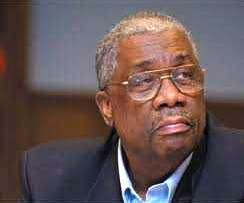
The week of the 25th anniversary of Florida’s gruesome botched electric chair execution of Jesse Tafero (pictured), the Tennessee Supreme Court began hearing a challenge to the administration of a state law that would resurrect the use of that State’s electric chair if lethal injection drugs are unavailable. On May 6, 2015, the Tennessee justices heard argument on death-row inmates’ right to know which method of execution will be used in their cases. The Justices voiced concerns about the…
Read More
May 06, 2015
Death Row Exoneree Anthony Ray Hinton Shares His Story
In an interview with Salon, Anthony Ray Hinton (pictured, l.), the 152nd death row exoneree, spoke about his wrongful conviction and spending 30 years on Alabama’s death row for a crime he did not commit. “They had every intention of executing an innocent man,” Hinton said. “If you’re poor and black you don’t stand a chance.” Hinton spoke about the inadequate representation he received at his trial: “My ballistics expert was blind in one eye. He was paid $500. It came down to, ‘Who do you…
Read More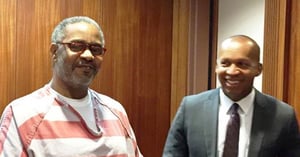
May 05, 2015
Representation Improves, Death Sentences Dramatically Drop in Virginia
The number of people sentenced to death in Virginia has plummeted from 40 in the years 1998 – 2005 to only 6 from 2006 through April 2015. A recent study suggests that improvements in capital representation in the state may have played a significant role in that dramatic change. In 2004, Virginia established four regional capital defender offices, which are completely devoted to handling death penalty cases. The year before the defender offices opened, Virginia juries imposed 6 death sentences…
Read More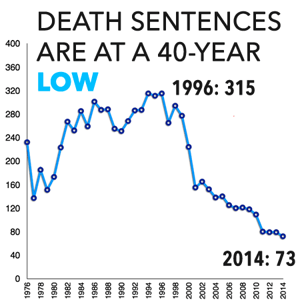
May 04, 2015
Charges Dropped Against Willie Manning; Becomes 153rd Death Row Exoneree
On April 21, 2015, Oktibbeha County (Mississippi) District Attorney Forrest Allgood announced that he would drop charges against death row inmate Willie Manning. In February, the Mississippi Supreme court granted Manning a new trial, saying that key evidence was withheld. Justice Michael K. Randolph wrote, “The State violated Manning’s due-process rights by failing to provide favorable, material evidence.” A witness testified that he saw Manning enter the victims’ apartment, but police records…
Read More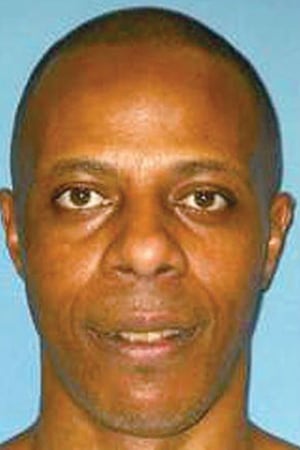
May 01, 2015
NEW VOICES: Citing Innocence, Misconduct, Creator of Lethal Injection Protocol Calls Death Penalty “Problematic”
Dr. Jay Chapman, the Oklahoma medical examiner who created the three-drug lethal injection protocol that was used from 1982 to 2010, recently told The Guardian that he has doubts about the death penalty.“I am ambivalent about the death penalty – there have been so many incidents of prosecutorial misconduct, or DNA testing that has proved a prisoner’s innocence. It’s problematic,” Chapman said. He said he believed lethal injection would be a more humane method of execution, “At that time we put…
Read More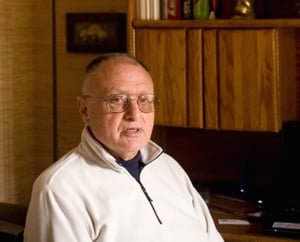
Apr 30, 2015
LAW REVIEW: Stephen Bright on Race, Poverty, Arbitrariness and the Death Penalty
In an article for the University of Richmond Law Review, Stephen Bright (pictured), President and Senior Counsel at the Southern Center for Human Rights, describes the arbitrary factors that continue to influence the death penalty. Bright first describes the historical context that led the Supreme Court to strike down the death penalty in 1976. He draws comparisons between lynchings, which he says were “used to maintain racial control after the Civil War,” and capital punishment, which in 1976…
Read More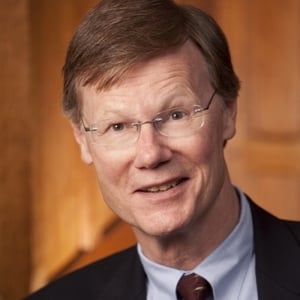
Apr 29, 2015
Supreme Court Hears Challenge to Oklahoma’s Lethal Injection Protocol
On April 29, the U.S. Supreme Court heard oral argument in Glossip v. Gross, a case challenging the use of midazolam in lethal injections. Midazolam was used as the first drug in three botched executions in 2014, including the execution of Clayton Lockett in Oklahoma exactly one year ago. Prisoners on Oklahoma’s death row argued that midazolam should not be used in executions because it could not reliably anesthesize the prisoner to prevent him or her from experiencing extreme pain when the…
Read More
Apr 28, 2015
Florida Supreme Court Strikes Down Mentally Ill Defendant’s Death Sentence as Disproportionate
In a case spotlighting issues of mental illness and the death penalty, the Florida Supreme Court on April 23 unanimously overturned the death sentence imposed on a severely mentally ill death-row inmate, Humberto Delgado (pictured). Delgado, who was convicted of killing a Tampa police officer, will be resentenced to life without parole. The court said, “We do not downplay the fact that Corporal Roberts lost his life as a result of Delgado’s actions. However … we are compelled to reduce…
Read More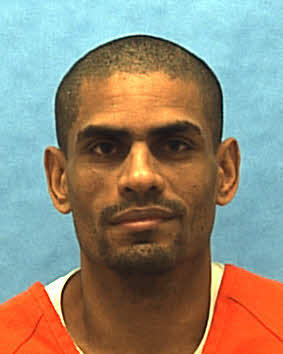
Apr 27, 2015
Nebraska Repeal Vote Reflects Growing Republican Opposition to Death Penalty
Nebraska’s unicameral legislature recently voted 30 – 13 in favor of repealing the State’s death penalty, advancing the bill to a second round of legislative review. (In Nebraska, a bill must pass three times before it is sent to the Governor.) A majority (17 out of 30) of Republican legislators voted in favor of the bill, which was also supported by 12 Democrats and one Independent legislator. Sen. Colby Coash (R‑Lincoln), said, “If any other system in our government was as ineffective and…
Read More
Apr 24, 2015
NEW VOICES: Effects of the Death Penalty on Those Who Carry It Out
Four retired death-row prison officials — two wardens, a chaplain, and an execution supervisor — recently described the effect that carrying out executions has had on them. Frank Thompson (pictured), who served as a warden in Oregon and Arkansas, said he believed in capital punishment until he thought “about those flaws in the back of my mind that I knew existed with capital punishment. It’s being administered against the poor; it lacks proof that it deters anything.” He trained his staff to…
Read More