Publications & Testimony
Testimony and Statements on the Death Penalty
FROM DPIC
For testimony by former Executive Director Robert Dunham and former Executive Director Richard C. Dieter, please visit our page DPIC Testimony.
FROM RELIGIOUS LEADERS AND ORGANIZATIONS
- News Brief: Pope Francis Calls for Prayer to Abolish the Death Penalty (September 1, 2022)
- Jewish Congregation Renews Request for Department of Justice to Drop Death Penalty in Tree of Life Synagogue Killings (June 24, 2021)
- Orthodox Church Patriarch Calls Death Penalty Incompatible with Christian Beliefs (October 20, 2020)
- Presbyterian Church (U.S.A.) — Statement on the Federal Death Penalty (August 5, 2019)
- Louisiana Christian Faith Leaders Call for State to Abolish Death Penalty (April 25, 2019)
- Pittsburgh Rabbi’s Wife Opposes Death Penalty for Tree of Life Synagogue Killings (March 18, 2019)
- Orthodox Jewish Organization Calls for an End to Capital Punishment in the U.S. | Death Penalty Information Center (February 17, 2016)
- Baptist Theologian Says Death Penalty Does Not Fit With Christian Theology (March 8, 2016)
- Civil and Human Rights: Death Penalty — Church & Society, The United Methodist Church
- Religious Views: Over 150 Catholic Theologians Call for Repeal of the Death Penalty (September 27, 2011)
- Power Over Life and Death — The Power to Save a Life (January 15, 2005)
- Responsibility, Rehabilitation, and Restoration: A Catholic Perspective on Crime and Criminal Justice (November 2000)
- The Challenge of Holiness: A Sermon on the Death Penalty (January 10, 2000)
- General Assembly of the Texas Conference of Churches — Resolution Opposing the Death Penalty (February 24, 1998)
- Statement by Catholic Bishops of Texas on Capital Punishment (October 20, 1997)
- Catholic Church Expresses Strong Opposition to Capital Punishment in Catechism (September 9, 1997)
- Catholic Bishops of Iowa Issue Statement on Death Penalty (February 4, 1998)
- To End the Death Penalty: A Report of the National Jewish/Catholic Consultation
- Transcript of Dr. Pat Robertson’s Speech on the Role of Religion and the Death Penalty at The College of William and Mary
- Collection of Official Catholic Statements on the Death Penalty (1980)
FROM THE INTERNATIONAL COMMUNITY
- UN experts call for universal abolition of the death penalty | OHCHR (October 9, 2023)
- Zambia Becomes 25th Sub-Saharan African Nation to Abolish Death Penalty (December 23, 2022)
- Belgium Wants a World Without the Death Penalty (October 20, 2022)
- As France Prepares to Assume Presidency of European Union, Emmanuel Macron Announces Initiative for Worldwide Abolition of Death Penalty (October 11, 2021)
- U.N. Secretary-General, European Union Ambassador Call for Abolition of “Barbaric” Death Penalty (October 11, 2017)
- European Union Calls for Abolition of Capital Punishment as World Coalition Hosts International Death Penalty Conference (June 27, 2017)
- U.N. Investigator Talks About the Future of Solitary and the Death Penalty (November 7, 2016)
- World Congress Against the Death Penalty Renews Call for Global Moratorium, Pope Sends Message of Support (June 27, 2016)
- Declaration by the Presidency on behalf of the European Union on the 400th execution in Texas from the Council of the European Union (August 21, 2007)
- Resolution Supporting Worldwide Moratorium on Executions from the United Nations Commission on Human Rights (April 1999)
- Mary Robinson, U.N. High Commissioner for Human Rights — Message to the Press Conference organized by the Death Penalty Information Center for the release of the report, “International Perspectives on the Death Penalty” (October 12, 1999)
- Status of the International Covenants on Human Rights from the United Nations Commission on Human Rights (April 1998)
FROM ADVOCACY GROUPS
- Advocacy Group Tells Supreme Court that Negative Stereotypes Distort Perception that Latinos in Death-Penalty Cases Pose Future Danger to Society (April 15, 2022)
- Disability Rights Groups, Legal Experts, and Conservative Advocates Urge Supreme Court to Strike Down Georgia’s Uniquely Harsh Proof Requirements in Death-Penalty Intellectual Disabilities Cases (January 11, 2022)
- NAACP Reaffirms Its Support of Abolishing the Death Penalty (2022)
- More Than 80 Civil Rights and Advocacy Organizations Urge President Biden to End Federal Executions | Death Penalty Information Center (February 9, 2021)
- More Than 250 Conservative Leaders Join Call to End Death Penalty (October 29, 2019)
- National Alliance on Mental Illness: The Death Penalty
- Florida League of Women Voters Calls for Halt to Executions (May 28, 2007)
- Victims Organizations Issue Joint Statement for National Victims’ Rights Week (April 19, 2007)
FROM JUDGES, LEGISLATORS, AND OTHER ORGANIZATIONS
- Republican-led Oklahoma committee considers pause on executions amid death case scrutiny (October 5, 2023)
- Former Pro-Death Penalty District Attorney Explains Why He Now Supports Abolition, and Fears Political Promises to Expand the Use of the Death Penalty (August 20, 2023)
- Pressley, Durbin Reintroduce Bill to End the Federal Death Penalty (July 13, 2023)
- The Lancet Editorial: Physician Involvement in Executions Violates Medical Ethics | Death Penalty Information Center (May 20, 2023)
- APA calls for extending ineligibility for the death penalty to adolescent offenders younger than age 21 (August 4, 2022)
- Why some Republicans are turning against the death penalty | Ron Ferguson | Ohio House of Representatives (March 8, 2022)
- Eight years on Texas’ highest criminal court turned Elsa Alcala into a death penalty skeptic. How will the court change without her? (January 26, 2019)
- AMA to Supreme Court: Doctor participation in executions unethical (August 22, 2018)
- Former Governor Bill Richardson: Death Penalty Is Bad for Business, Out of Step With World’s Views (June 16, 2017)
- Capital Punishment and Nurses’ Participation in Capital Punishment (2016)
- Former Ohio Attorney General Jim Petro Says Death Penalty Unfixable, “Not Worth It Any More” (September 12, 2016)
- Resolution Supporting Repeal of the Death Penalty, National Hispanic Caucus of State Legislators (August 11, 2016)
- Retired Police Captain Says Repealing Death Penalty Is “Smart on Crime” (November 24, 2014)
- Resolution Supporting Abolition of the Death Penalty, Natl. Assoc. of Black Psychologists (2012)
- The Road to Justice and Peace by New Jersey State Senator Raymond Lesniak (February 1, 2009)
- Statement On The Federal Death Penalty System by Senator Feingold (June 7, 2001)
- Statement on the Need for a Federal Moratorium on the Death Penalty Senator Feingold (October 29, 2000)
- Death Penalty: The Torah and Today (August 23, 2000)
- Press Release for Senator Russ Feingold’s Introduction of Senate’s First Death Penalty Moratorium Bill (April 20, 2000)
- Amnesty International Southern Regional Conference: Orlando, Florida Remarks by Former Florida Chief Justice Gerald Kogan (October 23, 1999)
- American Bar Association Resolution on the Death Penalty (February 3, 1997)
FROM MURDER VICTIMS’ FAMILY MEMBERS
Items: 3141 — 3150
Jan 12, 2015
COSTS: Washington’s Death Penalty Is Costing Taxpayers Millions
A Seattle University study examining the costs of the death penalty in Washington found that each death penalty case cost an average of $1 million more than a similar case where the death penalty was not sought ($3.07 million, versus $2.01 million). Defense costs were about three times as high in death penalty cases and prosecution costs were as much as four times higher than for non-death penalty cases. Criminal Justice Professor Peter Collins, the lead author of the study, said, “What this…
Read More
Jan 09, 2015
EDUCATIONAL RESOURCES: Yale University Offers Free Online Course on Capital Punishment
Capital Punishment: Race, Poverty, & Disadvantage is a free on-line course offered by Yale Law School. The course is taught by Stephen B. Bright, President of the Southern Center for Human Rights in Georgia. According to Yale’s description, “This course explores the imposition of the death penalty in the United States with particular attention to the influence of race and poverty, and the disadvantages of mental illness or intellectual disability of those facing death.” Each of the 13 course…
Read More
Jan 08, 2015
RESOURCES: New Series Examines Pennsylvania Death Penalty
The Patriot-News in Pennsylvania is running a series of articles examining the state’s death penalty in anticipation of a comprehensive report on the death penalty commissioned by the state legislature. Pennsylvania has not carried out an execution since 1999, and all three of its executions in the modern era were inmates who waived their appeals. Incoming Governor Tom Wolf has said he may hold off on allowing executions until the state addresses questions of fairness in the application of the…
Read More
Jan 07, 2015
UPCOMING EXECUTION: Vietnam Veteran with PTSD Seeks Clemency
UPDATE: Brannan was denied clemency by Georgia on Jan.12. Andrew Brannan, a decorated veteran of the Vietnam War, is scheduled to be executed in Georgia on January 13. His execution would be the first of 2015. Brannan’s attorneys are asking the Georgia Board of Pardons and Paroles to grant clemency because Brannan suffers from post-traumatic stress disorder and bipolar disorder. A police video from the crime scene illustrated Brannan’s erratic behavior. Joe Loveland, one of Brannan’s attorneys…
Read More
Jan 06, 2015
EDITORIALS: Newspapers Around the Country Echoed Themes in DPIC’s Year End Report
DPIC’s 2014 Year End Report was featured in numerous editorials since its release on December 18, including: “Thirty-five people were put to death in 2014, the fewest in 20 years, according to a report last month by the Death Penalty Information Center….[W]hile the death penalty may be increasingly infrequent, it is all too often a brutal end to a brutal life….The people executed in recent years were not the ‘worst of the worst’ — as many death-penalty advocates like to imagine — but those who…
Read More
Jan 05, 2015
NEW VOICES: Former Prosecutors Call for Repeal of Kentucky’s Death Penalty
In a recent op-ed in the Louisville Courier-Journal, three former Kentucky prosecutors advocated for repeal of the death penalty. Citing the findings of a study by the American Bar Association on Kentucky’s law, Joseph P. Gutmann (pictured), Stephen Ryan, and J. Stewart Schneider said, “[T]he death penalty is broken beyond repair in Kentucky.” Among the report’s findings were a reversal rate of 60% in death penalty cases, a lack of standards for eyewitness identification and interrogations, and…
Read More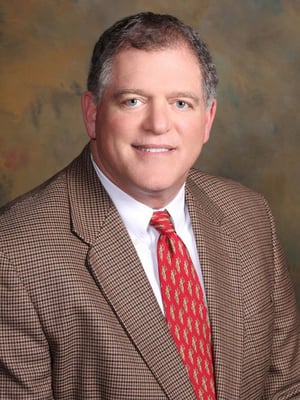
Jan 02, 2015
Maryland Governor Will Commute Sentences of Remaining Death Row Inmates
On December 31, 2014, Maryland Governor Martin O’Malley announced he will commute the sentences of the four men remaining on the state’s death row to life without parole. O’Malley signed Maryland’s death penalty repeal bill into law in 2013, but the repeal was not retroactive. In a statement, O’Malley said, “Recent appeals and the latest opinion on this matter by Maryland’s Attorney General have called into question the legality of carrying out earlier death sentences — sentences imposed prior…
Read More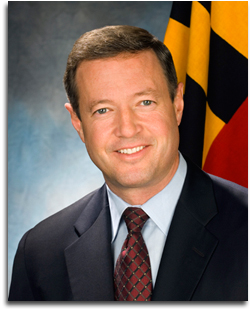
Dec 31, 2014
Sentence Reversals in Intellectual Disability Cases (2002 – 2012)
UPDATE (2015): There have been wide variations among states in exempting defendants with intellectual disability from the death penalty. Professor John Blume (l.) of Cornell Law School, along with three co-authors, analyzed claims filed under the Supreme Court’s decision in Atkins v. Virginia (2002) against executing defendants with intellectual disability (formerly, “mental retardation”). Overall, from 2002 through 2013, only about 7.7% (371) of death row inmates or capital defendants have…
Read More
Dec 30, 2014
NEW RESOURCES: Bureau of Justice Statistics Releases “Capital Punishment, 2013”
On December 19, the Bureau of Justice Statistics released its annual statistical report on capital punishment in the United States, with information for 2013. It noted a continuing decline in the death row population and the number of executions. Highlights of the report include: The death row population dropped to 2,979 inmates as of 12/31/13, with 60% held in just 5 states (California, Florida, Texas, Pennsylvania, and Alabama). 2013 was the 13th consecutive year in which the population of…
Read More
Dec 29, 2014
INTERNATIONAL: United Nations Passes Death Penalty Moratorium Resolution With Record Support
On December 18, the United Nations voted to adopt a resolution calling for a global moratorium on the death penalty, with an eye toward abolition. A record high 117 countries voted in favor of the resolution. The United States was one of just 38 nations that opposed it, and 34 nations abstained. Two years ago, a similar resolution passed with 111 “yes” votes. This year’s resolution also urged those countries that still carry out executions not to execute juveniles, pregnant women, or people…
Read More