Publications & Testimony
Testimony and Statements on the Death Penalty
FROM DPIC
For testimony by former Executive Director Robert Dunham and former Executive Director Richard C. Dieter, please visit our page DPIC Testimony.
FROM RELIGIOUS LEADERS AND ORGANIZATIONS
- News Brief: Pope Francis Calls for Prayer to Abolish the Death Penalty (September 1, 2022)
- Jewish Congregation Renews Request for Department of Justice to Drop Death Penalty in Tree of Life Synagogue Killings (June 24, 2021)
- Orthodox Church Patriarch Calls Death Penalty Incompatible with Christian Beliefs (October 20, 2020)
- Presbyterian Church (U.S.A.) — Statement on the Federal Death Penalty (August 5, 2019)
- Louisiana Christian Faith Leaders Call for State to Abolish Death Penalty (April 25, 2019)
- Pittsburgh Rabbi’s Wife Opposes Death Penalty for Tree of Life Synagogue Killings (March 18, 2019)
- Orthodox Jewish Organization Calls for an End to Capital Punishment in the U.S. | Death Penalty Information Center (February 17, 2016)
- Baptist Theologian Says Death Penalty Does Not Fit With Christian Theology (March 8, 2016)
- Civil and Human Rights: Death Penalty — Church & Society, The United Methodist Church
- Religious Views: Over 150 Catholic Theologians Call for Repeal of the Death Penalty (September 27, 2011)
- Power Over Life and Death — The Power to Save a Life (January 15, 2005)
- Responsibility, Rehabilitation, and Restoration: A Catholic Perspective on Crime and Criminal Justice (November 2000)
- The Challenge of Holiness: A Sermon on the Death Penalty (January 10, 2000)
- General Assembly of the Texas Conference of Churches — Resolution Opposing the Death Penalty (February 24, 1998)
- Statement by Catholic Bishops of Texas on Capital Punishment (October 20, 1997)
- Catholic Church Expresses Strong Opposition to Capital Punishment in Catechism (September 9, 1997)
- Catholic Bishops of Iowa Issue Statement on Death Penalty (February 4, 1998)
- To End the Death Penalty: A Report of the National Jewish/Catholic Consultation
- Transcript of Dr. Pat Robertson’s Speech on the Role of Religion and the Death Penalty at The College of William and Mary
- Collection of Official Catholic Statements on the Death Penalty (1980)
FROM THE INTERNATIONAL COMMUNITY
- UN experts call for universal abolition of the death penalty | OHCHR (October 9, 2023)
- Zambia Becomes 25th Sub-Saharan African Nation to Abolish Death Penalty (December 23, 2022)
- Belgium Wants a World Without the Death Penalty (October 20, 2022)
- As France Prepares to Assume Presidency of European Union, Emmanuel Macron Announces Initiative for Worldwide Abolition of Death Penalty (October 11, 2021)
- U.N. Secretary-General, European Union Ambassador Call for Abolition of “Barbaric” Death Penalty (October 11, 2017)
- European Union Calls for Abolition of Capital Punishment as World Coalition Hosts International Death Penalty Conference (June 27, 2017)
- U.N. Investigator Talks About the Future of Solitary and the Death Penalty (November 7, 2016)
- World Congress Against the Death Penalty Renews Call for Global Moratorium, Pope Sends Message of Support (June 27, 2016)
- Declaration by the Presidency on behalf of the European Union on the 400th execution in Texas from the Council of the European Union (August 21, 2007)
- Resolution Supporting Worldwide Moratorium on Executions from the United Nations Commission on Human Rights (April 1999)
- Mary Robinson, U.N. High Commissioner for Human Rights — Message to the Press Conference organized by the Death Penalty Information Center for the release of the report, “International Perspectives on the Death Penalty” (October 12, 1999)
- Status of the International Covenants on Human Rights from the United Nations Commission on Human Rights (April 1998)
FROM ADVOCACY GROUPS
- Advocacy Group Tells Supreme Court that Negative Stereotypes Distort Perception that Latinos in Death-Penalty Cases Pose Future Danger to Society (April 15, 2022)
- Disability Rights Groups, Legal Experts, and Conservative Advocates Urge Supreme Court to Strike Down Georgia’s Uniquely Harsh Proof Requirements in Death-Penalty Intellectual Disabilities Cases (January 11, 2022)
- NAACP Reaffirms Its Support of Abolishing the Death Penalty (2022)
- More Than 80 Civil Rights and Advocacy Organizations Urge President Biden to End Federal Executions | Death Penalty Information Center (February 9, 2021)
- More Than 250 Conservative Leaders Join Call to End Death Penalty (October 29, 2019)
- National Alliance on Mental Illness: The Death Penalty
- Florida League of Women Voters Calls for Halt to Executions (May 28, 2007)
- Victims Organizations Issue Joint Statement for National Victims’ Rights Week (April 19, 2007)
FROM JUDGES, LEGISLATORS, AND OTHER ORGANIZATIONS
- Republican-led Oklahoma committee considers pause on executions amid death case scrutiny (October 5, 2023)
- Former Pro-Death Penalty District Attorney Explains Why He Now Supports Abolition, and Fears Political Promises to Expand the Use of the Death Penalty (August 20, 2023)
- Pressley, Durbin Reintroduce Bill to End the Federal Death Penalty (July 13, 2023)
- The Lancet Editorial: Physician Involvement in Executions Violates Medical Ethics | Death Penalty Information Center (May 20, 2023)
- APA calls for extending ineligibility for the death penalty to adolescent offenders younger than age 21 (August 4, 2022)
- Why some Republicans are turning against the death penalty | Ron Ferguson | Ohio House of Representatives (March 8, 2022)
- Eight years on Texas’ highest criminal court turned Elsa Alcala into a death penalty skeptic. How will the court change without her? (January 26, 2019)
- AMA to Supreme Court: Doctor participation in executions unethical (August 22, 2018)
- Former Governor Bill Richardson: Death Penalty Is Bad for Business, Out of Step With World’s Views (June 16, 2017)
- Capital Punishment and Nurses’ Participation in Capital Punishment (2016)
- Former Ohio Attorney General Jim Petro Says Death Penalty Unfixable, “Not Worth It Any More” (September 12, 2016)
- Resolution Supporting Repeal of the Death Penalty, National Hispanic Caucus of State Legislators (August 11, 2016)
- Retired Police Captain Says Repealing Death Penalty Is “Smart on Crime” (November 24, 2014)
- Resolution Supporting Abolition of the Death Penalty, Natl. Assoc. of Black Psychologists (2012)
- The Road to Justice and Peace by New Jersey State Senator Raymond Lesniak (February 1, 2009)
- Statement On The Federal Death Penalty System by Senator Feingold (June 7, 2001)
- Statement on the Need for a Federal Moratorium on the Death Penalty Senator Feingold (October 29, 2000)
- Death Penalty: The Torah and Today (August 23, 2000)
- Press Release for Senator Russ Feingold’s Introduction of Senate’s First Death Penalty Moratorium Bill (April 20, 2000)
- Amnesty International Southern Regional Conference: Orlando, Florida Remarks by Former Florida Chief Justice Gerald Kogan (October 23, 1999)
- American Bar Association Resolution on the Death Penalty (February 3, 1997)
FROM MURDER VICTIMS’ FAMILY MEMBERS
Items: 3251 — 3260
Aug 08, 2014
STUDIES: Arbitrariness in Connecticut Death Sentences
A newly published study by Professor John Donohue of Stanford Law School found that arbitrary factors, including race and geography, significantly affected death sentencing decisions in Connecticut. While controlling for a variety of factors related to the severity of the crime, the study’s abstract indicated that “[M]inority defendants who kill white victims are capitally charged at substantially higher rates than minority defendants who kill minorities, [and] that geography influences both…
Read More
Aug 07, 2014
NEW VOICES: Former State Health Official Warns of More Botched Executions
Dr. Marc Stern, the former assistant secretary of healthcare for the Washington Department of Corrections, recently commented on physician participation in executions in the wake of the botched lethal injections in Oklahoma and Arizona. Dr. Stern resigned rather than cooperate with his state’s execution plan. He explained his views, “Although its foundation is in medical science, lethal injection is not a medical procedure: it has no therapeutic value, and it is not taught in medical school. A…
Read More
Aug 06, 2014
Kentucky Holds First Public Hearing on Future of Death Penalty
A joint committee of 32 senators and representatives held the first public hearing on Kentucky’s death penalty since capital punishment was reinstated there in 1975. The hearing was prompted by a death penalty repeal bill proposed by Republican Rep. David Floyd, who said the death penalty should be ended because of the cost and time it takes for cases to complete the appeals process. He was also concerned about the number of death penalty cases that have been overturned. A 2011 study by the…
Read More
Aug 05, 2014
Arizona Repeated Execution Protocol 15 Times Before Inmate Died
On August 1, the Arizona Department of Corrections (DOC) released 330 pages of documents related to the execution of Joseph Wood on July 23. Although not a report on why the execution took nearly 2 hours to complete, the documents reveal that Wood was injected with 15 consecutive doses (50 mg each) of midazolam and hydromorphone, far more than indicated in the state’s protocol. Dale Baich, an attorney for Wood, said, “The Arizona execution protocol explicitly states that a prisoner will be…
Read More
Aug 04, 2014
INNOCENCE: New Evidence Supports Case That Texas Executed an Innocent Man
Cameron Todd Willingham was executed in Texas in 2004. His conviction was based largely on forensic evidence of arson that both prosecutors and defense attorneys now agree was seriously flawed. Prosecutors have maintained that other evidence pointed towards Willingham’s guilt, especially the testimony of a jailhouse informant who said Willingham confessed to the crime of murdering his children. Now according to an investigative article by Maurice Possley for the Marshall Project and published…
Read More
Aug 01, 2014
NEW VOICES: Attorney General Criticizes Secrecy in Lethal Injections
On July 31, U.S. Attorney General Eric Holder spoke about the death penalty review underway at the Department of Justice and the need for greater transparency in lethal injection methods. Holder said he was “greatly troubled” by the recent botched executions, adding that states should provide more information about the drugs they plan to use. He said, “[F]or the state to exercise that greatest of all powers, to end a human life, it seems to me… that transparency would be a good thing, and to…
Read More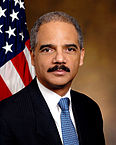
Aug 01, 2014
United States Supreme Court Decisions: 2013 – 2014 Term
Cert. granted October 21, 2013 Argument Mar. 3, 2014 Decided May 27, 2014 The Court agreed to hear Hall v. Florida (No. 12 – 10882) to determine whether the Florida Supreme Court properly upheld the death sentence of a man whose IQ is just above the state’s standard for mental retardation. According to Florida’s law, defendants with an IQ of 70 or above cannot be considered intellectually disabled, even though most states use a broader definition and IQ tests involve a margin of error. Freddie…
Read MoreJul 31, 2014
STUDIES: ‘Volunteers’ for Execution
A new study by Prof. Meredith Martin Rountree of Northwestern University Law School examined the characteristics of Texas death row inmates who waived all or part of their normal appeals, thus hastening their execution. Referring to these inmates as “volunteers,” she compared them with similarly-situated inmates who did not waive their appeals. She found that more volunteers experienced depression or had attempted suicide than non-volunteers. She also examined the role of “self-blame” in…
Read More
Jul 30, 2014
Alabama Stands Alone in Judges Imposing Death When Juries Say Life
Alabama is the only state that in which judges regularly impose death sentences even after a jury recommends a life sentence. Death row inmate Courtney Lockhart has asked the Alabama Supreme Court to reconsider his sentence imposed as a result of this unique process. Lockhart was convicted of capital murder in 2010. The jury unanimously found that his post-traumatic stress disorder, resulting from his military service in Iraq, was sufficiently mitigating to recommend a sentence of life without…
Read More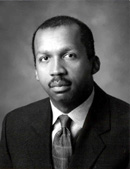
Jul 29, 2014
Leading Medical Experts Contradict Arizona’s Description of Execution
Although Arizona officials have claimed that Joseph Wood was “brain dead” during his two-hour execution on July 23, prominent medical experts from around the country strongly disagreed. David Waisel, associate professor of anaesthesia at Harvard medical school, said a person who is brain dead will stop breathing unless kept alive on a ventilator. “There is no way anyone could ever look at someone and make that kind of diagnosis. He was still breathing, so he was not brain dead. This is an…
Read More