Publications & Testimony
Testimony and Statements on the Death Penalty
FROM DPIC
For testimony by former Executive Director Robert Dunham and former Executive Director Richard C. Dieter, please visit our page DPIC Testimony.
FROM RELIGIOUS LEADERS AND ORGANIZATIONS
- News Brief: Pope Francis Calls for Prayer to Abolish the Death Penalty (September 1, 2022)
- Jewish Congregation Renews Request for Department of Justice to Drop Death Penalty in Tree of Life Synagogue Killings (June 24, 2021)
- Orthodox Church Patriarch Calls Death Penalty Incompatible with Christian Beliefs (October 20, 2020)
- Presbyterian Church (U.S.A.) — Statement on the Federal Death Penalty (August 5, 2019)
- Louisiana Christian Faith Leaders Call for State to Abolish Death Penalty (April 25, 2019)
- Pittsburgh Rabbi’s Wife Opposes Death Penalty for Tree of Life Synagogue Killings (March 18, 2019)
- Orthodox Jewish Organization Calls for an End to Capital Punishment in the U.S. | Death Penalty Information Center (February 17, 2016)
- Baptist Theologian Says Death Penalty Does Not Fit With Christian Theology (March 8, 2016)
- Civil and Human Rights: Death Penalty — Church & Society, The United Methodist Church
- Religious Views: Over 150 Catholic Theologians Call for Repeal of the Death Penalty (September 27, 2011)
- Power Over Life and Death — The Power to Save a Life (January 15, 2005)
- Responsibility, Rehabilitation, and Restoration: A Catholic Perspective on Crime and Criminal Justice (November 2000)
- The Challenge of Holiness: A Sermon on the Death Penalty (January 10, 2000)
- General Assembly of the Texas Conference of Churches — Resolution Opposing the Death Penalty (February 24, 1998)
- Statement by Catholic Bishops of Texas on Capital Punishment (October 20, 1997)
- Catholic Church Expresses Strong Opposition to Capital Punishment in Catechism (September 9, 1997)
- Catholic Bishops of Iowa Issue Statement on Death Penalty (February 4, 1998)
- To End the Death Penalty: A Report of the National Jewish/Catholic Consultation
- Transcript of Dr. Pat Robertson’s Speech on the Role of Religion and the Death Penalty at The College of William and Mary
- Collection of Official Catholic Statements on the Death Penalty (1980)
FROM THE INTERNATIONAL COMMUNITY
- UN experts call for universal abolition of the death penalty | OHCHR (October 9, 2023)
- Zambia Becomes 25th Sub-Saharan African Nation to Abolish Death Penalty (December 23, 2022)
- Belgium Wants a World Without the Death Penalty (October 20, 2022)
- As France Prepares to Assume Presidency of European Union, Emmanuel Macron Announces Initiative for Worldwide Abolition of Death Penalty (October 11, 2021)
- U.N. Secretary-General, European Union Ambassador Call for Abolition of “Barbaric” Death Penalty (October 11, 2017)
- European Union Calls for Abolition of Capital Punishment as World Coalition Hosts International Death Penalty Conference (June 27, 2017)
- U.N. Investigator Talks About the Future of Solitary and the Death Penalty (November 7, 2016)
- World Congress Against the Death Penalty Renews Call for Global Moratorium, Pope Sends Message of Support (June 27, 2016)
- Declaration by the Presidency on behalf of the European Union on the 400th execution in Texas from the Council of the European Union (August 21, 2007)
- Resolution Supporting Worldwide Moratorium on Executions from the United Nations Commission on Human Rights (April 1999)
- Mary Robinson, U.N. High Commissioner for Human Rights — Message to the Press Conference organized by the Death Penalty Information Center for the release of the report, “International Perspectives on the Death Penalty” (October 12, 1999)
- Status of the International Covenants on Human Rights from the United Nations Commission on Human Rights (April 1998)
FROM ADVOCACY GROUPS
- Advocacy Group Tells Supreme Court that Negative Stereotypes Distort Perception that Latinos in Death-Penalty Cases Pose Future Danger to Society (April 15, 2022)
- Disability Rights Groups, Legal Experts, and Conservative Advocates Urge Supreme Court to Strike Down Georgia’s Uniquely Harsh Proof Requirements in Death-Penalty Intellectual Disabilities Cases (January 11, 2022)
- NAACP Reaffirms Its Support of Abolishing the Death Penalty (2022)
- More Than 80 Civil Rights and Advocacy Organizations Urge President Biden to End Federal Executions | Death Penalty Information Center (February 9, 2021)
- More Than 250 Conservative Leaders Join Call to End Death Penalty (October 29, 2019)
- National Alliance on Mental Illness: The Death Penalty
- Florida League of Women Voters Calls for Halt to Executions (May 28, 2007)
- Victims Organizations Issue Joint Statement for National Victims’ Rights Week (April 19, 2007)
FROM JUDGES, LEGISLATORS, AND OTHER ORGANIZATIONS
- Republican-led Oklahoma committee considers pause on executions amid death case scrutiny (October 5, 2023)
- Former Pro-Death Penalty District Attorney Explains Why He Now Supports Abolition, and Fears Political Promises to Expand the Use of the Death Penalty (August 20, 2023)
- Pressley, Durbin Reintroduce Bill to End the Federal Death Penalty (July 13, 2023)
- The Lancet Editorial: Physician Involvement in Executions Violates Medical Ethics | Death Penalty Information Center (May 20, 2023)
- APA calls for extending ineligibility for the death penalty to adolescent offenders younger than age 21 (August 4, 2022)
- Why some Republicans are turning against the death penalty | Ron Ferguson | Ohio House of Representatives (March 8, 2022)
- Eight years on Texas’ highest criminal court turned Elsa Alcala into a death penalty skeptic. How will the court change without her? (January 26, 2019)
- AMA to Supreme Court: Doctor participation in executions unethical (August 22, 2018)
- Former Governor Bill Richardson: Death Penalty Is Bad for Business, Out of Step With World’s Views (June 16, 2017)
- Capital Punishment and Nurses’ Participation in Capital Punishment (2016)
- Former Ohio Attorney General Jim Petro Says Death Penalty Unfixable, “Not Worth It Any More” (September 12, 2016)
- Resolution Supporting Repeal of the Death Penalty, National Hispanic Caucus of State Legislators (August 11, 2016)
- Retired Police Captain Says Repealing Death Penalty Is “Smart on Crime” (November 24, 2014)
- Resolution Supporting Abolition of the Death Penalty, Natl. Assoc. of Black Psychologists (2012)
- The Road to Justice and Peace by New Jersey State Senator Raymond Lesniak (February 1, 2009)
- Statement On The Federal Death Penalty System by Senator Feingold (June 7, 2001)
- Statement on the Need for a Federal Moratorium on the Death Penalty Senator Feingold (October 29, 2000)
- Death Penalty: The Torah and Today (August 23, 2000)
- Press Release for Senator Russ Feingold’s Introduction of Senate’s First Death Penalty Moratorium Bill (April 20, 2000)
- Amnesty International Southern Regional Conference: Orlando, Florida Remarks by Former Florida Chief Justice Gerald Kogan (October 23, 1999)
- American Bar Association Resolution on the Death Penalty (February 3, 1997)
FROM MURDER VICTIMS’ FAMILY MEMBERS
Items: 3301 — 3310
May 29, 2014
Georgia Supreme Court Upholds Lethal Injection Secrecy
In a 5 – 2 ruling issued on May 19, the Georgia Supreme Court upheld the state’s law that hides the source and the identity of the preparer of drugs and equipment used in executions. The court said, “We conclude that Georgia’s execution process is likely made more timely and orderly by the execution-participant confidentiality statute….” The ruling lifted the stay of execution that was in place for Warren Hill, whose lawyers challenged the law. In a dissent, Justice Robert Benham referenced the…
Read More
May 28, 2014
BOOKS: “I Am Troy Davis”
I Am Troy Davis is a recent book by Jen Marlowe and Troy Davis’ sister, Martina Davis-Correia, that tells the story of a possibly innocent man who was executed in Georgia in 2011. Troy Davis was sentenced to death for the murder of a police officer in Savannah. Years later evidence casting doubts about his guilt emerged, including recantations from several of the witnesses who had testified against him. Pope Benedict XVI, President Jimmy Carter, and 51 members of Congress petitioned for his…
Read More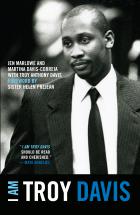
May 27, 2014
Supreme Court Strikes Down Florida’s Strict IQ Cutoff for Death Penalty
On May 27, the U.S. Supreme Court held in Hall v. Florida that Florida’s strict IQ cutoff for determining intellectual disability in capital cases is unconstitutional. The Court concluded, “Florida’s law contravenes our Nation’s commitment to dignity and its duty to teach human decency as the mark of a civilized world.” In 2002, the Court banned the execution of people with “mental retardation,” but allowed states leeway in selecting a process for determining who would qualify for that…
Read More
May 23, 2014
Tennessee Governor Signs Forced Electrocution Bill
On May 22, Tennessee Gov. Bill Haslam signed into law a bill that will allow the state to use the electric chair in executions if lethal injection drugs are not available. While seven states, including Tennessee, allow inmates to choose the electric chair as their method of execution, no other state forces inmates to be executed by that method. Defense attorney David Raybin, who helped draft Tennessee’s death penalty law in the 1970s, said that changing the execution method retroactively would…
Read More
May 22, 2014
NEW RESOURCES: BJS Releases “Capital Punishment, 2012”
The Bureau of Justice Statistics recently issued a new report, “Capital Punishment, 2012,” analyzing the use of the death penalty in that year and revealing overall trends since the death penalty was reinstated. The report noted that 2012 was “the twelfth consecutive year in which the number of inmates under sentence of death decreased.” Among the statistics not reported elsewhere, BJS noted that the time between sentencing and execution in 2012 was 15.8 years. The average time for all…
Read More
May 21, 2014
Execution of Inmate with Unique Medical Condition Stayed by Supreme Court
UPDATE: The U.S. Supreme Court issued a stay of execution, pending the outcome of a review by the U.S. Court of Appeals for the 8th Circuit. The Court further noted: “We leave for further consideration in the lower courts whether an evidentiary hearing is necessary.” Earlier: On May 20, just hours before a scheduled execution in Missouri, the U.S. Supreme Court, acting through Justice Samuel Alito, granted a temporary stay to Russell Bucklew. Bucklew has a congenital medical condition that…
Read More
May 20, 2014
Ohio Residents Support Life Sentences Over Death Penalty
A recent poll by Quinnipiac University found that Ohioans support life sentences over the death penalty for people convicted of murder. A total of 49% of respondents chose sentences of life without parole (40%) or life with parole (9%), compared to just 43% who chose the death penalty. The survey also showed a 4‑point drop in death penalty support in just the last three months. In February, 47% of respondents said they preferred the death penalty. Death penalty support was much lower among…
Read More
May 19, 2014
News Organizations File Suit to Obtain Execution Drug Information
On May 15, the Associated Press and four other media organizations filed suit against the state of Missouri, asking a state court to order the Department of Corrections (DOC) to release information about the source of its lethal injection drugs. Under Missouri law, the identity of the “execution team” is secret, and the DOC has interpreted the drug supplier to be a part of that team. The other four news organizations are the Guardian‑U.S., the St. Louis Post-Dispatch, the Kansas City Star, and…
Read More
May 16, 2014
NEW VOICES: Oliver North — Long-Time Opponent of the Death Penalty
Oliver North, a former Marine and noted conservative leader, has opposed the death penalty for many years. In a recent interview, he said, “I’m a ‘law and order’ guy. Don’t get me wrong. Individuals need to be held accountable…but I have always felt… and always said that there are very serious questions about the justice of the death penalty. Just a few months ago, a man (Glenn Ford) who was on death row for thirty years was found to be innocent.” When North ran for U.S. Senate in Virginia in…
Read More
May 15, 2014
BOOKS: “Gruesome Spectacles” Reveals the History of Botched Executions
A new book, Gruesome Spectacles: Botched Executions and America’s Death Penalty, describes the history of flawed executions in the U.S. from 1890 to 2010. During that period, 8,776 people were executed and 276 of those executions went wrong in some way. Of all the methods used, lethal injection had the highest rate of botched executions — about 7%. Austin Sarat, the author of the book and a professor of jurisprudence and political science at Amherst College, described the evolution of new methods…
Read More