Publications & Testimony
Testimony and Statements on the Death Penalty
FROM DPIC
For testimony by former Executive Director Robert Dunham and former Executive Director Richard C. Dieter, please visit our page DPIC Testimony.
FROM RELIGIOUS LEADERS AND ORGANIZATIONS
- News Brief: Pope Francis Calls for Prayer to Abolish the Death Penalty (September 1, 2022)
- Jewish Congregation Renews Request for Department of Justice to Drop Death Penalty in Tree of Life Synagogue Killings (June 24, 2021)
- Orthodox Church Patriarch Calls Death Penalty Incompatible with Christian Beliefs (October 20, 2020)
- Presbyterian Church (U.S.A.) — Statement on the Federal Death Penalty (August 5, 2019)
- Louisiana Christian Faith Leaders Call for State to Abolish Death Penalty (April 25, 2019)
- Pittsburgh Rabbi’s Wife Opposes Death Penalty for Tree of Life Synagogue Killings (March 18, 2019)
- Orthodox Jewish Organization Calls for an End to Capital Punishment in the U.S. | Death Penalty Information Center (February 17, 2016)
- Baptist Theologian Says Death Penalty Does Not Fit With Christian Theology (March 8, 2016)
- Civil and Human Rights: Death Penalty — Church & Society, The United Methodist Church
- Religious Views: Over 150 Catholic Theologians Call for Repeal of the Death Penalty (September 27, 2011)
- Power Over Life and Death — The Power to Save a Life (January 15, 2005)
- Responsibility, Rehabilitation, and Restoration: A Catholic Perspective on Crime and Criminal Justice (November 2000)
- The Challenge of Holiness: A Sermon on the Death Penalty (January 10, 2000)
- General Assembly of the Texas Conference of Churches — Resolution Opposing the Death Penalty (February 24, 1998)
- Statement by Catholic Bishops of Texas on Capital Punishment (October 20, 1997)
- Catholic Church Expresses Strong Opposition to Capital Punishment in Catechism (September 9, 1997)
- Catholic Bishops of Iowa Issue Statement on Death Penalty (February 4, 1998)
- To End the Death Penalty: A Report of the National Jewish/Catholic Consultation
- Transcript of Dr. Pat Robertson’s Speech on the Role of Religion and the Death Penalty at The College of William and Mary
- Collection of Official Catholic Statements on the Death Penalty (1980)
FROM THE INTERNATIONAL COMMUNITY
- UN experts call for universal abolition of the death penalty | OHCHR (October 9, 2023)
- Zambia Becomes 25th Sub-Saharan African Nation to Abolish Death Penalty (December 23, 2022)
- Belgium Wants a World Without the Death Penalty (October 20, 2022)
- As France Prepares to Assume Presidency of European Union, Emmanuel Macron Announces Initiative for Worldwide Abolition of Death Penalty (October 11, 2021)
- U.N. Secretary-General, European Union Ambassador Call for Abolition of “Barbaric” Death Penalty (October 11, 2017)
- European Union Calls for Abolition of Capital Punishment as World Coalition Hosts International Death Penalty Conference (June 27, 2017)
- U.N. Investigator Talks About the Future of Solitary and the Death Penalty (November 7, 2016)
- World Congress Against the Death Penalty Renews Call for Global Moratorium, Pope Sends Message of Support (June 27, 2016)
- Declaration by the Presidency on behalf of the European Union on the 400th execution in Texas from the Council of the European Union (August 21, 2007)
- Resolution Supporting Worldwide Moratorium on Executions from the United Nations Commission on Human Rights (April 1999)
- Mary Robinson, U.N. High Commissioner for Human Rights — Message to the Press Conference organized by the Death Penalty Information Center for the release of the report, “International Perspectives on the Death Penalty” (October 12, 1999)
- Status of the International Covenants on Human Rights from the United Nations Commission on Human Rights (April 1998)
FROM ADVOCACY GROUPS
- Advocacy Group Tells Supreme Court that Negative Stereotypes Distort Perception that Latinos in Death-Penalty Cases Pose Future Danger to Society (April 15, 2022)
- Disability Rights Groups, Legal Experts, and Conservative Advocates Urge Supreme Court to Strike Down Georgia’s Uniquely Harsh Proof Requirements in Death-Penalty Intellectual Disabilities Cases (January 11, 2022)
- NAACP Reaffirms Its Support of Abolishing the Death Penalty (2022)
- More Than 80 Civil Rights and Advocacy Organizations Urge President Biden to End Federal Executions | Death Penalty Information Center (February 9, 2021)
- More Than 250 Conservative Leaders Join Call to End Death Penalty (October 29, 2019)
- National Alliance on Mental Illness: The Death Penalty
- Florida League of Women Voters Calls for Halt to Executions (May 28, 2007)
- Victims Organizations Issue Joint Statement for National Victims’ Rights Week (April 19, 2007)
FROM JUDGES, LEGISLATORS, AND OTHER ORGANIZATIONS
- Republican-led Oklahoma committee considers pause on executions amid death case scrutiny (October 5, 2023)
- Former Pro-Death Penalty District Attorney Explains Why He Now Supports Abolition, and Fears Political Promises to Expand the Use of the Death Penalty (August 20, 2023)
- Pressley, Durbin Reintroduce Bill to End the Federal Death Penalty (July 13, 2023)
- The Lancet Editorial: Physician Involvement in Executions Violates Medical Ethics | Death Penalty Information Center (May 20, 2023)
- APA calls for extending ineligibility for the death penalty to adolescent offenders younger than age 21 (August 4, 2022)
- Why some Republicans are turning against the death penalty | Ron Ferguson | Ohio House of Representatives (March 8, 2022)
- Eight years on Texas’ highest criminal court turned Elsa Alcala into a death penalty skeptic. How will the court change without her? (January 26, 2019)
- AMA to Supreme Court: Doctor participation in executions unethical (August 22, 2018)
- Former Governor Bill Richardson: Death Penalty Is Bad for Business, Out of Step With World’s Views (June 16, 2017)
- Capital Punishment and Nurses’ Participation in Capital Punishment (2016)
- Former Ohio Attorney General Jim Petro Says Death Penalty Unfixable, “Not Worth It Any More” (September 12, 2016)
- Resolution Supporting Repeal of the Death Penalty, National Hispanic Caucus of State Legislators (August 11, 2016)
- Retired Police Captain Says Repealing Death Penalty Is “Smart on Crime” (November 24, 2014)
- Resolution Supporting Abolition of the Death Penalty, Natl. Assoc. of Black Psychologists (2012)
- The Road to Justice and Peace by New Jersey State Senator Raymond Lesniak (February 1, 2009)
- Statement On The Federal Death Penalty System by Senator Feingold (June 7, 2001)
- Statement on the Need for a Federal Moratorium on the Death Penalty Senator Feingold (October 29, 2000)
- Death Penalty: The Torah and Today (August 23, 2000)
- Press Release for Senator Russ Feingold’s Introduction of Senate’s First Death Penalty Moratorium Bill (April 20, 2000)
- Amnesty International Southern Regional Conference: Orlando, Florida Remarks by Former Florida Chief Justice Gerald Kogan (October 23, 1999)
- American Bar Association Resolution on the Death Penalty (February 3, 1997)
FROM MURDER VICTIMS’ FAMILY MEMBERS
Items: 3351 — 3360
Mar 25, 2014
Supreme Court to Review Death Penalty Case Involving Ineffective Representation
On March 24, the U.S. Supreme Court agreed to hear arguments in Jennings v. Stephens (No. 13 – 7211), a Texas death penalty case involving ineffectiveness of counsel. In his request for federal relief from his death sentence, Robert Jennings cited three instances in which his trial lawyers failed to adequately represent him. A U.S. District Court granted him relief on two of those claims (including failure to present evidence of his mental problems), while denying the third (his own lawyers told…
Read More
Mar 24, 2014
BOOKS: Quest for Justice — Defending the Damned
In his book, “Quest for Justice: Defending the Damned,” Richard Jaffe explores the problems of the American death penalty system through his experience as a capital defense attorney in Alabama. During the past twenty years, Jaffe has helped secure the release of three death row inmates: Randall Padgett and Gary Drinkard, who were fully exonerated, and James Cochran, who was cleared of murder charges, but pleaded guilty to a related robbery charge. In his book, Jaffe wrote, “I always keep in…
Read More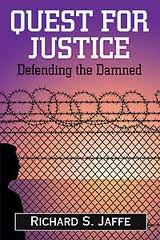
Mar 21, 2014
EDITORIALS: Mississippi Paper Calls Pending Execution “Gravely Inhumane”
A recent editorial in the Jackson Free Press in Mississippi called for a halt to the scheduled execution of Michelle Byrom, saying she is “clearly not guilty of the crime for which the state plans to execute her next week.” The editorial noted that Byrom’s son had confessed to the crime four times.” He said the story he originally told sheriffs implicating his mother was made up because he was “scared, confused and high” when he was interrogated. The paper pointed to mitigating evidence about…
Read More
Mar 20, 2014
Doubts of Culpability Surround Upcoming Execution in Mississippi
Michelle Byrom is scheduled to be executed in Mississippi on March 27 for conspiring to murder her husband, Edward Byrom, Sr. Her son, Edward Byrom, Jr., known as Junior, confessed to the crime on multiple occasions, and wrote that he lied when he told police his mother and a friend were involved. “I was so scared, confused, and high, I just started spitting the first thought out, which turned in to this big conspiracy thing, for money, which was all BS, that’s why I had so many different…
Read More
Mar 19, 2014
COSTS: Idaho Study Finds Death Penalty Cases Are Rare, Lengthy, & Costly
A new, but limited, study of the costs of the death penalty in Idaho found that capital cases are more costly and take much more time to resolve than non-capital cases. One measure of death-penalty costs was reflected in the time spent by attorneys handling appeals. The State Appellate Public Defenders office spent about 44 times more time on a typical death penalty appeal than on a life sentence appeal (almost 8,000 hours per capital defendant compared to about 180 hours per non-death penalty…
Read More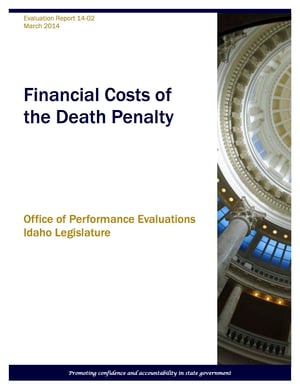
Mar 18, 2014
Oklahoma Unable to Obtain Lethal Injection Drugs for Upcoming Executions
(UPDATE: The executions of Clayton Lockett and Charles Warner were stayed until April 22 and 29 respectively.) Oklahoma does not have the necessary drugs to carry out the upcoming executions of Clayton Lockett and Charles Warner, scheduled for March 20 and 26. According to a brief filed on behalf of the Department of Corrections, the department has made a “Herculean effort” to obtain pentobarbital and vecuronium bromide for the lethal injections, but still lacks a supply of either drug. The…
Read More
Mar 17, 2014
NEW VOICES: Pennsylvania Supreme Court Justice Criticizes Inadequate Representation in Capital Cases
In a lecture at the Widener University School of Law, Pennsylvania Supreme Court Justice Thomas G. Saylor criticized the poor state of death penalty representation in Pennsylvania. He offered numerous cases in which death sentences were overturned because attorneys had failed to present mitigating evidence to the jury. Quoting from a special concurrence he wrote on a capital case involving ineffective assistance of counsel, he said, “Of greatest concern, these sorts of exceptionally costly…
Read More
Mar 14, 2014
Furman v. Georgia Reenactment Raises Questions of Arbitrariness
The Georgia State Bar’s constitutional symposium recently staged a reenactment of Furman v. Georgia, the U.S. Supreme Court case that led to the temporary suspension of the death penalty in 1972. Stephen Bright (pictured), president of the Southern Center for Human Rights, played the role of Anthony Amsterdam, who argued on behalf of death row inmates in two of the four cases that the Court decided in Furman. The roles of the justices were performed by Georgia Supreme Court Chief Justice Hugh…
Read More
Mar 13, 2014
Should State Executions Proceed Under a Veil of Secrecy?
In his Sidebar column in the N.Y. Times, Supreme Court reporter Adam Liptak recently discussed the concerns about states denying death row inmates information about how they will be executed. Liptak highlighted the recent execution of Michael Taylor in Missouri, where the state has made the pharmacy providing the drugs for lethal injection part of its “execution team,” thus obscuring any failings the pharmacy may have. This secretive approach drew criticism from a minority of judges on the U.S.
Read More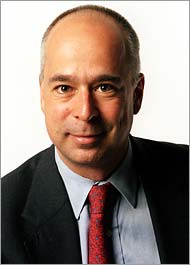
Mar 12, 2014
Efforts Underway to Exonerate 14-Year-Old Executed in South Carolina in 1944
Attorneys representing the family of George Stinney, Jr., recently filed a request for a posthumous exoneration of Mr. Stinney, the youngest person executed in the U.S. in the 20th century. Stinney, an African-American 14-year-old, was executed in 1944 for the murder of two young white girls less than three months after a trial that was filled with errors. Although Clarendon County, South Carolina, where the trial took place, had a population that was 72% black, only whites served on Stinney’s…
Read More