Publications & Testimony
Testimony and Statements on the Death Penalty
FROM DPIC
For testimony by former Executive Director Robert Dunham and former Executive Director Richard C. Dieter, please visit our page DPIC Testimony.
FROM RELIGIOUS LEADERS AND ORGANIZATIONS
- News Brief: Pope Francis Calls for Prayer to Abolish the Death Penalty (September 1, 2022)
- Jewish Congregation Renews Request for Department of Justice to Drop Death Penalty in Tree of Life Synagogue Killings (June 24, 2021)
- Orthodox Church Patriarch Calls Death Penalty Incompatible with Christian Beliefs (October 20, 2020)
- Presbyterian Church (U.S.A.) — Statement on the Federal Death Penalty (August 5, 2019)
- Louisiana Christian Faith Leaders Call for State to Abolish Death Penalty (April 25, 2019)
- Pittsburgh Rabbi’s Wife Opposes Death Penalty for Tree of Life Synagogue Killings (March 18, 2019)
- Orthodox Jewish Organization Calls for an End to Capital Punishment in the U.S. | Death Penalty Information Center (February 17, 2016)
- Baptist Theologian Says Death Penalty Does Not Fit With Christian Theology (March 8, 2016)
- Civil and Human Rights: Death Penalty — Church & Society, The United Methodist Church
- Religious Views: Over 150 Catholic Theologians Call for Repeal of the Death Penalty (September 27, 2011)
- Power Over Life and Death — The Power to Save a Life (January 15, 2005)
- Responsibility, Rehabilitation, and Restoration: A Catholic Perspective on Crime and Criminal Justice (November 2000)
- The Challenge of Holiness: A Sermon on the Death Penalty (January 10, 2000)
- General Assembly of the Texas Conference of Churches — Resolution Opposing the Death Penalty (February 24, 1998)
- Statement by Catholic Bishops of Texas on Capital Punishment (October 20, 1997)
- Catholic Church Expresses Strong Opposition to Capital Punishment in Catechism (September 9, 1997)
- Catholic Bishops of Iowa Issue Statement on Death Penalty (February 4, 1998)
- To End the Death Penalty: A Report of the National Jewish/Catholic Consultation
- Transcript of Dr. Pat Robertson’s Speech on the Role of Religion and the Death Penalty at The College of William and Mary
- Collection of Official Catholic Statements on the Death Penalty (1980)
FROM THE INTERNATIONAL COMMUNITY
- UN experts call for universal abolition of the death penalty | OHCHR (October 9, 2023)
- Zambia Becomes 25th Sub-Saharan African Nation to Abolish Death Penalty (December 23, 2022)
- Belgium Wants a World Without the Death Penalty (October 20, 2022)
- As France Prepares to Assume Presidency of European Union, Emmanuel Macron Announces Initiative for Worldwide Abolition of Death Penalty (October 11, 2021)
- U.N. Secretary-General, European Union Ambassador Call for Abolition of “Barbaric” Death Penalty (October 11, 2017)
- European Union Calls for Abolition of Capital Punishment as World Coalition Hosts International Death Penalty Conference (June 27, 2017)
- U.N. Investigator Talks About the Future of Solitary and the Death Penalty (November 7, 2016)
- World Congress Against the Death Penalty Renews Call for Global Moratorium, Pope Sends Message of Support (June 27, 2016)
- Declaration by the Presidency on behalf of the European Union on the 400th execution in Texas from the Council of the European Union (August 21, 2007)
- Resolution Supporting Worldwide Moratorium on Executions from the United Nations Commission on Human Rights (April 1999)
- Mary Robinson, U.N. High Commissioner for Human Rights — Message to the Press Conference organized by the Death Penalty Information Center for the release of the report, “International Perspectives on the Death Penalty” (October 12, 1999)
- Status of the International Covenants on Human Rights from the United Nations Commission on Human Rights (April 1998)
FROM ADVOCACY GROUPS
- Advocacy Group Tells Supreme Court that Negative Stereotypes Distort Perception that Latinos in Death-Penalty Cases Pose Future Danger to Society (April 15, 2022)
- Disability Rights Groups, Legal Experts, and Conservative Advocates Urge Supreme Court to Strike Down Georgia’s Uniquely Harsh Proof Requirements in Death-Penalty Intellectual Disabilities Cases (January 11, 2022)
- NAACP Reaffirms Its Support of Abolishing the Death Penalty (2022)
- More Than 80 Civil Rights and Advocacy Organizations Urge President Biden to End Federal Executions | Death Penalty Information Center (February 9, 2021)
- More Than 250 Conservative Leaders Join Call to End Death Penalty (October 29, 2019)
- National Alliance on Mental Illness: The Death Penalty
- Florida League of Women Voters Calls for Halt to Executions (May 28, 2007)
- Victims Organizations Issue Joint Statement for National Victims’ Rights Week (April 19, 2007)
FROM JUDGES, LEGISLATORS, AND OTHER ORGANIZATIONS
- Republican-led Oklahoma committee considers pause on executions amid death case scrutiny (October 5, 2023)
- Former Pro-Death Penalty District Attorney Explains Why He Now Supports Abolition, and Fears Political Promises to Expand the Use of the Death Penalty (August 20, 2023)
- Pressley, Durbin Reintroduce Bill to End the Federal Death Penalty (July 13, 2023)
- The Lancet Editorial: Physician Involvement in Executions Violates Medical Ethics | Death Penalty Information Center (May 20, 2023)
- APA calls for extending ineligibility for the death penalty to adolescent offenders younger than age 21 (August 4, 2022)
- Why some Republicans are turning against the death penalty | Ron Ferguson | Ohio House of Representatives (March 8, 2022)
- Eight years on Texas’ highest criminal court turned Elsa Alcala into a death penalty skeptic. How will the court change without her? (January 26, 2019)
- AMA to Supreme Court: Doctor participation in executions unethical (August 22, 2018)
- Former Governor Bill Richardson: Death Penalty Is Bad for Business, Out of Step With World’s Views (June 16, 2017)
- Capital Punishment and Nurses’ Participation in Capital Punishment (2016)
- Former Ohio Attorney General Jim Petro Says Death Penalty Unfixable, “Not Worth It Any More” (September 12, 2016)
- Resolution Supporting Repeal of the Death Penalty, National Hispanic Caucus of State Legislators (August 11, 2016)
- Retired Police Captain Says Repealing Death Penalty Is “Smart on Crime” (November 24, 2014)
- Resolution Supporting Abolition of the Death Penalty, Natl. Assoc. of Black Psychologists (2012)
- The Road to Justice and Peace by New Jersey State Senator Raymond Lesniak (February 1, 2009)
- Statement On The Federal Death Penalty System by Senator Feingold (June 7, 2001)
- Statement on the Need for a Federal Moratorium on the Death Penalty Senator Feingold (October 29, 2000)
- Death Penalty: The Torah and Today (August 23, 2000)
- Press Release for Senator Russ Feingold’s Introduction of Senate’s First Death Penalty Moratorium Bill (April 20, 2000)
- Amnesty International Southern Regional Conference: Orlando, Florida Remarks by Former Florida Chief Justice Gerald Kogan (October 23, 1999)
- American Bar Association Resolution on the Death Penalty (February 3, 1997)
FROM MURDER VICTIMS’ FAMILY MEMBERS
Items: 3381 — 3390
Jan 17, 2014
Problems Arise As Ohio Tries New Execution Procedure
On January 16, Ohio carried out the first lethal injection in the U.S. using a new protocol, resulting in a lengthy and disruptive execution. Ohio employed a back-up procedure to execute Dennis McGuire, using midazolam, a sedative, and hydromorphone, a painkiller. Witnesses to the execution reported that McGuire snorted, gasped, and struggled during the execution, which took longer than usual for death to occur. Deborah Denno, a professor at Fordham Law School and lethal injection expert, said…
Read More
Jan 16, 2014
NEW VOICES: Former Texas Governor Calls for Hearing for Edgar Tamayo
In an op-ed in the Austin American-Statesman, former Texas Governor Mark White called for a new hearing for Edgar Tamayo, a Mexican national scheduled for execution on January 22. Foreign nationals charged with crimes in the U.S. are entitled to assistance from their consulate under the Vienna Convention on Consular Relations, but Tamayo was denied that right. White joins U.S. Secretary of State John Kerry and the Mexican Foreign Minister in calling for hearings to determine whether assistance…
Read More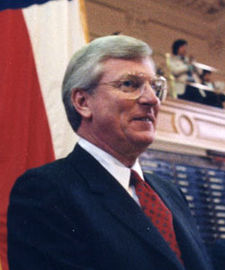
Jan 15, 2014
Preliminary Cost Figures Released as Death Penalty Hearings Approach
The Kansas Judicial Council, an advisory body to the legislature, released preliminary findings on the cost of the death penalty in preparation for legislative hearings on a repeal measure. The council found that state Supreme Court Justices spend 20 times more hours on death penalty appeals than on non-capital appeals; the Department of Corrections spends than twice as much ($49,380 versus $24,690) to house a death-row inmate per year as to house a general-population inmate; and capital cases…
Read More
Jan 14, 2014
NEW VOICES: Retired Judges Support Finding of Racial Bias in North Carolina Death Penalty
Six retired judges in North Carolina urged the the state Supreme Court to uphold the rulings of a lower court that found racial bias in the use of the death peanlty. Former chief justices James Exum and Henry Frye, along with former judges Willis Whichard, Melzer Morgan, Wade Barber and Russell Walker filed a brief in support of inmates whose death sentences were reduced to life without parole in 2012 under the state’s Racial Justice Act. The Act allowed death row inmates to present statistical…
Read More
Jan 13, 2014
EDITORIAL: “Proposal to Speed Up Death Penalty Appeals Troubling”
A recent editorial in the Montgomery Advertiser criticized a proposal by Alabama Attorney General Luther Strange to speed up death penalty appeals. His proposed legislation would require two parts of the appeal process to essentially run concurrently. The editorial cautioned that lack of adequate representation for death penalty defendants would make the accelerated process more problematic. The paper concluded, “Anything that smacks of haste in capital punishment cases is inherently troubling.
Read More
Jan 10, 2014
Federal Court Reviewing Ohio’s Untried Lethal Injection Procedure
On January 10, U.S. District Court Judge Gregory Frost will consider a challenge to an execution procedure in Ohio that has never been used before in the country. Dennis McGuire is scheduled for execution on January 16, and his attorneys are arguing the new drugs could cause a very painful death, saying, “McGuire will experience the agony and terror of air hunger as he struggles to breathe for five minutes after [executioners] intravenously inject him with the execution drugs.” The new lethal…
Read More
Jan 09, 2014
NEW VOICES: Victims’ Family Members Show Opposition to Death Penalty at Colorado Trial
Family members of murder victims gathered outside a courthouse in Castle Rock, Colorado, in support of Robert Autobee, whose son was murdered, but who opposes the death penalty for the perpetrator. Inside the courthouse, jury selection was underway in the trial of Edward Montour, who is accused of murdering correctional officer Eric Autobee (pictured), Robert’s son. Montour originally pleaded guilty and was sentenced to death, but his conviction was overturned, and he has pleaded not guilty by…
Read More
Jan 08, 2014
Boston Bar Association Announces Opposition to Use of Federal Death Penalty
On January 7, the Boston Bar Association, representing more than 10,000 lawyers, released a statement opposing the use of the federal death penalty. The Association already had a longstanding position against the death penalty in state cases. Paul T. Dacier (pictured), the President of the Boston Bar, said, “Without equivocation, the death penalty has no place in the fair administration of justice and makes no sense on a practical level.” The organization’s new stance was based on a review of…
Read More
Jan 07, 2014
Two Defendants from the Same Case Illustrate Inequities in Florida’s Death Penalty
In a recent article in the Atlantic, Marc Bookman compared the path through the justice system of two co-defendants sentenced to death in Florida after committing murder in 1977. Beauford White was electrocuted in 1987, despite his trial jury voting 12 – 0 for a life sentence. The trial judge overrode that recommendation and imposed death. White’s co-defendant, John Ferguson, lived for another 26 years before being executed in 2013. His jury voted 12 – 0 for death. The foreman of White’s jury later…
Read More
Jan 06, 2014
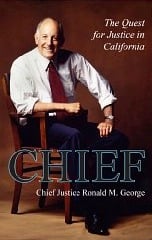
NEW VOICES: Former California Chief Justice Questions Arbitrariness in Death Sentencing
Ronald George is a former Chief Justice of the California Supreme Court, who regularly upheld death sentences. However, in his recent book, Chief: The Quest for Justice in California, he questioned the geographical disparities in the application of the death penalty in the state. In his chapter, “Reforming the Judicial System,” he wrote, “You could have the exact same crime, let’s say a straightforward street robbery homicide, result in the seeking of the death penalty in one part of the state…
Read More