Publications & Testimony
Testimony and Statements on the Death Penalty
FROM DPIC
For testimony by former Executive Director Robert Dunham and former Executive Director Richard C. Dieter, please visit our page DPIC Testimony.
FROM RELIGIOUS LEADERS AND ORGANIZATIONS
- News Brief: Pope Francis Calls for Prayer to Abolish the Death Penalty (September 1, 2022)
- Jewish Congregation Renews Request for Department of Justice to Drop Death Penalty in Tree of Life Synagogue Killings (June 24, 2021)
- Orthodox Church Patriarch Calls Death Penalty Incompatible with Christian Beliefs (October 20, 2020)
- Presbyterian Church (U.S.A.) — Statement on the Federal Death Penalty (August 5, 2019)
- Louisiana Christian Faith Leaders Call for State to Abolish Death Penalty (April 25, 2019)
- Pittsburgh Rabbi’s Wife Opposes Death Penalty for Tree of Life Synagogue Killings (March 18, 2019)
- Orthodox Jewish Organization Calls for an End to Capital Punishment in the U.S. | Death Penalty Information Center (February 17, 2016)
- Baptist Theologian Says Death Penalty Does Not Fit With Christian Theology (March 8, 2016)
- Civil and Human Rights: Death Penalty — Church & Society, The United Methodist Church
- Religious Views: Over 150 Catholic Theologians Call for Repeal of the Death Penalty (September 27, 2011)
- Power Over Life and Death — The Power to Save a Life (January 15, 2005)
- Responsibility, Rehabilitation, and Restoration: A Catholic Perspective on Crime and Criminal Justice (November 2000)
- The Challenge of Holiness: A Sermon on the Death Penalty (January 10, 2000)
- General Assembly of the Texas Conference of Churches — Resolution Opposing the Death Penalty (February 24, 1998)
- Statement by Catholic Bishops of Texas on Capital Punishment (October 20, 1997)
- Catholic Church Expresses Strong Opposition to Capital Punishment in Catechism (September 9, 1997)
- Catholic Bishops of Iowa Issue Statement on Death Penalty (February 4, 1998)
- To End the Death Penalty: A Report of the National Jewish/Catholic Consultation
- Transcript of Dr. Pat Robertson’s Speech on the Role of Religion and the Death Penalty at The College of William and Mary
- Collection of Official Catholic Statements on the Death Penalty (1980)
FROM THE INTERNATIONAL COMMUNITY
- UN experts call for universal abolition of the death penalty | OHCHR (October 9, 2023)
- Zambia Becomes 25th Sub-Saharan African Nation to Abolish Death Penalty (December 23, 2022)
- Belgium Wants a World Without the Death Penalty (October 20, 2022)
- As France Prepares to Assume Presidency of European Union, Emmanuel Macron Announces Initiative for Worldwide Abolition of Death Penalty (October 11, 2021)
- U.N. Secretary-General, European Union Ambassador Call for Abolition of “Barbaric” Death Penalty (October 11, 2017)
- European Union Calls for Abolition of Capital Punishment as World Coalition Hosts International Death Penalty Conference (June 27, 2017)
- U.N. Investigator Talks About the Future of Solitary and the Death Penalty (November 7, 2016)
- World Congress Against the Death Penalty Renews Call for Global Moratorium, Pope Sends Message of Support (June 27, 2016)
- Declaration by the Presidency on behalf of the European Union on the 400th execution in Texas from the Council of the European Union (August 21, 2007)
- Resolution Supporting Worldwide Moratorium on Executions from the United Nations Commission on Human Rights (April 1999)
- Mary Robinson, U.N. High Commissioner for Human Rights — Message to the Press Conference organized by the Death Penalty Information Center for the release of the report, “International Perspectives on the Death Penalty” (October 12, 1999)
- Status of the International Covenants on Human Rights from the United Nations Commission on Human Rights (April 1998)
FROM ADVOCACY GROUPS
- Advocacy Group Tells Supreme Court that Negative Stereotypes Distort Perception that Latinos in Death-Penalty Cases Pose Future Danger to Society (April 15, 2022)
- Disability Rights Groups, Legal Experts, and Conservative Advocates Urge Supreme Court to Strike Down Georgia’s Uniquely Harsh Proof Requirements in Death-Penalty Intellectual Disabilities Cases (January 11, 2022)
- NAACP Reaffirms Its Support of Abolishing the Death Penalty (2022)
- More Than 80 Civil Rights and Advocacy Organizations Urge President Biden to End Federal Executions | Death Penalty Information Center (February 9, 2021)
- More Than 250 Conservative Leaders Join Call to End Death Penalty (October 29, 2019)
- National Alliance on Mental Illness: The Death Penalty
- Florida League of Women Voters Calls for Halt to Executions (May 28, 2007)
- Victims Organizations Issue Joint Statement for National Victims’ Rights Week (April 19, 2007)
FROM JUDGES, LEGISLATORS, AND OTHER ORGANIZATIONS
- Republican-led Oklahoma committee considers pause on executions amid death case scrutiny (October 5, 2023)
- Former Pro-Death Penalty District Attorney Explains Why He Now Supports Abolition, and Fears Political Promises to Expand the Use of the Death Penalty (August 20, 2023)
- Pressley, Durbin Reintroduce Bill to End the Federal Death Penalty (July 13, 2023)
- The Lancet Editorial: Physician Involvement in Executions Violates Medical Ethics | Death Penalty Information Center (May 20, 2023)
- APA calls for extending ineligibility for the death penalty to adolescent offenders younger than age 21 (August 4, 2022)
- Why some Republicans are turning against the death penalty | Ron Ferguson | Ohio House of Representatives (March 8, 2022)
- Eight years on Texas’ highest criminal court turned Elsa Alcala into a death penalty skeptic. How will the court change without her? (January 26, 2019)
- AMA to Supreme Court: Doctor participation in executions unethical (August 22, 2018)
- Former Governor Bill Richardson: Death Penalty Is Bad for Business, Out of Step With World’s Views (June 16, 2017)
- Capital Punishment and Nurses’ Participation in Capital Punishment (2016)
- Former Ohio Attorney General Jim Petro Says Death Penalty Unfixable, “Not Worth It Any More” (September 12, 2016)
- Resolution Supporting Repeal of the Death Penalty, National Hispanic Caucus of State Legislators (August 11, 2016)
- Retired Police Captain Says Repealing Death Penalty Is “Smart on Crime” (November 24, 2014)
- Resolution Supporting Abolition of the Death Penalty, Natl. Assoc. of Black Psychologists (2012)
- The Road to Justice and Peace by New Jersey State Senator Raymond Lesniak (February 1, 2009)
- Statement On The Federal Death Penalty System by Senator Feingold (June 7, 2001)
- Statement on the Need for a Federal Moratorium on the Death Penalty Senator Feingold (October 29, 2000)
- Death Penalty: The Torah and Today (August 23, 2000)
- Press Release for Senator Russ Feingold’s Introduction of Senate’s First Death Penalty Moratorium Bill (April 20, 2000)
- Amnesty International Southern Regional Conference: Orlando, Florida Remarks by Former Florida Chief Justice Gerald Kogan (October 23, 1999)
- American Bar Association Resolution on the Death Penalty (February 3, 1997)
FROM MURDER VICTIMS’ FAMILY MEMBERS
Items: 3761 — 3770
Jul 24, 2012
The Toll of Representing Those on Death Row
Bryan Stevenson, Executive Director of Equal Justice Initiative in Alabama, recently delivered the keynote address at the 30th anniversary celebration of the Open Door Community in Atlanta. Mr. Stevenson discussed how defending those on death row often takes a personal toll on those engaged in this work, even to the point of feeling “broken.” But, he added, “I’ve learned some very basic things, being a broken person. I’ve learned that each person is more than the worst thing they’ve ever done.
Read More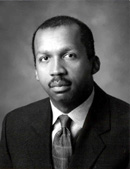
Jul 23, 2012
INNOCENCE: State Supreme Court Takes Lead on Eyewitness Identification Errors
One of the principal causes of wrongful convictions in death penalty cases and other felonies is mistaken eyewitness testimony. On July 19, the New Jersey Supreme Court issued instructions designed to help jurors better evaluate the reliability of eyewitness identifications. A judge is now required to tell jurors before deliberations begin that stress levels, distance, or poor lighting can affect an eyewitness’s ability to make an accurate identification. The new instructions also warn that…
Read More
Jul 20, 2012
LAW REVIEWS: Revisiting the Constitutionality of the Death Penalty
A recent law review article by Professors Carol and Jordan Steiker examines two decades of attempts to regulate capital punishment and concludes that this process may have paved the way to a finding that the death penalty is unconstitutional: “[T]he modern American death penalty — with its unprecedented costs, alternatives, and legal regulatory framework — seems newly vulnerable to judicial invalidation. Reform of the death penalty and its abolition might well be on the same path.” The authors…
Read More
Jul 19, 2012
TIME ON DEATH ROW: “The Faces of Mississippi’s Death Row”
Conditions for the the 50 inmates on Mississippi’s death row are perhaps typical of death rows around the country, but are nevertheless debilitating and cruel. Most inmates spend an average of 12 – 15 years on death row while they proceed through the appeals process, though some have been there longer than 30 years. Death row inmates usually spend 23 hours a day in their cells. Dr. Stuart Grassian, a Harvard psychiatrist who has long studied death row inmates in solitary confinement, described…
Read More
Jul 18, 2012
MENTAL ILLNESS: Still Another Execution Scheduled Despite Serious Mental Health Concerns
Marcus Druery (pictured) is facing execution in Texas on August 1 even though he has shown clear signs of mental incompetence. The Texas Defender Service recently filed a motion to delay his execution, citing the findings of a psychologist who examined Druery earlier this year: “His delusional ideas so pervade his understanding of his case that he no longer understands that it was him who committed the crime, and that he’s the one who has to suffer the punishment.” Another assessment of his…
Read More
Jul 17, 2012
Lack of Funding for Representation Delays Georgia Death Penalty Cases
A Georgia judge has removed Kelvin Johnson’s public defenders from representing him in a death penalty case because his lawyers requested more time to prepare for trial. Johnson was being represented by attorneys from the Georgia Capital Defender Office, who said a delay was needed because an overwhelming caseload and lack of funding precluded them from going forward at this time. The Georgia Capital Defender program, which was started to provide better representation to indigent capital…
Read More
Jul 16, 2012
Executions Scheduled for July 18 in Texas and Georgia Present Serious Mental Health Issues
Yokamon Hearn (pictured) is facing execution in Texas on July 18 despite clear evidence of brain damage since his early childhood. Hearn’s trial attorneys failed to conduct an adequate investigation into Hearn’s early history, which would have uncovered mitigating evidence that he was neglected by his parents and had a history of mental health problems. His mother’s alcoholism was so severe that she drank to the point of passing out during her pregnancy with Mr. Hearn. He has been diagnosed…
Read More
Jul 13, 2012
BOOKS: “Injustice: Life and Death in the Courtrooms of America”
A new book by Clive Stafford Smith, a British lawyer who has defended death row inmates in the U.S., offers an in-depth view of capital punishment in America. In Injustice: Life and Death in the Courtrooms of America, Stafford Smith examines the case of Kris Maharaj, a British citizen who was sentenced to death in Florida for a double murder, to expose problems in the justice system. The book reveals disturbing details of Maharaj’s case, including anomalies in the prosecution files — witnesses…
Read More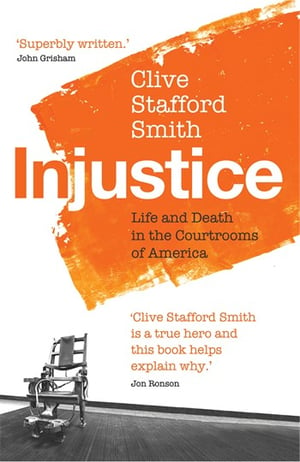
Jul 12, 2012
United Kingdom Acts to Ban Export of Lethal Injection Drug
The United Kingdom has introduced restictions on the exportation of propofol after officials in Missouri announced they would begin using the anesthetic in executions. Exports of sodium thiopental, another anesthetic previously used in executions, were restricted after several states obtained that drug from DreamPharma, a drug company run out of the back of a driving school in London. Vince Cable, the U.K. Business Secretary, said, “This country opposes the death penalty. We are clear that the…
Read More
Jul 11, 2012
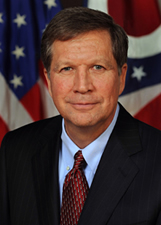
Ohio Governor Grants Clemency Based on Defendant’s Mental Capacity
On July 10, Ohio Governor John Kasich (pictured) granted clemency to death row inmate John Eley, who was scheduled to be executed on July 26. Eley’s sentence was reduced to life in prison without parole. The governor said he based his decision on evidence that Eley acted under the direction of another person, and that his mental capacity was limited, saying, “Without those factors it is doubtful that Eley would have committed this crime.” The prosecutor in the case and one of the judges who…
Read More