Publications & Testimony
Testimony and Statements on the Death Penalty
FROM DPIC
For testimony by former Executive Director Robert Dunham and former Executive Director Richard C. Dieter, please visit our page DPIC Testimony.
FROM RELIGIOUS LEADERS AND ORGANIZATIONS
- News Brief: Pope Francis Calls for Prayer to Abolish the Death Penalty (September 1, 2022)
- Jewish Congregation Renews Request for Department of Justice to Drop Death Penalty in Tree of Life Synagogue Killings (June 24, 2021)
- Orthodox Church Patriarch Calls Death Penalty Incompatible with Christian Beliefs (October 20, 2020)
- Presbyterian Church (U.S.A.) — Statement on the Federal Death Penalty (August 5, 2019)
- Louisiana Christian Faith Leaders Call for State to Abolish Death Penalty (April 25, 2019)
- Pittsburgh Rabbi’s Wife Opposes Death Penalty for Tree of Life Synagogue Killings (March 18, 2019)
- Orthodox Jewish Organization Calls for an End to Capital Punishment in the U.S. | Death Penalty Information Center (February 17, 2016)
- Baptist Theologian Says Death Penalty Does Not Fit With Christian Theology (March 8, 2016)
- Civil and Human Rights: Death Penalty — Church & Society, The United Methodist Church
- Religious Views: Over 150 Catholic Theologians Call for Repeal of the Death Penalty (September 27, 2011)
- Power Over Life and Death — The Power to Save a Life (January 15, 2005)
- Responsibility, Rehabilitation, and Restoration: A Catholic Perspective on Crime and Criminal Justice (November 2000)
- The Challenge of Holiness: A Sermon on the Death Penalty (January 10, 2000)
- General Assembly of the Texas Conference of Churches — Resolution Opposing the Death Penalty (February 24, 1998)
- Statement by Catholic Bishops of Texas on Capital Punishment (October 20, 1997)
- Catholic Church Expresses Strong Opposition to Capital Punishment in Catechism (September 9, 1997)
- Catholic Bishops of Iowa Issue Statement on Death Penalty (February 4, 1998)
- To End the Death Penalty: A Report of the National Jewish/Catholic Consultation
- Transcript of Dr. Pat Robertson’s Speech on the Role of Religion and the Death Penalty at The College of William and Mary
- Collection of Official Catholic Statements on the Death Penalty (1980)
FROM THE INTERNATIONAL COMMUNITY
- UN experts call for universal abolition of the death penalty | OHCHR (October 9, 2023)
- Zambia Becomes 25th Sub-Saharan African Nation to Abolish Death Penalty (December 23, 2022)
- Belgium Wants a World Without the Death Penalty (October 20, 2022)
- As France Prepares to Assume Presidency of European Union, Emmanuel Macron Announces Initiative for Worldwide Abolition of Death Penalty (October 11, 2021)
- U.N. Secretary-General, European Union Ambassador Call for Abolition of “Barbaric” Death Penalty (October 11, 2017)
- European Union Calls for Abolition of Capital Punishment as World Coalition Hosts International Death Penalty Conference (June 27, 2017)
- U.N. Investigator Talks About the Future of Solitary and the Death Penalty (November 7, 2016)
- World Congress Against the Death Penalty Renews Call for Global Moratorium, Pope Sends Message of Support (June 27, 2016)
- Declaration by the Presidency on behalf of the European Union on the 400th execution in Texas from the Council of the European Union (August 21, 2007)
- Resolution Supporting Worldwide Moratorium on Executions from the United Nations Commission on Human Rights (April 1999)
- Mary Robinson, U.N. High Commissioner for Human Rights — Message to the Press Conference organized by the Death Penalty Information Center for the release of the report, “International Perspectives on the Death Penalty” (October 12, 1999)
- Status of the International Covenants on Human Rights from the United Nations Commission on Human Rights (April 1998)
FROM ADVOCACY GROUPS
- Advocacy Group Tells Supreme Court that Negative Stereotypes Distort Perception that Latinos in Death-Penalty Cases Pose Future Danger to Society (April 15, 2022)
- Disability Rights Groups, Legal Experts, and Conservative Advocates Urge Supreme Court to Strike Down Georgia’s Uniquely Harsh Proof Requirements in Death-Penalty Intellectual Disabilities Cases (January 11, 2022)
- NAACP Reaffirms Its Support of Abolishing the Death Penalty (2022)
- More Than 80 Civil Rights and Advocacy Organizations Urge President Biden to End Federal Executions | Death Penalty Information Center (February 9, 2021)
- More Than 250 Conservative Leaders Join Call to End Death Penalty (October 29, 2019)
- National Alliance on Mental Illness: The Death Penalty
- Florida League of Women Voters Calls for Halt to Executions (May 28, 2007)
- Victims Organizations Issue Joint Statement for National Victims’ Rights Week (April 19, 2007)
FROM JUDGES, LEGISLATORS, AND OTHER ORGANIZATIONS
- Republican-led Oklahoma committee considers pause on executions amid death case scrutiny (October 5, 2023)
- Former Pro-Death Penalty District Attorney Explains Why He Now Supports Abolition, and Fears Political Promises to Expand the Use of the Death Penalty (August 20, 2023)
- Pressley, Durbin Reintroduce Bill to End the Federal Death Penalty (July 13, 2023)
- The Lancet Editorial: Physician Involvement in Executions Violates Medical Ethics | Death Penalty Information Center (May 20, 2023)
- APA calls for extending ineligibility for the death penalty to adolescent offenders younger than age 21 (August 4, 2022)
- Why some Republicans are turning against the death penalty | Ron Ferguson | Ohio House of Representatives (March 8, 2022)
- Eight years on Texas’ highest criminal court turned Elsa Alcala into a death penalty skeptic. How will the court change without her? (January 26, 2019)
- AMA to Supreme Court: Doctor participation in executions unethical (August 22, 2018)
- Former Governor Bill Richardson: Death Penalty Is Bad for Business, Out of Step With World’s Views (June 16, 2017)
- Capital Punishment and Nurses’ Participation in Capital Punishment (2016)
- Former Ohio Attorney General Jim Petro Says Death Penalty Unfixable, “Not Worth It Any More” (September 12, 2016)
- Resolution Supporting Repeal of the Death Penalty, National Hispanic Caucus of State Legislators (August 11, 2016)
- Retired Police Captain Says Repealing Death Penalty Is “Smart on Crime” (November 24, 2014)
- Resolution Supporting Abolition of the Death Penalty, Natl. Assoc. of Black Psychologists (2012)
- The Road to Justice and Peace by New Jersey State Senator Raymond Lesniak (February 1, 2009)
- Statement On The Federal Death Penalty System by Senator Feingold (June 7, 2001)
- Statement on the Need for a Federal Moratorium on the Death Penalty Senator Feingold (October 29, 2000)
- Death Penalty: The Torah and Today (August 23, 2000)
- Press Release for Senator Russ Feingold’s Introduction of Senate’s First Death Penalty Moratorium Bill (April 20, 2000)
- Amnesty International Southern Regional Conference: Orlando, Florida Remarks by Former Florida Chief Justice Gerald Kogan (October 23, 1999)
- American Bar Association Resolution on the Death Penalty (February 3, 1997)
FROM MURDER VICTIMS’ FAMILY MEMBERS
Items: 3781 — 3790
Jun 25, 2012
NEW RESOURCE: The State of Criminal Justice 2012
The American Bar Association recently published The State of Criminal Justice 2012, an annual report that examines major issues, trends and significant changes in America’s criminal justice system. This publication serves as a valuable resource for academics, students, and policy-makers in the area of criminal justice, and contains 24 chapters focusing on specific areas of the criminal justice field. The chapter devoted to capital punishment was written by Ronald Tabak, special counsel and pro…
Read More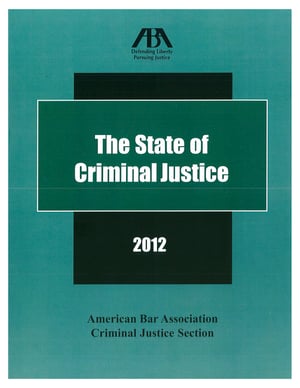
Jun 22, 2012
Arkansas Supreme Court Holds Lethal Injection Law Unconstitutional
On June 22, the Arkansas Supreme Court struck down the state’s lethal injection law as unconstitutional because it delegated too much authority to the Department of Corrections. In a 5 – 2 decision, the court sided with 10 death row inmates who argued that, under Arkansas’s constitution, only the Legislature can set execution policy, and that legislators violated the state’s separation of powers doctrine when it voted to give that authority to the prison system in the Method of Execution Act of…
Read More
Jun 21, 2012
COSTS: Lack of Adequate Funding Causing Shortage of Death Penalty Attorneys in Louisiana
In Louisiana, a lack of adequate funding for indigent defense in death penalty cases is causing a critical shortage of qualified counsel and long delays in cases. John Di Giulio, a member of the Louisiana Public Defender Board, said that public defenders and regional offices that represent death penalty clients are “overworked and underfunded.” Mike Mitchell, chief public defender of the East Baton Rouge Public Defender’s office, attributed the shortage of lawyers to the demanding nature of…
Read More
Jun 20, 2012
DEATH ROW: Former Texas Death Row Inmate Testifies at Congressional Hearings on Solitary Confinement
On June 19, the U.S. Senate Subcommittee on the Constitution, Civil Rights and Human Rights held hearings on solitary confinement in U.S. prisons, including the conditions of many state death rows. The hearings marked the first time lawmakers on Capitol Hill have considered this issue. Anthony Graves (pictured r., along with Sen. Richard Durbin), a former Texas death row inmate, described the conditions of his incarceration in a 8 by 12 foot cage with no physical human contact for years. Meals…
Read More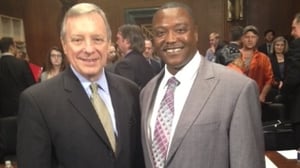
Jun 19, 2012
MENTAL ILLNESS: Ohio Execution Halted After Inmate Found Mentally Incompetent
On June 18, the Ohio Supreme Court stayed the execution of Abdul Awkal (pictured) indefinitely following a county court’s ruling that he was mentally incompetent to face execution. Awkal was originally scheduled for execution on June 6, but shortly before the execution Governor John Kasich granted a two-week reprieve to allow time for a mental competency hearing. Judge Stuart Friedman presided over that hearing and subsequently ruled that Awkal was too mentally ill to be put to death, citing…
Read More
Jun 18, 2012
NEW RESOURCES: Latest Death Row USA Report Now Available
The latest edition of the NAACP Legal Defense Fund’s Death Row USA shows a decrease of 19 inmates between January 1 and April 1, 2012. Over the last decade, the total population of state and federal death rows has decreased significantly, from 3,682 inmates in 2000 to 3,170 inmates as of April 2012. California continues to have the largest death row population (724), followed by Florida (407), Texas (308), Pennsylvania (204), and Alabama (200). Neither California nor Pennsylvania have carried…
Read More
Jun 15, 2012
RACE: After Judge Finds Statewide Racial Bias in Jury Selection, North Carolina Legislators Move to Repeal Racial Justice Act
On June 13, the North Carolina House of Representatives approved a bill to essentially overturn the state’s Racial Justice Act (RJA), a groundbreaking law that allowed a finding of racial bias in sentencing or jury selection based on sophisticated statistical studies. If passed into law, the new bill would require courts to revert to the older and more problematic process of finding direct racial bias by the prosecution or jury against an individual defendant in order to reverse a death…
Read More
Jun 14, 2012
EDITORIALS: Intellectual Disabilities and Death Sentences
The editors of the Birmingham News in Alabama recenlty called upon a trial court to overrule a jury’s 10 – 2 recommendation for death in the case of Esaw Jackson because of his mental disabilities. While noting that in many states Jackson would not even be eligible for the death penalty following a non-unanimous vote, the News added that an IQ test, conducted by a state expert on Jackson, showed an IQ of 56, well below the level that generally indicates an intellectual disability. In 2002, the…
Read MoreJun 13, 2012
NEW VOICES: Former Prosecutor and Sentencing Judge Say Ohio Death Sentence Inappropriate
The prosecutor who helped secure the death sentence of John Eley (pictured) and one of the presiding judges who sentenced him to death recently asked the Ohio Parole Board to recommend clemency instead. Former Mahoning County prosecutor Gary Van Brocklin told the state parole board that Eley should be spared from execution because the type of crime he committed is no longer usually prosecuted as a death penalty case and is not so egregious as to deserve capital punishment. Van Brocklin said…
Read More
Jun 12, 2012
DETERRENCE: Why the Studies Have Failed to Produce Reliable Results
Two researchers at the University of Pennsylvania’s Wharton School, Professors Justin Wolfers (pictured) and Betsey Stevenson, recently explained why decades of studies have failed to show a reliable deterrent effect from the death penalty. The authors cited a 2012 report from the National Academy of Sciences, concluding that the deterrence studies of the past 30 years “should not influence policy judgments about capital punishment.” Wolfers and Stevenson explain why these studies cannot be…
Read More