Publications & Testimony
Testimony and Statements on the Death Penalty
FROM DPIC
For testimony by former Executive Director Robert Dunham and former Executive Director Richard C. Dieter, please visit our page DPIC Testimony.
FROM RELIGIOUS LEADERS AND ORGANIZATIONS
- News Brief: Pope Francis Calls for Prayer to Abolish the Death Penalty (September 1, 2022)
- Jewish Congregation Renews Request for Department of Justice to Drop Death Penalty in Tree of Life Synagogue Killings (June 24, 2021)
- Orthodox Church Patriarch Calls Death Penalty Incompatible with Christian Beliefs (October 20, 2020)
- Presbyterian Church (U.S.A.) — Statement on the Federal Death Penalty (August 5, 2019)
- Louisiana Christian Faith Leaders Call for State to Abolish Death Penalty (April 25, 2019)
- Pittsburgh Rabbi’s Wife Opposes Death Penalty for Tree of Life Synagogue Killings (March 18, 2019)
- Orthodox Jewish Organization Calls for an End to Capital Punishment in the U.S. | Death Penalty Information Center (February 17, 2016)
- Baptist Theologian Says Death Penalty Does Not Fit With Christian Theology (March 8, 2016)
- Civil and Human Rights: Death Penalty — Church & Society, The United Methodist Church
- Religious Views: Over 150 Catholic Theologians Call for Repeal of the Death Penalty (September 27, 2011)
- Power Over Life and Death — The Power to Save a Life (January 15, 2005)
- Responsibility, Rehabilitation, and Restoration: A Catholic Perspective on Crime and Criminal Justice (November 2000)
- The Challenge of Holiness: A Sermon on the Death Penalty (January 10, 2000)
- General Assembly of the Texas Conference of Churches — Resolution Opposing the Death Penalty (February 24, 1998)
- Statement by Catholic Bishops of Texas on Capital Punishment (October 20, 1997)
- Catholic Church Expresses Strong Opposition to Capital Punishment in Catechism (September 9, 1997)
- Catholic Bishops of Iowa Issue Statement on Death Penalty (February 4, 1998)
- To End the Death Penalty: A Report of the National Jewish/Catholic Consultation
- Transcript of Dr. Pat Robertson’s Speech on the Role of Religion and the Death Penalty at The College of William and Mary
- Collection of Official Catholic Statements on the Death Penalty (1980)
FROM THE INTERNATIONAL COMMUNITY
- UN experts call for universal abolition of the death penalty | OHCHR (October 9, 2023)
- Zambia Becomes 25th Sub-Saharan African Nation to Abolish Death Penalty (December 23, 2022)
- Belgium Wants a World Without the Death Penalty (October 20, 2022)
- As France Prepares to Assume Presidency of European Union, Emmanuel Macron Announces Initiative for Worldwide Abolition of Death Penalty (October 11, 2021)
- U.N. Secretary-General, European Union Ambassador Call for Abolition of “Barbaric” Death Penalty (October 11, 2017)
- European Union Calls for Abolition of Capital Punishment as World Coalition Hosts International Death Penalty Conference (June 27, 2017)
- U.N. Investigator Talks About the Future of Solitary and the Death Penalty (November 7, 2016)
- World Congress Against the Death Penalty Renews Call for Global Moratorium, Pope Sends Message of Support (June 27, 2016)
- Declaration by the Presidency on behalf of the European Union on the 400th execution in Texas from the Council of the European Union (August 21, 2007)
- Resolution Supporting Worldwide Moratorium on Executions from the United Nations Commission on Human Rights (April 1999)
- Mary Robinson, U.N. High Commissioner for Human Rights — Message to the Press Conference organized by the Death Penalty Information Center for the release of the report, “International Perspectives on the Death Penalty” (October 12, 1999)
- Status of the International Covenants on Human Rights from the United Nations Commission on Human Rights (April 1998)
FROM ADVOCACY GROUPS
- Advocacy Group Tells Supreme Court that Negative Stereotypes Distort Perception that Latinos in Death-Penalty Cases Pose Future Danger to Society (April 15, 2022)
- Disability Rights Groups, Legal Experts, and Conservative Advocates Urge Supreme Court to Strike Down Georgia’s Uniquely Harsh Proof Requirements in Death-Penalty Intellectual Disabilities Cases (January 11, 2022)
- NAACP Reaffirms Its Support of Abolishing the Death Penalty (2022)
- More Than 80 Civil Rights and Advocacy Organizations Urge President Biden to End Federal Executions | Death Penalty Information Center (February 9, 2021)
- More Than 250 Conservative Leaders Join Call to End Death Penalty (October 29, 2019)
- National Alliance on Mental Illness: The Death Penalty
- Florida League of Women Voters Calls for Halt to Executions (May 28, 2007)
- Victims Organizations Issue Joint Statement for National Victims’ Rights Week (April 19, 2007)
FROM JUDGES, LEGISLATORS, AND OTHER ORGANIZATIONS
- Republican-led Oklahoma committee considers pause on executions amid death case scrutiny (October 5, 2023)
- Former Pro-Death Penalty District Attorney Explains Why He Now Supports Abolition, and Fears Political Promises to Expand the Use of the Death Penalty (August 20, 2023)
- Pressley, Durbin Reintroduce Bill to End the Federal Death Penalty (July 13, 2023)
- The Lancet Editorial: Physician Involvement in Executions Violates Medical Ethics | Death Penalty Information Center (May 20, 2023)
- APA calls for extending ineligibility for the death penalty to adolescent offenders younger than age 21 (August 4, 2022)
- Why some Republicans are turning against the death penalty | Ron Ferguson | Ohio House of Representatives (March 8, 2022)
- Eight years on Texas’ highest criminal court turned Elsa Alcala into a death penalty skeptic. How will the court change without her? (January 26, 2019)
- AMA to Supreme Court: Doctor participation in executions unethical (August 22, 2018)
- Former Governor Bill Richardson: Death Penalty Is Bad for Business, Out of Step With World’s Views (June 16, 2017)
- Capital Punishment and Nurses’ Participation in Capital Punishment (2016)
- Former Ohio Attorney General Jim Petro Says Death Penalty Unfixable, “Not Worth It Any More” (September 12, 2016)
- Resolution Supporting Repeal of the Death Penalty, National Hispanic Caucus of State Legislators (August 11, 2016)
- Retired Police Captain Says Repealing Death Penalty Is “Smart on Crime” (November 24, 2014)
- Resolution Supporting Abolition of the Death Penalty, Natl. Assoc. of Black Psychologists (2012)
- The Road to Justice and Peace by New Jersey State Senator Raymond Lesniak (February 1, 2009)
- Statement On The Federal Death Penalty System by Senator Feingold (June 7, 2001)
- Statement on the Need for a Federal Moratorium on the Death Penalty Senator Feingold (October 29, 2000)
- Death Penalty: The Torah and Today (August 23, 2000)
- Press Release for Senator Russ Feingold’s Introduction of Senate’s First Death Penalty Moratorium Bill (April 20, 2000)
- Amnesty International Southern Regional Conference: Orlando, Florida Remarks by Former Florida Chief Justice Gerald Kogan (October 23, 1999)
- American Bar Association Resolution on the Death Penalty (February 3, 1997)
FROM MURDER VICTIMS’ FAMILY MEMBERS
Items: 3821 — 3830
May 04, 2012
September 11, 2001: A Forum of Information and News, Especially Related to Capital Punishment
Earlier Proposal for Federal Trials U.S. Attorney General Eric Holder had announced that five men being held in Guantanamo prison in connection with the September 11, 2001 attack on the World Trade Center will face trial in federal court in New York City: Khalid Shaikh Mohammed, Ali Abd al-Aziz Ali, Walid bin Attash, Mustafa Ahmed al-Hawsawi and Ramzi bin al-Shibh. These defendants could face the federal death penalty. (C. Savage, “U.S. To Try Avowed 9/11 Mastermind Before Civilian Court in…
Read More
May 03, 2012
LETHAL INJECTION: Execution Process Often Masked Behind a Veil of Secrecy
Controversies surrounding the lethal drugs used in U.S. executions continue to arise in many states. Documents obtained by the Associated Press reveal the secretive process in which the Delaware Department of Corrections obtained the drugs necessary for the its lethal injection process. Delaware officials solicited the help of the state’s Economic Development Director, Alan Levin, in obtaining lethal injection drugs after its previous supply expired in 2005. Levin, the former head of the Happy…
Read More
May 02, 2012
COMMENTARY: Death Penalty Climate Changing
Commentary from nationally syndicated columnist E.J. Dionne (pictured) and the New York Times reflected on the changing state of the death penalty in the U.S. in light of recent developments. Dionne cited the repeal of the death penalty in Connecticut as an example of a “remarkable pivot in the politics of the death penalty, the premier issue on which an overwhelming consensus favoring what’s taken to be the conservative side has begun to crumble.” He observed that “significant groups of…
Read More
May 01, 2012
NEW RESOURCES: DPIC’s Latest Podcast Explores the Death Penalty in Japan
In the latest edition of the Death Penalty Information Center’s podcasts, Professor Michael H. Fox, director of the Japan Innocence and Death Penalty Research Center, discusses the current state of the death penalty in Japan. Prof. Fox compares public opinion on the death penalty in Japan and the U.S., explains some of the unique aspects of Japan’s criminal justice system, and discusses the prospects for change. Click here to listen to this latest podcast. You can listen to the podcast now or…
Read MoreApr 30, 2012
NEW VOICES: Jimmy Carter, Former President and Nobel Peace Prize Winner, Calls for End to Death Penalty
In a recent op-ed in the Atlanta Journal-Constitution, former U.S. President Jimmy Carter called for the end of the death penalty. President Carter cited the risk of wrongful executions, the lack of evidence of deterrence, and the costs of prosecution as reasons to abolish capital punishment. He wrote, “[T]here has never been any evidence that the death penalty reduces capital crimes or that crimes increased when executions stopped. Tragic mistakes are prevalent. DNA testing and other factors…
Read More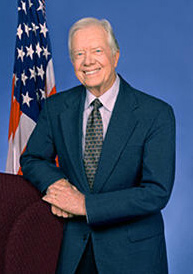
Apr 27, 2012
BOOKS: “The Death Penalty Failed Experiment: From Gary Graham to Troy Davis in Context”
A new book published in electronic format, The Death Penalty Failed Experiment: From Gary Graham to Troy Davis in Context by Diann Rust-Tierney, examines the problem of arbitrariness in the death penalty since its reinstatement in 1976. Through an analysis of the cases of Gary Graham and Troy Davis, the author argues that race, wealth and geography play a more significant role in determining who faces capital punishment than the facts of the crime itself. Both defendants had significant claims…
Read More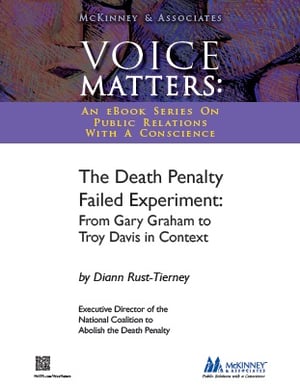
Apr 26, 2012
RACE: Commentary on the Anniversary of McCleskey v. Kemp
In an op-ed written for the 25th anniversary of the U.S. Supreme Court’s decision in McCleskey v. Kemp, nationally acclaimed death penalty expert James Acker (pictured) called for a reassessment of how race is affecting death penalty decisions. Prof. Acker questioned the Court’s refusal to find bias in the wake of the strong statistical evidence presented in that case. He wrote, “The time has surely come for a sober reassessment of this ruling” and “we must question if justice truly has been…
Read More
Apr 25, 2012
RECENT LEGISLATION: Governor’s Signature Makes Connecticut Fifth State in Five Years to End Death Penalty
On April 25, 2012, Connecticut Governor Dannel Malloy (pictured) signed into law a bill that replaces the death penalty with life without parole. At that time, Connecticut became the fifth state in five years, and the 17th overall, to do away with capital punishment. Governor Malloy, who once supported the death penalty, offered the following statement: “My position on the appropriateness of the death penalty in our criminal justice system evolved over a long period of time. As a young man, I…
Read More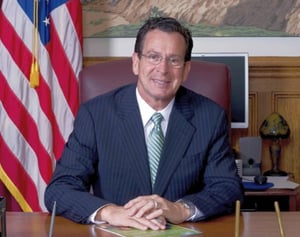
Apr 24, 2012
CLEMENCY: Georgia Board Commutes Death Sentence of ‘Model Prisoner’
On April 20, the Georgia Board of Pardons and Paroles reduced the death sentence of Daniel Greene (pictured) to life in prison without the possibility of parole. The Board had stayed Greene’s execution, which was set for April 19, in order to further consider his clemency petition. Greene’s petition included letters from several members of the Taylor County community, where the murder occurred, urging the Board to spare Greene’s life. Among the letters was one from a former correctional…
Read More
Apr 23, 2012
Death Penalty Repeal Initiative Qualifies for Ballot in California
On April 23, the SAFE California Act, an initiative to replace California’s death penalty with a sentence of life without parole, qualified for the November 2012 ballot by presenting an ample number of qualified signatures. The initiative garnered almost 800,000 signatures for the measure that would repeal the death penalty and make capital crimes punishable by life in prison without parole. The initiative would also require inmates to work in prison to help pay restitution to the families of…
Read More